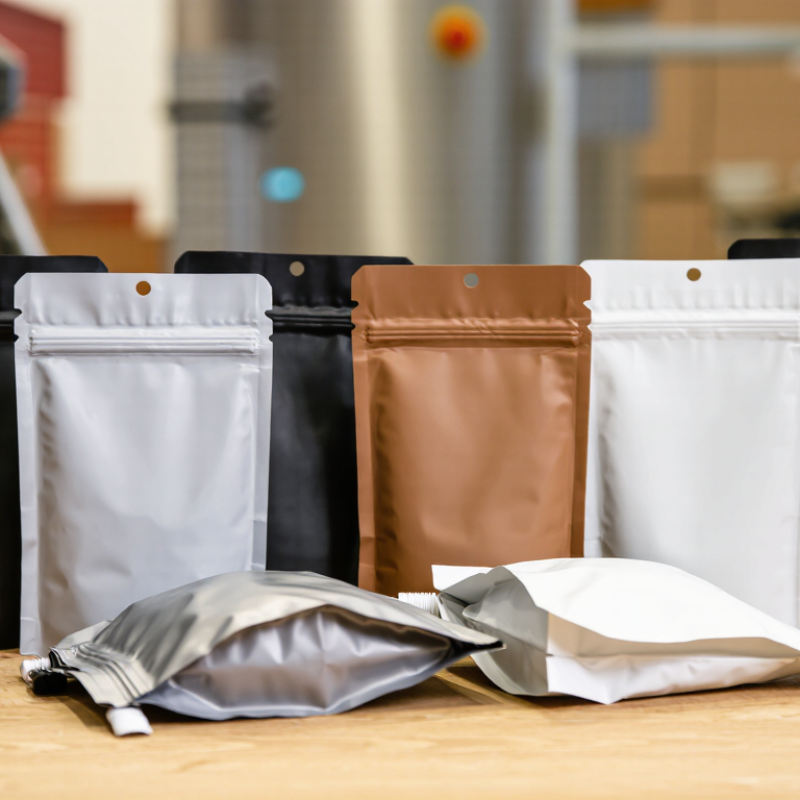
Coffee demand is large, and the packaging behind each bag has a practical job: protect aroma, resist moisture, and travel reliably. The International Coffee Organization’s Coffee Report and Outlook estimated global coffee consumption at 177.0 million 60-kilogram bags in coffee year 2023/24, a 2.2% increase from the previous year. That scale makes dependable packaging a real purchasing concern for roasters and distributors. Small details matter.
A well-made Coffee Pouch may use a high-barrier film, a heat-sealed edge, and a zipper that stays usable after opening. Valve placement, film thickness, pouch dimensions, and print quality also affect performance on filling lines and retail shelves. Not every pouch fits. A design that looks polished in a sample can behave differently during production, so buyers should request specifications, production samples, and relevant quality documents before placing a large order.
This guide explores China-based coffee pouch manufacturers for global buyers, with attention to product range, customization, quality controls, communication, and export experience. Supplier claims deserve careful checking. Ask how barrier performance is tested, whether materials match your product and filling process, and what evidence supports environmental claims. The right manufacturer is not simply the one offering the lowest quote; it is the one that can explain its materials, deliver consistent batches, and respond clearly when something needs correction. No single supplier suits every brand. That trade-off is easy to miss.
A leading coffee pouch manufacturer in China should explain how its packaging protects coffee, not just show polished samples. Ask about the pouch’s laminate structure and its oxygen and moisture barrier data. Freshly roasted beans release gas, so valve performance and seal quality matter. A neat sample is useful, but it cannot prove consistency. Request pouches from a regular production run.
Reliable suppliers provide clear material specifications, batch traceability, and relevant food-contact test records. They should also discuss printing accuracy, zipper function, and how seals are checked. Test filled pouches under realistic storage and shipping conditions. Look for leaks, weak corners, or print rubbing after handling. Details like these can reveal more than a sales presentation. No factory is flawless; open discussion of defects and corrective actions is a stronger sign than vague promises.
Tips: Compare written specifications, not just prices. Ask for recent test results and production samples. Check each pouch after filling, sealing, and transport. Even experienced buyers can miss small seal flaws.
Coffee pouches come in several practical formats. Stand-up pouches offer shelf visibility and often include resealable zippers. Flat-bottom bags stand upright neatly, while side-gusset bags suit larger coffee volumes. Small sachets work for single servings and sampling. The International Coffee Organization’s Coffee Market Report forecast global consumption at 177 million 60-kilogram bags in 2023/24, up 2.2% year over year. That scale makes pouch size and shipping efficiency important choices.
Material structure affects freshness, handling, and disposal. Common constructions include PET/PE laminates, paper combined with barrier films, and aluminum-foil laminates. A one-way degassing valve can release carbon dioxide from freshly roasted beans while limiting outside air. Useful detail. Ask suppliers for oxygen-transmission data, seal-strength results, and samples tested with your actual coffee. A shiny surface alone does not prove strong protection.
Some suppliers also offer mono-material PE or PP structures designed with recyclability in mind. However, collection and recycling options vary by market, and printed layers or closures can affect compatibility. The Flexible Packaging Association’s industry reports describe flexible packaging as a substantial part of the U.S. packaging market, but broad market figures cannot confirm a pouch’s performance. Compare barrier needs, filling equipment, shipping conditions, and local disposal routes before selecting a structure. A small trial run may reveal seal or zipper problems that specifications miss.
For coffee pouches, check whether a manufacturer’s quality system is certified to ISO 9001 and its food-safety system to ISO 22000 or an equivalent scheme. The ISO Survey 2022 recorded 1,265,216 valid ISO 9001 certificates worldwide. That figure shows the standard’s reach, not a supplier’s actual performance. Ask to see the certificate’s scope, site address, expiry date, and latest audit findings.
A certificate alone is not enough.
Request recent, product-specific test reports for oxygen and water-vapor transmission, seal strength, and laminate bond. These affect aroma retention and pouch integrity during storage and shipping. Ask how the plant controls ink and adhesive migration, and whether tests match the destination market’s food-contact requirements.
Traceability should link a finished pouch to material lots and production records. Request a sample batch record, not only a policy document. Then inspect pouches for uneven seals, pinholes, and delamination. Small defects matter.
Test results can vary by structure, thickness, and laboratory method, so compare like with like. A supplier’s paperwork may look complete; still, confirm that the tested construction matches the pouch you plan to order.
Global buyers should compare Chinese coffee pouch manufacturers using the same written specifications. State pouch dimensions, material structure, thickness, zipper type, valve position, and print requirements. Then ask each supplier to confirm them in a quotation. Vague descriptions make prices difficult to compare.
Request physical samples and inspect the seals, zipper, valve, and pouch base. Check that the bag stands steadily and opens without tearing. Ask for recent test reports and food-contact documents relevant to your destination market. Verify the issuing laboratory and whether the documents cover the exact material offered. Details matter.
Compare minimum order quantities, production lead times, sample charges, and procedures for handling defects. Ask how material batches are traced and how changes are approved. A polished sample can hide inconsistent production. Request samples from a normal production run when possible. Not always. If answers are slow or incomplete, record that as a sourcing risk, not just an inconvenience. I would also compare communication during a small trial order; it may reveal practical issues that a factory tour cannot. Even a careful checklist has limits, so keep approved samples and specifications for later orders.
For global buyers, verifying a coffee pouch supplier means checking the factory process, not just the sales sample. The Flexible Packaging Association’s 2024 State of the Flexible Packaging Industry report estimated U.S. industry sales at $42.9 billion in 2023. That scale makes supplier claims easy to encounter, but not automatically easy to verify. Ask for current food-contact documentation, material specifications, and independent test results for oxygen and moisture barrier performance. Check that the test conditions match your pouch structure and intended use. Paperwork can look neat. It can still miss the production floor.
Request samples from a normal production run, then inspect seals, zipper function, valve placement, print alignment, and pouch dimensions. For roasted coffee, ask how the supplier controls seal strength and checks valve consistency; a small defect can compromise freshness. Confirm minimum order quantities, lead times, and how rejected lots are handled in writing. If possible, arrange a factory audit or a third-party inspection before approving a large order. Run a small pilot first. I would not rely on one successful sample alone; repeatability matters more, and buyers sometimes overlook that. Keep a dated record of test results, approved artwork, and sample changes so later deliveries can be compared against the same standard.
| Verification Area | What to Request | How to Verify | Reliable-Supplier Indicator | Warning Sign |
|---|---|---|---|---|
| Legal entity and facility | Current business registration details, manufacturing-site address, and the name of the contracting and invoicing entity. | Check the registration through an appropriate official or independent business-verification channel. Confirm the site address during a live video tour or independent audit. | Documents, facility details, contract, and payment beneficiary are consistent and clearly explained. | Unexplained differences between the seller, factory, contract party, and payment account. |
| Food-safety management | Current food-safety or packaging-management certificates, including the certificate scope and covered facility. | Verify the certificate number, validity, issuing body, site, and scope with the issuer or certification directory. Check that the scope covers the relevant packaging activity. | Valid, relevant certification supported by documented hygiene, process-control, and corrective-action procedures. | A certificate for another site or activity is presented as proof for the pouch factory, or verification is refused. |
| Food-contact compliance | Material specifications, food-contact declarations, and applicable test reports for the proposed structure, inks, adhesives, and intended use. | Identify the destination market and intended conditions of use first. Confirm that documentation addresses the actual materials and applicable local requirements; seek independent testing where needed. | Documents are traceable to the supplied materials and explain relevant limitations and conditions of use. | Generic reports, reports for a different structure, or claims of universal compliance without supporting evidence. |
| Pouch structure and barrier | Layer-by-layer construction, material thicknesses, zipper or valve details, and available oxygen- and water-vapour-barrier data. | Match the proposed structure to the coffee format, shelf-life target, filling conditions, and storage environment. Review test method, sample identity, and testing conditions. | Technical data is specific to the proposed construction, with material substitutions controlled and disclosed. | Barrier figures are quoted without a test method, conditions, or link to the actual pouch construction. |
| Quality control and traceability | Inspection plan, incoming-material controls, in-process checks, finished-goods specifications, and lot-traceability procedure. | Ask how a pouch lot can be traced to its raw materials and production records. Review sample inspection records and, if possible, observe a traceability or recall exercise. | Defined acceptance criteria, retained records, lot identification, and a documented process for handling nonconforming product. | No lot-level records, unclear inspection criteria, or inability to explain how affected goods would be identified. |
| Product samples and sealing performance | Production-representative samples, seal specifications, and test results relevant to the pouch design. | Test samples on the intended filling and sealing equipment. Evaluate seal integrity, zipper function, valve fit where applicable, and performance after handling and transport simulation. | Samples reflect the quoted materials and production process, and test results meet buyer-agreed specifications. | Only presentation samples are available, or samples differ from the quoted construction without disclosure. |
| Printing and artwork control | Artwork approval process, color-management approach, proofing options, and controls for version changes. | Approve a final proof and confirm how revisions are authorized. Check text, dimensions, print position, and any required market-specific information before production. | Written approval is required before printing, and obsolete artwork is controlled. | Production can begin without documented artwork approval or version confirmation. |
| Capacity and lead time | Production stages, stated capacity, order schedule, sample timeline, and factors that may affect delivery. | Compare the proposed schedule with the supplier’s production plan and order requirements. Confirm what starts the lead-time clock and how delays are communicated. | Lead times and capacity are explained for the specific pouch and order, with clear milestones and escalation contacts. | Guaranteed delivery claims are made without a defined production plan or allowance for approvals and shipping. |
| Quotation and order terms | Itemized pricing, minimum order quantity, tooling or plate charges, payment terms, Incoterms® rule and named place, and packaging details. | Compare like-for-like specifications and confirm which costs, export documents, freight arrangements, and inspection rights are included in the offer. | Commercial terms are written, specific to the approved specification, and consistent across quotation, purchase order, and invoice. | Unspecified surcharges, changing specifications, or pressure to pay outside agreed company channels. |
| Independent inspection and corrective action | Agreement on pre-shipment inspection, defect definitions, sampling approach, and corrective-action process. | Define acceptance criteria before ordering. Arrange an independent inspection when the order risk or value warrants it, and document how failures will be resolved. | The supplier accepts measurable criteria and provides a documented response to nonconformities. | Inspection access or written defect-resolution terms are rejected without a clear alternative. |
| Logistics and export readiness | Carton and pallet details, packing list format, origin and shipping documentation responsibilities, and estimated transit plan. | Confirm the chosen Incoterms® rule, named place, shipment marks, and document requirements with the buyer’s freight provider and customs adviser. | Responsibilities are allocated in writing and shipment details match the purchase order and shipping documents. | Unclear responsibility for export documents, shipping costs, or cargo handover. |



For those larger-sized parts, or smaller quantity runs, we have 2 independent powder coat booths and ovens. The quality, durability and affordability of today’s powder coating finishes make this the process of choice for world-class companies.
Powder coating advantages over other forms of coating are many. Materials used in the Powder coating process can be metals and non-metals that come in a multitude of thicknesses, textures, colors, etc. Another of Powder coating’s biggest advantages over conventional coatings is its ability to create finishes in many different textures. Powder Coating Booths allow us the ability to apply these advantages to large products.
Tri-State Fabricators runs a full-service conveyor line for painting. Wet painting can provide protection or decoration to many different part styles. From start to finish, every project is easier to undergo random and point-based inspection by our skilled painting team.
Advantages to our Wet Paint Line are these lines start with product prep and ends with a thorough inspection of a high quality finished product. Our ability to complete large and small projects with a superior finish and doing so in a timely and economical fashion. This passes along the savings in production to our customers. When powder coating ins not an option, our Wet Paint Line gets the job done right the first time.
When the parts get big and heavy we roll-out our custom paint racks and oversize booth. By utilizing our partnerships with all the major paint brands, we can match virtually any color with wet paint.
The advantages of having access to a Wet Paint Booth are many. Large projects of many different shapes can be loaded into the booth. The Wet Paint Booth offers an environment that is much more controlled than a typical parts painting operation.
Not only are they used because of their controlled environment, but they’re are also advantageous when it comes to applying paint to parts that are needed in industries that require specialty coatings such as medical, aerospace, etc.
Our military forces have some very high standards when it comes to the finish of their vehicles and equipment. From the first pre-treatment step to final coat, it takes a great deal of knowledge and experience to protect the men and women of our armed forces. They deserve only the best, and Tri-State Fabricators provides it.
All of our processes are closely monitored by our staff and management teams. Both of which are highly trained in the processes of metal fabrication and finishing. Tri-State Fabricators’ goal is to always fully satisfy each and every customer, including the military. We will always put a 110% into what we do.
Abrasive media blasting is an excellent way to remove old paint, rust, and increase the paint/powder adhesion. Glass beads produce a much smoother and brighter finish than angular abrasives; leaving the part clean yet without any dimensional change. Chemically inert and environmentally friendly, we can recycle our beads approximately 30 times; making them a more preferred method of metal cleaning or surface finishing.
Advantages to Glass Bead Blasting are many. Glass bead blast media is used when a project is needing rough surfaces need to become smooth for applications of coatings such as paint. It is typically used to clean paint and rust from a product surface without deforming the surface it is being used on. Overall, compared to many other blasting media, Glass Bead Blasting is a very economical choice and those savings are always passed on to our customers.
Tri-State Fabricators utilize a zinc phosphate wash to clean and etch the material to ensure the best paint adhesion possible. The unique design of our 3-stage wash system does the work like a 5-stage. From Cleaning and rinsing to conversion coating and post-treatment, Our Part Washing process is a complete service and works throughout the fabrication service and the finishing service.
Along with the previously mentioned benefits, Curing is a vital chemical reaction that leaves the product finish hard and relatively safe from mild abrasion and aggressive corrosion. This process can be done in more than one way; ambient air-dry or in curing ovens at temps that exceed 240°.
From fixing paint mistakes (someone else’s of course) to simply cleaning our paint line hooks, our burn-off oven is put to good use. After a quick burn-off, a little clean up, and a fresh coat of paint, your parts will look better than new.
Why does our Burn-Off Oven work so well? Because super heating the air around parts turns the materials into ashes. From paint and powder coatings to rubber and machining oils, high temps do the job without degrading the integrity of the part.
Masking is a vital part of producing high quality products. We have die-cut masking patterns to protect machined surfaces as well as a wide range of plugs and caps to protect threaded holes and bolts. We provide permanent and temporary masking.
Masking allows the selected sections of a product to be protected from a fabrication or finishing service. This can be with both chemicals when etching and tapes, paints when only finishing just a section of the product. Masking is great in aiding the customization process of a project.
Screen printing is a photographic process that transfers artwork onto a porous nylon screen which allows colored ink to flow through the screen and be deposited on an aluminum or plastic component. We can generally have just about any design created onto a screen for your parts.
Some of the advantages of Screen Printing are, brand recognition for your business displaying on your products, assembly instructions, product warnings/hazards, etc. Tri-State Fabricators produces Screen Printing of the highest quality so you know it’s durable.
Metal Finishing is the art of treating the exterior portion of product, often metal but can also be made of other materials, so that the surface is clean and free of any debris. Then the process of applying coats or either paint of powder coat takes place. This coating process improves the quality of the product in both appearance and resistance to wear and corrosion.
Tri-State Fabricators, Inc., understands that a project typically isn’t complete until a high-quality finish has been added to your product. This is why our painting and powder coating teams continuously inspect the products throughout the Metal Finishing process.