Choosing the right Chemical Mechanical Seals supplier requires more than comparing prices or browsing attractive product catalogs. In chemical processing, a seal may face corrosive acids, abrasive crystals, high temperatures, pressure changes, and continuous shaft movement. A small material mismatch can create leakage, unplanned downtime, or damaged equipment. The details matter: carbon faces, silicon carbide, tungsten carbide, elastomer compatibility, spring design, and flush arrangements all influence performance.
Robert Flitney, author of Seals and Sealing Handbook, offers a useful principle: “A seal is not an isolated component; it is part of a sealing system.” This idea guides our review of leading suppliers worldwide. We examine engineering experience, manufacturing consistency, testing practices, technical support, customization, and compliance with recognized industry standards. Suppliers serving refineries may differ from those supporting pharmaceutical, food-processing, or wastewater facilities. There is no universal winner.
A company can appear impressive on paper, yet provide weak installation guidance. Another may offer excellent prototypes but limited global service. That contradiction deserves attention. Reliable suppliers usually explain operating limits clearly, recommend suitable materials, and provide documentation before problems occur. They also understand pumps, mixers, reactors, and the process conditions surrounding the seal. Our comparison focuses on practical value, not promotional language. It considers proven performance, response capability, and long-term maintenance needs. The ranking may still require reflection, because supplier quality can vary by region, product line, and application.
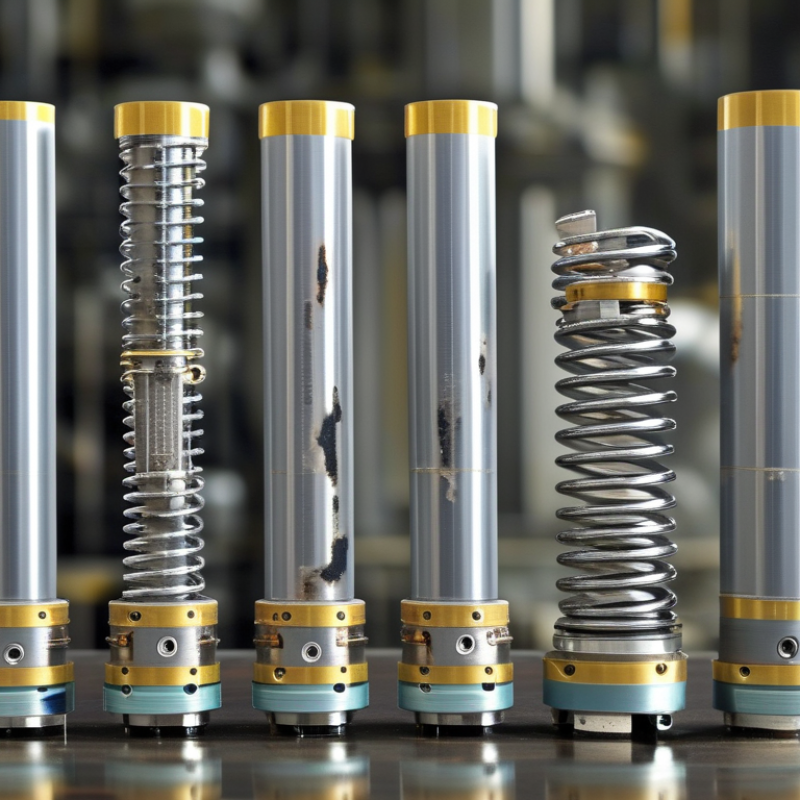
Chemical mechanical seals prevent fluid leakage where rotating shafts enter pumps, mixers, and reactors. Their faces press together with controlled force. A thin lubricant film reduces friction, heat, and wear. Secondary elastomers protect the shaft and housing from chemical contact.
The seal material must match the process. Silicon carbide handles abrasive slurries, while corrosion-resistant alloys suit many acidic services. Temperature, pressure, shaft speed, and dry-running risk also influence the design. The U.S. Department of Energy identifies pumping systems as major industrial energy users, making leakage control and efficient sealing practical maintenance priorities. Small failures can create large production losses.
Applications include chemical reactors, solvent-transfer pumps, wastewater equipment, fertilizer units, and pharmaceutical mixing systems. Fortune Business Insights valued the global mechanical seals market at approximately USD 3.9 billion in 2023, with continued growth projected through the decade. Suppliers worldwide increasingly provide cartridge seals, split seals, and engineered systems for demanding fluids. However, market reports often combine chemical, oil, water, and general industrial data. Their categories are not perfectly comparable. In field inspections, incorrect face materials and poor shaft alignment remain common causes of early failure. Selection should therefore involve operating records, seal-face inspection, and documented compatibility testing rather than catalogue matching alone.
Selecting a chemical mechanical seal supplier requires more than comparing prices. Start with application knowledge. The supplier should understand pressure, temperature, shaft speed, fluid chemistry, and equipment alignment. Ask for material recommendations supported by engineering data, not vague claims. Carbon, silicon carbide, elastomers, and metal parts must match the process conditions. Small chemical changes can cause large sealing problems.
Review manufacturing controls and testing procedures carefully. Reliable suppliers provide dimensional reports, batch traceability, inspection records, and clear acceptance criteria. Their seals should be tested under conditions that resemble your equipment, including thermal cycling and pressure changes.
Certification can help, but it does not replace technical evidence. Request drawings, installation limits, spare-part guidance, and realistic delivery information. Details matter.
Service quality is equally important. An experienced supplier can help investigate leakage, face wear, vibration, or premature failure without blaming installation immediately. That gap matters.
Ask how quickly technical staff respond and whether they can support root-cause analysis. No supplier gets everything right. A credible one admits limitations and documents corrective actions. Review references from facilities with similar fluids and operating pressures. An occasional overlooked detail can still expose weaknesses in your own specification, so keep the evaluation collaborative and demanding.
Chemical mechanical seal suppliers serve demanding plants handling acids, solvents, slurries, and high-temperature fluids. Strong suppliers provide engineered designs, traceable materials, and documented testing. MarketsandMarkets estimates the global mechanical seals market could grow from about USD 4.5 billion in 2023 to nearly USD 6 billion by 2028. This growth reflects upgrades in chemical processing, water treatment, and industrial manufacturing.
Experienced buyers should examine supplier performance beyond catalog prices. Look for compliance with ISO 21049 and API 682 where applicable. Review pressure ratings, face materials, elastomer compatibility, and leakage-test records.
Suppliers with application engineers can improve seal selection around rotating speed, shaft movement, and crystallizing fluids. The wrong elastomer may harden quickly, even when the seal appears correctly installed. That detail is easy to miss.
Tips:
Request a written compatibility chart and recent quality certificates. Ask how suppliers manage batch traceability and emergency replacement parts.
Cross-check claims against independent inspection reports, not sales language alone. A practical trial under real process conditions remains valuable.
Market forecasts are useful, but they cannot replace field evidence. Some supplier comparisons also overlook maintenance training, which may distort the final purchasing decision.
Chemical mechanical seal suppliers worldwide now offer more than standard pump replacements. Their main product types include pusher seals, cartridge seals, split seals, bellows seals, and dry-running gas seals.
Cartridge designs reduce installation errors through pre-set compression. Split seals help operators service large pumps without full shaft removal. Gas seals support cleaner operation in demanding rotating equipment.
Materials determine whether a seal survives real chemical service. Common combinations include silicon carbide, tungsten carbide, carbon graphite, ceramic, PTFE, EPDM, and fluoroelastomers.
Silicon carbide handles abrasive fluids well, while carbon faces support low-friction running. PTFE suits many corrosive chemicals, but temperature limits require careful checking.
The wrong elastomer can swell within hours. That detail is often underestimated.
Technology is moving toward engineered faces, laser-textured surfaces, monitoring sensors, and improved balance designs. These features reduce leakage, heat generation, and unplanned maintenance.
The MarketsandMarkets Mechanical Seals Market report estimates global demand will grow from about USD 4.0 billion in 2024 to USD 5.2 billion by 2029.
Grand View Research also reports steady growth, driven by chemical processing, water treatment, and energy equipment.
Figures vary between reports. Buyers should compare test conditions, not only market size. A credible supplier should provide pressure, speed, temperature, chemical compatibility, and emissions data.
Field experience still matters. Seals rarely fail for one reason. Improper installation, shaft movement, and dry running can matter as much as material selection.
Top Chemical Mechanical Seals Suppliers Worldwide?
How to Select the Right Chemical Mechanical Seal Supplier
Selecting a chemical mechanical seal supplier starts with your process, not a sales catalogue. Identify the fluid, concentration, temperature, pressure, shaft speed, and equipment type. Small details matter. Abrasive crystals can damage faces quickly. Solvents may attack elastomers without visible warning.
Ask suppliers to explain material compatibility using documented data. Face materials, secondary seals, springs, and metal parts must suit the entire operating range. Request test records, dimensional drawings, traceability documents, and clear inspection procedures. A capable supplier should discuss failure modes openly, including leakage, face distortion, dry running, and thermal damage. Vague answers deserve caution.
Practical experience also matters. Look for engineers who understand pumps, mixers, reactors, and maintenance conditions. They should recommend a design that workers can install correctly. Complex seals are not always better. In many plants, a simpler arrangement reduces maintenance errors and spare-part costs. Check production capacity, delivery reliability, technical support, and emergency response before approving a supplier. A low quotation can hide weak testing or unstable materials. I have seen selection teams focus heavily on price, then overlook installation training. That decision became expensive. Supplier audits should include manufacturing controls, calibration records, corrective-action history, and communication quality. No supplier gets every decision right. The most reliable partner admits limitations, asks precise questions, and improves the design when field evidence challenges the original specification.
The chart compares representative upper continuous-use temperatures for commonly specified chemical mechanical seal materials. Actual limits depend on compound formulation, pressure, fluid concentration, shaft speed, and mechanical seal design. When evaluating suppliers, confirm temperature data against the applicable chemical compatibility tables, test reports, and standards such as API 682 and ISO 21049.
Reference basis: commonly published engineering temperature ranges for PTFE, PEEK, graphite, FKM, and EPDM sealing materials; values are representative and grade-dependent.



For those larger-sized parts, or smaller quantity runs, we have 2 independent powder coat booths and ovens. The quality, durability and affordability of today’s powder coating finishes make this the process of choice for world-class companies.
Powder coating advantages over other forms of coating are many. Materials used in the Powder coating process can be metals and non-metals that come in a multitude of thicknesses, textures, colors, etc. Another of Powder coating’s biggest advantages over conventional coatings is its ability to create finishes in many different textures. Powder Coating Booths allow us the ability to apply these advantages to large products.
Tri-State Fabricators runs a full-service conveyor line for painting. Wet painting can provide protection or decoration to many different part styles. From start to finish, every project is easier to undergo random and point-based inspection by our skilled painting team.
Advantages to our Wet Paint Line are these lines start with product prep and ends with a thorough inspection of a high quality finished product. Our ability to complete large and small projects with a superior finish and doing so in a timely and economical fashion. This passes along the savings in production to our customers. When powder coating ins not an option, our Wet Paint Line gets the job done right the first time.
When the parts get big and heavy we roll-out our custom paint racks and oversize booth. By utilizing our partnerships with all the major paint brands, we can match virtually any color with wet paint.
The advantages of having access to a Wet Paint Booth are many. Large projects of many different shapes can be loaded into the booth. The Wet Paint Booth offers an environment that is much more controlled than a typical parts painting operation.
Not only are they used because of their controlled environment, but they’re are also advantageous when it comes to applying paint to parts that are needed in industries that require specialty coatings such as medical, aerospace, etc.
Our military forces have some very high standards when it comes to the finish of their vehicles and equipment. From the first pre-treatment step to final coat, it takes a great deal of knowledge and experience to protect the men and women of our armed forces. They deserve only the best, and Tri-State Fabricators provides it.
All of our processes are closely monitored by our staff and management teams. Both of which are highly trained in the processes of metal fabrication and finishing. Tri-State Fabricators’ goal is to always fully satisfy each and every customer, including the military. We will always put a 110% into what we do.
Abrasive media blasting is an excellent way to remove old paint, rust, and increase the paint/powder adhesion. Glass beads produce a much smoother and brighter finish than angular abrasives; leaving the part clean yet without any dimensional change. Chemically inert and environmentally friendly, we can recycle our beads approximately 30 times; making them a more preferred method of metal cleaning or surface finishing.
Advantages to Glass Bead Blasting are many. Glass bead blast media is used when a project is needing rough surfaces need to become smooth for applications of coatings such as paint. It is typically used to clean paint and rust from a product surface without deforming the surface it is being used on. Overall, compared to many other blasting media, Glass Bead Blasting is a very economical choice and those savings are always passed on to our customers.
Tri-State Fabricators utilize a zinc phosphate wash to clean and etch the material to ensure the best paint adhesion possible. The unique design of our 3-stage wash system does the work like a 5-stage. From Cleaning and rinsing to conversion coating and post-treatment, Our Part Washing process is a complete service and works throughout the fabrication service and the finishing service.
Along with the previously mentioned benefits, Curing is a vital chemical reaction that leaves the product finish hard and relatively safe from mild abrasion and aggressive corrosion. This process can be done in more than one way; ambient air-dry or in curing ovens at temps that exceed 240°.
From fixing paint mistakes (someone else’s of course) to simply cleaning our paint line hooks, our burn-off oven is put to good use. After a quick burn-off, a little clean up, and a fresh coat of paint, your parts will look better than new.
Why does our Burn-Off Oven work so well? Because super heating the air around parts turns the materials into ashes. From paint and powder coatings to rubber and machining oils, high temps do the job without degrading the integrity of the part.
Masking is a vital part of producing high quality products. We have die-cut masking patterns to protect machined surfaces as well as a wide range of plugs and caps to protect threaded holes and bolts. We provide permanent and temporary masking.
Masking allows the selected sections of a product to be protected from a fabrication or finishing service. This can be with both chemicals when etching and tapes, paints when only finishing just a section of the product. Masking is great in aiding the customization process of a project.
Screen printing is a photographic process that transfers artwork onto a porous nylon screen which allows colored ink to flow through the screen and be deposited on an aluminum or plastic component. We can generally have just about any design created onto a screen for your parts.
Some of the advantages of Screen Printing are, brand recognition for your business displaying on your products, assembly instructions, product warnings/hazards, etc. Tri-State Fabricators produces Screen Printing of the highest quality so you know it’s durable.
Metal Finishing is the art of treating the exterior portion of product, often metal but can also be made of other materials, so that the surface is clean and free of any debris. Then the process of applying coats or either paint of powder coat takes place. This coating process improves the quality of the product in both appearance and resistance to wear and corrosion.
Tri-State Fabricators, Inc., understands that a project typically isn’t complete until a high-quality finish has been added to your product. This is why our painting and powder coating teams continuously inspect the products throughout the Metal Finishing process.


