China Top 10 Cereal Bar Cutting Line Manufacturers?
China’s cereal bar equipment market has expanded rapidly, but selecting a reliable supplier requires more than comparing catalog prices. A Cereal Bar Cutting Line must manage sticky mixtures, uneven slab thickness, cooling changes, and strict hygiene requirements. Small differences can affect weight accuracy, edge quality, and production losses.
Food-processing consultant Elena Marquez puts it plainly: “A clean cut begins long before the blade.” Her view reflects practical factory experience. The forming roller, cooling tunnel, conveyor speed, and cutting head must work as one system. When the slab enters the cutter too warm, product may smear across the knife. When it becomes too cold, bars can crack at the edges. These details matter during daily production.
This guide examines China’s top ten Cereal Bar Cutting Line manufacturers through equipment capability, customization, service response, and manufacturing experience. It considers rotary cutters, guillotine systems, servo control, stainless-steel construction, and automatic cleaning access. It also looks at output stability, spare-part availability, and commissioning support.
No ranking is perfect. A supplier with excellent machinery may still provide weak technical communication. Another may offer attractive pricing but limited after-sales support. Factory visits, sample testing, and real production references remain important. Buyers should test their own recipes, including bars containing nuts, syrup, chocolate, or dried fruit. A few machines may appear similar on paper. Their performance can differ sharply on the production floor.
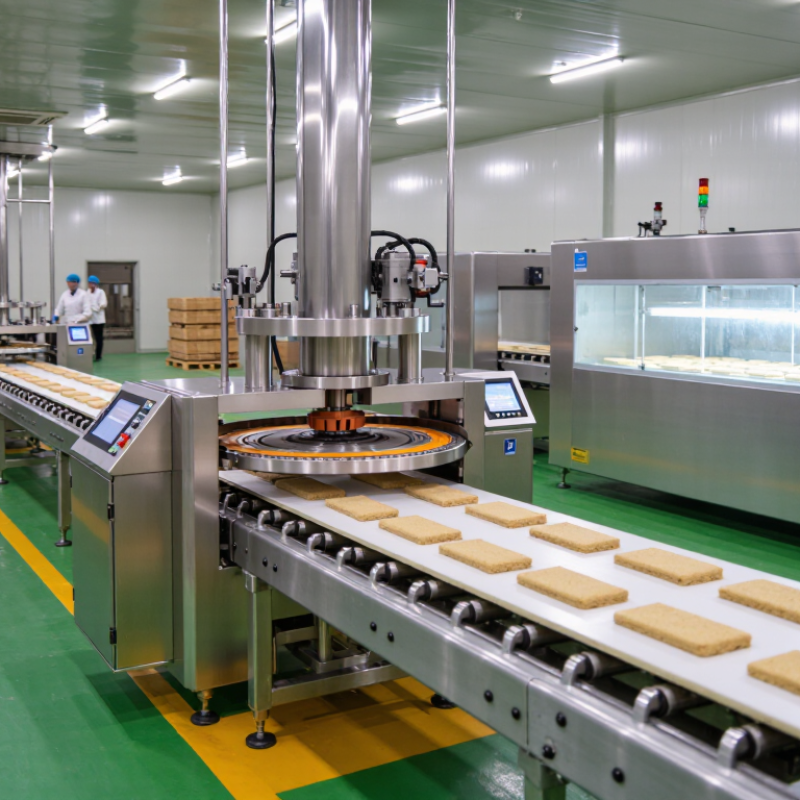
Cereal Bar Cutting Line Manufacturing in China: Industry Overview
China’s cereal bar cutting line industry has grown with demand for nutrition bars, granola snacks, and meal replacements. Manufacturing usually covers slab forming, cooling, longitudinal cutting, cross-cutting, and packaging transfer. Many Chinese suppliers build modular equipment, allowing factories to adjust bar length, thickness, and cutting speed.
A reliable line needs stable servo control and accurate knife positioning. Stainless steel food-contact surfaces support hygiene and easier cleaning. Practical buyers should inspect cooling tunnels, cutter guards, conveyor alignment, and emergency systems.
Production trials matter because sticky syrup, nuts, and uneven grains can affect cutting accuracy. Some machines look efficient during demonstrations, yet real ingredients may behave differently. That detail is often underestimated.
Tips: Ask for sample testing with your recipe. Check hourly output under normal conditions. Review spare-part availability, operator training, and maintenance records. Confirm electrical standards before installation. Do not judge a supplier only by price or catalog speed. A smaller line may perform better when recipe changes are frequent. Supplier claims should be compared with factory data, inspection documents, and customer references. Mistakes can happen, especially during the first commissioning stage, so leave space for adjustment.
How to Evaluate China’s Top Cereal Bar Cutting Line Manufacturers
China Top 10 Cereal Bar Cutting Line Manufacturers
Choosing among China’s top cereal bar cutting line manufacturers requires more than comparing prices. Evaluate each supplier against cutting accuracy, output stability, product flexibility, and maintenance access. A reliable line should handle different bar sizes without frequent blade changes. Check the conveyor design, cooling section, servo control, and waste collection system. Ask for measured production data, not only catalog claims.
Factory experience matters. Request videos of similar cereal bar projects and speak with current users when possible. During a factory audit, inspect weld quality, electrical cabinets, safety guards, and spare-parts storage. Confirm whether engineers provide installation training and remote support. Certifications can support reliability, but they do not replace performance testing. A factory acceptance test should measure speed, weight consistency, cutting edges, and downtime. No evaluation is perfect. Even a strong supplier may underestimate cleaning time.
Tips: Build a scoring sheet before contacting manufacturers. Give separate scores for equipment quality, customization, delivery control, technical support, and total ownership cost. Ask for a sample run using your actual recipe. Observe sticky residues, uneven edges, and rejected bars. These small details often reveal more than polished presentations. Also, leave room for improvement; your initial requirements may change after testing.
Profiles of Ten Leading Chinese Cereal Bar Cutting Line Manufacturers
China Top 10 Cereal Bar Cutting Line Manufacturers
Profiles of ten leading Chinese cereal bar cutting line manufacturers show a market shaped by speed, hygiene, and flexible production. Grand View Research estimates the global cereal bar market will expand at roughly 5% annually through 2030. This growth increases demand for accurate cutting, stable feeding, and quicker product changeovers. PMMI reports that food manufacturers increasingly prioritize automation, sanitation, and reduced material waste. These pressures are visible on Chinese production floors.
The ten leading profiles represent different strengths. One focuses on servo-controlled guillotine cutting for dense bars. Another develops rotary cutting systems for higher output. Several specialize in chocolate-coated products, where temperature control prevents surface cracking. Some suppliers combine slab forming, cooling, cutting, and automatic packing in one line. Others build compact equipment for smaller factories. Stainless-steel frames, tool-free belt removal, and washdown-friendly guards appear frequently. A few manufacturers emphasize vision inspection and automatic rejection. Their practical advantage is easier quality tracking.
Capacity claims need careful review. A line rated at 1,200 cuts per minute may lose output during sticky recipes or frequent size changes. Test samples matter more than catalogue figures. Buyers should request data on cutting accuracy, product loss, sanitation time, and spare-part availability. This is where some profiles remain less convincing. Factory visits and witnessed trials can reveal vibration, crumbs, and uneven bar edges. The best evaluation is not always the fastest one.
Key Technologies and Features of Cereal Bar Cutting Lines
China Top 10 Cereal Bar Cutting Line Manufacturers
Cereal bar cutting lines combine forming, cooling, slicing, and controlled conveying. Their key technology is precise pressure control. This prevents cracking when bars contain nuts, dried fruit, or sticky syrup. Servo-driven rollers can maintain stable thickness across long production runs. Accurate temperature control also matters. A cooling tunnel firms the product before cutting, reducing deformation and blade residue. Some lines use ultrasonic or guillotine cutters for different textures and sizes. The correct choice depends on moisture, density, and recipe viscosity.
Hygienic design should guide every comparison. Food-grade contact surfaces, quick-release guards, and tool-free cleaning reduce production risks. Adjustable cutting speeds help operators manage fragile bars without excessive waste. A reliable control system should record settings and identify sudden changes in weight or shape. In practice, automation is useful, but it cannot replace skilled inspection. No line is perfect. Sticky recipes may still require manual adjustments, especially during seasonal temperature changes. Manufacturers with documented testing, spare-part support, and clear validation procedures deserve closer attention.
Tips: Request sample cutting tests before purchase. Measure edge quality, weight variation, cleaning time, and restart performance. Check whether operators can adjust pressure without complicated software. Ask for food-contact certificates and maintenance records. Small details matter. A quiet conveyor, accessible sensors, and simple blade replacement can save hours each week. Also, test the line with your actual recipe, not a convenient substitute.
Comparing Suppliers by Quality, Capacity, Service, and Cost
China Top 10 Cereal Bar Cutting Line Manufacturers?
Comparing suppliers requires more than checking a machine’s advertised speed. Grand View Research valued the global food processing equipment market at about USD 52.7 billion in 2022, with continued growth expected through 2030. This expansion increases supplier choice, but also creates uneven quality. A reliable cereal bar cutting line should deliver stable dimensions, clean edges, and food-grade stainless-steel contact parts. Ask for recorded cutting accuracy, product trials, and sanitation procedures. Photographs are not enough.
Capacity must match the factory’s real production plan. Compare bars per minute, changeover time, conveyor width, and verified uptime. A line rated at 300 bars per minute may perform differently with sticky syrup or fragile inclusions. Small details matter. PMMI industry reports repeatedly identify labor efficiency and automation as important packaging investment drivers. Therefore, check whether the supplier offers automatic feeding, recipe storage, fault alerts, and simple operator controls.
Service and cost often expose the largest differences. Evaluate installation training, remote diagnostics, spare-part availability, and response times before signing. Request a five-year cost model covering energy, blades, maintenance, waste, and downtime. The lowest quotation can become expensive after one failed sensor or delayed replacement part. I would not trust a ranking based only on price. Supplier comparisons still contain uncertainty, especially when factory acceptance tests use ideal materials. A practical review should include sample production, documented performance data, warranty terms, and at least two customer references.





