


Choosing the right Cell Phone Box Making Machine is a practical decision, not a race for the lowest price. Global buyers must examine production speed, box dimensions, folding accuracy, material compatibility, and after-sales support. A machine may look impressive in a showroom, yet perform differently with rigid paperboard, coated stock, or magnetic closure designs.
Details matter. The best equipment should create clean edges, stable creases, smooth wrapping, and consistent corners during long production runs. Buyers should also review operator training, spare-part availability, electrical requirements, installation guidance, and documented quality controls. These factors often influence real production costs more than the initial quotation.
Experience reveals a common mistake. Many buyers compare machines by output numbers alone. That assumption fails when setup time, rejected boxes, or maintenance delays are ignored. A reliable supplier should provide test samples using the buyer’s actual materials and box structure. Independent inspection can add confidence before shipment. No machine is perfect. Even advanced equipment may need adjustments for unusual paper thicknesses or changing designs. This guide evaluates leading options through measurable performance, practical usability, supplier credibility, and long-term value. It also considers responsible manufacturing expectations and applicable safety requirements in different markets. The goal is not to promote one model blindly, but to help buyers make a clear, evidence-based choice for dependable cellphone packaging production.
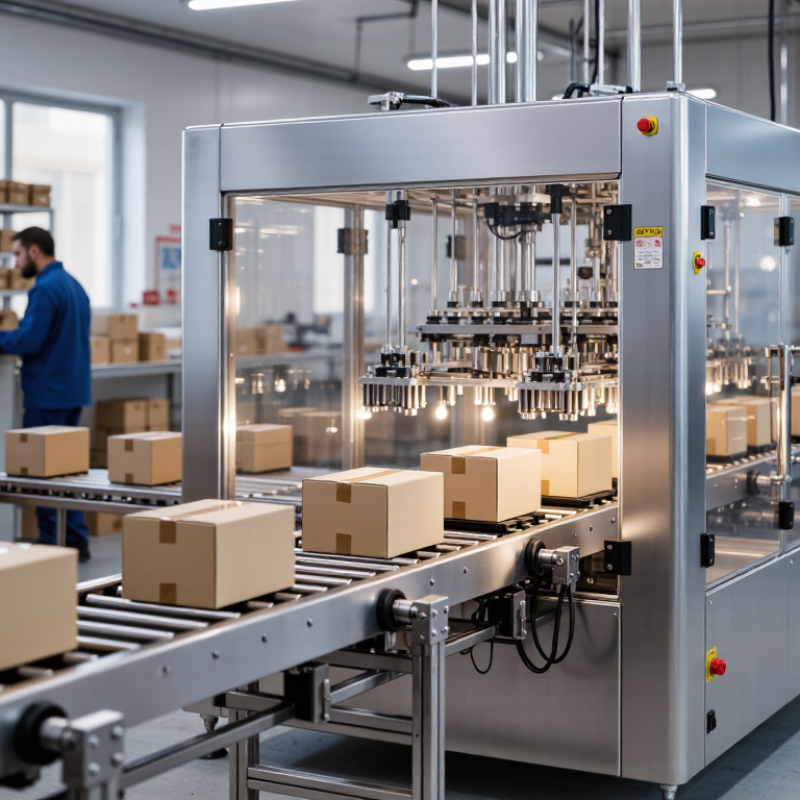
For global buyers, selecting a cell phone box making machine begins with board compatibility, not advertised speed. Rigid board creates firm walls, clean edges, and a premium hand feel. A practical grammage range is 800 to 1,800 gsm, while thickness often sits around 1.2 to 2.5 millimeters. GSM measures weight, not complete strength. Fiber direction, moisture, density, and coating also affect folding and corner quality. Lower grammage can work for lighter accessories, but phone boxes usually need stable compression resistance. Too thin, and edges collapse. Too thick, and tooling may struggle. The machine should offer adjustable feeding, creasing, wrapping, pressing, and corner-forming controls. In production, small changes in glue amount can create visible bulges. That detail is easy to underestimate.
Structural standards start with accurate internal dimensions and consistent squareness. Designers should check lid overlap, insert clearance, wall strength, and base flatness before ordering equipment. Tolerances must match the phone, tray, protective film, and transport conditions. A credible supplier should provide samples, test records, and material specifications for review. Compression and drop testing reveal more than appearance alone. Ask whether the machine handles the selected GSM range consistently during long runs. Recycled board may vary between batches, so automatic calibration is useful, though it cannot replace inspection. A recurring lesson is uncomfortable: a beautiful prototype can hide weak corners. Looks can mislead. Request repeated samples, not one perfect box. Record pressure, temperature, waste rate, and finished-box measurements during the trial.
| Box Type | Typical Board Structure | Typical GSM / Caliper | Common Cell Phone Application | Suitable Machine Functions | Typical Production Considerations | Relevant Structural / Transport References |
|---|---|---|---|---|---|---|
| Rigid Setup Box | Greyboard or chipboard wrapped with printed paper, coated paper, or specialty paper | Approximately 800–1,800 g/m²; commonly about 1.0–2.0 mm board thickness | Premium handset boxes, presentation packaging, and two-piece lid-and-base designs | Board cutting, corner forming, paper wrapping, creasing, box forming, and pressing | Requires accurate corner alignment, controlled glue application, and sufficient pressing time for a clean finish | ISTA 3A or ASTM D4169 may be used for distribution testing; dimensions should follow the approved structural drawing |
| Drawer-Style Rigid Box | Rigid wrapped shell with an inner tray or sliding drawer | Approximately 900–1,800 g/m²; often 1.2–2.0 mm board thickness | Handset-and-accessory sets, gift packaging, and high-end retail presentation | Rigid case making, tray forming, lining, ribbon or pull-tab attachment, and pressing | Clearance between the drawer and shell is critical; excessive glue can affect smooth opening and closing | Use compression, drop, vibration, and edge-impact tests appropriate to the distribution route |
| Folding Carton | Solid bleached board, folding boxboard, or coated paperboard with die-cut and creased panels | Approximately 250–500 g/m²; often 0.35–0.70 mm caliper | Standard retail packs, entry-level devices, and accessory cartons | Sheet feeding, printing, coating, die-cutting, creasing, folding, and gluing | Grain direction, crease quality, board stiffness, and glue-line accuracy influence folding performance | Structural dimensions can be documented using ECMA-style carton drawings; transport performance should be tested for the finished pack |
| Corrugated Mailer Box | Single-wall corrugated board, commonly E-flute or F-flute, with printed liner options | Approximately 300–600 g/m² total paper weight; flute height commonly about 0.6–1.6 mm | E-commerce shipping, direct-to-consumer delivery, and protective outer packaging | Flexographic printing, slotting, die-cutting, creasing, folding, and gluing | Crush resistance, moisture exposure, board direction, and locking-tab strength should be evaluated | ASTM D4169, ISTA 3A, and applicable ISO 12048 compression testing may be considered |
| Paperboard Inner Tray | Folded or molded paperboard insert, sometimes combined with a rigid outer box | Approximately 300–700 g/m², depending on load and forming depth | Phone retention, accessory separation, cable organization, and protection from surface contact | Die-cutting, creasing, folding, partition forming, and adhesive assembly | Internal dimensions must allow for protective clearances without making the package unnecessarily large | Verify fit, retention, vibration resistance, and drop performance with the actual handset and accessories |
| Two-Piece Lid-and-Base Box | Separate rigid lid and base made from wrapped board components | Approximately 900–2,000 g/m²; commonly about 1.2–2.5 mm board thickness | Premium devices, limited-edition packaging, and reusable presentation boxes | Rigid box forming, paper wrapping, corner folding, edge wrapping, and hot or cold pressing | The lid-to-base fit, wall squareness, and corner durability are key quality-control points | Use a documented design tolerance and validate the completed box through stacking and distribution tests |

Top Cell Phone Box Making Machine for Global Buyers?
A reliable cell phone box making machine should control four core processes: die-cutting, folding, gluing, and hot foil. Die-cutting shapes the board with clean edges and accurate corners. A sharp cutting rule reduces crushed fibers and uneven panels. Operators should check pressure after material changes. Small adjustments matter.
Folding units create the box structure without breaking the printed surface. Adjustable guides help different box sizes run smoothly. Folding speed must match board stiffness and crease depth. Gluing requires stable adhesive flow and precise nozzle timing. Too much glue causes swelling, while too little weakens the box. A practical machine should allow easy cleaning and quick setup.
Hot foil adds a metallic logo or fine decorative line. Temperature, pressure, and dwell time need careful control. Excess heat can mark coated paper. Insufficient pressure creates broken foil areas. Production trials should test black, white, recycled, and laminated boards. I have found that a fast machine is not always the best machine. Consistent feeding often matters more than peak speed. No setup is perfect. Dust, humidity, and operator habits can still affect results. Buyers should request sample boxes, process data, safety documentation, and after-sales training before choosing equipment.
For global buyers, a cell phone box making machine should be judged by output and repeatable accuracy. A rated speed of 20–40 boxes per minute supports small and medium production lines. Actual speed depends on board thickness, folding design, adhesive curing, and operator skill. Smithers’ 2024 packaging market analysis values global packaging demand at more than US$1 trillion, showing why stable equipment matters across export markets.
Positioning accuracy of ±0.5 mm is especially important for premium phone boxes. It helps keep printed panels aligned with die-cut edges, magnets, inserts, and folding corners. A half-millimeter error can become visible around a small logo or camera-shaped cutout. PMMI industry reports consistently identify automation, quality control, and flexible changeovers as major packaging investment priorities. Buyers should therefore check servo control, sensor response, and calibration procedures, not only the advertised speed.
Ask for a physical sample test.
A reliable supplier should provide measured results from your board and box structure. Request continuous production data, not one perfect sample. I would also inspect waste rates during speed changes. The ±0.5 mm figure may require clean tooling, stable humidity, and regular maintenance. That detail is easy to overlook. A machine producing 40 boxes per minute but frequent rejects may cost more than a slower, steadier line. Performance needs verification.
Global buyers should treat compliance as a purchasing requirement, not a decorative certificate. CE marking shows that the manufacturer declares conformity with applicable European requirements. It is not a universal quality award. For box-making equipment, buyers should request the EU Declaration of Conformity, risk assessment, technical file summary, and safety test records. ISO 9001 also matters. The ISO Survey 2022 recorded 1,265,216 valid ISO 9001 certificates worldwide, showing its broad role in quality management. Still, certification does not guarantee every machine performs perfectly.
Voltage must match the installation site. Common specifications include 220V single-phase or 380–415V three-phase power at 50Hz or 60Hz. Confirm phase, frequency, current, plug design, and grounding before shipment. IEC 60204-1 provides widely recognized electrical safety guidance for machinery. Emergency stops, guarded moving parts, overload protection, and clear wiring labels should be checked during factory acceptance testing. Small details matter.
Ask for measurable evidence. Request sample boxes, cycle-speed records, reject rates, noise readings, and operator training materials. PMMI industry reports continue to identify automation and labor efficiency as major packaging investment drivers. However, faster production can increase feeding errors and maintenance pressure. I would not approve a machine based on paperwork alone. Inspect the wiring. Test the guards. Leave room for improvement.
Machine selection starts with verified output, not catalogue speed. Smithers’ The Future of Folding Cartons to 2028 forecasts roughly 4% annual market growth. This supports demand for flexible, automated carton production. For 300–600 g/m² board, buyers should test feeding, creasing, folding, and corner accuracy together. A practical trial may target 25–45 boxes per minute. Higher speeds can create glue marks, crushed edges, or uneven lids.
Measure real output after setup waste and changeovers. A machine producing 2,400 boxes per hour may deliver only 1,800 saleable units. PMMI’s 2024 packaging machinery research identifies labor availability as a major automation driver. However, automation does not remove inspection needs. One operator still needs to check board feeding, adhesive temperature, and finished dimensions. Small details matter. Ask for a sample run using your actual 400 g/m² board.
Cost comparison should include tooling, electricity, maintenance, rejected boxes, and operator training. A simple ROI estimate is:
For example, 1,800 saleable boxes hourly, 2,000 hours yearly, and a modest margin can justify automation quickly. Yet this assumption may be too optimistic for seasonal buyers. A slower machine with stable quality can outperform a faster model with frequent adjustments. Request production records, not only promises.


For those larger-sized parts, or smaller quantity runs, we have 2 independent powder coat booths and ovens. The quality, durability and affordability of today’s powder coating finishes make this the process of choice for world-class companies.
Powder coating advantages over other forms of coating are many. Materials used in the Powder coating process can be metals and non-metals that come in a multitude of thicknesses, textures, colors, etc. Another of Powder coating’s biggest advantages over conventional coatings is its ability to create finishes in many different textures. Powder Coating Booths allow us the ability to apply these advantages to large products.
Tri-State Fabricators runs a full-service conveyor line for painting. Wet painting can provide protection or decoration to many different part styles. From start to finish, every project is easier to undergo random and point-based inspection by our skilled painting team.
Advantages to our Wet Paint Line are these lines start with product prep and ends with a thorough inspection of a high quality finished product. Our ability to complete large and small projects with a superior finish and doing so in a timely and economical fashion. This passes along the savings in production to our customers. When powder coating ins not an option, our Wet Paint Line gets the job done right the first time.
When the parts get big and heavy we roll-out our custom paint racks and oversize booth. By utilizing our partnerships with all the major paint brands, we can match virtually any color with wet paint.
The advantages of having access to a Wet Paint Booth are many. Large projects of many different shapes can be loaded into the booth. The Wet Paint Booth offers an environment that is much more controlled than a typical parts painting operation.
Not only are they used because of their controlled environment, but they’re are also advantageous when it comes to applying paint to parts that are needed in industries that require specialty coatings such as medical, aerospace, etc.
Our military forces have some very high standards when it comes to the finish of their vehicles and equipment. From the first pre-treatment step to final coat, it takes a great deal of knowledge and experience to protect the men and women of our armed forces. They deserve only the best, and Tri-State Fabricators provides it.
All of our processes are closely monitored by our staff and management teams. Both of which are highly trained in the processes of metal fabrication and finishing. Tri-State Fabricators’ goal is to always fully satisfy each and every customer, including the military. We will always put a 110% into what we do.
Abrasive media blasting is an excellent way to remove old paint, rust, and increase the paint/powder adhesion. Glass beads produce a much smoother and brighter finish than angular abrasives; leaving the part clean yet without any dimensional change. Chemically inert and environmentally friendly, we can recycle our beads approximately 30 times; making them a more preferred method of metal cleaning or surface finishing.
Advantages to Glass Bead Blasting are many. Glass bead blast media is used when a project is needing rough surfaces need to become smooth for applications of coatings such as paint. It is typically used to clean paint and rust from a product surface without deforming the surface it is being used on. Overall, compared to many other blasting media, Glass Bead Blasting is a very economical choice and those savings are always passed on to our customers.
Tri-State Fabricators utilize a zinc phosphate wash to clean and etch the material to ensure the best paint adhesion possible. The unique design of our 3-stage wash system does the work like a 5-stage. From Cleaning and rinsing to conversion coating and post-treatment, Our Part Washing process is a complete service and works throughout the fabrication service and the finishing service.
Along with the previously mentioned benefits, Curing is a vital chemical reaction that leaves the product finish hard and relatively safe from mild abrasion and aggressive corrosion. This process can be done in more than one way; ambient air-dry or in curing ovens at temps that exceed 240°.
From fixing paint mistakes (someone else’s of course) to simply cleaning our paint line hooks, our burn-off oven is put to good use. After a quick burn-off, a little clean up, and a fresh coat of paint, your parts will look better than new.
Why does our Burn-Off Oven work so well? Because super heating the air around parts turns the materials into ashes. From paint and powder coatings to rubber and machining oils, high temps do the job without degrading the integrity of the part.
Masking is a vital part of producing high quality products. We have die-cut masking patterns to protect machined surfaces as well as a wide range of plugs and caps to protect threaded holes and bolts. We provide permanent and temporary masking.
Masking allows the selected sections of a product to be protected from a fabrication or finishing service. This can be with both chemicals when etching and tapes, paints when only finishing just a section of the product. Masking is great in aiding the customization process of a project.
Screen printing is a photographic process that transfers artwork onto a porous nylon screen which allows colored ink to flow through the screen and be deposited on an aluminum or plastic component. We can generally have just about any design created onto a screen for your parts.
Some of the advantages of Screen Printing are, brand recognition for your business displaying on your products, assembly instructions, product warnings/hazards, etc. Tri-State Fabricators produces Screen Printing of the highest quality so you know it’s durable.
Metal Finishing is the art of treating the exterior portion of product, often metal but can also be made of other materials, so that the surface is clean and free of any debris. Then the process of applying coats or either paint of powder coat takes place. This coating process improves the quality of the product in both appearance and resistance to wear and corrosion.
Tri-State Fabricators, Inc., understands that a project typically isn’t complete until a high-quality finish has been added to your product. This is why our painting and powder coating teams continuously inspect the products throughout the Metal Finishing process.

