China Top Cell Assembly Machine Manufacturers?
China’s battery manufacturing sector includes suppliers of Cell Assembly Machines for cylindrical, prismatic, and pouch-cell production. Their equipment can support winding or stacking, tab welding, sealing, inspection, and line integration. The right choice depends on the cell format, target output, factory layout, and required automation. A polished brochure alone proves little.
This guide examines leading Chinese manufacturers through practical criteria: product range, customization, documented production experience, quality controls, and after-sales support. Buyers should ask for machine specifications, sample test results, installation plans, spare-parts arrangements, and references from comparable projects. If possible, inspect a running line or request a factory acceptance test. Small details matter. A stable weld, repeatable alignment, and clear fault logs can affect yield more than a long feature list.
“Top” is not a fixed ranking. Supplier capabilities, delivery schedules, and service coverage can change, while public information may not reveal every limitation. Treat comparisons as a starting point, not a guarantee. No shortlist is perfect. Some manufacturers may excel at customized lines but offer less accessible overseas support; others may provide standard equipment with shorter lead times. The following overview helps readers compare options carefully, verify claims directly, and match a machine supplier to their production needs.
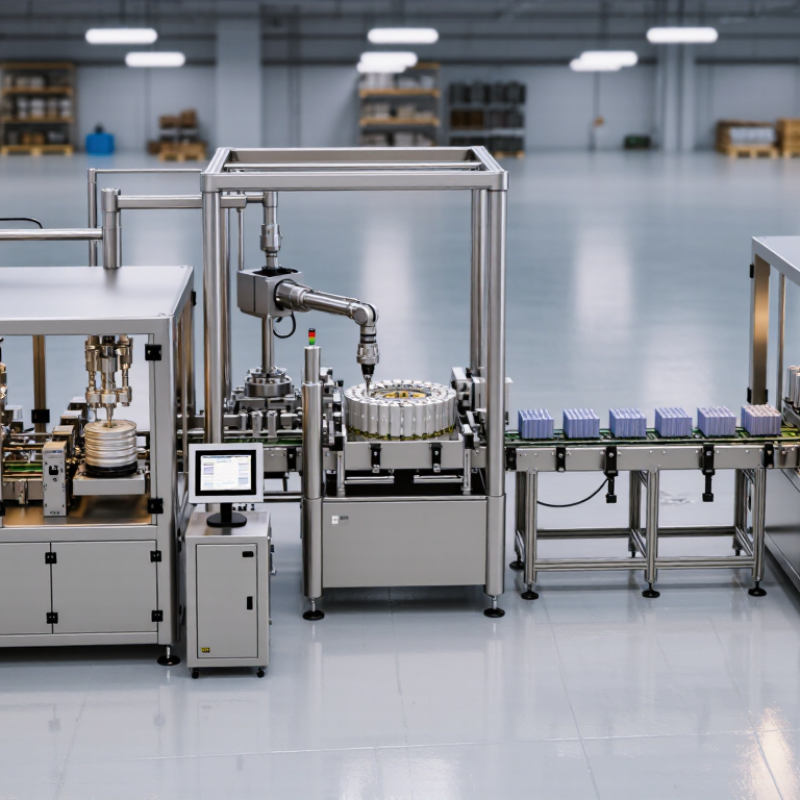
Cell Assembly Machines: Purpose, Main Types, and Production Stages
Cell assembly machines turn prepared electrodes and separators into sealed battery cells. Their purpose is precise, repeatable assembly: layers must stay aligned, tabs must connect reliably, and contamination must be controlled. Small errors matter. The International Energy Agency’s Global EV Outlook 2024 reports that electric-vehicle battery demand reached about 750 GWh in 2023, up roughly 40% from 2022. That growth raises the value of stable production, though demand alone does not guarantee good yields.
Main machine types depend on cell format. Winding equipment rolls electrode-and-separator layers into a compact “jelly roll,” commonly used in cylindrical cells. Stacking equipment places flat layers in sequence, often for pouch and prismatic formats. Lines may also include tab welding, electrolyte filling, sealing, and inspection stations. A clean-looking weld is not always a strong one; process checks still matter.
Production typically moves from electrode preparation to cell assembly, then formation and aging. In assembly, operators or automated systems feed materials, align and join layers, insert them into a casing, add electrolyte, and seal the cell. Formation cycles charge and discharge cells to establish performance, while aging helps reveal defects. These stages sound orderly on paper. Real lines can vary: material tension, humidity, and tiny alignment shifts may affect output, so manufacturers need process data and careful quality checks—not just faster machines.
China’s Cell Assembly Equipment Industry and Its Manufacturing Landscape
China’s cell assembly equipment industry serves manufacturers building cylindrical, prismatic, and pouch cells. Its landscape includes specialized machine shops, automation integrators, and larger production-line contractors. Equipment may cover electrode handling, stacking or winding, tab welding, electrolyte filling, sealing, and inspection. The exact setup depends on cell design and factory capacity. Small details matter.
On a production floor, operators watch alignment cameras, adjust conveyor speeds, and check weld consistency. A slight offset can disrupt downstream sealing or inspection. Many Chinese equipment makers combine mechanical engineering with vision systems and programmable controls. Some offer single machines; others coordinate linked stations and installation support. That range makes supplier comparisons difficult. A polished demonstration does not guarantee stable output during long production runs.
Buyers assessing manufacturers should examine sample results, changeover procedures, spare-part access, and service response times. Ask how the machine handles different cell dimensions and what data it records during operation. Factory visits can reveal practical details, such as cable routing, guarding, and maintenance access. Documentation quality also matters. Capabilities vary, and published specifications may not show every limitation. I would verify performance against the intended materials and process before treating quoted cycle times as dependable.
Leading Chinese Cell Assembly Machine Manufacturers and Their Specialties
Chinese cell assembly machine manufacturers often focus on different stages of battery production. Some build winding or stacking equipment, where precise alignment helps prevent wrinkles and uneven edges. Others specialize in laser or ultrasonic tab welding. A clean weld matters. It can reduce resistance and avoid weak connections during later testing.
For pouch-cell lines, suppliers may offer electrolyte filling, vacuum sealing, and formation systems. Their specialties often include controlling fill volume and keeping moisture exposure low. Cylindrical-cell equipment tends to emphasize electrode insertion, can sealing, and high-speed inspection. Prismatic-cell lines may require more flexible handling because cell dimensions and fixtures vary. These distinctions are useful, but labels alone do not prove a machine will suit a factory.
A practical review should examine sample runs, changeover time, and reject handling. Ask how the system detects a misaligned electrode or an incomplete weld, and request process data from comparable materials. Watch an actual cycle, not only a presentation. Small details count: fixture access, sensor placement, and how quickly operators can clear a jam. Specifications can look neat on paper. In practice, integration with upstream and downstream equipment may be the harder part, and it is easy to underestimate.
Key Technologies and Applications in Modern Cell Assembly Equipment
Modern cell assembly equipment turns coated electrodes into sealed, testable cells. Key operations include electrode stacking or winding, tab welding, electrolyte filling, sealing, and formation. Each step demands precise motion and clean handling. A tiny alignment error can wrinkle a separator or weaken a weld. In practice, stable process control matters as much as headline machine speed.
The International Energy Agency’s Global EV Outlook 2024 estimates that battery manufacturing capacity reached about 2.2 TWh in 2023, while electric-vehicle battery demand exceeded 750 GWh. This gap makes flexible production lines important. Servo-driven handling, machine-vision inspection, and traceable process data help manufacturers manage different cell formats and catch defects earlier. Vacuum filling and controlled formation also influence wetting consistency and cell performance. Still, more automation is not automatically better; poorly tuned inspection can create false rejects and costly stoppages.
Tips: When assessing Chinese equipment suppliers, ask for measured cycle time, changeover time, yield data, and sample-cell results. Check weld strength and fill consistency. A neat factory demo is useful, but sustained production evidence is better.
China Top Cell Assembly Machine Manufacturers? — Key Technologies and Applications in Modern Cell Assembly Equipment
The chart shows a representative order of common cell assembly operations, from electrode stacking or winding through sealing. Actual process routes vary by cell format and equipment design. The numbered values indicate sequence only; they are not measured performance data.
How to Compare Manufacturers, Equipment Capabilities, and Support
China’s cell-assembly equipment market rewards careful comparison, not showroom speed. The IEA’s Global EV Outlook 2024 estimates global battery-cell manufacturing capacity at about 2.2 TWh in 2023, against roughly 750 GWh of electric-vehicle battery demand. McKinsey’s Battery 2030 report projects demand could reach 4.7 TWh by 2030. These figures show a fast-changing market, but they do not prove any individual machine will perform reliably.
Ask suppliers for logged results using a cell format and materials close to yours. Check alignment, weld consistency, sealing quality, inspection accuracy, and rejected-cell rates. Details matter more. Compare the full process scope: stacking or winding, tab welding, assembly, testing, and traceability. Request the acceptance criteria and trial duration; one good sample proves little.
Ask how quickly operators can change recipes when dimensions or materials shift. Support deserves the same scrutiny as machine specifications. Request a written commissioning schedule, operator-training plan, spare-parts list, and response-time commitment. Clarify which faults can be diagnosed remotely and which require an on-site technician.
A recorded production trial beats a polished presentation. Even these checks are imperfect: test conditions rarely capture every shift, material variation, or maintenance delay. Look for service evidence from comparable installations, not just promises.





