


Carbon steel plate remains a practical foundation for bridges, pressure vessels, shipyards, heavy machinery, and energy infrastructure. Its appeal is direct: strength, weldability, availability, and comparatively predictable pricing. Yet choosing among Carbon Steel Plate Manufacturers requires more than comparing annual output or advertised prices.
The World Steel Association reported approximately 1.89 billion tonnes of crude steel production worldwide in 2023. Its 2024 Short Range Outlook also showed how construction demand, manufacturing activity, and regional economic conditions continue shaping steel markets. These figures describe crude steel, not finished plate. That distinction matters. A large producer may not offer the thickness, grade, heat treatment, or certification required for a specific project.
Quality is visible in details. Consider mill certificates, ultrasonic testing, dimensional tolerances, surface condition, and traceability from heat number to shipment. The IEA’s Iron and Steel Technology Roadmap also highlights emissions reduction as a major industry challenge. Production volume alone is no longer enough.
Edwin Basson, Director General of the World Steel Association, has described steel as “essential to modern life.” That observation remains relevant, though it does not answer every purchasing question. Delivery reliability, technical support, and transparent documentation can matter more than a polished ranking.
This guide examines ten leading manufacturers worldwide through those practical measures. The list is informative, not absolute. Regional access, product scope, and changing market conditions may alter the outcome. Readers should verify current certifications, plant capabilities, and commercial terms before making a final decision.
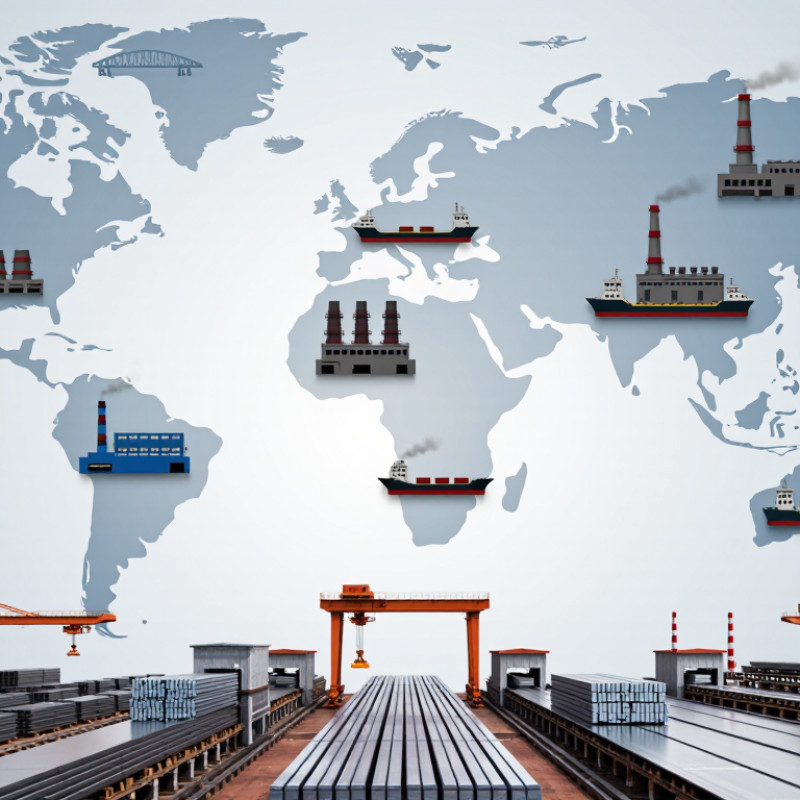
Global steelmaking reached approximately 1.89 billion tonnes in 2023, according to the World Steel Association’s World Steel in Figures 2024. This figure represents crude steel, not carbon steel plate alone. Still, it shows the enormous industrial base supporting plate production, from shipyards to bridges and pressure equipment.
Carbon steel plates begin with slabs, reheating furnaces, and controlled rolling. Their final performance depends on thickness, chemistry, cooling speed, and inspection discipline. The OECD Steel Outlook highlights persistent overcapacity concerns and uneven demand across major markets. That pressure can influence mill utilization, delivery schedules, and export pricing.
Quality is more than a polished certificate. Buyers should review heat numbers, ultrasonic testing records, tensile results, and impact-test temperatures. A plate may look flawless under warehouse lighting. It can still fail a specification review. ASTM, EN, and ISO requirements offer useful frameworks, but documents must match the actual production heat. Traceability matters.
Energy use remains a difficult issue. The International Energy Agency identifies steel as one of the largest industrial sources of carbon dioxide emissions. Cleaner electricity, higher scrap use, and lower-emission production routes may reduce future impacts. Progress is uneven. That deserves scrutiny. For any global manufacturer ranking, output volume alone is an incomplete measure. Consistency, verified data, technical support, and responsible production should carry equal weight.

A credible ranking starts with annual output, but total crude steel is not plate production. The World Steel Association reported 1.892 billion tonnes of global crude steel output in 2023. That figure shows scale, not product specialization. Our ranking therefore weighs published plate capacity, rolling-line size, slab supply, and recent operating data. Capacity should be verified against annual reports, technical disclosures, and shipment records.
Certification adds another practical test. ISO 9001 supports quality control, while ISO 14001 indicates structured environmental management. Product approvals, inspection systems, and traceability matter more for pressure vessels, bridges, and heavy machinery. Global reach is measured through export destinations, port access, regional service centers, and delivery reliability. The OECD’s Steel Market Developments reports continuing worldwide excess capacity, so installed capacity alone can be misleading. Some mills list impressive capacity but operate well below it. That deserves scrutiny.
Tips: Compare saleable plate output, not crude steel output. Check thickness ranges, maximum plate width, and documented delivery performance. Request current mill certificates and third-party audit evidence. World Steel Association data is useful for market context, but it does not replace plant-level verification. A ranking can still contain gaps. Disclosure quality varies, and private production figures are sometimes incomplete. That uncertainty should remain visible rather than hidden behind precise-looking scores.
A credible Top 10 ranking must measure more than advertised capacity. The World Steel Association reported global crude steel production of 1,892 million tonnes in 2023. That figure covers steelmaking, not finished carbon steel plate. The distinction matters. Production scale should combine crude output, plate-line capacity, utilization, and delivery consistency. Public filings and mill certificates provide stronger evidence than promotional claims. Still imperfect. Capacity may remain idle during maintenance or weak demand.
Market coverage requires more than export volume. UN Comtrade records under HS codes 7208, 7209, and 7211 help track relevant flat-rolled steel flows. OECD steel outlooks add useful context on excess capacity and regional demand. A manufacturer serving shipyards in Asia, infrastructure projects in Europe, and machinery buyers in North America shows broader reach. However, trade statistics can mix carbon, alloy, coated, and semi-finished products. Buyers should examine product-level data carefully.
For the ten leading producers, production scale could receive 60% of the score. Market coverage could receive 40%. Scale includes melting capacity, plate throughput, and stable monthly deliveries. Coverage includes regional warehouses, technical support, certifications, and shipment reliability. The weighting remains debatable. A huge mill with inconsistent lead times may support fewer projects than a smaller, responsive producer. Audited quality records and recent shipment histories make the ranking more defensible. Numbers alone can mislead.
| Rank | Anonymized Producer | Parent-Group Crude Steel Output 2023 (Million Tonnes) | Carbon Steel Plate Capability | Estimated Production-Scale Tier | Geographic Market Coverage | Export Market Reach | Typical Plate Product Range |
|---|---|---|---|---|---|---|---|
| 1 | Producer 01 | 130.77 | Integrated flat-steel and heavy-plate operations | Very Large | Domestic, regional, and global | High | Structural, shipbuilding, pressure-vessel, and line-pipe plate |
| 2 | Producer 02 | 68.52 | Multiple flat-steel and plate production sites | Very Large | Europe, North America, South America, and selected Asian markets | High | Structural, automotive-grade, energy, and wear-resistant plate |
| 3 | Producer 03 | 55.89 | Large integrated plate and flat-products capacity | Very Large | Domestic and international markets | High | Shipbuilding, bridges, machinery, and structural plate |
| 4 | Producer 04 | 43.64 | Advanced flat-steel and specialty plate facilities | Large | East Asia, North America, Southeast Asia, and Europe | High | High-strength, construction, energy, and industrial plate |
| 5 | Producer 05 | 41.34 | Integrated steelmaking with broad flat-product capability | Large | Domestic, Asian, Middle Eastern, and African markets | Moderate to High | Structural, pressure-vessel, pipeline, and ship plate |
| 6 | Producer 06 | 40.54 | Large-scale carbon steel and heavy-plate production | Large | Domestic and Asia-Pacific markets | Moderate to High | General engineering, construction, shipbuilding, and machinery plate |
| 7 | Producer 07 | 39.23 | Integrated flat products and project-oriented plate supply | Large | Domestic, Southeast Asian, and selected export markets | Moderate | Construction, infrastructure, machinery, and wear-resistant plate |
| 8 | Producer 08 | 33.65 | Flat-steel, heavy-plate, and engineered steel products | Large | Domestic, Asian, Middle Eastern, and African markets | Moderate to High | Bridge, shipbuilding, pressure-vessel, and structural plate |
| 9 | Producer 09 | 29.48 | Flat-steel and plate production across several regions | Upper-Medium | India, Europe, Southeast Asia, and selected global markets | High | Construction, line-pipe, energy, and industrial plate |
| 10 | Producer 10 | 26.15 | Integrated steelmaking with growing plate capacity | Upper-Medium | India, North America, Europe, and selected export markets | High | Structural, infrastructure, energy, and heavy-engineering plate |
Note: Company identities are intentionally anonymized. The production figures represent publicly reported parent-group crude steel output for 2023 rather than standalone carbon steel plate output, because most manufacturers do not separately disclose plate production volumes. Market-coverage and product-capability categories summarize publicly documented operating footprints and product portfolios.
Regional capability matters when comparing the top 10 Carbon Steel Plate Manufacturers worldwide. Asia often leads in production scale, competitive pricing, and export capacity. Large mills can roll plates from 6 to 300 millimeters thick. Many serve construction, shipbuilding, and heavy machinery markets. However, delivery times may change sharply during port congestion or raw material disruptions.
European producers generally emphasize advanced grades, energy efficiency, and strict traceability. Their documentation often includes heat numbers, impact-test results, and ultrasonic inspection records. This supports demanding infrastructure and pressure equipment projects. Costs are usually higher. Yet buyers may receive stronger technical support and more predictable quality control. The difference is not always clear on paper.
North American manufacturers benefit from regional supply chains and established certification systems. They often compete through reliable delivery, customized dimensions, and close customer service. Emerging steel markets are expanding modern rolling lines and improving laboratory testing. They may offer attractive prices and shorter routes to nearby buyers. Still, buyers should verify production history, inspection independence, and mill certificate accuracy. A low quotation can hide extra testing, inland freight, or import duties. No region wins every category. This comparison also remains imperfect because plant performance changes with investment, energy prices, and local demand. A serious sourcing decision should review recent test reports, plate tolerances, minimum order quantities, and actual shipment records. Small details matter.
A useful review of the top 10 carbon steel plate manufacturers should begin with product data, not production volume. Common grades include ASTM A36 for general fabrication, ASTM A572 for higher-strength structures, and ASTM A516 for pressure vessels. European buyers may specify S235JR, S275JR, or S355JR under EN 10025. JIS SS400 remains common in Asian supply chains.
Thickness ranges often start near 3 mm and extend beyond 200 mm, depending on the mill, grade, and rolling route. Heavy plates may require normalized rolling, quenching and tempering, or controlled cooling. These treatments affect strength, weldability, and impact performance. Standards also define chemistry, tensile properties, bend tests, and dimensional tolerances. Do not trust a range without checking the actual mill certificate.
End-use sectors reveal whether the product data is practical. Shipbuilding needs reliable weldability and impact toughness. Construction projects often prioritize yield strength, flatness, and cutting performance. Energy equipment may require ultrasonic testing, low-temperature impact tests, and strict traceability. A heat number should follow the plate from production to delivery. That detail matters.
A polished comparison table can still mislead. Thickness availability changes with width, order volume, and delivery region. Certificates may meet a standard while missing a project-specific requirement. I would verify the latest test report, inspection level, surface condition, and tolerances before approving any supplier. Small details decide whether a plate performs well in the field.
The chart compares ten widely specified carbon and low-alloy structural or pressure-vessel plate grades used by global producers. Values represent minimum yield strength stated by the relevant specifications; actual thickness availability varies by mill, heat treatment, and certification.
| Grade / Specification | Typical Thickness Range | Primary End-Use Sectors |
|---|---|---|
| ASTM A36 | 6–200 mm | Buildings, bridges, general fabrication, machinery |
| ASTM A572 Grade 50 | 6–150 mm | Structural frames, bridges, transport equipment |
| ASTM A516 Grade 60 | 6–205 mm | Pressure vessels, boilers, storage tanks |
| ASTM A516 Grade 70 | 6–205 mm | Pressure vessels, petrochemical and process equipment |
| EN 10025 S235JR | 3–400 mm | Construction, structural steelwork, general engineering |
| EN 10025 S355JR | 3–400 mm | Heavy construction, bridges, cranes, machinery |
| JIS G3101 SS400 | 6–200 mm | Buildings, industrial equipment, welded structures |
| GB/T 700 Q235B | 4–200 mm | Construction, general fabrication, machinery |
| GB/T 1591 Q355B | 4–200 mm | Bridges, buildings, heavy equipment, transport |
| AS/NZS 3678-250 | 6–200 mm | Structural steelwork, infrastructure, fabrication |
Reference framework: ASTM A36, ASTM A572, ASTM A516, EN 10025, JIS G3101, GB/T 700, GB/T 1591, and AS/NZS 3678. Thickness ranges are representative commercial product ranges rather than universal specification limits.


For those larger-sized parts, or smaller quantity runs, we have 2 independent powder coat booths and ovens. The quality, durability and affordability of today’s powder coating finishes make this the process of choice for world-class companies.
Powder coating advantages over other forms of coating are many. Materials used in the Powder coating process can be metals and non-metals that come in a multitude of thicknesses, textures, colors, etc. Another of Powder coating’s biggest advantages over conventional coatings is its ability to create finishes in many different textures. Powder Coating Booths allow us the ability to apply these advantages to large products.
Tri-State Fabricators runs a full-service conveyor line for painting. Wet painting can provide protection or decoration to many different part styles. From start to finish, every project is easier to undergo random and point-based inspection by our skilled painting team.
Advantages to our Wet Paint Line are these lines start with product prep and ends with a thorough inspection of a high quality finished product. Our ability to complete large and small projects with a superior finish and doing so in a timely and economical fashion. This passes along the savings in production to our customers. When powder coating ins not an option, our Wet Paint Line gets the job done right the first time.
When the parts get big and heavy we roll-out our custom paint racks and oversize booth. By utilizing our partnerships with all the major paint brands, we can match virtually any color with wet paint.
The advantages of having access to a Wet Paint Booth are many. Large projects of many different shapes can be loaded into the booth. The Wet Paint Booth offers an environment that is much more controlled than a typical parts painting operation.
Not only are they used because of their controlled environment, but they’re are also advantageous when it comes to applying paint to parts that are needed in industries that require specialty coatings such as medical, aerospace, etc.
Our military forces have some very high standards when it comes to the finish of their vehicles and equipment. From the first pre-treatment step to final coat, it takes a great deal of knowledge and experience to protect the men and women of our armed forces. They deserve only the best, and Tri-State Fabricators provides it.
All of our processes are closely monitored by our staff and management teams. Both of which are highly trained in the processes of metal fabrication and finishing. Tri-State Fabricators’ goal is to always fully satisfy each and every customer, including the military. We will always put a 110% into what we do.
Abrasive media blasting is an excellent way to remove old paint, rust, and increase the paint/powder adhesion. Glass beads produce a much smoother and brighter finish than angular abrasives; leaving the part clean yet without any dimensional change. Chemically inert and environmentally friendly, we can recycle our beads approximately 30 times; making them a more preferred method of metal cleaning or surface finishing.
Advantages to Glass Bead Blasting are many. Glass bead blast media is used when a project is needing rough surfaces need to become smooth for applications of coatings such as paint. It is typically used to clean paint and rust from a product surface without deforming the surface it is being used on. Overall, compared to many other blasting media, Glass Bead Blasting is a very economical choice and those savings are always passed on to our customers.
Tri-State Fabricators utilize a zinc phosphate wash to clean and etch the material to ensure the best paint adhesion possible. The unique design of our 3-stage wash system does the work like a 5-stage. From Cleaning and rinsing to conversion coating and post-treatment, Our Part Washing process is a complete service and works throughout the fabrication service and the finishing service.
Along with the previously mentioned benefits, Curing is a vital chemical reaction that leaves the product finish hard and relatively safe from mild abrasion and aggressive corrosion. This process can be done in more than one way; ambient air-dry or in curing ovens at temps that exceed 240°.
From fixing paint mistakes (someone else’s of course) to simply cleaning our paint line hooks, our burn-off oven is put to good use. After a quick burn-off, a little clean up, and a fresh coat of paint, your parts will look better than new.
Why does our Burn-Off Oven work so well? Because super heating the air around parts turns the materials into ashes. From paint and powder coatings to rubber and machining oils, high temps do the job without degrading the integrity of the part.
Masking is a vital part of producing high quality products. We have die-cut masking patterns to protect machined surfaces as well as a wide range of plugs and caps to protect threaded holes and bolts. We provide permanent and temporary masking.
Masking allows the selected sections of a product to be protected from a fabrication or finishing service. This can be with both chemicals when etching and tapes, paints when only finishing just a section of the product. Masking is great in aiding the customization process of a project.
Screen printing is a photographic process that transfers artwork onto a porous nylon screen which allows colored ink to flow through the screen and be deposited on an aluminum or plastic component. We can generally have just about any design created onto a screen for your parts.
Some of the advantages of Screen Printing are, brand recognition for your business displaying on your products, assembly instructions, product warnings/hazards, etc. Tri-State Fabricators produces Screen Printing of the highest quality so you know it’s durable.
Metal Finishing is the art of treating the exterior portion of product, often metal but can also be made of other materials, so that the surface is clean and free of any debris. Then the process of applying coats or either paint of powder coat takes place. This coating process improves the quality of the product in both appearance and resistance to wear and corrosion.
Tri-State Fabricators, Inc., understands that a project typically isn’t complete until a high-quality finish has been added to your product. This is why our painting and powder coating teams continuously inspect the products throughout the Metal Finishing process.

