China Best Carbon Film Resistor Suppliers?
Choosing among China’s best Carbon Film Reaistor suppliers requires more than comparing prices. Buyers need evidence of stable resistance values, dependable coating quality, and consistent production controls. A supplier may show a polished website, yet factory capability matters more.
Felix Zandman, founder of Vishay Intertechnology, reportedly observed, “Precision begins with controlling the smallest details.” This principle fits carbon film resistor sourcing. Small variations in carbon composition can affect tolerance, temperature performance, and long-term reliability. Experienced buyers should request datasheets, inspection records, sample batches, and clear failure-rate information.
Look closely.
Reliable Chinese suppliers usually explain their manufacturing process without vague promises. They can discuss resistance ranges, tolerance grades, voltage ratings, temperature coefficients, and flame-retardant coatings. They should also provide traceable quality documents and respond clearly to technical questions. Independent testing can strengthen confidence, especially for automotive, industrial, and power-control applications.
However, no supplier is perfect. Samples may perform well while later batches show variation. This risk deserves attention. A practical evaluation should compare several samples under heat, vibration, humidity, and continuous load. Packaging also matters. Moisture-damaged leads or poorly protected components can create problems before assembly begins.
This guide will examine China’s leading Carbon Film Reaistor suppliers through product consistency, certifications, customization ability, delivery capacity, and customer support. The ranking may not fit every project. A low-cost supplier could suit basic circuits, while demanding applications need stronger documentation and process discipline. Supplier claims should be verified, not simply repeated.
Carbon Film Resistors: Structure, Materials, and Operating Principles
Carbon Film Resistors: Structure, Materials, and Operating Principles
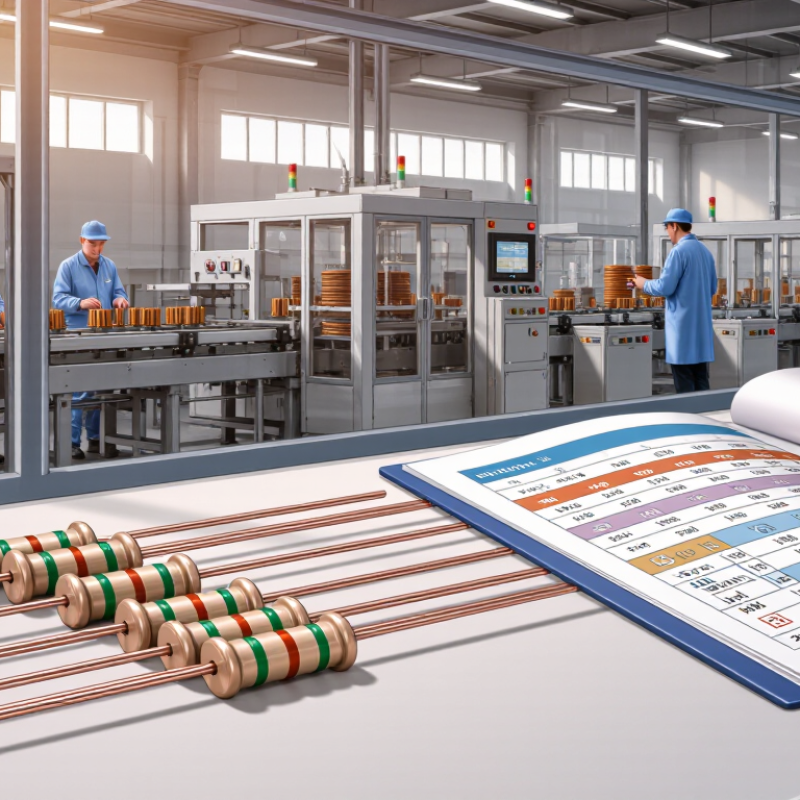
When evaluating carbon film resistor suppliers in China, engineers should examine construction details, not only quoted prices. A typical resistor uses a ceramic rod as its stable mechanical base. A thin carbon layer covers the rod. Metal end caps connect the film to copper or tinned leads. An insulating coating protects the surface from moisture, dust, and handling damage.
The resistance value depends on the carbon film’s thickness, length, and electrical path. Manufacturers often cut a fine spiral groove into the film. This groove lengthens the current path and allows accurate adjustment. During operation, electrons move through the resistive carbon layer, producing heat as electrical energy is dissipated. The power rating shows how much heat the resistor can release under specified conditions. It is not a permanent guarantee.
Practical testing should include resistance, insulation, coating quality, and temperature behavior. I would also inspect the groove under magnification, because uneven cutting may create unstable readings. Carbon film resistors usually provide useful general-purpose performance, but they may show more noise or drift than precision alternatives. High humidity, repeated pulses, and operation near the power limit can shorten service life. A conservative design leaves thermal margin. Even then, measurement errors can occur, especially when test leads, contact pressure, or temperature are ignored. Supplier documentation should state tolerance, temperature coefficient, maximum working voltage, and applicable test conditions.
Carbon Film Resistors: Structure, Materials, and Operating Principles
Carbon film resistors use a thin carbon-based film deposited on a cylindrical ceramic core. Their resistance follows Ohm’s law: V = I × R. The chart shows the ideal voltage-current relationship for a 1 kΩ carbon film resistor.
Typical construction: ceramic substrate, carbon film resistive element, spiral trimming cut, protective coating, and metal leads. A 1 kΩ resistor carries 1 mA at 1 V and dissipates 1 mW under these conditions.
China’s Carbon Film Resistor Supplier Landscape
China’s carbon film resistor supplier landscape includes factories, trading companies, and specialized component distributors. Their capabilities can differ sharply, even when product descriptions appear similar. Experienced buyers usually inspect resistance range, tolerance, temperature coefficient, voltage rating, and pulse performance before comparing prices.
A reliable supplier should provide clear datasheets, traceable production records, and consistent sample results. Ask for samples from several resistance values, such as 100 ohms, 10 kilohms, and 1 megohm. Tolerance matters. Measure them after storage, soldering, and moderate thermal cycling. A resistor that meets its initial value may drift during actual assembly.
Manufacturing details also deserve attention. Check lead welding, coating uniformity, color-band readability, packaging moisture control, and inspection frequency. Suppliers serving export markets should explain their quality procedures and documentation without vague promises. Factory visits or live production reviews can reveal whether testing is systematic or mostly manual.
Price is useful, but it should not lead the decision. A low quotation may reflect weaker coating, unstable raw materials, or limited testing. My own assessment would keep a written comparison table, because informal impressions fade quickly. No supplier is perfect. Even strong factories may show variation between batches, so an incoming inspection plan remains necessary. Availability can also change during peak production periods, requiring earlier forecasts and practical communication.
Comparing Supplier Capabilities, Quality, and Customization Options
Choosing the best carbon film resistor supplier requires more than comparing catalog prices. Supplier capability appears in process control, engineering support, and response speed. Ask for production capacity, minimum order quantities, lead times, and sample policies. A reliable supplier should explain film deposition, trimming, coating, and final inspection in clear terms.
Quality comparisons need measurable evidence. Request resistance tolerance, temperature coefficient, rated voltage, power derating curves, and long-term stability data. Check whether each batch includes traceable test records. Independent testing can confirm noise levels and moisture resistance. Look closely at the coating. Uneven surfaces, weak markings, or bent leads may indicate careless handling.
Customization is often the real separator. Strong engineering teams can adjust resistance values, lead length, forming shapes, packaging, and labeling to match a circuit assembly. They should review drawings before sampling and identify tolerance conflicts early. Ask how they manage engineering changes and failed samples. Small details matter.
Do not trust promises alone.
A common mistake is selecting a supplier with attractive samples but weak volume controls. Sample approval proves little if later batches vary. Another imperfect point is cost comparison. A lower unit price may hide extra inspection, slower delivery, or higher rejection rates. A practical evaluation should compare quality records, customization depth, communication, and total production risk together.
How to Select the Best Supplier for Your Application
Selecting a carbon film resistor supplier for your application requires more than comparing prices. Start with the circuit’s resistance range, tolerance, power rating, voltage, and operating temperature. A supplier should explain how its products handle humidity, vibration, and repeated thermal cycling.
Ask for samples from the same production process used for regular orders. Test them at room temperature, then near the highest expected temperature. Measure resistance before and after soldering. Small changes matter. Request recent inspection records, material specifications, and traceability for each batch. Clear documentation shows practical control, not just confident sales language.
For China-based sourcing, review the supplier’s production capacity and communication habits. Can engineers answer technical questions directly? Are delivery dates supported by realistic capacity? Check packaging carefully, especially for reels exposed to moisture during transport. I once treated a low price as a strong advantage; later, unstable tolerance created extra testing work. That decision was avoidable. A trial order can reveal weak labeling, inconsistent samples, or slow corrective action before volume purchasing. Confirm the resistance tolerance and temperature coefficient on the purchase documents, not only in a quotation. Keep one approved sample for comparison. Small details protect the application.





