Who Are the Top Car Garage Lift Manufacturers in China?
A Car Garage Lift is more than a steel platform and a hydraulic pump. In a workshop, it must raise vehicles steadily, leave room for safe access, and withstand repeated daily use. For buyers, choosing a manufacturer means looking beyond a low quote or a polished product photo. Details matter.
China has a broad manufacturing base for automotive service equipment, but “top” depends on the job. A small repair shop may prioritize a compact two-post lift, while a vehicle inspection center may need different capacity and platform dimensions. Not just price. Buyers should check rated load, lift height, locking mechanisms, materials, installation guidance, and the availability of spare parts. Ask for clear specifications and relevant quality documentation, then confirm that the offered model suits the vehicles and floor conditions at your site. A factory visit or a live product demonstration can reveal practical details that a catalog misses, such as weld finish, control layout, and lowering behavior.
This guide explores how to identify leading Chinese car garage lift manufacturers and compare them on useful, verifiable criteria. It considers product range, production experience, customization, communication, and after-sales support. These factors can help narrow a shortlist, but they do not guarantee a perfect purchase. Even a reputable supplier may not fit every project, and I would treat unusually broad claims with care. The right choice is the one whose specifications, documentation, and support match your actual operating needs.
What Are Car Garage Lifts and How Are They Used?
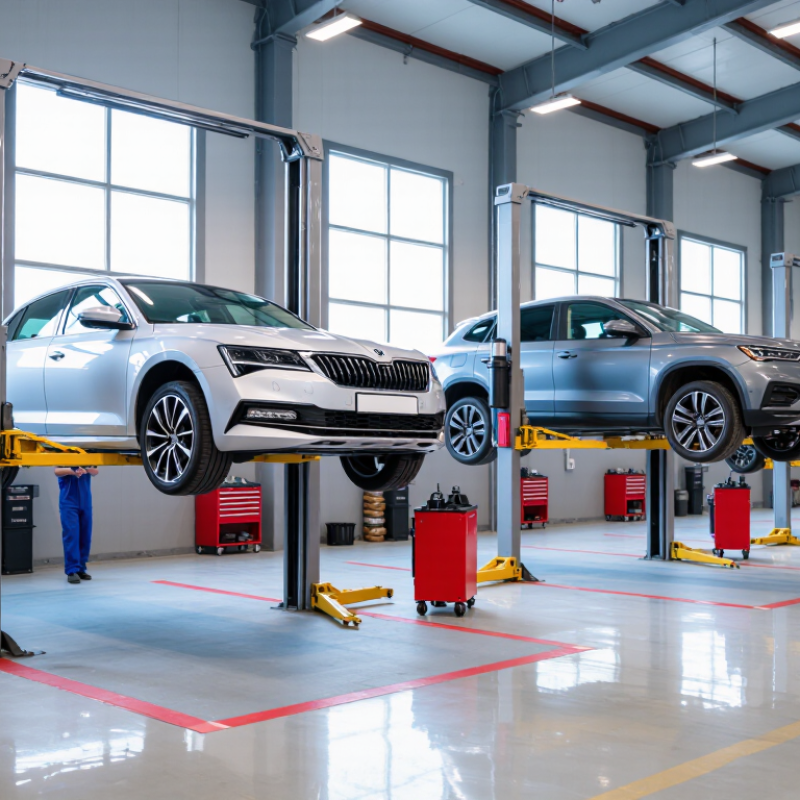
A car garage lift is equipment that raises a vehicle to create working or storage space beneath it. Depending on its design, it may lift a car by the wheels, frame, or designated lifting points. Two-post lifts are common in repair shops, while four-post models can suit vehicle storage and some maintenance tasks. Scissor lifts offer a compact footprint, though access underneath can vary. The details matter.
In everyday garage work, the operator parks the vehicle in the marked position, checks its balance, and raises it gradually. Lift arms or runways must contact the vehicle only at approved points. Before going underneath, confirm that the safety locks have engaged. A lift’s rated capacity is not the only consideration; vehicle weight distribution, ceiling height, floor condition, and available clearance also affect suitability. Keep the area clear, and never rely on hydraulic pressure alone to support a raised vehicle.
For a home garage, a lift can free floor space or make inspections easier, but it is not automatically a space-saving solution. Measure the vehicle, ceiling, and approach path before choosing equipment. Installation and routine inspections should follow the lift maker’s instructions and be handled by qualified professionals when required. A small misalignment can create problems. That part is easy to underestimate. A lift works best when its capacity, layout, and intended use all match the garage.
Car Garage Lifts: Typical Rated Capacity by Lift Type
Garage lifts raise vehicles for servicing, inspections, repairs, or storage. The chart shows representative rated capacities commonly available for each lift type, not manufacturer-specific data. Actual ratings vary by model, and a lift must be selected and used according to its specifications and installation requirements.
How Are Chinese Garage Lift Manufacturers Evaluated?
Chinese garage lift manufacturers should be evaluated on more than price or catalogue photos. Start with the lift’s rated capacity, platform dimensions, and intended vehicle types. Ask how the structure was tested under load, and request dated test records. A useful factory review also checks weld consistency, steel thickness, and the finish around joints. Small details matter.
Safety deserves close attention.
Inspect mechanical locks, emergency lowering controls, and hose routing for clear access and protection. Ask whether each unit receives a functional test before shipment, and what that test records. Clear manuals, wiring diagrams, and maintenance schedules help technicians install and service equipment correctly. Claims are not evidence.
Manufacturing consistency is another key measure. Review production checks, component traceability, and how rejected parts are handled. Then assess spare-part availability, response times, and technical support in your region. A video call can show the assembly floor, but it cannot replace an independent inspection or a careful document review. No checklist is perfect. Some buyers focus too heavily on price and overlook installation conditions, floor strength, or ceiling clearance. A reliable comparison weighs these practical factors alongside verified performance, warranty terms, and the supplier’s ability to answer specific technical questions.
Which Companies Lead China’s Car Garage Lift Industry?
China’s leading car-garage-lift manufacturers are best judged by engineering consistency, verified production capacity, and after-sales support—not by export claims alone. The China Association of Automobile Manufacturers reported 31.282 million vehicles produced in 2024, a large installed base for maintenance equipment. That figure signals demand, not lift-market share. Public, independently audited rankings of Chinese lift manufacturers are limited, so naming a definitive market leader would overstate the available evidence.
In practice, stronger suppliers can document rated capacity, platform dimensions, safety-lock performance, and repeat-cycle testing. Ask for test records and inspect welds, hydraulic fittings, and the control cabinet. A smooth showroom demonstration is not enough. Installation guidance and spare-parts availability also matter, especially for workshops outside major cities. Export volume can indicate experience, but it does not prove that a lift suits a particular floor, vehicle mix, or daily workload. Even capable factories may vary between production batches; buyers should verify the delivered unit.
Tips: Match lift capacity to the heaviest vehicle you service, then check ceiling height and floor condition before ordering. Request the manual, inspection records, and a written maintenance schedule.
What Lift Types and Features Do These Manufacturers Offer?
Car garage lift manufacturers in China commonly offer two-post, four-post, scissor, and mobile-column lifts. Each design suits a different workshop layout. Two-post lifts leave the wheels accessible for brake and suspension work, but require suitable floor conditions and careful vehicle positioning. Four-post models support the tires and can simplify storage or alignment tasks. They take up more floor space. Space is finite.
Scissor lifts range from compact, low-rise units to full-height systems. Low-rise versions can help with tire changes and inspections when ceiling height is limited. Full-height models provide better underbody access, though their platforms may restrict access to some vehicle components. Mobile-column lifts are useful for fleets with heavy vehicles; technicians can move the columns between bays. That flexibility adds setup steps.
Useful features include mechanical safety locks, synchronized lifting, adjustable arms, and clear load ratings. Check that the rated capacity matches the vehicles you actually service, not just the heaviest one listed in a brochure. Ask about power requirements, minimum ceiling height, installation support, spare parts, and maintenance instructions. Details matter. A lift that fits the budget but blocks a doorway or complicates daily checks may be a poor choice. Specifications alone do not tell the whole story, so verify the manual and site requirements before selecting a model.
Who Are the Top Car Garage Lift Manufacturers in China? - What Lift Types and Features Do These Manufacturers Offer?
Rather than assigning an unsupported company ranking, this table summarizes common car-lift types and features offered by established manufacturers in China. Specifications are typical market ranges; confirm the capacity and safety configuration of each model with its manufacturer.
| Lift Type | Typical Rated Capacity | Common Drive and Configuration | Typical Features | Common Applications |
| Two-post lift | About 3–5 tonnes | Usually hydraulic; symmetrical or asymmetrical arms; clear-floor or floor-plate design | Adjustable arms and pads, automatic arm restraints, mechanical safety locks, and synchronized lifting on many models | General repair, inspection, and underbody service in automotive workshops |
| Four-post lift | About 3–6 tonnes for many service models | Hydraulic platform lift with four runways; optional rolling jacks on some models | Runway-style support, mechanical lock positions, drive-on access, and optional wheel-free lifting equipment | Wheel alignment, vehicle storage, inspections, and service work requiring stable runway support |
| Scissor lift | About 2.5–5 tonnes, depending on design | Hydraulic scissor mechanism; low-rise, mid-rise, and full-rise versions | Compact footprint, platform supports, mechanical safety locks, and optional recessed installation or alignment turntables | Tire, brake, and general service work where space or unobstructed access is important |
| In-ground lift | Commonly around 3–5 tonnes per lift unit | Hydraulic cylinders installed below floor level; configurations vary by number of plungers and support arms | Clear floor when lowered, concealed lifting components, and safety controls designed for the selected installation | Professional workshops seeking a clear work area; installation requires suitable civil works and maintenance access |
| Parking lift / vehicle stacker | Often about 2–2.5 tonnes per platform; model limits vary | Typically hydraulic, with a raised platform for vertically stacking vehicles | Mechanical locking positions, platform stops, and controlled lowering; site layout and vehicle dimensions must be checked | Residential garages, parking facilities, and locations where additional parking capacity is needed |
Selection note: Compare rated capacity, lifting height, platform or arm dimensions, power supply, safety-lock design, installation requirements, applicable certification, warranty, and after-sales support. A lift should be selected and installed according to its documentation and the vehicle and site requirements.
How Do Safety Standards and After-Sales Services Compare?
When comparing Chinese car garage lift manufacturers, safety claims need more than a certificate image. Ask which standards apply to the lift type and destination market. For vehicle lifts, documentation may reference EN 1493 or applicable local requirements. Check that the model number matches the certificate. It matters.
Inspect the details that affect daily use: rated capacity, mechanical locking positions, cable or hydraulic protection, and emergency lowering instructions. Request load-test records and installation guidance. A clear manual should explain inspection intervals and safe operating steps. Paperwork can look tidy; it cannot prove an installation was done correctly. That distinction is easy to miss. Ask who trains installers, and how faults should be reported.
After-sales support can separate otherwise similar suppliers. Compare written warranty terms, spare-parts availability, and response times for technical questions. Ask whether common items, such as seals, cables, or control switches, can be identified by part number. A low purchase price may mean little if a small component keeps a lift idle for weeks. Get service commitments in writing, including what the warranty excludes. One uncertainty remains: promised support is not the same as support tested under pressure. A practical check is to send a technical question before ordering and judge the clarity of the reply.





