


10 Best Capacitive Switch Suppliers for Global Buyers?

Choosing the right Capacitive Switch supplier requires more than comparing unit prices. Global buyers must examine sensing stability, surface durability, customization depth, and long-term support. A switch may look flawless under showroom lighting, yet fail beside a motor, freezer, or industrial washdown line.

Industry data supports this careful approach. Grand View Research projects continued expansion in the global touch sensor market, driven by smart appliances, automotive controls, medical equipment, and industrial interfaces. MarketsandMarkets also identifies rising demand for touch-based human-machine interfaces across consumer and commercial applications. These reports describe broader touch technologies, not every Capacitive Switch application. That limitation matters.

“The most profound technologies are those that disappear,” wrote Mark Weiser, a respected computer scientist and ubiquitous-computing pioneer. His observation fits modern switch design: users expect immediate response without seeing mechanical complexity. A reliable panel should respond through glass, gloves, or a thin overlay, while resisting moisture, fingerprints, and repeated cleaning.

This guide evaluates ten leading Capacitive Switch suppliers for international buyers. It considers sensing accuracy, IP protection, EMC performance, operating temperature, tactile feedback, production consistency, certification support, and after-sales communication. Suppliers with transparent test evidence deserve greater confidence than those offering attractive samples alone. Look closely.

The ranking is not perfect. Regional pricing, minimum order quantities, tooling ownership, and delivery conditions can change the final decision. Buyers should request samples, inspection records, and application-specific validation before approving production. A bright panel is useful. A dependable one is better.
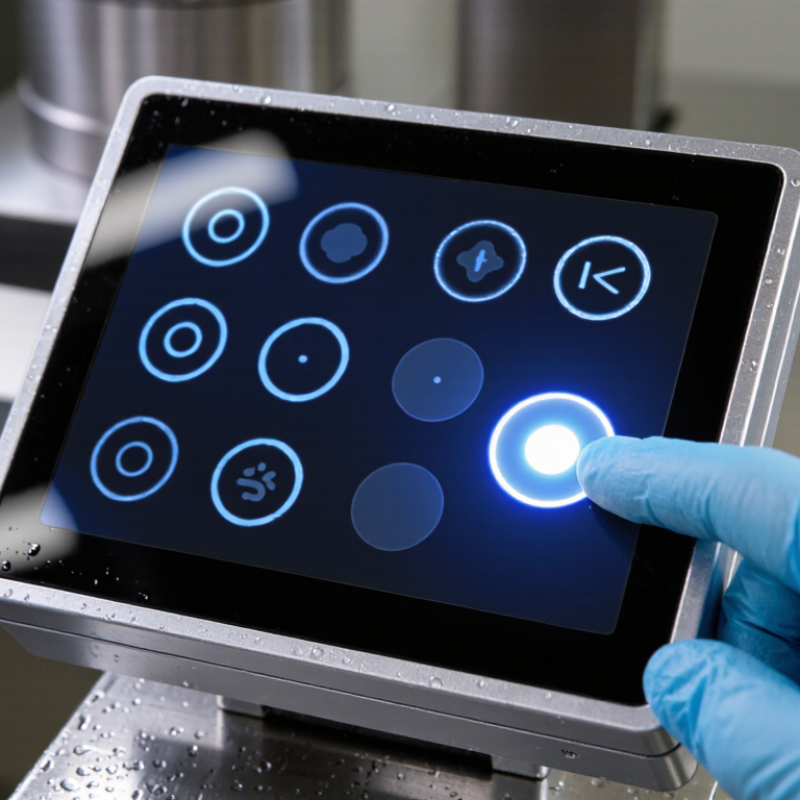
10 Best Capacitive Switch Suppliers for Global Buyers?

Capacitive Switches: Definition, Operating Principles, and Key Applications

Capacitive switches detect changes in an electric field rather than physical movement. A finger changes the sensor’s capacitance when it approaches the electrode. The controller measures that change and triggers a command. No moving contact exists. This design supports slim panels, sealed surfaces, and quiet operation.

According to MarketsandMarkets’ 2023 Capacitive Sensors report, the market was valued at about USD 31.8 billion and may reach USD 48.0 billion by 2028. That growth reflects demand across consumer electronics, vehicles, appliances, medical devices, and industrial controls. A switch may sit behind glass, plastic, or coated panels. Backlighting can also show status clearly in dark equipment rooms. Small details matter.

Engineering evaluations commonly test moisture, gloves, electromagnetic noise, temperature, and accidental touches. Poor grounding can cause unstable sensitivity. Thick overlays may reduce detection distance. These limitations deserve attention before supplier comparison. In medical or industrial settings, designers often add visual feedback and a deliberate activation threshold. Capacitive switches are durable, but not automatically reliable. The market figures are useful directionally, yet they combine different sensor types and application categories. That makes direct switch demand harder to measure precisely.

10 Best Capacitive Switch Suppliers for Global Buyers? - Capacitive Switches: Definition, Operating Principles, and Key Applications

Rank Supplier Profile Typical Product Focus Operating Principle Typical Supply Voltage Typical Operating Temperature Common Protection Level Key Applications Recommended Buyer Evaluation Criteria
1 Industrial Control Supplier Panel-mounted capacitive push buttons, machine-interface switches, and metal-faceplate controls Change in capacitance caused by finger proximity or touch 5–24 V DC −20°C to +70°C IP65–IP69K options Factory automation, control cabinets, packaging equipment, and process machinery Glove sensitivity, false-trigger resistance, panel thickness, EMC performance, and cleaning requirements
2 Medical Interface Supplier Sealed touch controls, membrane-integrated capacitive panels, and low-force user interfaces Electrode sensing with electronic threshold detection 3.3–12 V DC 0°C to +50°C IP54–IP67 options Patient monitors, laboratory instruments, diagnostic equipment, and therapy devices Disinfection compatibility, tactile feedback, leakage-current design, traceability, and compliance documentation
3 Automotive HMI Supplier Backlit capacitive controls, steering-wheel touch interfaces, and center-console switches Touch-induced capacitance variation interpreted by a controller 5–16 V DC −40°C to +85°C Automotive environmental sealing Vehicle infotainment, climate controls, interior lighting, and driver-information systems Temperature cycling, vibration, moisture resistance, optical uniformity, and automotive EMC testing
4 Consumer Electronics Supplier Compact touch keys, capacitive sliders, touch wheels, and illuminated control panels Self-capacitance or mutual-capacitance sensing 1.8–5 V DC 0°C to +60°C Front-surface splash resistance Home appliances, audio equipment, personal electronics, and smart-home controls Low power consumption, response time, aesthetic finish, tooling cost, and high-volume consistency
5 Commercial Appliance Supplier Glass-panel touch switches, appliance control overlays, and capacitive selection keys Finger-contact detection through a nonconductive overlay 5–12 V DC 0°C to +70°C IPX4–IPX6 front-panel options Cooking equipment, beverage machines, laundry equipment, and commercial kitchen systems Heat resistance, grease and detergent compatibility, wet-finger operation, and graphic durability
6 Outdoor Equipment Supplier Weather-resistant capacitive buttons, access controls, and vandal-resistant touch panels Capacitance shift detected through a sealed front surface 9–24 V DC −30°C to +70°C IP65–IP69K options Parking terminals, kiosks, access gates, charging stations, and outdoor payment equipment UV resistance, condensation tolerance, vandal resistance, temperature range, and long-term switch-life testing
7 Marine and Transport Supplier Sealed touch panels, bridge controls, cabin interfaces, and transport equipment switches Electronic detection of touch through coated glass, plastic, or laminate 9–32 V DC −25°C to +70°C IP65–IP67 options Marine consoles, rail interiors, fleet equipment, navigation interfaces, and passenger systems Salt-fog resistance, vibration endurance, ingress protection, emergency-use feedback, and serviceability
8 Security and Access-Control Supplier Capacitive entry keys, touch-to-exit controls, and illuminated access panels Touch detection combined with controller-based debounce and filtering 5–24 V DC −20°C to +60°C IP54–IP67 options Door entry systems, elevator panels, security gates, intercoms, and building automation Tamper resistance, standby power, backlight visibility, electromagnetic immunity, and auditability
9 Lighting and Building-Automation Supplier Wall touch switches, dimming controls, scene selectors, and occupancy-related interfaces Capacitive touch sensing with digital or analog control output 5–24 V DC; mains interface via approved electronics 0°C to +50°C IP20–IP44 typical; higher options available Residential lighting, hotel rooms, offices, conference spaces, and smart-building systems Electrical safety, compatibility with wall materials, dimming protocol, standby consumption, and installation method
10 Custom OEM/ODM Interface Supplier Application-specific capacitive switches, printed electrodes, custom overlays, and integrated assemblies Self-capacitance, mutual-capacitance, or proximity sensing selected for the design 1.8–24 V DC Project-specific; commonly −20°C to +70°C Project-specific IP rating Specialized instruments, industrial equipment, branded control panels, and low-to-high volume products Engineering support, prototype capability, tooling ownership, validation testing, minimum order quantity, and supply continuity

Note: Values shown are typical design ranges or commonly specified options, not guaranteed specifications. Final performance depends on electrode geometry, overlay material and thickness, controller design, grounding, environmental conditions, and required certification.


How to Evaluate Capacitive Switch Suppliers for Global Procurement

Choosing among the 10 best capacitive switch suppliers requires more than comparing prices. Global buyers should examine technical experience, production consistency, and communication quality. Ask for drawings, material specifications, circuit details, and test records. A reliable supplier should explain sensitivity, operating temperature, surface durability, and expected service life clearly.

Request samples from the same production process, not specially prepared prototypes. Test them with gloves, moisture, different touch pressures, and repeated activation. Check adhesive strength and backlight uniformity. Small details matter. Review quality controls, inspection points, traceability, and corrective action procedures. Delivery history also deserves attention, especially for custom designs and replacement orders. A polished website proves little.

Tips: Build a weighted supplier scorecard before requesting quotations. Include quality, engineering support, lead time, communication, packaging, and total cost. Confirm how design changes are approved and documented. Ask whether the supplier can provide inspection reports for each batch. I once saw a low-cost sample pass basic testing but fail after humidity exposure; that mistake changed the evaluation process. Do not rely on one successful sample. Supplier performance can vary between development and mass production. Regular audits may feel slow, but skipping them can create expensive delays.

Profiles of the 10 Best Capacitive Switch Suppliers Worldwide

Selecting the right capacitive switch supplier requires more than comparing catalog prices. The strongest global suppliers combine stable sensing performance, clear documentation, and practical engineering support. A German industrial supplier is known for precise panels and strong environmental testing. A Japanese manufacturer focuses on compact switches for medical and laboratory equipment. A Taiwanese supplier offers flexible custom layouts and competitive production volumes. A South Korean supplier develops responsive interfaces for appliances and control cabinets. A United States supplier supports rapid prototyping and short design reviews. A Chinese supplier provides broad customization, including backlighting, icons, and connector options. A Swiss supplier emphasizes cleanroom-compatible materials and strict traceability. An Italian supplier serves automation projects with durable front panels and tactile feedback. A British supplier helps buyers integrate switches into transport and energy equipment. A Canadian supplier is valued for low-volume development and responsive technical communication.

Experienced buyers should request sample units before approving mass production. Check activation force, response consistency, operating temperature, surface wear, and resistance to moisture. Ask for drawings, inspection records, and material specifications. Good suppliers explain failure limits instead of promising perfection. That matters.

Some suppliers excel at engineering but struggle with delivery speed. Others offer fast production but limited customization. This is where a careful comparison becomes necessary. Review warranty terms, revision control, packaging quality, and after-sales response times. A supplier with slightly higher pricing may reduce costly redesigns. Still, no profile replaces application testing. A switch that performs well in a showroom may react poorly with gloves, condensation, or heavy electrical noise. Supplier quality is important, but system conditions matter just as much.

Comparing Product Quality, Customization, Pricing, and Certifications

Global buyers should compare capacitive switch suppliers through measurable evidence, not attractive catalog images. Fortune Business Insights estimated the global capacitive touch sensor market at about USD 7.5 billion in 2023, with double-digit growth expected through 2030. Definitions differ across reports, so treat forecasts as direction, not certainty. Ask each supplier for verified sensitivity data, response time, operating temperature, and failure rates.

Customization affects both performance and price. Request samples with your actual glass thickness, glove type, backlight color, and mounting method. A reliable supplier should explain electrode layout, controller selection, adhesive durability, and tooling charges. Compare total cost, including prototypes, molds, firmware changes, packaging, and replacement units. The cheapest quote can still be wrong. A 2024 industry analysis from MarketsandMarkets also identifies automotive, appliances, and industrial controls as major growth areas, where stable production matters more than a low first order.

Certification needs careful checking. ISO 9001 supports process consistency, but it does not certify switch safety. Review test records against IEC 61058 for switches, IEC 60529 for ingress protection, and applicable RoHS and REACH requirements. Ask for laboratory reports, material declarations, traceability codes, and audit dates. Supplier claims need evidence. My practical concern is often overlooked: a switch passing a laboratory test may still fail after repeated cleaning, wet fingers, or electromagnetic noise. Require endurance testing under real-use conditions, even when it delays approval.

This chart presents a transparent buyer-weighted evaluation model for comparing capacitive switch suppliers. Product quality and customization receive the highest weighting, while certification coverage, pricing, and international logistics are also considered. The percentages represent evaluation priorities rather than data from any specific company or brand.

How Global Buyers Can Select the Right Capacitive Switch Supplier

Selecting the right capacitive switch supplier requires more than comparing unit prices. Global buyers should examine sensing stability, response time, operating temperature, and expected cycle life. Ask for complete datasheets, inspection records, and sample units from the same production line.

Test samples under real conditions. Use gloves, moisture, dust, and different mounting materials. A switch that performs well in a clean laboratory may react poorly behind thick glass or near metal parts. Check whether sensitivity can be adjusted during assembly. Also review connector quality, cable length, surface markings, and backlight consistency.

Supplier experience matters. Look for documented projects in industrial controls, appliances, medical equipment, or vehicle interiors. Reliable suppliers explain failure rates, calibration methods, and corrective actions without avoiding difficult questions. Request a clear process for engineering changes, replacement parts, packaging, and technical support across time zones.

Do not trust polished samples alone. Inspect production samples.

A supplier should provide traceable test results and realistic lead times. Confirm minimum order quantities, tooling fees, export documents, and quality standards before signing. Communication speed is useful, but technical accuracy matters more. One common mistake is accepting a promised lifespan without defining test conditions. That figure may change with humidity, pressure, or switching frequency. Buyers should also leave room for retesting, because early specifications are sometimes incomplete. A careful supplier welcomes that scrutiny.

Powder Coat Booths

For those larger-sized parts, or smaller quantity runs, we have 2 independent powder coat booths and ovens. The quality, durability and affordability of today’s powder coating finishes make this the process of choice for world-class companies.

Powder coating advantages over other forms of coating are many. Materials used in the Powder coating process can be metals and non-metals that come in a multitude of thicknesses, textures, colors, etc. Another of Powder coating’s biggest advantages over conventional coatings is its ability to create finishes in many different textures. Powder Coating Booths allow us the ability to apply these advantages to large products.

Wet Paint Line

Tri-State Fabricators runs a full-service conveyor line for painting. Wet painting can provide protection or decoration to many different part styles. From start to finish, every project is easier to undergo random and point-based inspection by our skilled painting team.

Advantages to our Wet Paint Line are these lines start with product prep and ends with a thorough inspection of a high quality finished product. Our ability to complete large and small projects with a superior finish and doing so in a timely and economical fashion. This passes along the savings in production to our customers. When powder coating ins not an option, our Wet Paint Line gets the job done right the first time.

Wet Paint Booths

When the parts get big and heavy we roll-out our custom paint racks and oversize booth. By utilizing our partnerships with all the major paint brands, we can match virtually any color with wet paint.

The advantages of having access to a Wet Paint Booth are many. Large projects of many different shapes can be loaded into the booth. The Wet Paint Booth offers an environment that is much more controlled than a typical parts painting operation.

Not only are they used because of their controlled environment, but they’re are also advantageous when it comes to applying paint to parts that are needed in industries that require specialty coatings such as medical, aerospace, etc.

Military CARC

Our military forces have some very high standards when it comes to the finish of their vehicles and equipment. From the first pre-treatment step to final coat, it takes a great deal of knowledge and experience to protect the men and women of our armed forces. They deserve only the best, and Tri-State Fabricators provides it.

All of our processes are closely monitored by our staff and management teams. Both of which are highly trained in the processes of metal fabrication and finishing. Tri-State Fabricators’ goal is to always fully satisfy each and every customer, including the military. We will always put a 110% into what we do.

Glass-Bead Blasting

Abrasive media blasting is an excellent way to remove old paint, rust, and increase the paint/powder adhesion. Glass beads produce a much smoother and brighter finish than angular abrasives; leaving the part clean yet without any dimensional change. Chemically inert and environmentally friendly, we can recycle our beads approximately 30 times; making them a more preferred method of metal cleaning or surface finishing.

Advantages to Glass Bead Blasting are many. Glass bead blast media is used when a project is needing rough surfaces need to become smooth for applications of coatings such as paint. It is typically used to clean paint and rust from a product surface without deforming the surface it is being used on. Overall, compared to many other blasting media, Glass Bead Blasting is a very economical choice and those savings are always passed on to our customers.

Part Washing

Tri-State Fabricators utilize a zinc phosphate wash to clean and etch the material to ensure the best paint adhesion possible. The unique design of our 3-stage wash system does the work like a 5-stage. From Cleaning and rinsing to conversion coating and post-treatment, Our Part Washing process is a complete service and works throughout the fabrication service and the finishing service.

Along with the previously mentioned benefits, Curing is a vital chemical reaction that leaves the product finish hard and relatively safe from mild abrasion and aggressive corrosion. This process can be done in more than one way; ambient air-dry or in curing ovens at temps that exceed 240°.

Burn-Off Oven

From fixing paint mistakes (someone else’s of course) to simply cleaning our paint line hooks, our burn-off oven is put to good use. After a quick burn-off, a little clean up, and a fresh coat of paint, your parts will look better than new.

Why does our Burn-Off Oven work so well? Because super heating the air around parts turns the materials into ashes. From paint and powder coatings to rubber and machining oils, high temps do the job without degrading the integrity of the part.

Masking

Masking is a vital part of producing high quality products. We have die-cut masking patterns to protect machined surfaces as well as a wide range of plugs and caps to protect threaded holes and bolts. We provide permanent and temporary masking.

Masking allows the selected sections of a product to be protected from a fabrication or finishing service. This can be with both chemicals when etching and tapes, paints when only finishing just a section of the product. Masking is great in aiding the customization process of a project.

Screen Printing

Screen printing is a photographic process that transfers artwork onto a porous nylon screen which allows colored ink to flow through the screen and be deposited on an aluminum or plastic component. We can generally have just about any design created onto a screen for your parts.

Some of the advantages of Screen Printing are, brand recognition for your business displaying on your products, assembly instructions, product warnings/hazards, etc. Tri-State Fabricators produces Screen Printing of the highest quality so you know it’s durable.

Metal Finishing

Metal Finishing is the art of treating the exterior portion of product, often metal but can also be made of other materials, so that the surface is clean and free of any debris. Then the process of applying coats or either paint of powder coat takes place. This coating process improves the quality of the product in both appearance and resistance to wear and corrosion.

Tri-State Fabricators, Inc., understands that a project typically isn’t complete until a high-quality finish has been added to your product. This is why our painting and powder coating teams continuously inspect the products throughout the Metal Finishing process.
