


For global buyers, Canned Lychee is more than a sweet fruit packed in syrup. It is a sourcing decision shaped by variety, processing method, packaging, and destination-market expectations. This guide introduces ten important types, helping importers compare products with greater confidence. Some are selected for crisp texture. Others prioritize floral aroma, appearance, or cost efficiency.
Product names can be confusing. The same lychee variety may perform differently after peeling, heating, and storage. Drain weight matters. Syrup concentration matters too. A bright, intact fruit may suit retail shelves, while smaller pieces can support foodservice applications and dessert manufacturing. Buyers should examine harvest regions, ingredient lists, can dimensions, shelf life, and batch documentation before making commitments. Reliable suppliers should provide clear specifications, traceability records, food-safety certifications, and realistic delivery information. Details matter.
Practical experience also reveals a common weakness: attractive photographs cannot confirm texture or flavor. Samples are essential. A trial shipment may expose bruising, excessive syrup, or inconsistent grading. Therefore, this overview considers both commercial strengths and possible limitations. It does not assume one type fits every market. Consumer preferences, tariff classifications, labeling rules, and climate conditions can change the best choice. Careful comparison remains necessary, especially when purchasing at container scale. The ten types below offer a useful starting point, not a substitute for supplier verification and local compliance checks.
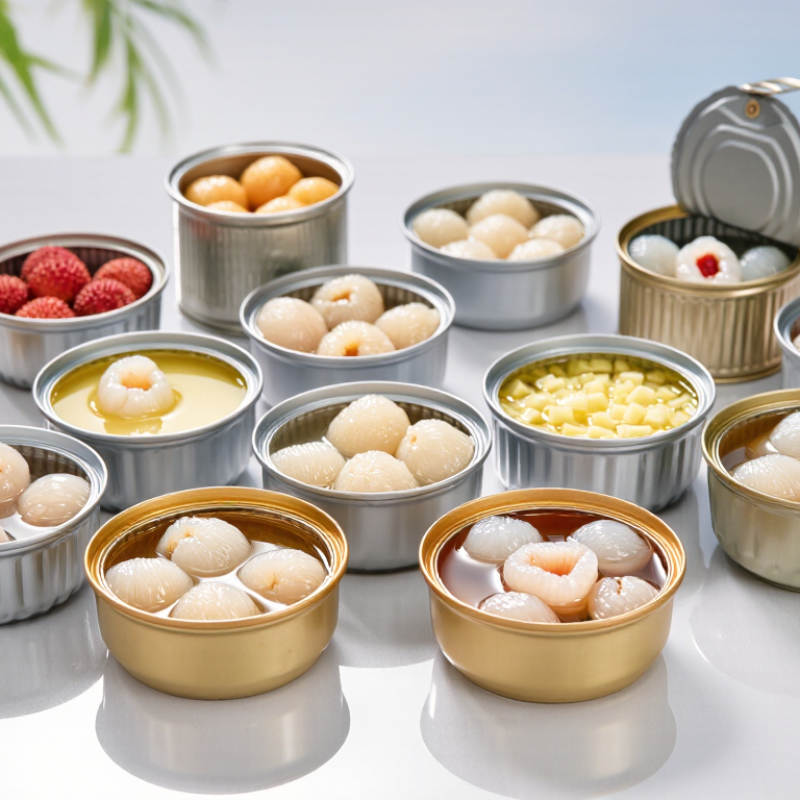
Canned lychee is peeled lychee preserved in syrup, juice, or another permitted packing liquid. Heat processing protects the fruit and supports safe storage in sealed cans. Global buyers usually classify it by fruit shape, size, packing medium, and can format. Common types include whole, pitted, halved, sliced, diced, and lychee pulp. Whole pitted fruit often suits desserts and retail shelves. Diced lychee works better in bakery fillings, drinks, and fruit salads. Buyers may also request light syrup, heavy syrup, or juice-packed products. Sugar levels and permitted ingredients must match the destination market.
From my sourcing experience, appearance matters, but it should not lead the decision alone. Buyers inspect fruit firmness, color, aroma, drained weight, and liquid clarity. They also review can seams, production dates, lot codes, and traceability records. Size grades may use fruit counts per can, although grading methods differ between suppliers. This system is useful, but not perfect. A beautiful can may still contain soft fruit. Samples and laboratory documents remain important before contract approval.
Tips: Request a product specification sheet and a pre-shipment sample. Compare net weight with drained weight. Check whether “pitted” means fully pitted or nearly pitted. Confirm syrup composition, packaging materials, shelf life, and storage conditions. Keep written approval records. Small details prevent expensive misunderstandings.
Canned lychee differs by fruit variety and processing style, not only by syrup taste. Common choices include:
Feizixiao often offers balanced sweetness, while Nuomici may provide softer flesh. Guiwei can deliver a stronger floral aroma. Texture depends on harvest maturity, peeling method, heat treatment, and storage time. Whole fruit suits dessert presentation. Halves and slices work better in bakery fillings, drinks, and prepared fruit cups.
Tips: Check drained weight, fruit count, syrup Brix, can integrity, and lot traceability. Ask for samples from different production dates. A bright appearance can hide soft texture. Do not judge quality from sweetness alone. Destination labeling and food safety requirements must be verified before shipment.
Experienced buyers should compare firmness after opening the can, not just before delivery. I would also check whether the fruit keeps its shape after refrigeration. One mistake is assuming a higher syrup concentration means better quality. It may only create a sweeter product. Specifications sometimes look precise, yet natural fruit variation remains. That part deserves honest discussion.
Canned lychee can be whole peeled, pitted whole, halved, quartered, diced, crushed, light-syrup, heavy-syrup, juice-packed, or low-sugar. Each format serves a different sales channel. Whole fruit looks attractive in desserts and gift packs. Halves and quarters suit foodservice kitchens because they reduce preparation time. Diced and crushed lychee blend easily into fillings, drinks, and dairy products. Confirm the cut size with a retained sample. Pictures can be misleading.
Syrup strength affects sweetness, texture, and shipping weight. Light syrup preserves a cleaner fruit impression, while heavy syrup delivers a richer dessert profile. Juice-packed options may appeal to buyers seeking a less sugary taste, but they still require careful label review. Check drained weight, fruit-to-syrup ratio, Brix, acidity, and can integrity. A low-sugar claim is not enough. Ask for laboratory results and batch records.
Packaging decisions depend on destination, handling, and customer use. Small cans work for households and hotel minibars. Larger cans reduce unit costs in restaurants, but opened product needs faster turnover. Easy-open ends improve convenience, yet they may need stronger protection during long transport. Origin also changes color, aroma, firmness, harvest timing, and price. Compare samples from more than one growing region. One trial may not reveal seasonal variation. That part is easy to underestimate. Also inspect dents, rust, leakage, coding clarity, and pallet stability before approving a shipment.
Top 10 Types of Canned Lychee for Global Buyers
Key Quality Standards, Certifications, and Labeling Requirements for Importers
Canned lychee commonly comes as whole, peeled, pitted, halved, sliced, diced, crushed, syrup-packed, juice-packed, or reduced-sugar fruit. Each format needs consistent size, texture, color, and drained weight. Buyers should inspect can seams, dents, swelling, and leakage before accepting shipments. The syrup should appear clear, not cloudy or fermented. Fruit should remain firm, with a fresh floral aroma. A soft texture may indicate poor processing or extended storage.
Reliable suppliers should provide batch records, laboratory results, and traceability documents. Useful systems include HACCP, ISO 22000, BRCGS, or IFS certification. Organic, halal, and kosher claims require valid certification for the destination market. Certifications alone do not guarantee every shipment. Importers must verify certificate scope, expiry dates, and production-site details. Labels should show the product name, ingredients, allergens, net weight, drained weight, country of origin, lot code, date marking, storage instructions, nutrition information, and importer details. Local language rules can differ. Check them before printing.
Tips: Request a pre-shipment sample. Measure drained fruit weight yourself. Compare syrup clarity across cartons. Confirm the can lining suits acidic fruit. Keep photographs and inspection notes for each lot. A clean label is not enough. No checklist is perfect. I have seen minor weight differences become expensive claims. Review tolerances with your customs broker and quality team before signing the purchase agreement.
| No. | Canned Lychee Type | Typical Product Format | Common Packing Medium | Key Quality Standards for Importers | Relevant Certifications or Compliance Programs | Core Labeling Requirements | Best-Fit Commercial Applications |
|---|---|---|---|---|---|---|---|
| 1 | Whole Peeled Lychee with Seed | Whole fruits with the outer skin removed; the seed remains inside. Premium appearance | Light syrup, medium syrup, or water. |
|
|
| Retail fruit cups, dessert toppings, hotel buffets, and premium foodservice. |
| 2 | Whole Peeled and Pitted Lychee | Whole peeled fruits with the seed removed. Ready to eat | Light syrup, fruit juice, or water with permitted acidity regulators where applicable. |
|
|
| Retail cans, cocktail service, bakery fillings, and ready-to-eat applications. |
| 3 | Lychee Halves | Peeled fruit cut into two pieces, usually pitted. Uniform cut | Light syrup, heavy syrup, juice, or water. |
|
|
| Desserts, cakes, fruit salads, catering, and restaurant preparation. |
| 4 | Lychee Quarters or Slices | Peeled and pitted fruit divided into quarters or sliced into smaller pieces. Value format | Syrup, fruit juice, or water. |
|
|
| Industrial desserts, bakery products, smoothies, toppings, and foodservice packs. |
| 5 | Diced Canned Lychee | Small, standardized cubes or diced fruit, usually pitted. Foodservice | Light syrup, juice, water, or formulated dessert syrup. |
|
|
| Ice cream, yogurt, bakery fillings, bubble tea, sauces, and catering. |
| 6 | Lychee Pieces and Irregular Fruit | Non-uniform pieces created during trimming or processing. Cost-efficient | Syrup, juice, or water. |
|
|
| Sauces, fillings, purees, beverages, jams, and industrial food manufacturing. |
| 7 | Lychee in Light Syrup | Whole, halved, sliced, or diced lychee packed in a lower-solids sugar syrup. Mainstream retail | Water and sugar; acidity regulators or antioxidants may be used where permitted and declared. |
|
|
| Supermarkets, household consumption, desserts, cocktails, and catering. |
| 8 | Lychee in Juice or No-Added-Sugar Medium | Lychee packed in fruit juice or in water without added sugar, subject to the exact formulation. Health-positioned | Lychee juice, another declared fruit juice, water, or a blend of these. |
|
|
| Health-oriented retail, lunchbox products, fruit salads, and premium foodservice. |
| 9 | Flavored or Infused Canned Lychee | Lychee packed with a declared flavor profile, such as rose, citrus, ginger, or another permitted flavor. Specialty product | Flavored syrup, juice, water, or a combination of these. |
|
|
| Premium beverages, cocktails, gift products, desserts, and specialty retail. |
| 10 | Certified Organic Canned Lychee | Whole, pitted, halved, sliced, or diced lychee processed and packed under an approved organic system. Certification-dependent | Organic syrup, organic juice, or water, depending on the certified formulation. |
|
|
| Organic supermarkets, natural-food distributors, premium retail, and specialty foodservice. |
Top 10 Types of Canned Lychee for Global Buyers
Global buyers should compare suppliers by product type, not only by price. Common options include whole, peeled, pitted, halved, quartered, syrup-packed, juice-packed, low-sugar, organic-certified, and aseptic-packed lychees. Each type serves a different use. Whole fruit suits retail cans. Halves and quarters reduce preparation time for desserts and foodservice.
UN Comtrade 2023 trade data places canned lychees under HS 200899, covering many prepared or preserved fruits. Therefore, reported trade totals are not lychee-specific. Buyers should request shipment records for the exact product. The Codex Alimentarius Standard for Canned Lychees, CXS 42-1981, provides a useful quality reference. Check fruit count, drained weight, syrup concentration, color, texture, and can seam integrity. Ask for recent laboratory reports, not old templates. A supplier may pass a visual inspection yet fail during storage.
Tips: Compare three samples from different production lots. Verify Brix, pH, microbiological results, pesticide compliance, and metal-can migration documents. Confirm whether “pitted” means fully pit-free. One overlooked fragment can damage customer trust. Also inspect cartons after simulated transport. Humidity, pallet pressure, and temperature changes reveal weak packaging. Supplier audits matter, but they are not perfect. Keep a retained sample for every approved lot.
Common commercial pack-size references help buyers compare product formats, shipment efficiency, and foodservice suitability. Actual availability, drained weight, syrup strength, and certifications should be confirmed with each supplier.
How to compare suppliers: Check net weight and drained weight together, then review fruit count, syrup or juice medium, Brix specification, can or jar material, certifications, shelf life, carton configuration, and minimum order quantity.



For those larger-sized parts, or smaller quantity runs, we have 2 independent powder coat booths and ovens. The quality, durability and affordability of today’s powder coating finishes make this the process of choice for world-class companies.
Powder coating advantages over other forms of coating are many. Materials used in the Powder coating process can be metals and non-metals that come in a multitude of thicknesses, textures, colors, etc. Another of Powder coating’s biggest advantages over conventional coatings is its ability to create finishes in many different textures. Powder Coating Booths allow us the ability to apply these advantages to large products.
Tri-State Fabricators runs a full-service conveyor line for painting. Wet painting can provide protection or decoration to many different part styles. From start to finish, every project is easier to undergo random and point-based inspection by our skilled painting team.
Advantages to our Wet Paint Line are these lines start with product prep and ends with a thorough inspection of a high quality finished product. Our ability to complete large and small projects with a superior finish and doing so in a timely and economical fashion. This passes along the savings in production to our customers. When powder coating ins not an option, our Wet Paint Line gets the job done right the first time.
When the parts get big and heavy we roll-out our custom paint racks and oversize booth. By utilizing our partnerships with all the major paint brands, we can match virtually any color with wet paint.
The advantages of having access to a Wet Paint Booth are many. Large projects of many different shapes can be loaded into the booth. The Wet Paint Booth offers an environment that is much more controlled than a typical parts painting operation.
Not only are they used because of their controlled environment, but they’re are also advantageous when it comes to applying paint to parts that are needed in industries that require specialty coatings such as medical, aerospace, etc.
Our military forces have some very high standards when it comes to the finish of their vehicles and equipment. From the first pre-treatment step to final coat, it takes a great deal of knowledge and experience to protect the men and women of our armed forces. They deserve only the best, and Tri-State Fabricators provides it.
All of our processes are closely monitored by our staff and management teams. Both of which are highly trained in the processes of metal fabrication and finishing. Tri-State Fabricators’ goal is to always fully satisfy each and every customer, including the military. We will always put a 110% into what we do.
Abrasive media blasting is an excellent way to remove old paint, rust, and increase the paint/powder adhesion. Glass beads produce a much smoother and brighter finish than angular abrasives; leaving the part clean yet without any dimensional change. Chemically inert and environmentally friendly, we can recycle our beads approximately 30 times; making them a more preferred method of metal cleaning or surface finishing.
Advantages to Glass Bead Blasting are many. Glass bead blast media is used when a project is needing rough surfaces need to become smooth for applications of coatings such as paint. It is typically used to clean paint and rust from a product surface without deforming the surface it is being used on. Overall, compared to many other blasting media, Glass Bead Blasting is a very economical choice and those savings are always passed on to our customers.
Tri-State Fabricators utilize a zinc phosphate wash to clean and etch the material to ensure the best paint adhesion possible. The unique design of our 3-stage wash system does the work like a 5-stage. From Cleaning and rinsing to conversion coating and post-treatment, Our Part Washing process is a complete service and works throughout the fabrication service and the finishing service.
Along with the previously mentioned benefits, Curing is a vital chemical reaction that leaves the product finish hard and relatively safe from mild abrasion and aggressive corrosion. This process can be done in more than one way; ambient air-dry or in curing ovens at temps that exceed 240°.
From fixing paint mistakes (someone else’s of course) to simply cleaning our paint line hooks, our burn-off oven is put to good use. After a quick burn-off, a little clean up, and a fresh coat of paint, your parts will look better than new.
Why does our Burn-Off Oven work so well? Because super heating the air around parts turns the materials into ashes. From paint and powder coatings to rubber and machining oils, high temps do the job without degrading the integrity of the part.
Masking is a vital part of producing high quality products. We have die-cut masking patterns to protect machined surfaces as well as a wide range of plugs and caps to protect threaded holes and bolts. We provide permanent and temporary masking.
Masking allows the selected sections of a product to be protected from a fabrication or finishing service. This can be with both chemicals when etching and tapes, paints when only finishing just a section of the product. Masking is great in aiding the customization process of a project.
Screen printing is a photographic process that transfers artwork onto a porous nylon screen which allows colored ink to flow through the screen and be deposited on an aluminum or plastic component. We can generally have just about any design created onto a screen for your parts.
Some of the advantages of Screen Printing are, brand recognition for your business displaying on your products, assembly instructions, product warnings/hazards, etc. Tri-State Fabricators produces Screen Printing of the highest quality so you know it’s durable.
Metal Finishing is the art of treating the exterior portion of product, often metal but can also be made of other materials, so that the surface is clean and free of any debris. Then the process of applying coats or either paint of powder coat takes place. This coating process improves the quality of the product in both appearance and resistance to wear and corrosion.
Tri-State Fabricators, Inc., understands that a project typically isn’t complete until a high-quality finish has been added to your product. This is why our painting and powder coating teams continuously inspect the products throughout the Metal Finishing process.