


What Are the Top Can Sealing Machine Types in 2026?

Choosing a Can Sealing Machine in 2026 is not just a matter of speed. Container material, lid design, production volume, and the required seam quality all shape the decision. A small food producer may need a compact semi-automatic seamer, while a beverage line running thousands of cans per hour may require a high-speed rotary system. The right fit depends on the actual line—not the most impressive specification sheet.

Industry data helps explain why this choice matters. The Can Manufacturers Institute’s 2023 aluminum can recycling report puts the U.S. beverage-can recycling rate at 43%, underscoring the importance of dependable packaging and material recovery. PMMI’s packaging-industry research also points to automation and workforce availability as ongoing operational concerns. These reports do not identify one universally superior machine; they highlight pressures that manufacturers must weigh against their own production conditions.

This guide compares the leading machine types expected to matter in 2026, including manual, semi-automatic, automatic inline, and rotary can seamers. It looks at practical differences in throughput, changeover, footprint, and operator involvement. Small details matter. A lid that feeds unevenly or a seam that needs frequent adjustment can slow an otherwise fast line. No machine removes every production headache, and that is worth remembering. The goal is to match equipment capabilities with real operating needs, then verify performance using the intended cans, ends, and product.
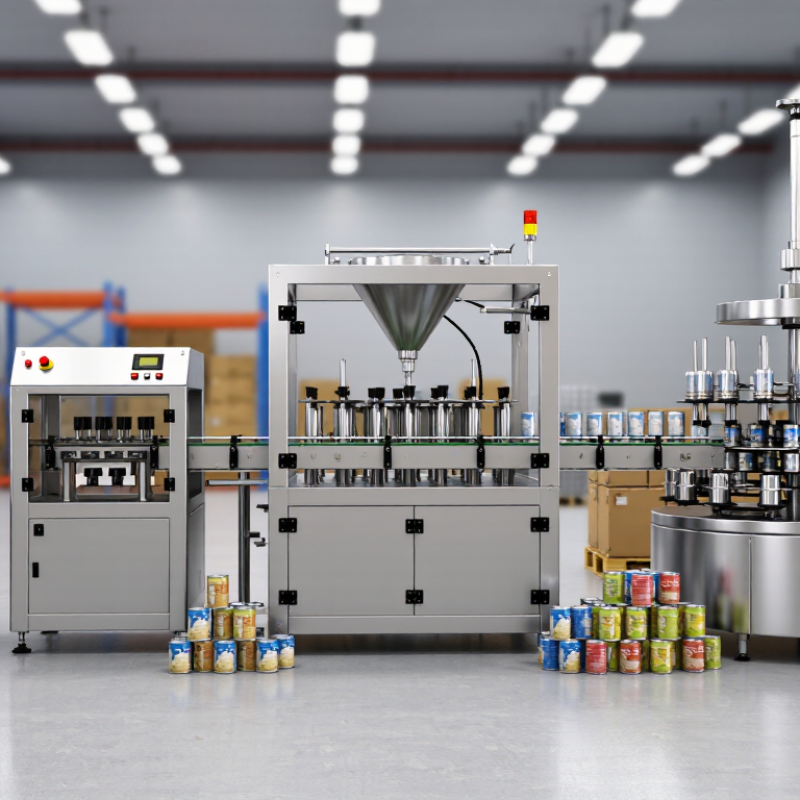
What Are the Top Can Sealing Machine Types in 2026?

What Is a Can Sealing Machine and How Does It Work?

A can sealing machine joins a lid to a can body to help protect the contents from leaks, air, and contamination. On many metal cans, the machine forms a double seam: the lid’s curled edge and the can’s flange are rolled together in several tight layers. A chuck holds the lid in place while seaming rollers shape the metal. The exact setup depends on the can’s size, material, and intended use.

The process looks simple from outside. It is not always simple. A small change in roller pressure or lid position can affect the seam. Manual machines suit low-volume work and careful adjustments; semi-automatic and automatic models handle more cans with less direct effort.

In practice, operators feed a can and lid, secure them beneath the seaming head, and start the cycle. Then they inspect samples for wrinkles, sharp edges, or uneven seams. A visual check helps, but it cannot confirm every seal. Seam measurements and suitable leak tests provide stronger evidence.

I would not treat one successful test as proof that every can is sound. Machine setup, material variation, and routine wear all deserve attention.


Which Can Sealing Machine Types Are Used in 2026?

In 2026, can sealing machines generally fall into manual, semi-automatic, and fully automatic types. Manual seamers suit small batches and careful, hands-on work. Semi-automatic machines reduce repetitive effort while an operator positions each can. Fully automatic inline or rotary systems suit higher output, feeding and sealing cans with less manual handling. Each type forms a double seam, joining the can end to its body.

Some machines also use vacuum or gas flushing to limit oxygen in the container. These are process options, not a replacement for choosing the right seamer. Match the machine to can diameter, height, material, lid design, and expected hourly volume. Check setup adjustments, cleaning access, and seam inspection procedures, too. A fast machine can still produce poor seals if the tooling or settings are wrong. The choice is not always neat; future growth may make a modest system feel limiting.

Tips: Test representative cans before purchase. Inspect seam dimensions and conduct suitable leak checks. Keep records of settings and results. Small changes matter.

How Do Manual, Semi-Automatic, and Automatic Sealers Differ?

Choosing among can sealer types in 2026 depends on output, labor, and the consistency your product requires. A manual sealer relies on an operator to position each can and apply the closing force. It suits short runs, sampling, or seasonal production, with relatively simple setup. The trade-off is pace: operator fatigue or uneven placement can affect results. That matters.

A semi-automatic sealer typically requires someone to load each can, while the machine completes the sealing cycle after a button press or pedal action. It can improve repeatability without removing hands-on work. The middle option is easy to underestimate; check how quickly staff can load and clear cans. Automatic sealers use powered feeding and sealing, often with conveyors, to handle higher volumes with less direct handling. They need more floor space, setup, and maintenance. A faster cycle is not automatically a better fit.

Tips: Match the machine to your can size and expected hourly output. Ask for a demonstration using your actual containers and lids. Inspect seam measurements, not just appearance; a smooth-looking seam alone does not confirm a reliable seal. Keep a written setup record, and review it when changing formats.

What Roles Do Vacuum, Rotary, and Induction Sealers Serve?

What Are the Top Can Sealing Machine Types in 2026?

Vacuum, rotary, and induction sealers serve different packaging needs; they are not interchangeable. A vacuum sealer removes air before closure, helping limit oxidation in products sensitive to oxygen. In canning lines, vacuum can be paired with a seaming system, but the right setup depends on the product and container.

Rotary machines use rotating stations or turrets to seal containers continuously. They suit steady, higher-volume production, where consistent seam formation and line speed matter. Small details count: a poorly adjusted seaming roll can create leaks.

Induction sealers use electromagnetic heating to bond a foil liner to a compatible container opening. They are common with bottles and jars, but they do not create the double seam used to close a conventional metal can. That distinction is easy to miss.

Each method has limits: vacuum equipment adds process steps, rotary systems need careful setup, and induction sealing requires matching liners, closures, and container materials. Operators should verify seal integrity with routine checks, not appearance alone.

Tips: Match the machine to the package, product, and expected output. Test sample containers at the intended speed, then inspect seals for wrinkles, gaps, or leaks. Keep records of settings and checks. Real lines vary.

Which Factors Determine the Right Can Sealing Machine?

In 2026, can sealing machines range from hand-operated units to semi-automatic and fully automatic systems. Rotary machines can suit higher-volume lines, while simpler units may fit small batches. The right choice depends less on the machine’s label and more on the can, lid, product, and production target.

Start with container compatibility. Check can diameter, height, material, and lid specifications against the machine’s stated range. Fit matters. Then estimate the number of cans per hour, allowing room for changeovers and routine stops. A line running thick sauces may need different handling and cleaning access than one sealing dry goods. Ask how operators adjust settings and inspect seams. A neat-looking seal is not proof of a reliable one.

Consider floor space, power, staffing, cleaning time, and integration with filling or labeling equipment. Service access matters, too; a minor adjustment should not require dismantling half the line. Test real cans and lids under expected operating conditions, and review the resulting seams with a qualified technician. The fastest option is not always the best. No checklist removes every surprise, and sample runs can miss problems that appear during longer shifts. Balance output goals with safe operation, available support, and the cost of downtime.

Powder Coat Booths

For those larger-sized parts, or smaller quantity runs, we have 2 independent powder coat booths and ovens. The quality, durability and affordability of today’s powder coating finishes make this the process of choice for world-class companies.

Powder coating advantages over other forms of coating are many. Materials used in the Powder coating process can be metals and non-metals that come in a multitude of thicknesses, textures, colors, etc. Another of Powder coating’s biggest advantages over conventional coatings is its ability to create finishes in many different textures. Powder Coating Booths allow us the ability to apply these advantages to large products.

Wet Paint Line

Tri-State Fabricators runs a full-service conveyor line for painting. Wet painting can provide protection or decoration to many different part styles. From start to finish, every project is easier to undergo random and point-based inspection by our skilled painting team.

Advantages to our Wet Paint Line are these lines start with product prep and ends with a thorough inspection of a high quality finished product. Our ability to complete large and small projects with a superior finish and doing so in a timely and economical fashion. This passes along the savings in production to our customers. When powder coating ins not an option, our Wet Paint Line gets the job done right the first time.

Wet Paint Booths

When the parts get big and heavy we roll-out our custom paint racks and oversize booth. By utilizing our partnerships with all the major paint brands, we can match virtually any color with wet paint.

The advantages of having access to a Wet Paint Booth are many. Large projects of many different shapes can be loaded into the booth. The Wet Paint Booth offers an environment that is much more controlled than a typical parts painting operation.

Not only are they used because of their controlled environment, but they’re are also advantageous when it comes to applying paint to parts that are needed in industries that require specialty coatings such as medical, aerospace, etc.

Military CARC

Our military forces have some very high standards when it comes to the finish of their vehicles and equipment. From the first pre-treatment step to final coat, it takes a great deal of knowledge and experience to protect the men and women of our armed forces. They deserve only the best, and Tri-State Fabricators provides it.

All of our processes are closely monitored by our staff and management teams. Both of which are highly trained in the processes of metal fabrication and finishing. Tri-State Fabricators’ goal is to always fully satisfy each and every customer, including the military. We will always put a 110% into what we do.

Glass-Bead Blasting

Abrasive media blasting is an excellent way to remove old paint, rust, and increase the paint/powder adhesion. Glass beads produce a much smoother and brighter finish than angular abrasives; leaving the part clean yet without any dimensional change. Chemically inert and environmentally friendly, we can recycle our beads approximately 30 times; making them a more preferred method of metal cleaning or surface finishing.

Advantages to Glass Bead Blasting are many. Glass bead blast media is used when a project is needing rough surfaces need to become smooth for applications of coatings such as paint. It is typically used to clean paint and rust from a product surface without deforming the surface it is being used on. Overall, compared to many other blasting media, Glass Bead Blasting is a very economical choice and those savings are always passed on to our customers.

Part Washing

Tri-State Fabricators utilize a zinc phosphate wash to clean and etch the material to ensure the best paint adhesion possible. The unique design of our 3-stage wash system does the work like a 5-stage. From Cleaning and rinsing to conversion coating and post-treatment, Our Part Washing process is a complete service and works throughout the fabrication service and the finishing service.

Along with the previously mentioned benefits, Curing is a vital chemical reaction that leaves the product finish hard and relatively safe from mild abrasion and aggressive corrosion. This process can be done in more than one way; ambient air-dry or in curing ovens at temps that exceed 240°.

Burn-Off Oven

From fixing paint mistakes (someone else’s of course) to simply cleaning our paint line hooks, our burn-off oven is put to good use. After a quick burn-off, a little clean up, and a fresh coat of paint, your parts will look better than new.

Why does our Burn-Off Oven work so well? Because super heating the air around parts turns the materials into ashes. From paint and powder coatings to rubber and machining oils, high temps do the job without degrading the integrity of the part.

Masking

Masking is a vital part of producing high quality products. We have die-cut masking patterns to protect machined surfaces as well as a wide range of plugs and caps to protect threaded holes and bolts. We provide permanent and temporary masking.

Masking allows the selected sections of a product to be protected from a fabrication or finishing service. This can be with both chemicals when etching and tapes, paints when only finishing just a section of the product. Masking is great in aiding the customization process of a project.

Screen Printing

Screen printing is a photographic process that transfers artwork onto a porous nylon screen which allows colored ink to flow through the screen and be deposited on an aluminum or plastic component. We can generally have just about any design created onto a screen for your parts.

Some of the advantages of Screen Printing are, brand recognition for your business displaying on your products, assembly instructions, product warnings/hazards, etc. Tri-State Fabricators produces Screen Printing of the highest quality so you know it’s durable.

Metal Finishing

Metal Finishing is the art of treating the exterior portion of product, often metal but can also be made of other materials, so that the surface is clean and free of any debris. Then the process of applying coats or either paint of powder coat takes place. This coating process improves the quality of the product in both appearance and resistance to wear and corrosion.

Tri-State Fabricators, Inc., understands that a project typically isn’t complete until a high-quality finish has been added to your product. This is why our painting and powder coating teams continuously inspect the products throughout the Metal Finishing process.
