


China’s binder hardware industry serves stationery brands, print shops, and office-product distributors worldwide. Yet choosing an exporter takes more than comparing prices or browsing polished product photos. Buyers need to understand what a company actually makes, how consistently it supplies orders, and whether its communication holds up after the first inquiry. Details matter. A mechanism that looks simple can affect a binder’s page capacity, opening feel, and durability in daily use.
This guide examines how to assess companies involved in Binder Mechanism Export, including their product range, customization options, production information, and export experience. Look for clear specifications on ring shape, size, finish, and mounting-hole spacing. Ask how samples are checked against bulk orders and how packaging protects metal parts during transit. These are practical questions, not guarantees of quality. A website alone cannot confirm factory capacity or recent shipment performance, so buyers should verify claims directly and request relevant documentation. Rankings can also change as product lines and business conditions evolve. There is no perfect shortlist. The aim here is to offer a grounded starting point, while leaving room for careful checks, candid questions, and the occasional second look.
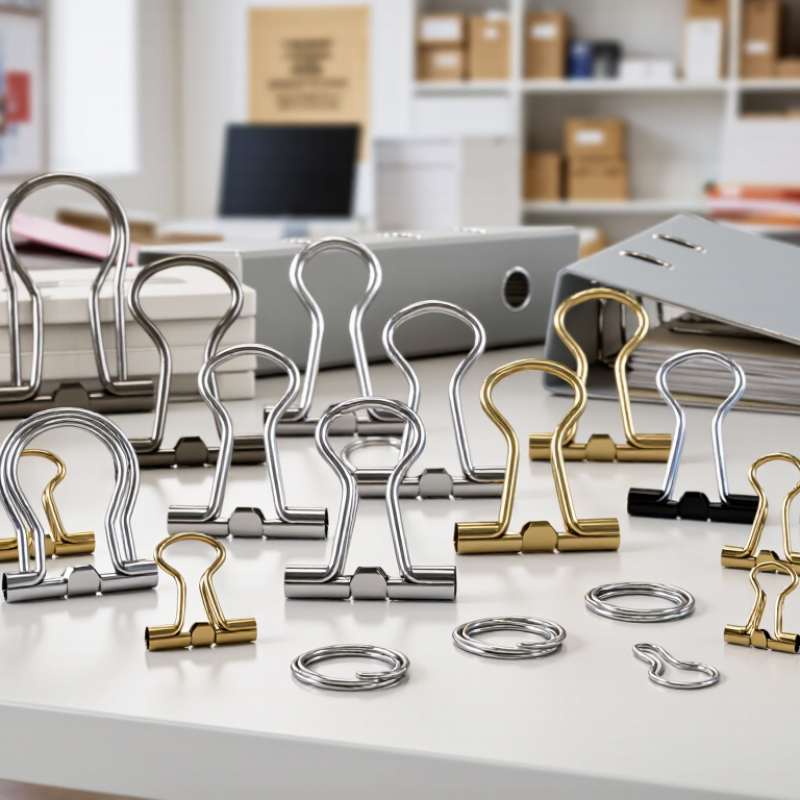
A binder mechanism is the metal assembly that holds punched sheets inside a folder, binder, or presentation file. Its rings open to add or remove pages, then close to keep them aligned. Common designs include two-ring and three-ring systems, as well as lever-operated mechanisms for thicker documents. Each suits a different job. A compact ring set works well for notes, while a lever mechanism can handle larger reports or catalogs.
In use, people punch holes in paper, position the sheets over the open rings, and press the mechanism shut. Some binders also hold dividers, plastic pockets, or sample cards. The mechanism’s ring diameter affects capacity, but paper thickness and hole spacing matter too. Small details count. A stiff opening lever may be awkward during frequent updates, while loose rings can let pages shift. Manufacturers typically assess opening force, alignment, and repeated use when choosing a design. Still, no single mechanism fits every application; a setup that works for office records may feel bulky in a slim presentation folder. Test it with the actual paper stack.

China’s binder mechanism export industry is a layered supply chain, not a single factory category. It connects metal-strip suppliers, stamping workshops, surface-finishing lines, assembly plants, and export traders. UNIDO’s International Yearbook of Industrial Statistics 2024 puts China’s share of global manufacturing value added at roughly 31% in 2022. That figure describes the broader manufacturing base, not binder mechanisms alone. Small parts matter.
Production often starts with steel strip cut to width. Presses form the hinge, rings, or locking tabs; workers then check alignment and opening force. Exporters may source components from several suppliers before packing finished mechanisms for stationery wholesalers or office-product makers. This structure lets firms handle varied order sizes, but quality can differ between batches. A misaligned ring is easy to spot on a sample and harder to catch across thousands of units.
Trade data has limits. UN Comtrade places binder and file fittings within HS 8305, alongside other metal office articles, so the category cannot cleanly rank binder mechanism exporters by itself. The classification is imperfect. Buyers comparing suppliers should request mechanism-specific specifications, such as ring diameter, sheet capacity, plating, and cycle-test results, rather than relying only on broad export totals.
China’s binder mechanism exports are supplied by a mix of manufacturers and export intermediaries. The profiles below describe common roles in the industry, not a ranked list of named companies.
| Exporter profile | Typical products | Main role in the supply chain | Common customer requirements | Export considerations |
|---|---|---|---|---|
| Integrated mechanism manufacturers | Ring binder mechanisms, lever arch mechanisms, and related metal filing components | Make mechanisms in-house and may manage tooling, assembly, inspection, and export packing | Consistent opening and closing action, dimensional accuracy, surface finish, and repeatable production | Specifications such as ring shape, capacity, base length, hole pattern, and finish should be agreed before production |
| Specialist metal-stamping producers | Stamped steel bases, levers, rings, clips, and other formed filing hardware | Supply finished parts or components to mechanism assemblers and stationery manufacturers | Material and thickness control, burr management, corrosion resistance, and stable forming quality | Buyers commonly confirm material grade, coating or plating, tolerances, and inspection criteria |
| Stationery OEM and ODM suppliers | Binder mechanisms supplied with, or fitted into, files and presentation products | Coordinate mechanism sourcing with finished stationery production and custom specifications | Custom dimensions, product assembly, private-label packaging, and coordinated delivery schedules | Clarify whether the order covers mechanisms only or complete binders, folders, or files |
| Export-oriented trading companies | Standard binder mechanisms and assorted filing hardware sourced from manufacturers | Consolidate products, handle export documentation, and coordinate communication and shipment | A broad product range, mixed-item orders, export packing, and support across multiple suppliers | Confirm the actual manufacturing source, product specifications, and quality-control responsibilities |
| Custom and project-based suppliers | Mechanisms made to specified dimensions, configurations, or finish requirements | Adapt existing designs or tooling to buyer requirements, subject to production feasibility | Samples, drawings, agreed tolerances, functional testing, and documented approval before bulk orders | Check tooling ownership, minimum order quantity, sample lead time, and change-control arrangements |
Note: Exporter profiles are industry categories, not verified company rankings. Product availability, specifications, and export capabilities vary by supplier and should be confirmed directly.
A credible comparison starts with a narrow product definition. UN Comtrade records “fittings for loose-leaf binders or files” under HS 830510. Its annual export values and quantities help screen Chinese suppliers, but the code does not identify individual factories. Request matching customs records, product specifications, and recent shipment documents before treating a company as a leading exporter. A high declared value alone proves little.
Then compare what buyers can verify. Ask for samples showing consistent hole spacing, smooth hinge movement, and cleanly finished metal edges. Review production capacity, defect records, inspection procedures, and response times for replacement parts.
ISO 9001:2015 offers a useful quality-management framework, but certification is not proof that each batch meets your requirements. The World Bank’s 2023 Logistics Performance Index scored China 3.7 out of 5 overall; it provides national context, not a factory-level delivery guarantee. Check shipment records directly.
No ranking is perfect. Unit values in trade data can also mislead, since mechanism size, material, and packaging differ. Compare like with like, and record unresolved gaps rather than smoothing them over.
China’s top binder mechanism exporters are distinguished by precise tooling, stable materials, and flexible production. Look for suppliers that can adjust ring diameter, hole spacing, metal thickness, and finish without changing the mechanism’s fit. Strong process control should cover stamping, riveting, and hinge alignment. A slight mismatch can make pages turn unevenly.
UN Comtrade classifies loose-leaf binder and file fittings under HS 8305.10. This provides a useful trade-data reference, but the category does not reveal individual factory quality or separate every mechanism type. Buyers should therefore request sample measurements, material specifications, and inspection records. Check that cycle tests confirm smooth opening and secure closure. Small details matter. No production line is flawless; clear defect limits and corrective-action records help show how issues are handled.
Tips: Test samples with your actual covers and paper load. Ask for recent batch inspection data, not only a catalogue specification. A mechanism that feels firm by hand may still loosen after repeated use.
Choosing a binder mechanism exporter takes more than comparing prices. Ask how long the supplier has produced the mechanism type you need and which markets it regularly serves. Request current product specifications, material details, and inspection records. For a sample, check that the rings open smoothly, align evenly, and stay closed after repeated use. Small defects can cause paper to shift or tear.
Tips: Confirm minimum order quantities, sample fees, production lead times, and packaging details in writing. Ask how the exporter handles damaged goods or production delays. A clear answer is more useful than a broad promise. If possible, compare a sample with your finished binder design, not just a loose mechanism.
Communication matters, too. Send a drawing or a physical reference and ask the exporter to confirm dimensions, finish, and tolerances. Check whether updates arrive on time and whether answers address your questions. One awkward point: a polished sample does not guarantee every production batch will match it. Discuss batch inspection and agree on acceptable quality levels before placing a large order. No exporter is perfect, so notice how openly they discuss limitations and correct mistakes.
These standard sheet widths help buyers check whether a mechanism fits their intended documents. Ask exporters to confirm compatible paper formats, punching patterns, and sheet capacities. The chart shows standard paper dimensions, not exporter rankings or company data.


For those larger-sized parts, or smaller quantity runs, we have 2 independent powder coat booths and ovens. The quality, durability and affordability of today’s powder coating finishes make this the process of choice for world-class companies.
Powder coating advantages over other forms of coating are many. Materials used in the Powder coating process can be metals and non-metals that come in a multitude of thicknesses, textures, colors, etc. Another of Powder coating’s biggest advantages over conventional coatings is its ability to create finishes in many different textures. Powder Coating Booths allow us the ability to apply these advantages to large products.
Tri-State Fabricators runs a full-service conveyor line for painting. Wet painting can provide protection or decoration to many different part styles. From start to finish, every project is easier to undergo random and point-based inspection by our skilled painting team.
Advantages to our Wet Paint Line are these lines start with product prep and ends with a thorough inspection of a high quality finished product. Our ability to complete large and small projects with a superior finish and doing so in a timely and economical fashion. This passes along the savings in production to our customers. When powder coating ins not an option, our Wet Paint Line gets the job done right the first time.
When the parts get big and heavy we roll-out our custom paint racks and oversize booth. By utilizing our partnerships with all the major paint brands, we can match virtually any color with wet paint.
The advantages of having access to a Wet Paint Booth are many. Large projects of many different shapes can be loaded into the booth. The Wet Paint Booth offers an environment that is much more controlled than a typical parts painting operation.
Not only are they used because of their controlled environment, but they’re are also advantageous when it comes to applying paint to parts that are needed in industries that require specialty coatings such as medical, aerospace, etc.
Our military forces have some very high standards when it comes to the finish of their vehicles and equipment. From the first pre-treatment step to final coat, it takes a great deal of knowledge and experience to protect the men and women of our armed forces. They deserve only the best, and Tri-State Fabricators provides it.
All of our processes are closely monitored by our staff and management teams. Both of which are highly trained in the processes of metal fabrication and finishing. Tri-State Fabricators’ goal is to always fully satisfy each and every customer, including the military. We will always put a 110% into what we do.
Abrasive media blasting is an excellent way to remove old paint, rust, and increase the paint/powder adhesion. Glass beads produce a much smoother and brighter finish than angular abrasives; leaving the part clean yet without any dimensional change. Chemically inert and environmentally friendly, we can recycle our beads approximately 30 times; making them a more preferred method of metal cleaning or surface finishing.
Advantages to Glass Bead Blasting are many. Glass bead blast media is used when a project is needing rough surfaces need to become smooth for applications of coatings such as paint. It is typically used to clean paint and rust from a product surface without deforming the surface it is being used on. Overall, compared to many other blasting media, Glass Bead Blasting is a very economical choice and those savings are always passed on to our customers.
Tri-State Fabricators utilize a zinc phosphate wash to clean and etch the material to ensure the best paint adhesion possible. The unique design of our 3-stage wash system does the work like a 5-stage. From Cleaning and rinsing to conversion coating and post-treatment, Our Part Washing process is a complete service and works throughout the fabrication service and the finishing service.
Along with the previously mentioned benefits, Curing is a vital chemical reaction that leaves the product finish hard and relatively safe from mild abrasion and aggressive corrosion. This process can be done in more than one way; ambient air-dry or in curing ovens at temps that exceed 240°.
From fixing paint mistakes (someone else’s of course) to simply cleaning our paint line hooks, our burn-off oven is put to good use. After a quick burn-off, a little clean up, and a fresh coat of paint, your parts will look better than new.
Why does our Burn-Off Oven work so well? Because super heating the air around parts turns the materials into ashes. From paint and powder coatings to rubber and machining oils, high temps do the job without degrading the integrity of the part.
Masking is a vital part of producing high quality products. We have die-cut masking patterns to protect machined surfaces as well as a wide range of plugs and caps to protect threaded holes and bolts. We provide permanent and temporary masking.
Masking allows the selected sections of a product to be protected from a fabrication or finishing service. This can be with both chemicals when etching and tapes, paints when only finishing just a section of the product. Masking is great in aiding the customization process of a project.
Screen printing is a photographic process that transfers artwork onto a porous nylon screen which allows colored ink to flow through the screen and be deposited on an aluminum or plastic component. We can generally have just about any design created onto a screen for your parts.
Some of the advantages of Screen Printing are, brand recognition for your business displaying on your products, assembly instructions, product warnings/hazards, etc. Tri-State Fabricators produces Screen Printing of the highest quality so you know it’s durable.
Metal Finishing is the art of treating the exterior portion of product, often metal but can also be made of other materials, so that the surface is clean and free of any debris. Then the process of applying coats or either paint of powder coat takes place. This coating process improves the quality of the product in both appearance and resistance to wear and corrosion.
Tri-State Fabricators, Inc., understands that a project typically isn’t complete until a high-quality finish has been added to your product. This is why our painting and powder coating teams continuously inspect the products throughout the Metal Finishing process.

