


The global bath towel industry is becoming more technical, flexible, and data-driven. Modern Bath Towel Making Machine systems must handle terry loops, dense pile, colored yarns, and repeated washing cycles. They also need stable tension control, efficient drying, and consistent fabric density.
The International Textile Machinery Federation reported continued investment in shuttleless weaving equipment in its International Textile Machinery Shipment Statistics. These figures do not isolate terry towel machines, but they show strong demand for faster and more automated looms. Textile Exchange’s 2024 Materials Market Report also highlights the growing importance of recycled fibers, traceability, and responsible material sourcing. Those requirements affect machine design, yarn handling, and production monitoring.
Performance is not measured by speed alone. A reliable manufacturer should provide accurate pile-height control, practical maintenance access, responsive technical service, and verified energy data. Useful evidence includes factory demonstrations, customer references, certification records, and long-term spare-parts support. Some manufacturers publish impressive output figures. Real production can differ.
That matters.
This guide examines leading Bath Towel Making Machine manufacturers worldwide through engineering capability, product range, automation, service coverage, and operational experience. It also considers weaving width, production stability, fabric quality, and compatibility with cotton or recycled yarns. A perfect ranking is impossible because factory conditions vary widely. Power quality, operator skill, yarn preparation, and local service can change the final result. Buyers should therefore compare tested performance, not attractive brochures alone. Industry reports offer valuable direction, but machine-level decisions still require direct verification.
Bath towel specifications begin with GSM, the fabric’s weight per square metre. The common premium range is 400–700 GSM. A 400 GSM towel dries faster, while a 700 GSM towel feels denser and stores more water. However, GSM alone can mislead. A poorly constructed 600 GSM towel may absorb less than a well-looped 450 GSM towel.
Size affects both comfort and production planning. Typical bath towels measure about 70 × 140 centimetres, while larger bath sheets may reach 100 × 150 centimetres. Cotton remains widely used because its cellulose fibres create strong moisture attraction.
Textile Exchange’s Materials Market Report 2024 estimated cotton at roughly 19% of global fibre production in 2023. Recycled cotton and cotton blends can reduce virgin-fibre demand, but they may change softness and durability.
Absorbency needs testing, not guessing. AATCC TM79 measures textile absorbency through water-drop penetration, while controlled production checks can compare drying time and retained moisture. Long, dense loops usually improve contact with wet skin. Tightly twisted yarns can improve strength but may reduce initial softness. That trade-off is easy to overlook. For towel-making machines, loop height, pile density, yarn tension, and edge stitching deserve equal attention. Even then, laboratory results may not match a towel used after a hot shower.

Producing bath towels from 20–40 Ne yarn requires controlled preparation and steady machine performance. The yarn count affects softness, absorbency, weight, and production stability. Coarser yarn often creates a fuller towel, while finer yarn can produce a smoother surface. Consistency matters. Reliable manufacturers design equipment for accurate tension control, clean yarn paths, and stable high-speed operation.
The process begins with winding, warping, and sizing. Operators remove weak sections and balance yarn tension before weaving. Sizing protects the ground warp during loom operation, but excessive sizing may reduce absorbency later. Terry looms then form ground loops and pile loops through precise shedding and beat-up movements. Loop height must remain even across the towel width. A slight setting error can create thin stripes, loose edges, or uneven corners.
After weaving, towels usually pass through bleaching or dyeing, washing, drying, and softening. Moisture changes everything. Drying temperatures must protect fiber strength without leaving harsh hand feel. Cutting, hemming, embroidery, and inspection follow the finishing stage. Experienced equipment manufacturers support adjustable controls, accessible maintenance points, and practical quality monitoring. They also provide technical guidance for different yarn qualities and towel weights. Not every setting works. Experienced operators still need to check absorbency, shrinkage, color uniformity, edge strength, and lint release. A careful factory records these results and adjusts the line when real production differs from laboratory expectations.
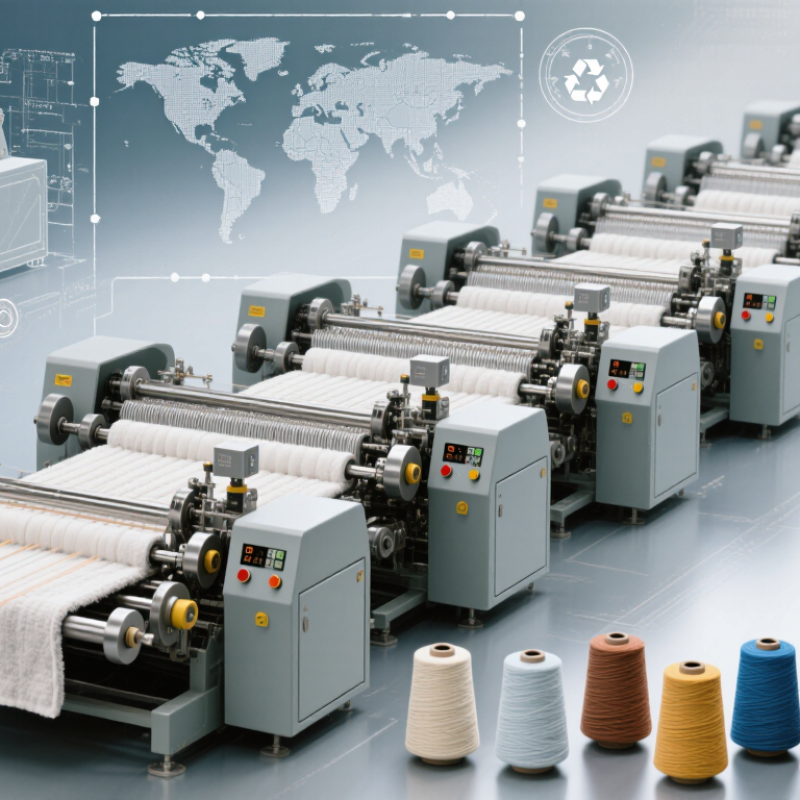
Bath towel making machines usually form a connected production line, not a single unit. Weaving machines create terry fabric with raised loops for softness and absorbency. Modern models control yarn tension, pile height, and fabric width during continuous operation. Small changes matter. Uneven loops can increase waste and weaken washing performance.
Dyeing equipment then applies color through jet, beam, or continuous systems. Each method suits different fabric weights and production goals. Temperature control protects cotton fibers and improves shade consistency. Cutting machines divide large fabric rolls into towel panels, while edge sewing equipment prevents fraying. Experienced manufacturers test these stages together, because a fast weaving machine cannot fix poor dye penetration or inaccurate cutting.
Complete lines commonly produce 500–2,000 kilograms per day, depending on towel size, fabric density, working hours, and automation. A 500-kilogram line may suit a regional factory with varied orders. Larger systems need stronger utilities, skilled operators, and reliable wastewater management. Output figures can be optimistic. Real production often falls below brochures because of changeovers, maintenance, and rejected pieces. Buyers should request trial data using comparable yarn, towel weight, and operating hours. No line is perfect. Careful factories measure moisture, color deviation, loop loss, and cutting accuracy before approving a machine supplier.
Typical daily output ranges for weaving, dyeing, cutting, and integrated towel production lines
Output depends on towel size, GSM, fabric construction, automation level, operating hours, and material efficiency. The illustrated capacity ranges of 500–2,000 kg per day represent practical reference levels for commercial terry towel production equipment rather than brand-specific performance.
Top Bath Towel Making Machine Manufacturers Worldwide
Leading bath towel machine manufacturers across Asia, Europe, and North America serve different production priorities. Asian manufacturers often offer broad equipment ranges and flexible customization. European manufacturers commonly emphasize precision, energy control, and long service life. North American suppliers often focus on automation, safety, and responsive technical support. These patterns are general, not absolute.
A reliable comparison should examine the complete production line. Check terry weaving performance, yarn compatibility, cutting accuracy, stitching stability, and drying efficiency. Ask for sample towels made with your intended cotton or blended yarn. Inspect edge straightness, loop consistency, and fabric weight after washing. Experienced buyers should also review installation training, spare-part availability, software updates, and maintenance response times. A machine may look impressive, yet perform poorly with dense towel piles.
Tips: Request production videos from a working factory, not only polished demonstrations. Compare power consumption at the same output level. Confirm whether local technicians can support commissioning. Review warranty terms carefully. No supplier is perfect. Small details matter. A lower purchase price can become expensive when downtime, operator training, or imported parts are overlooked. In my view, the best choice balances measurable output, dependable support, and realistic operating conditions rather than relying on regional reputation alone.
Selecting a bath towel making machine requires more than comparing advertised output. Capacity should match your daily orders, towel sizes, yarn types, and planned production shifts. Ask manufacturers for tested output in kilograms per day, not only maximum speed. A machine producing 1,000 kilograms daily may struggle during frequent size changes. Request a factory trial with your yarn and target towel specifications.
Energy use directly affects operating cost. Examine electricity, compressed air, water, and steam consumption for each production stage. Efficient motors and heat recovery can reduce waste, but published figures may reflect ideal conditions. Measure actual consumption during a full shift. Small details matter, such as standby power and air leaks.
Automation should improve consistency without making maintenance difficult. Useful features include programmable controls, yarn-tension sensors, automatic fault alarms, and production data logging. Operators should adjust settings through clear screens, not complicated hidden menus. Too much automation can become expensive when local technicians lack training. That risk deserves honest discussion.
ISO 9001 certification indicates a documented quality management system, but it does not guarantee superior machinery. Verify the certificate’s validity and scope. Review inspection records, calibration procedures, corrective actions, and spare-part controls. Reliable manufacturers can explain how they handle defects after delivery. Speak with experienced users when possible. Their maintenance notes may reveal weaknesses that brochures omit._require a pilot run, clear acceptance criteria, and written service responsibilities before purchasing.


For those larger-sized parts, or smaller quantity runs, we have 2 independent powder coat booths and ovens. The quality, durability and affordability of today’s powder coating finishes make this the process of choice for world-class companies.
Powder coating advantages over other forms of coating are many. Materials used in the Powder coating process can be metals and non-metals that come in a multitude of thicknesses, textures, colors, etc. Another of Powder coating’s biggest advantages over conventional coatings is its ability to create finishes in many different textures. Powder Coating Booths allow us the ability to apply these advantages to large products.
Tri-State Fabricators runs a full-service conveyor line for painting. Wet painting can provide protection or decoration to many different part styles. From start to finish, every project is easier to undergo random and point-based inspection by our skilled painting team.
Advantages to our Wet Paint Line are these lines start with product prep and ends with a thorough inspection of a high quality finished product. Our ability to complete large and small projects with a superior finish and doing so in a timely and economical fashion. This passes along the savings in production to our customers. When powder coating ins not an option, our Wet Paint Line gets the job done right the first time.
When the parts get big and heavy we roll-out our custom paint racks and oversize booth. By utilizing our partnerships with all the major paint brands, we can match virtually any color with wet paint.
The advantages of having access to a Wet Paint Booth are many. Large projects of many different shapes can be loaded into the booth. The Wet Paint Booth offers an environment that is much more controlled than a typical parts painting operation.
Not only are they used because of their controlled environment, but they’re are also advantageous when it comes to applying paint to parts that are needed in industries that require specialty coatings such as medical, aerospace, etc.
Our military forces have some very high standards when it comes to the finish of their vehicles and equipment. From the first pre-treatment step to final coat, it takes a great deal of knowledge and experience to protect the men and women of our armed forces. They deserve only the best, and Tri-State Fabricators provides it.
All of our processes are closely monitored by our staff and management teams. Both of which are highly trained in the processes of metal fabrication and finishing. Tri-State Fabricators’ goal is to always fully satisfy each and every customer, including the military. We will always put a 110% into what we do.
Abrasive media blasting is an excellent way to remove old paint, rust, and increase the paint/powder adhesion. Glass beads produce a much smoother and brighter finish than angular abrasives; leaving the part clean yet without any dimensional change. Chemically inert and environmentally friendly, we can recycle our beads approximately 30 times; making them a more preferred method of metal cleaning or surface finishing.
Advantages to Glass Bead Blasting are many. Glass bead blast media is used when a project is needing rough surfaces need to become smooth for applications of coatings such as paint. It is typically used to clean paint and rust from a product surface without deforming the surface it is being used on. Overall, compared to many other blasting media, Glass Bead Blasting is a very economical choice and those savings are always passed on to our customers.
Tri-State Fabricators utilize a zinc phosphate wash to clean and etch the material to ensure the best paint adhesion possible. The unique design of our 3-stage wash system does the work like a 5-stage. From Cleaning and rinsing to conversion coating and post-treatment, Our Part Washing process is a complete service and works throughout the fabrication service and the finishing service.
Along with the previously mentioned benefits, Curing is a vital chemical reaction that leaves the product finish hard and relatively safe from mild abrasion and aggressive corrosion. This process can be done in more than one way; ambient air-dry or in curing ovens at temps that exceed 240°.
From fixing paint mistakes (someone else’s of course) to simply cleaning our paint line hooks, our burn-off oven is put to good use. After a quick burn-off, a little clean up, and a fresh coat of paint, your parts will look better than new.
Why does our Burn-Off Oven work so well? Because super heating the air around parts turns the materials into ashes. From paint and powder coatings to rubber and machining oils, high temps do the job without degrading the integrity of the part.
Masking is a vital part of producing high quality products. We have die-cut masking patterns to protect machined surfaces as well as a wide range of plugs and caps to protect threaded holes and bolts. We provide permanent and temporary masking.
Masking allows the selected sections of a product to be protected from a fabrication or finishing service. This can be with both chemicals when etching and tapes, paints when only finishing just a section of the product. Masking is great in aiding the customization process of a project.
Screen printing is a photographic process that transfers artwork onto a porous nylon screen which allows colored ink to flow through the screen and be deposited on an aluminum or plastic component. We can generally have just about any design created onto a screen for your parts.
Some of the advantages of Screen Printing are, brand recognition for your business displaying on your products, assembly instructions, product warnings/hazards, etc. Tri-State Fabricators produces Screen Printing of the highest quality so you know it’s durable.
Metal Finishing is the art of treating the exterior portion of product, often metal but can also be made of other materials, so that the surface is clean and free of any debris. Then the process of applying coats or either paint of powder coat takes place. This coating process improves the quality of the product in both appearance and resistance to wear and corrosion.
Tri-State Fabricators, Inc., understands that a project typically isn’t complete until a high-quality finish has been added to your product. This is why our painting and powder coating teams continuously inspect the products throughout the Metal Finishing process.

