


Top Automation Systems for Global Buyers?

Global buyers evaluating Automation Systems face a practical question: which solution will remain reliable after installation, expansion, and daily use? A polished demonstration is not enough. Buyers must examine production speed, integration requirements, operator training, maintenance access, cybersecurity controls, and local service coverage. A robotic cell may look impressive under bright showroom lights, yet fail when parts arrive with small variations. That gap matters.

Bill Gates once wrote, “The first rule of any technology used in a business is that automation applied to an efficient operation will magnify the efficiency.” This principle remains useful for factories, warehouses, laboratories, and distribution centers. Effective Automation Systems should reduce repetitive handling, improve measurement consistency, and provide clear performance data. They should also support people rather than simply remove tasks. A trained technician beside a safe, well-documented machine often delivers better results than an isolated system.

This guide introduces leading Automation Systems for global buyers, including robotic platforms, industrial control systems, machine vision, warehouse automation, and software-connected production tools. Each category deserves careful comparison. Total ownership costs can include sensors, licenses, spare parts, energy use, and regional compliance testing. That is easy to overlook.

No system is perfect. Integration may take longer than promised. Data may remain fragmented. Even experienced buyers can misjudge future production needs. The strongest purchasing process allows room for testing, independent verification, and honest review after deployment. Reliability is not a slogan. It is measured during ordinary shifts, under pressure, with real operators and real materials.
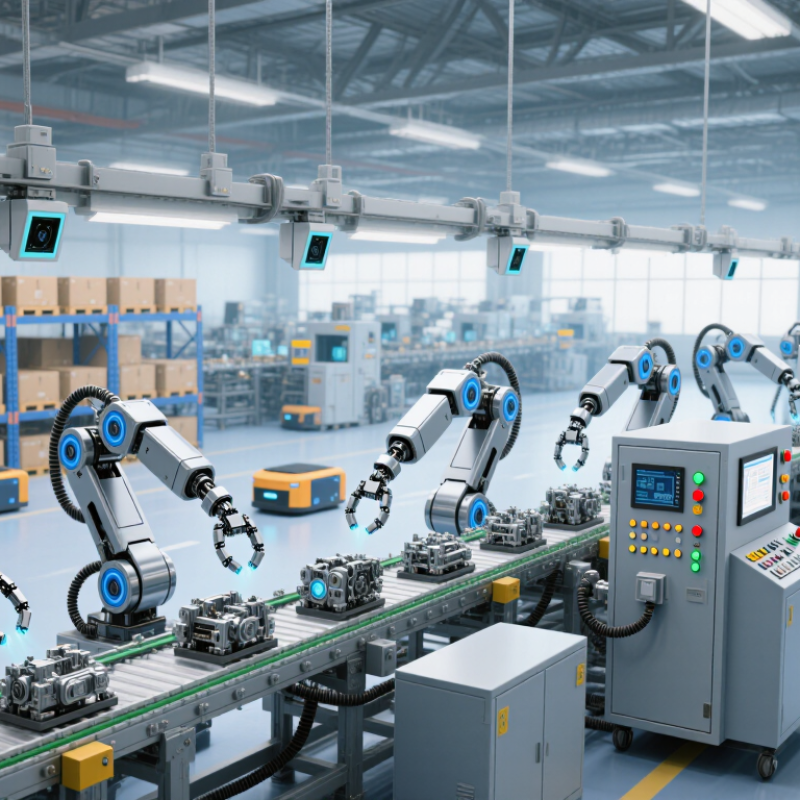
Top Automation Systems for Global Buyers?

What Global Automation Systems Are and What They Control

Top Automation Systems for Global Buyers?

Global automation systems connect sensing, decision-making, and machine action. PLCs control fast equipment sequences, while SCADA systems display alarms, trends, and production status. DCS platforms manage continuous processes, such as temperature, pressure, and flow. MES software links shop-floor activity with planning, quality, and traceability. Motion controllers coordinate servo-driven machines with millisecond accuracy. Safety systems monitor emergency stops, access doors, and hazardous movements. The International Federation of Robotics reported 541,302 industrial robots installed worldwide in 2023, with 4.28 million operating robots in service. That scale makes interoperability more than a technical preference.

Global buyers should examine protocols, environmental ratings, spare-part access, and local engineering support. A system may perform well in a clean factory, then struggle with dust, heat, or unstable networks. Cybersecurity also needs practical controls, including network segmentation, tested backups, and role-based access. The International Energy Agency estimates that industry uses about 37% of global final energy. Therefore, automation should measure idle time, compressed-air losses, motor loads, and abnormal consumption. In practice, dashboards often look impressive but lack reliable sensor data. That weakness is easy to miss.

Tips: Request a factory acceptance test before shipment. Confirm data ownership and update responsibilities. Test manual recovery, not only normal operation. Compare total lifecycle cost, not purchase price. Start with one measurable bottleneck. Then scale carefully.


What Global Automation Systems Control

Automation systems operate at different time scales: motion and machine controllers react in milliseconds, while supervisory and manufacturing-management systems coordinate processes over seconds or minutes.

The chart uses representative minimum update intervals commonly associated with each automation layer. Actual values vary by process design, network architecture, safety requirements, and equipment configuration.

Core Technologies Behind Modern Automation Systems

Modern automation systems rely on connected technologies rather than a single machine. Sensors measure temperature, pressure, position, vibration, and product quality in real time. A controller then converts these signals into precise actions. On a production line, this may mean adjusting a motor within milliseconds or stopping a conveyor after detecting a misplaced component.

Industrial networks connect controllers, robots, inspection cameras, and production software. Edge computing helps process urgent data near the machine, reducing delays caused by distant servers. Machine vision can inspect scratches, missing parts, or incorrect labels under consistent lighting. However, poor lighting and dusty lenses still create false readings. This detail is often underestimated during planning.

Modern systems also use data analytics to identify wear before equipment fails. Secure access controls, network separation, and regular software updates protect operational data and machine functions. Safety systems add emergency stops, protective sensors, and controlled restart procedures. In practical commissioning work, clear wiring diagrams and simple maintenance screens often matter as much as advanced algorithms. Engineers should test failure conditions, not only successful cycles. No system is perfectly predictive. Global buyers should examine interoperability, training, spare-part availability, validation records, and local technical support before purchasing. A fast machine with weak documentation can become an expensive operational problem.

Top Automation Systems for Global Buyers? - Core Technologies Behind Modern Automation Systems
Core Technology Primary Function Typical Measurable Characteristics Common Communication or Safety Standard Best-Fit Automation Tasks Global Buyer Considerations
Programmable Logic Controllers Executes deterministic control logic for machines, production cells, and process equipment. Millisecond-level scan cycles are common in machine-control applications; modular systems can support digital, analog, motion, and safety I/O. IEC 61131-3 programming languages; industrial Ethernet and fieldbus interfaces. Sequential control, interlocking, conveyor systems, packaging, assembly, and process control. Check programming-language support, spare-part availability, environmental ratings, cybersecurity features, and local engineering capability.
Industrial Robots and Cobots Performs repetitive, precise, or ergonomically difficult physical operations. Industrial robots commonly provide 4 to 6 axes; collaborative systems typically support payloads from a few kilograms to several tens of kilograms, depending on the model. ISO 10218 for industrial robot safety; ISO/TS 15066 provides guidance for collaborative robot applications. Pick-and-place, welding, palletizing, machine tending, inspection, dispensing, and assembly. Evaluate payload, reach, repeatability, safety-zone requirements, tooling compatibility, cycle time, and regional compliance documentation.
Servo Drives and Motion Control Controls position, speed, torque, and synchronized movement of motors and mechanical axes. Closed-loop systems use encoder feedback; positioning repeatability may reach approximately ±0.01 to ±0.1 mm in suitable mechanical systems, depending on load and calibration. IEC 61800 for adjustable-speed electrical power-drive systems; real-time industrial Ethernet is widely used for synchronization. CNC equipment, robotics, electronic assembly, converting, packaging, and high-speed indexing. Compare motor-drive matching, regenerative braking, overload capacity, encoder interfaces, tuning tools, and power-grid compatibility.
Machine Vision Captures and analyzes images for inspection, measurement, identification, and robot guidance. System performance depends on camera resolution, optics, lighting, and processing; common industrial cameras range from 1 to more than 20 megapixels. GigE Vision, USB3 Vision, CoaXPress, and industry-specific image-processing interfaces. Defect detection, dimensional measurement, barcode reading, orientation, presence checks, and quality classification. Assess lighting stability, lens availability, image-processing capacity, environmental protection, data-storage requirements, and false-rejection rates.
Industrial Sensors and IIoT Devices Measures machine conditions and process variables for control, monitoring, and predictive maintenance. Typical measurements include temperature, pressure, flow, vibration, proximity, position, and energy consumption; many devices offer IP65 or higher enclosure protection for industrial environments. IO-Link, 4–20 mA, HART, industrial Ethernet, and wireless industrial protocols. Condition monitoring, level detection, process feedback, energy management, and asset tracking. Review measurement range, accuracy, response time, ingress protection, calibration requirements, wireless spectrum rules, and replacement compatibility.
Industrial Networking and Edge Connectivity Connects controllers, drives, robots, sensors, supervisory systems, and enterprise platforms. Industrial Ethernet commonly provides 100 Mbps or 1 Gbps links; time-sensitive applications require deterministic timing and suitable network design. OPC UA for interoperable data exchange; MQTT is widely used for lightweight publish-subscribe messaging; IEC 62443 supports industrial cybersecurity practices. Machine-to-machine communication, production monitoring, remote diagnostics, data collection, and system integration. Check topology, redundancy, latency, protocol interoperability, certificate management, remote-access controls, and network segmentation.
Human-Machine Interfaces and SCADA Provides operator visualization, alarms, recipe management, supervisory control, and production reporting. Modern systems support role-based access, historical data, alarm logs, dashboards, and browser-based or thin-client access. IEC 62443 cybersecurity principles; OPC UA and standard industrial database interfaces are commonly used for data integration. Process visualization, alarm management, batch control, downtime analysis, and operator guidance. Evaluate multilingual support, audit trails, user permissions, historian capacity, licensing structure, and compatibility with existing controllers.
Safety Control Systems Reduces risk by monitoring emergency stops, guards, light curtains, enabling devices, and safe motion functions. Safety performance is commonly specified using PL d or PL e under ISO 13849-1, or equivalent safety integrity levels under IEC 61508 and IEC 62061. ISO 13849-1, IEC 62061, IEC 60204-1, and applicable regional machinery-safety requirements. Emergency stopping, guard monitoring, safe torque off, safe speed, safe limited position, and access control. Require documented risk assessment, validated safety circuits, diagnostic coverage, reset logic, inspection procedures, and local regulatory acceptance.
Automated Material Handling Moves raw materials, work-in-process goods, pallets, and finished products through a facility. Systems may use conveyors, automated storage and retrieval equipment, autonomous mobile robots, or guided vehicles; throughput is normally specified in units or pallets per hour. Warehouse-control interfaces, industrial Ethernet, safety standards, and fleet-management APIs. Warehousing, kitting, line feeding, pallet movement, sorting, and order fulfillment. Analyze floor layout, traffic density, payload, battery strategy, charging infrastructure, scalability, integration with inventory software, and emergency procedures.
Note: Performance figures are representative industry ranges or commonly used specifications. Actual results depend on equipment configuration, application conditions, software, mechanical design, installation quality, and applicable regional standards.

How to Compare Automation Systems for International Purchasing

Top Automation Systems for Global Buyers?

Comparing automation systems for international purchasing requires more than checking a feature list. Start with total cost, including installation, training, software updates, spare parts, and customs handling.

The World Economic Forum’s Future of Jobs Report 2023 found that 85% of surveyed organizations expect technology adoption to transform their operations. That shift increases pressure on buyers to choose systems that can scale across countries. Check language settings, currency support, regional tax rules, data hosting, and integration with existing procurement software. A polished demonstration can hide difficult daily work.

Reliability needs evidence. Ask for verified uptime, recovery procedures, cybersecurity controls, and performance results from similar operating environments.

The International Data Corporation’s Worldwide Digital Transformation Spending Guide shows continued global investment in digital operations, but spending alone does not guarantee useful automation. Request a live workflow test using real purchase orders, supplier changes, and delayed shipments. Test failure conditions too. They matter.

Tips:

Build a weighted scorecard before vendor discussions. Give higher scores to interoperability, local support, transparent pricing, and audit trails. Ask how quickly replacement parts arrive in each purchasing region.

Review three customer references, preferably from different countries. Do not ignore human adoption; a technically strong system may still fail when staff find its screens confusing.

I once underestimated training time in a rollout. That mistake was expensive, and still instructive.

A Step-by-Step Process for Evaluating Global Automation Suppliers

Top Automation Systems for Global Buyers?

A Step-by-Step Process for Evaluating Global Automation Suppliers

Start with the production problem, not the supplier’s sales presentation. Define cycle time, product tolerance, throughput, floor space, and operator involvement. Ask for a written process description. Vague requirements create expensive misunderstandings.

Review the supplier’s technical evidence next. Request drawings, control architecture, safety documentation, maintenance plans, and tested performance data. Compare promised cycle times with results from a live demonstration. If possible, inspect a similar installation and speak with its operating team. Their comments often reveal downtime patterns that brochures omit.

Check manufacturing quality through a remote or on-site audit. Observe wiring, assembly records, spare-parts storage, and final testing procedures. Confirm who handles software updates, training, troubleshooting, and regional service. Clarify response times in writing. A low purchase price can become costly when support is slow.

Use a weighted scorecard. Include technical fit, reliability, communication, delivery risk, training, and total ownership cost. Ask for references from buyers with similar production conditions. Verify certificates independently where practical. Do not treat a polished demonstration as proof of long-term performance.

No scorecard is perfect.

Leave room for judgment. A supplier may score well yet communicate poorly during technical discussions. Another may have less presentation polish but stronger engineering discipline. My experience suggests that transparent answers matter more than flawless claims. Pilot testing is still valuable, because assumptions fail when real materials, operators, and shifts enter the system.

Implementation, Integration, and Support Considerations for Buyers

Top Automation Systems for Global Buyers?

Implementation, Integration, and Support Considerations for Buyers

Selecting an automation system involves more than comparing features.

In real projects, implementation quality often determines long-term value. A warehouse team may need barcode scanners, approval screens, and reporting tools connected within weeks. I have seen attractive systems fail because data ownership was unclear. Define responsibilities before configuration begins. Keep a documented process map.

Integration deserves practical testing.

Confirm whether the system can exchange orders, inventory records, invoices, and user permissions with existing platforms. Use sample data from different regions, including varied currencies, time zones, and address formats. A staged rollout is safer than a global launch. Test one site first. Then measure errors, processing time, and staff adoption.

Our early estimates were too optimistic.

Support arrangements can protect buyers from expensive delays.

Ask about response times, escalation paths, maintenance windows, and training materials. A reliable provider should offer clear service commitments and accessible technical documentation. Request named contacts for implementation and post-launch support. Local language coverage may matter during a night-shift incident.

It is easy to overlook.

Buyers should also inspect security controls, data retention practices, backup procedures, and audit logs.

Independent assessments can strengthen confidence, but internal testing remains necessary. No system is perfect. Integration gaps may appear after launch, especially when business processes change. Reserve budget and staff time for adjustments, refresher training, and periodic performance reviews.

Support is not an optional add-on.

Powder Coat Booths

For those larger-sized parts, or smaller quantity runs, we have 2 independent powder coat booths and ovens. The quality, durability and affordability of today’s powder coating finishes make this the process of choice for world-class companies.

Powder coating advantages over other forms of coating are many. Materials used in the Powder coating process can be metals and non-metals that come in a multitude of thicknesses, textures, colors, etc. Another of Powder coating’s biggest advantages over conventional coatings is its ability to create finishes in many different textures. Powder Coating Booths allow us the ability to apply these advantages to large products.

Wet Paint Line

Tri-State Fabricators runs a full-service conveyor line for painting. Wet painting can provide protection or decoration to many different part styles. From start to finish, every project is easier to undergo random and point-based inspection by our skilled painting team.

Advantages to our Wet Paint Line are these lines start with product prep and ends with a thorough inspection of a high quality finished product. Our ability to complete large and small projects with a superior finish and doing so in a timely and economical fashion. This passes along the savings in production to our customers. When powder coating ins not an option, our Wet Paint Line gets the job done right the first time.

Wet Paint Booths

When the parts get big and heavy we roll-out our custom paint racks and oversize booth. By utilizing our partnerships with all the major paint brands, we can match virtually any color with wet paint.

The advantages of having access to a Wet Paint Booth are many. Large projects of many different shapes can be loaded into the booth. The Wet Paint Booth offers an environment that is much more controlled than a typical parts painting operation.

Not only are they used because of their controlled environment, but they’re are also advantageous when it comes to applying paint to parts that are needed in industries that require specialty coatings such as medical, aerospace, etc.

Military CARC

Our military forces have some very high standards when it comes to the finish of their vehicles and equipment. From the first pre-treatment step to final coat, it takes a great deal of knowledge and experience to protect the men and women of our armed forces. They deserve only the best, and Tri-State Fabricators provides it.

All of our processes are closely monitored by our staff and management teams. Both of which are highly trained in the processes of metal fabrication and finishing. Tri-State Fabricators’ goal is to always fully satisfy each and every customer, including the military. We will always put a 110% into what we do.

Glass-Bead Blasting

Abrasive media blasting is an excellent way to remove old paint, rust, and increase the paint/powder adhesion. Glass beads produce a much smoother and brighter finish than angular abrasives; leaving the part clean yet without any dimensional change. Chemically inert and environmentally friendly, we can recycle our beads approximately 30 times; making them a more preferred method of metal cleaning or surface finishing.

Advantages to Glass Bead Blasting are many. Glass bead blast media is used when a project is needing rough surfaces need to become smooth for applications of coatings such as paint. It is typically used to clean paint and rust from a product surface without deforming the surface it is being used on. Overall, compared to many other blasting media, Glass Bead Blasting is a very economical choice and those savings are always passed on to our customers.

Part Washing

Tri-State Fabricators utilize a zinc phosphate wash to clean and etch the material to ensure the best paint adhesion possible. The unique design of our 3-stage wash system does the work like a 5-stage. From Cleaning and rinsing to conversion coating and post-treatment, Our Part Washing process is a complete service and works throughout the fabrication service and the finishing service.

Along with the previously mentioned benefits, Curing is a vital chemical reaction that leaves the product finish hard and relatively safe from mild abrasion and aggressive corrosion. This process can be done in more than one way; ambient air-dry or in curing ovens at temps that exceed 240°.

Burn-Off Oven

From fixing paint mistakes (someone else’s of course) to simply cleaning our paint line hooks, our burn-off oven is put to good use. After a quick burn-off, a little clean up, and a fresh coat of paint, your parts will look better than new.

Why does our Burn-Off Oven work so well? Because super heating the air around parts turns the materials into ashes. From paint and powder coatings to rubber and machining oils, high temps do the job without degrading the integrity of the part.

Masking

Masking is a vital part of producing high quality products. We have die-cut masking patterns to protect machined surfaces as well as a wide range of plugs and caps to protect threaded holes and bolts. We provide permanent and temporary masking.

Masking allows the selected sections of a product to be protected from a fabrication or finishing service. This can be with both chemicals when etching and tapes, paints when only finishing just a section of the product. Masking is great in aiding the customization process of a project.

Screen Printing

Screen printing is a photographic process that transfers artwork onto a porous nylon screen which allows colored ink to flow through the screen and be deposited on an aluminum or plastic component. We can generally have just about any design created onto a screen for your parts.

Some of the advantages of Screen Printing are, brand recognition for your business displaying on your products, assembly instructions, product warnings/hazards, etc. Tri-State Fabricators produces Screen Printing of the highest quality so you know it’s durable.

Metal Finishing

Metal Finishing is the art of treating the exterior portion of product, often metal but can also be made of other materials, so that the surface is clean and free of any debris. Then the process of applying coats or either paint of powder coat takes place. This coating process improves the quality of the product in both appearance and resistance to wear and corrosion.

Tri-State Fabricators, Inc., understands that a project typically isn’t complete until a high-quality finish has been added to your product. This is why our painting and powder coating teams continuously inspect the products throughout the Metal Finishing process.
