


Global buyers comparing Asa Sheets face a choice that reaches beyond color and price. The right sheet must suit its end use, forming process, exposure conditions, and supply plan. A roofing panel, exterior sign, and vehicle component may all use ASA, yet their performance needs differ. Surface finish matters. So do thickness, dimensional consistency, and the quality of the underlying substrate.
ASA’s weather-resistant surface can help products retain appearance outdoors, but results depend on formulation, manufacturing, and installation. Ask suppliers for current technical data, sample sheets, and clear details about layer construction. Check color consistency under natural light. Inspect cut edges for uniformity. Small checks can reveal useful differences. They do not replace testing in the intended application.
This guide explores common ASA sheet types and the trade-offs buyers should evaluate, including solid and co-extruded options, finishes, thickness ranges, and application fit. It also considers how to compare suppliers without treating a low quotation as proof of value. A practical selection principle is simple: “Match the sheet to the conditions it must withstand, not only to the sample in your hand.” No verifiable source article or named expert quotation was provided, so that sentence is presented as editorial guidance, not as a published expert quote. Buyers should confirm claims directly with manufacturers and request evidence relevant to their project.
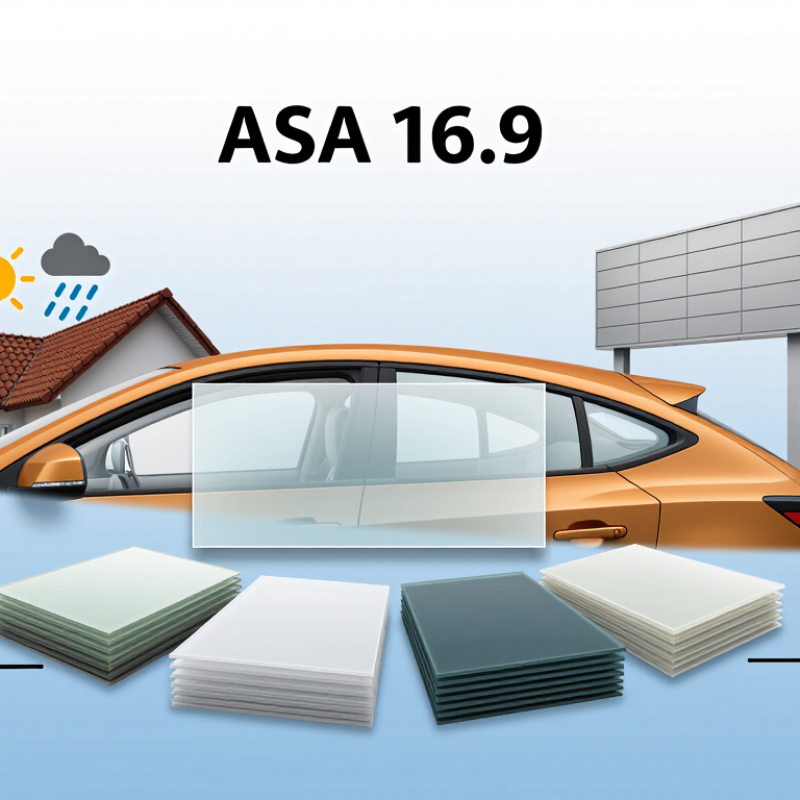
Top Types of ASA Sheets for Global Buyers
ASA Sheets: Definition, Composition, and Classification
ASA sheet is a thermoplastic sheet made with acrylonitrile styrene acrylate resin. Its acrylic-rubber component helps resist weathering, while the styrene-acrylonitrile matrix provides rigidity and shape retention. Many sheets have a colored, weather-resistant ASA surface; some are co-extruded with a supporting plastic layer. Exact layer structures vary, so check the technical data sheet before comparing products.
Buyers commonly classify ASA sheets by structure: solid ASA, ASA-faced composite sheets, and co-extruded ASA sheets with a compatible substrate. They may also be grouped by thickness, color, texture, or surface finish. A smooth sheet can look very different from a lightly embossed one under direct light. These categories can overlap, which is easy to miss. Ask about layer thickness, forming limits, and intended exposure rather than relying on a product label alone.
Tips: Request a sample and inspect both sides. Confirm the stated composition and test method with the supplier. Small formulation differences matter; appearance alone cannot verify long-term performance.
| Classification Dimension | ASA Sheet Type | Definition and Composition | Typical Characteristics | Common Applications | Buyer Considerations |
|---|---|---|---|---|---|
| Material composition | Solid ASA sheet | A sheet made primarily from acrylonitrile styrene acrylate (ASA), a weather-resistant thermoplastic. | Designed for outdoor color and surface durability; properties depend on formulation, thickness, and processing. | Outdoor panels, equipment covers, and formed exterior components. | Confirm grade, UV-weathering data, impact requirements, and suitability for the intended forming process. |
| Layer construction | ASA-capped ABS sheet | A co-extruded sheet with an ASA outer cap bonded to an acrylonitrile butadiene styrene (ABS) core. | Combines a weatherable exterior surface with an ABS substrate; the cap and core proportions vary by product. | Vehicle interior or exterior trim, recreational vehicle parts, and formed housings. | Ask for cap-layer thickness, layer-bond quality, forming limits, and outdoor-use test results. |
| Layer construction | ASA-capped substrate sheet | A multilayer sheet in which an ASA surface layer is combined with a compatible polymer substrate other than ABS, depending on the specified product. | Substrate selection influences stiffness, weight, forming behavior, and chemical resistance. | Application-specific panels and components requiring a weatherable exposed face. | Request the full layer structure and verify interlayer compatibility and recycling requirements. |
| Surface finish | Smooth or gloss-finish ASA sheet | ASA sheet with a smooth surface; gloss level depends on the grade and production conditions. | Offers a uniform appearance and is generally straightforward to clean; surface gloss is not a fixed value across all products. | Visible trim, equipment panels, and decorative exterior parts. | Specify the required gloss or appearance standard and check sample consistency. |
| Surface finish | Textured ASA sheet | ASA sheet with an embossed or otherwise textured surface produced during manufacture. | Texture can change appearance and help mask minor surface marks; available patterns are product-specific. | Exterior cladding, covers, and panels where a patterned surface is desired. | Check texture depth, cleanability, forming behavior, and whether the pattern must align across panels. |
| Processing form | Thermoforming-grade ASA sheet | Sheet formulated and supplied for heating and shaping in a thermoforming process. | Formability and allowable draw depend on material grade, sheet thickness, heating, and tooling. | Shallow or complex formed covers, housings, and trim components. | Obtain processing guidance and test a representative part for thinning, surface appearance, and dimensional stability. |
| Processing form | Flat-stock ASA sheet | Flat sheet supplied for cutting, machining, or other fabrication; the exact fabrication suitability depends on the grade. | Can be converted into parts using suitable shop processes; edge quality and tolerances depend on fabrication methods. | Flat panels, machine covers, and custom-fabricated components. | Confirm sheet dimensions, thickness tolerance, surface protection, and machining recommendations. |
| Color and appearance | Colored or custom-colored ASA sheet | ASA sheet colored through its formulation or surface layer; color availability and consistency vary by supplier and grade. | May reduce the need for post-forming painting, but color matching and weathering performance require specification. | Architectural details, exterior components, and color-coordinated equipment parts. | Define color tolerances, batch consistency, and whether the color must remain stable after outdoor exposure. |
Note: ASA sheet dimensions, thicknesses, layer ratios, colors, and performance values are product-specific rather than universal standards. Confirm the technical data sheet and applicable test methods before purchase.

ASA sheets are best compared by layer structure and manufacturing method. Solid ASA sheets contain one material through the full thickness. Coextruded sheets combine a weather-resistant ASA cap with an ABS or other polymer core. The cap provides the exposed surface; the core can add stiffness and manage material cost. Laminated constructions are another option, though layer adhesion and edge finishing need close inspection. Small details matter.
Manufacturers typically form these sheets by extrusion or coextrusion. Coextrusion joins the cap and core during production, while later thermoforming shapes the sheet into a finished part. Plastics Europe’s Plastics – the Fast Facts 2024 reports 413.8 million tonnes of global plastics production in 2023. This is not an ASA-specific figure, but it shows the scale of the broader materials market. It cannot predict ASA sheet availability or performance. Buyers should request the layer composition, cap thickness, and test conditions, since “ASA-faced” alone leaves important questions unanswered.
Tips: Match the sheet structure to its use. Check a cut edge for layer consistency, then confirm weathering and forming data in the supplier’s technical documents. A quick visual check is not enough.
Top Types of ASA Sheets for Global Buyers
Key Properties That Distinguish Different ASA Sheets
ASA sheets differ in weather resistance, impact behavior, heat tolerance, and surface finish. Solid ASA sheets offer consistent color through the material, while co-extruded sheets use a weather-resistant ASA cap over a supporting core. That cap can help retain appearance outdoors, but its thickness matters: a thin layer may be damaged during deep trimming or forming. CAMPUS polymer-property records for ASA grades commonly report tensile strengths around 40–50 MPa and heat-deflection temperatures near 85–100°C. These are grade-specific figures, not guarantees for every sheet.
Outdoor performance depends on formulation, pigment, thickness, and exposure conditions. ISO 4892-2 describes xenon-arc methods for assessing plastic weathering; it does not promise a fixed service life. Buyers should compare test results for color change, gloss retention, and impact after exposure, rather than relying on “weatherable” alone. A textured surface can hide minor scratches, yet may be harder to clean. Small details matter.
Tips: Request the exact grade’s technical data sheet and weathering results, including test duration and conditions. Check forming temperature and minimum bend radius with a sample. A datasheet can still leave questions; ask how the measured values apply to the finished sheet.
Typical Applications for Each Type of ASA Sheet
ASA sheets serve different jobs depending on their structure. Solid ASA sheets suit outdoor signs, equipment covers, and façade details exposed to sun and rain. Co-extruded ASA/ABS sheets combine a weather-resistant surface with a formable core, making them useful for vehicle trim, housings, and shaped panels. PlasticsEurope reported global plastics production of 413.8 million tonnes in 2023; that broad figure is not ASA-specific, but it underscores the importance of matching material choice to service conditions.
Corrugated ASA-faced sheets are commonly used for canopies, shelters, and lightweight roofing, where low weight and weather exposure matter. For vehicle-related applications, sheet selection should consider forming temperature, impact needs, and the visible finish. OICA recorded about 93.5 million motor vehicles produced worldwide in 2023, indicating the scale of potential demand for durable automotive components, not ASA sheet use alone. Test the cut edges. Poorly finished edges can undermine an otherwise sound panel.
Textured or embossed ASA sheets work well where glare, fingerprints, or minor surface marks are concerns, such as equipment panels and interior cladding. Smooth sheets are easier to wipe clean and may suit signage or decorative covers. A glossy sample can hide practical problems; compare formed samples under real lighting and check color consistency after fabrication. These checks are easy to skip. They should not be.
Top Types of ASA Sheets for Global Buyers
Global buyers commonly compare solid ASA sheets, ASA-capped ABS sheets, and embossed or textured sheets. Solid ASA suits outdoor parts exposed to sun and rain. ASA-capped ABS combines a weather-resistant surface with an impact-resistant core. Embossed finishes can hide minor scuffs, but may complicate cleaning. Choose by end use, not appearance alone.
Specifications and sourcing factors matter just as much. Confirm nominal thickness, width, tolerance, color consistency, surface finish, and UV-weathering test method. Request recent test reports and a production sample; a data sheet alone may not reflect batch variation. PlasticsEurope’s Plastics – the Fast Facts 2024 reports global plastics production of 413.8 million tonnes in 2023. That broad figure signals a large, complex supply chain, not ASA availability specifically. Buyers should also check minimum order quantities, lead times, packaging, and how sheets are protected from heat and abrasion during shipment. Small details matter. Still, written specifications can miss real-world handling issues.
Tips: Ask suppliers to state the test standard, exposure conditions, and acceptance limits for weathering and impact results. Compare samples under the same light, then inspect edges for chips and surface defects. Record any mismatch before approving bulk production. One imperfect point: color may shift slightly between batches, so define an acceptable range rather than relying on a single sample.


For those larger-sized parts, or smaller quantity runs, we have 2 independent powder coat booths and ovens. The quality, durability and affordability of today’s powder coating finishes make this the process of choice for world-class companies.
Powder coating advantages over other forms of coating are many. Materials used in the Powder coating process can be metals and non-metals that come in a multitude of thicknesses, textures, colors, etc. Another of Powder coating’s biggest advantages over conventional coatings is its ability to create finishes in many different textures. Powder Coating Booths allow us the ability to apply these advantages to large products.
Tri-State Fabricators runs a full-service conveyor line for painting. Wet painting can provide protection or decoration to many different part styles. From start to finish, every project is easier to undergo random and point-based inspection by our skilled painting team.
Advantages to our Wet Paint Line are these lines start with product prep and ends with a thorough inspection of a high quality finished product. Our ability to complete large and small projects with a superior finish and doing so in a timely and economical fashion. This passes along the savings in production to our customers. When powder coating ins not an option, our Wet Paint Line gets the job done right the first time.
When the parts get big and heavy we roll-out our custom paint racks and oversize booth. By utilizing our partnerships with all the major paint brands, we can match virtually any color with wet paint.
The advantages of having access to a Wet Paint Booth are many. Large projects of many different shapes can be loaded into the booth. The Wet Paint Booth offers an environment that is much more controlled than a typical parts painting operation.
Not only are they used because of their controlled environment, but they’re are also advantageous when it comes to applying paint to parts that are needed in industries that require specialty coatings such as medical, aerospace, etc.
Our military forces have some very high standards when it comes to the finish of their vehicles and equipment. From the first pre-treatment step to final coat, it takes a great deal of knowledge and experience to protect the men and women of our armed forces. They deserve only the best, and Tri-State Fabricators provides it.
All of our processes are closely monitored by our staff and management teams. Both of which are highly trained in the processes of metal fabrication and finishing. Tri-State Fabricators’ goal is to always fully satisfy each and every customer, including the military. We will always put a 110% into what we do.
Abrasive media blasting is an excellent way to remove old paint, rust, and increase the paint/powder adhesion. Glass beads produce a much smoother and brighter finish than angular abrasives; leaving the part clean yet without any dimensional change. Chemically inert and environmentally friendly, we can recycle our beads approximately 30 times; making them a more preferred method of metal cleaning or surface finishing.
Advantages to Glass Bead Blasting are many. Glass bead blast media is used when a project is needing rough surfaces need to become smooth for applications of coatings such as paint. It is typically used to clean paint and rust from a product surface without deforming the surface it is being used on. Overall, compared to many other blasting media, Glass Bead Blasting is a very economical choice and those savings are always passed on to our customers.
Tri-State Fabricators utilize a zinc phosphate wash to clean and etch the material to ensure the best paint adhesion possible. The unique design of our 3-stage wash system does the work like a 5-stage. From Cleaning and rinsing to conversion coating and post-treatment, Our Part Washing process is a complete service and works throughout the fabrication service and the finishing service.
Along with the previously mentioned benefits, Curing is a vital chemical reaction that leaves the product finish hard and relatively safe from mild abrasion and aggressive corrosion. This process can be done in more than one way; ambient air-dry or in curing ovens at temps that exceed 240°.
From fixing paint mistakes (someone else’s of course) to simply cleaning our paint line hooks, our burn-off oven is put to good use. After a quick burn-off, a little clean up, and a fresh coat of paint, your parts will look better than new.
Why does our Burn-Off Oven work so well? Because super heating the air around parts turns the materials into ashes. From paint and powder coatings to rubber and machining oils, high temps do the job without degrading the integrity of the part.
Masking is a vital part of producing high quality products. We have die-cut masking patterns to protect machined surfaces as well as a wide range of plugs and caps to protect threaded holes and bolts. We provide permanent and temporary masking.
Masking allows the selected sections of a product to be protected from a fabrication or finishing service. This can be with both chemicals when etching and tapes, paints when only finishing just a section of the product. Masking is great in aiding the customization process of a project.
Screen printing is a photographic process that transfers artwork onto a porous nylon screen which allows colored ink to flow through the screen and be deposited on an aluminum or plastic component. We can generally have just about any design created onto a screen for your parts.
Some of the advantages of Screen Printing are, brand recognition for your business displaying on your products, assembly instructions, product warnings/hazards, etc. Tri-State Fabricators produces Screen Printing of the highest quality so you know it’s durable.
Metal Finishing is the art of treating the exterior portion of product, often metal but can also be made of other materials, so that the surface is clean and free of any debris. Then the process of applying coats or either paint of powder coat takes place. This coating process improves the quality of the product in both appearance and resistance to wear and corrosion.
Tri-State Fabricators, Inc., understands that a project typically isn’t complete until a high-quality finish has been added to your product. This is why our painting and powder coating teams continuously inspect the products throughout the Metal Finishing process.

