


2026 Top Armature Shaft Manufacturers for Global Buyers

In 2026, global buyers are examining Armature Shaft manufacturers beyond price, production volume, and attractive catalogs. Reliable sourcing now requires evidence. Buyers need stable steel grades, controlled heat treatment, accurate grinding, and repeatable balancing results. A shaft may look flawless, yet small runout can create vibration, noise, and premature bearing wear.

Professor Ion Boldea, a recognized electric-machine researcher, offers a practical principle: “A motor’s electromagnetic promise is limited by its mechanical construction.” This idea guides our review of leading Armature Shaft suppliers. We examine machining capability, material traceability, dimensional inspection, surface finish, and production consistency. We also consider communication quality, sample approval, packaging, and after-sales support. These details matter when shafts cross borders and enter demanding motor assemblies.

Some manufacturers report impressive tolerances without explaining their measurement methods. That deserves caution. Buyers should request inspection records, balancing grades, hardness results, and clear drawings before placing large orders. Factory visits can reveal more than brochures. Look closely at grinding equipment, storage conditions, and how finished shafts are protected from corrosion.

The best supplier is not always the largest. It is the one that understands your load, speed, bearing fit, and production schedule. Mistakes still happen, even in advanced factories. Transparent corrective action matters. This guide compares major manufacturers through an engineering and purchasing lens, helping global buyers build a more dependable Armature Shaft supply chain in 2026.
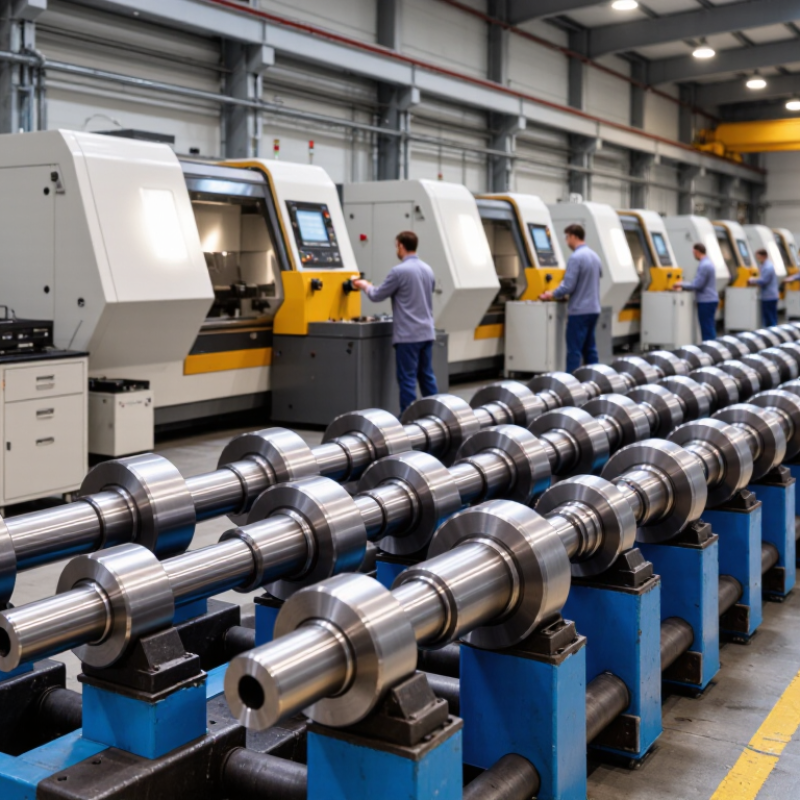
2026 Top Armature Shaft Manufacturers for Global Buyers

Armature Shafts: Definition, Functions, and Industrial Applications

An armature shaft is the rotating steel member inside an electric motor or generator. It carries the armature core, commutator, fan, and sometimes a gear. During operation, the shaft transfers electromagnetic torque to the machine’s working load. It also keeps rotating parts aligned with the bearings and stator.

A reliable shaft needs accurate machining, suitable steel, and controlled heat treatment. Surface hardness affects wear resistance, while core toughness helps prevent sudden failure. Dynamic balancing is essential because even a small imbalance can create vibration, noise, and bearing damage. Armature shafts serve power tools, cooling fans, pumps, automotive actuators, railway equipment, and factory drive systems. In practical inspection, runout, journal diameter, keyway size, and concentricity deserve close attention. One overlooked tolerance can reduce service life. Specifications are not always perfect; engineers should review real operating conditions before production.

Tips: Check the shaft drawing against the finished sample. Confirm material certificates, hardness results, balance grades, and dimensional reports. Ask manufacturers how they control straightness and surface finish. A lower price may hide extra assembly work. For global buyers, packaging also matters because unsupported shafts can bend during transport. Small details matter.


Armature Shafts: Definition, Functions, and Industrial Applications

Armature shafts transmit torque from an electric motor or generator rotor to the driven equipment while maintaining accurate alignment. The chart compares representative minimum ultimate tensile strength values for commonly used shaft materials and conditions. Actual performance depends on heat treatment, diameter, keyways, surface finish, fatigue loading, and design requirements. Typical applications include traction motors, industrial drives, power tools, pumps, fans, compressors, and automotive starter motors.

Key Standards for Evaluating Global Armature Shaft Manufacturers

2026 Top Armature Shaft Manufacturers for Global Buyers

Key Standards for Evaluating Global Armature Shaft Manufacturers

Choosing an armature shaft manufacturer requires more than comparing unit prices. The U.S. Department of Energy reports that motor-driven equipment consumes more than half of industrial electricity. Small shaft errors can therefore increase vibration, heat, and maintenance costs. Evaluate material certificates, heat-treatment records, surface hardness, straightness, and dimensional reports. ISO 9001 certification helps assess process control, but it does not prove every shaft is perfect. Buyers should also review calibration records and traceability from steel batch to final inspection.

Technical compliance matters during supplier audits.

IEC 60034-1 provides requirements for rotating electrical machines, while ISO 21940 addresses mechanical balancing. Ask for balance grades, runout limits, machining tolerances, and fatigue-test methods. The ISO Survey 2023 recorded more than 1.2 million ISO 9001 certificates worldwide, yet certificate numbers alone can mislead. A capable manufacturer should explain control plans clearly and provide recent, verifiable inspection data. Samples are useful, but production consistency is harder. This deserves careful reflection.

Tips: Request three recent inspection reports. Compare measured values with drawings. Check how rejected shafts are isolated. Visit the plant when possible. Confirm packaging against humidity and impact risks. Ask whether corrective actions are closed, not merely recorded. Avoid suppliers who promise every tolerance without showing measurement evidence.

2026 Ranking of Leading Armature Shaft Manufacturers Worldwide

2026 Ranking of Leading Armature Shaft Manufacturers Worldwide

The 2026 ranking evaluates armature shaft manufacturers by measurable production capability, dimensional accuracy, material control, delivery reliability, and international compliance. Public company disclosures and technical audits remain uneven, so the ranking should be read as a buyer’s framework, not an official global register. That limitation matters.

Energy efficiency drives demand. The International Energy Agency reports that electric motors and related systems consume about 46% of global electricity. The U.S. Department of Energy also identifies motor-system optimization as a major industrial efficiency opportunity. These figures place armature shafts inside a wider engineering challenge, not merely a replacement-parts market.

Leading manufacturers typically offer forged or precision-machined steel shafts, controlled heat treatment, dynamic balancing, and traceable inspection records. Buyers should examine runout data, surface hardness, fatigue testing, and tolerance stability across production batches. ISO 9001 certification helps, but it does not replace process evidence. Ask for sample inspection reports.

The strongest 2026 candidates combine regional production with export-ready packaging and documented lead times. They also support small engineering changes, since rotor geometry, commutator fit, and bearing seats vary by motor design. Some suppliers rank highly on price yet perform poorly on consistency. That weakness is easy to miss.

A reliable shortlist should include factory audits, first-article testing, and independent verification. Industry rankings can simplify sourcing, but they cannot predict every failure mode. Human judgment still matters.

Manufacturing Technologies and Quality Control Practices

2026 Top Armature Shaft Manufacturers for Global Buyers

Manufacturing Technologies and Quality Control Practices

Reliable armature shaft production starts with controlled material selection. Manufacturers should verify steel grade, heat number, chemical composition, and mechanical properties before machining. In practice, incoming inspection often reveals more than a polished factory presentation.

High-volume facilities may use cold heading, CNC turning, centerless grinding, and induction hardening. Each process affects concentricity, surface finish, and fatigue resistance. Grinding rooms should control temperature closely. Even small thermal changes can alter shaft dimensions.

Critical areas include bearing seats, commutator locations, keyways, and threaded ends. Coordinate measuring machines check diameter and geometry. Laser or optical systems can inspect profiles quickly. Runout testing should reflect the customer’s actual assembly conditions, not only laboratory fixtures. Dynamic balancing is also essential for quieter motor operation.

Quality teams should record hardness depth, surface roughness, runout, and final balance values. Lot-level traceability connects each shaft to raw material and process records. Sample testing is useful, but it cannot replace disciplined process control. A serious supplier also performs gauge calibration and reviews nonconforming parts.

Small details matter.

Global buyers should audit maintenance routines, operator training, and corrective-action records. A factory may have advanced equipment but weak follow-up practices. That gap deserves attention. No production system is flawless, and honest reporting of defects often signals stronger long-term reliability. Suppliers should explain their limits clearly, especially when tolerances become unusually tight.

How Global Buyers Can Select the Right Armature Shaft Supplier

2026 Top Armature Shaft Manufacturers for Global Buyers

How Global Buyers Can Select the Right Armature Shaft Supplier

Choosing an armature shaft supplier requires more than comparing unit prices. In practical sourcing work, I examine process control, testing records, and communication speed. Request drawings with clear tolerances for diameter, straightness, hardness, and surface finish. Confirm the steel grade and heat-treatment method before sampling. Small journal errors can create vibration, noise, or early bearing wear. Ask how the supplier controls concentricity during turning and grinding. The answer should include measurable inspection methods, not vague promises.

A capable supplier should provide material certificates, dimensional reports, and batch traceability. It should also explain dynamic balancing procedures for finished shafts. Review sample results under real operating conditions. Check whether the supplier can maintain stable quality across repeated production lots. One sample proves little. A polished factory tour can still hide weak inspection discipline. Independent testing may be worthwhile for hardness, fatigue resistance, or corrosion performance. It adds cost, but replacement failures cost more.

Global supply requires dependable packaging, lead times, and technical support. Ask for a realistic production schedule, including tooling and inspection delays. Clarify how engineering changes receive approval and records. A responsive supplier should discuss problems openly. That matters when drawings are incomplete or tolerances conflict. I have seen projects move too quickly because early samples looked perfect. Later, assembly pressure exposed poor fit. Leave room for another validation round. The cheapest quotation is not always the safest decision.

2026 Top Armature Shaft Manufacturers for Global Buyers - How Global Buyers Can Select the Right Armature Shaft Supplier

Anonymous supplier-capability comparison based on commonly used global manufacturing benchmarks. All values are indicative and should be verified through drawings, samples, inspection records, and commercial quotations.

Supplier Capability Profile Typical Buyer Application Common Shaft Materials Typical Diameter Range Typical Length Range Machining Tolerance Surface Finish Heat Treatment Capability Balancing Capability Quality Documentation Typical MOQ Indicative Production Lead Time Best Selection Advantage
High-volume export machining profile Small motors, pumps, fans, power tools, and general industrial drives Carbon steel, alloy steel, stainless steel, and free-cutting steel 6–50 mm 30–500 mm Usually ±0.02–0.05 mm; tighter features by drawing Ra 0.8–3.2 μm; grinding available for critical journals Induction hardening, carburizing, nitriding, and tempering through qualified processes Dynamic balancing commonly available for complete armature assemblies Dimensional report, material certificate, hardness report, and final inspection record Typically 100–1,000 pieces, depending on tooling and process 4–8 weeks after drawing approval Competitive unit cost and scalable repeat production
Precision-ground shaft profile High-speed motors, servo systems, laboratory equipment, and precision actuators Hardened alloy steel, bearing steel, stainless steel, and tool steel 3–40 mm 20–350 mm Commonly ±0.005–0.02 mm on critical diameters Ra 0.2–0.8 μm on precision-ground surfaces Through-hardening, induction hardening, and controlled tempering High-speed balancing and runout verification generally available CMM report, roundness report, concentricity data, hardness report, and traceability records Typically 20–200 pieces 6–10 weeks, including grinding and inspection Strong control of runout, concentricity, roundness, and bearing-seat accuracy
Automotive and mobility component profile Electric power steering, braking systems, pumps, traction motors, and vehicle actuators Low-carbon alloy steel, carburizing steel, micro-alloyed steel, and stainless steel 8–60 mm 40–650 mm Typically ±0.01–0.03 mm on functional dimensions Ra 0.4–1.6 μm, subject to bearing and seal requirements Carburizing, carbonitriding, induction hardening, and shot peening Assembly balancing with defined residual-unbalance limits Process control plan, PPAP support, capability studies, traceability, and inspection records Typically 500–5,000 pieces after approval 8–16 weeks for new programs; shorter for established production Strong process discipline, traceability, and high-volume consistency
Prototype and low-volume engineering profile New motor designs, replacement parts, testing programs, and engineering validation Common carbon steel, alloy steel, stainless steel, and aluminum where suitable 5–80 mm 20–800 mm Usually ±0.03–0.10 mm; tighter tolerances may require secondary grinding Ra 0.8–3.2 μm, with polishing available when specified External heat-treatment partners or in-house basic hardening, subject to review Balancing available as an additional operation Material certificate, first-article inspection, dimensional report, and sample approval records 1–50 pieces 2–5 weeks for standard materials and uncomplicated geometry Fast design feedback, flexible quantities, and low tooling commitment
Heavy-duty and high-torque profile Industrial motors, compressors, conveyors, generators, and demanding transmission systems 4140/4340-class alloy steel, carburizing steel, and high-strength stainless steel 20–150 mm 150–1,500 mm Typically ±0.02–0.05 mm; geometry-dependent Ra 0.8–3.2 μm, with ground bearing seats where required Quenching and tempering, induction hardening, nitriding, and stress relieving Low-speed and high-speed balancing based on operating speed and assembly condition Ultrasonic or magnetic-particle testing may be available; full material traceability recommended Typically 10–100 pieces 8–14 weeks, depending on forging, heat treatment, and inspection requirements Suitable for high loads, fatigue resistance, larger dimensions, and demanding duty cycles
Corrosion-resistant and specialty-material profile Medical equipment, food-processing motors, marine equipment, and chemically exposed machinery 304/316 stainless steel, 17-4 PH stainless steel, 420 stainless steel, and nickel-based alloys when justified 5–80 mm 30–700 mm Usually ±0.02–0.05 mm; precision grinding available Ra 0.4–1.6 μm; electropolishing or passivation may be specified Solution treatment, precipitation hardening, passivation, and controlled stress relieving Balancing available for motor assemblies and rotating equipment Material heat number, corrosion-treatment record, dimensional report, and surface-finish verification Typically 10–200 pieces 6–12 weeks, depending on material availability and finishing Improved corrosion resistance, cleanability, and suitability for controlled environments

Global Buyer Selection Checklist

  • Confirm the complete technical drawing, datum scheme, fit classes, runout limits, keyway or spline requirements, and balancing grade before requesting quotations.
  • Request material certificates with heat-number traceability and verify the specified tensile strength, hardness, case depth, or surface-treatment requirement.
  • Check whether critical operations such as grinding, heat treatment, balancing, plating, passivation, and nondestructive testing are performed in-house or through qualified subcontractors.
  • Compare first-article inspection capability, measurement equipment, calibration status, process-control records, and corrective-action procedures.
  • Evaluate total landed cost rather than unit price alone, including tooling, packaging, freight, import duties, inspection, payment terms, and warranty handling.
  • For repeat orders, establish agreed acceptance criteria, sample-retention rules, change-control procedures, annual capacity confirmation, and delivery-performance targets.

Note: Tolerance, finish, hardness, balancing, MOQ, and lead-time values vary with shaft geometry, material grade, production volume, heat-treatment route, inspection standard, and destination market. Buyers should obtain a drawing-specific quotation and a documented quality plan before placing an order.

Article Source:

Powder Coat Booths

For those larger-sized parts, or smaller quantity runs, we have 2 independent powder coat booths and ovens. The quality, durability and affordability of today’s powder coating finishes make this the process of choice for world-class companies.

Powder coating advantages over other forms of coating are many. Materials used in the Powder coating process can be metals and non-metals that come in a multitude of thicknesses, textures, colors, etc. Another of Powder coating’s biggest advantages over conventional coatings is its ability to create finishes in many different textures. Powder Coating Booths allow us the ability to apply these advantages to large products.

Wet Paint Line

Tri-State Fabricators runs a full-service conveyor line for painting. Wet painting can provide protection or decoration to many different part styles. From start to finish, every project is easier to undergo random and point-based inspection by our skilled painting team.

Advantages to our Wet Paint Line are these lines start with product prep and ends with a thorough inspection of a high quality finished product. Our ability to complete large and small projects with a superior finish and doing so in a timely and economical fashion. This passes along the savings in production to our customers. When powder coating ins not an option, our Wet Paint Line gets the job done right the first time.

Wet Paint Booths

When the parts get big and heavy we roll-out our custom paint racks and oversize booth. By utilizing our partnerships with all the major paint brands, we can match virtually any color with wet paint.

The advantages of having access to a Wet Paint Booth are many. Large projects of many different shapes can be loaded into the booth. The Wet Paint Booth offers an environment that is much more controlled than a typical parts painting operation.

Not only are they used because of their controlled environment, but they’re are also advantageous when it comes to applying paint to parts that are needed in industries that require specialty coatings such as medical, aerospace, etc.

Military CARC

Our military forces have some very high standards when it comes to the finish of their vehicles and equipment. From the first pre-treatment step to final coat, it takes a great deal of knowledge and experience to protect the men and women of our armed forces. They deserve only the best, and Tri-State Fabricators provides it.

All of our processes are closely monitored by our staff and management teams. Both of which are highly trained in the processes of metal fabrication and finishing. Tri-State Fabricators’ goal is to always fully satisfy each and every customer, including the military. We will always put a 110% into what we do.

Glass-Bead Blasting

Abrasive media blasting is an excellent way to remove old paint, rust, and increase the paint/powder adhesion. Glass beads produce a much smoother and brighter finish than angular abrasives; leaving the part clean yet without any dimensional change. Chemically inert and environmentally friendly, we can recycle our beads approximately 30 times; making them a more preferred method of metal cleaning or surface finishing.

Advantages to Glass Bead Blasting are many. Glass bead blast media is used when a project is needing rough surfaces need to become smooth for applications of coatings such as paint. It is typically used to clean paint and rust from a product surface without deforming the surface it is being used on. Overall, compared to many other blasting media, Glass Bead Blasting is a very economical choice and those savings are always passed on to our customers.

Part Washing

Tri-State Fabricators utilize a zinc phosphate wash to clean and etch the material to ensure the best paint adhesion possible. The unique design of our 3-stage wash system does the work like a 5-stage. From Cleaning and rinsing to conversion coating and post-treatment, Our Part Washing process is a complete service and works throughout the fabrication service and the finishing service.

Along with the previously mentioned benefits, Curing is a vital chemical reaction that leaves the product finish hard and relatively safe from mild abrasion and aggressive corrosion. This process can be done in more than one way; ambient air-dry or in curing ovens at temps that exceed 240°.

Burn-Off Oven

From fixing paint mistakes (someone else’s of course) to simply cleaning our paint line hooks, our burn-off oven is put to good use. After a quick burn-off, a little clean up, and a fresh coat of paint, your parts will look better than new.

Why does our Burn-Off Oven work so well? Because super heating the air around parts turns the materials into ashes. From paint and powder coatings to rubber and machining oils, high temps do the job without degrading the integrity of the part.

Masking

Masking is a vital part of producing high quality products. We have die-cut masking patterns to protect machined surfaces as well as a wide range of plugs and caps to protect threaded holes and bolts. We provide permanent and temporary masking.

Masking allows the selected sections of a product to be protected from a fabrication or finishing service. This can be with both chemicals when etching and tapes, paints when only finishing just a section of the product. Masking is great in aiding the customization process of a project.

Screen Printing

Screen printing is a photographic process that transfers artwork onto a porous nylon screen which allows colored ink to flow through the screen and be deposited on an aluminum or plastic component. We can generally have just about any design created onto a screen for your parts.

Some of the advantages of Screen Printing are, brand recognition for your business displaying on your products, assembly instructions, product warnings/hazards, etc. Tri-State Fabricators produces Screen Printing of the highest quality so you know it’s durable.

Metal Finishing

Metal Finishing is the art of treating the exterior portion of product, often metal but can also be made of other materials, so that the surface is clean and free of any debris. Then the process of applying coats or either paint of powder coat takes place. This coating process improves the quality of the product in both appearance and resistance to wear and corrosion.

Tri-State Fabricators, Inc., understands that a project typically isn’t complete until a high-quality finish has been added to your product. This is why our painting and powder coating teams continuously inspect the products throughout the Metal Finishing process.
