


What Are the Top Anodized Aluminum Profile Suppliers?

Choosing a supplier for an Anodized Aluminum Profile is not just a price comparison. The right partner can influence finish consistency, dimensional accuracy, delivery reliability, and the profile’s performance in its intended setting. A frame installed beside a coastal window faces different conditions from one used inside a dry office. Small details matter.

Anodizing specialist Maya Chen captures the practical challenge: “A good finish is not a color sample; it is a process that stays consistent across the order.” Buyers should ask suppliers about alloy selection, pretreatment, coating thickness, color control, and inspection records. Request samples, but also ask how production batches are checked. One polished sample proves little.

This overview will compare leading suppliers by product range, customization, quality practices, certifications, and customer support. It will also consider how clearly each company explains lead times and minimum order quantities. The strongest supplier may not be the largest or cheapest. It should be able to match technical requirements with repeatable production and clear documentation. That sounds obvious. It is often missed.

Supplier rankings can simplify a complex market, but they cannot replace project-specific checks. Confirm the profile dimensions, finish requirements, and service environment before placing an order. Even a careful shortlist has limits; supplier capabilities and product specifications can change. The comparison ahead is a starting point, not a substitute for verification.
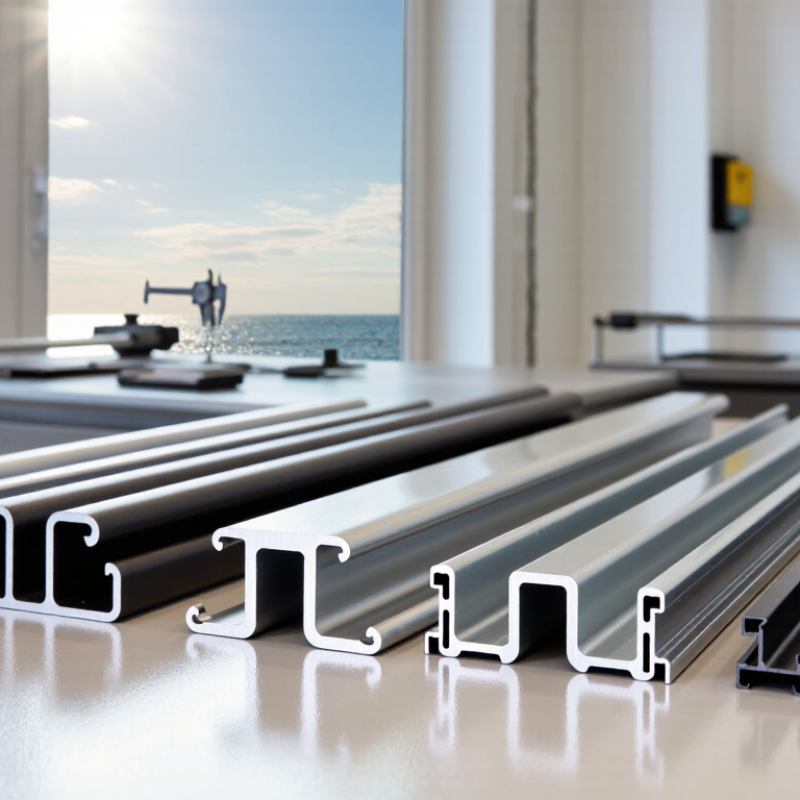
What Are the Top Anodized Aluminum Profile Suppliers?

Understanding Anodized Aluminum Profiles and Their Applications

What Are the Top Anodized Aluminum Profile Suppliers?

Anodized aluminum profiles are extruded shapes treated through an electrochemical process. This process thickens the aluminum’s natural oxide layer, improving resistance to corrosion and everyday wear. It can also create a consistent surface color. The finish is durable, but it is not scratch-proof. Deep impacts can still mark it.

These profiles appear in window frames, room dividers, equipment enclosures, and display systems. Their low weight makes them useful where easier handling matters. A profile’s shape, wall thickness, and finish all affect its performance. For outdoor use, check that the specified finish suits the expected exposure. Supplier data is useful, but real fit and assembly conditions matter too. A detail that is easy to overlook is how cut edges will look after installation.

Tips: Ask for samples and confirm dimensions before ordering. Check the finish under the lighting where the profile will be used. Small color differences can be noticeable across a large wall or frame. Also review care instructions; harsh cleaners may dull the surface over time.

What Are the Top Anodized Aluminum Profile Suppliers? — Understanding Anodized Aluminum Profiles and Their Applications
Supplier Category Typical Profile Capabilities Common Alloy Choices Anodizing Options and Considerations Typical Applications What to Verify When Comparing Suppliers
Architectural extrusion supplier Standard and custom shapes for window, door, curtain-wall, and façade systems; may provide machining and fabrication. 6063 is commonly used for architectural extrusions because it supports smooth finishes and complex shapes. Clear or colored anodized finishes are available from many providers. Confirm the specified coating class, appearance, and sealing requirements for the project. Window and door frames, curtain walls, storefronts, sunshades, and interior trim. Ask for approved finish samples, dimensional tolerances, coating documentation, and experience with the applicable architectural specification.
Industrial extrusion supplier Structural shapes, channels, rails, tubes, and profiles designed for strength, assembly, or equipment integration. 6061 is often selected when greater strength is needed; 6063 may suit applications prioritizing extrudability and surface finish. Selection depends on design requirements. Anodizing can improve surface hardness and corrosion resistance, but the finish and coating thickness should be specified for the intended environment and use. Machine frames, automation equipment, transport components, fixtures, and structural assemblies. Check alloy and temper certificates, profile tolerances, load-related design data, finish consistency, and available inspection records.
Custom profile and finishing supplier Develops made-to-order cross-sections and may coordinate extrusion, cutting, drilling, machining, and surface finishing. Alloy choice is matched to profile geometry, mechanical requirements, and desired surface finish; 6063 and 6061 are common options. Color, gloss, and appearance can vary with alloy, extrusion conditions, and anodizing process. Approve a production-representative sample before ordering. Specialized enclosures, lighting housings, display systems, custom trims, and equipment components. Confirm tooling ownership and cost, minimum order quantities, sample and approval steps, lead times, and responsibility for coordinating finishing.
Aluminum profile distributor or service center Stocks standard profiles and may offer cut-to-length service, basic machining, and access to external anodizing services. Stocked alloys vary by market and product range; verify the alloy and temper for each item rather than relying on appearance. Finished stock may be available, or anodizing may be arranged after fabrication. Confirm whether cut edges and machined areas remain unfinished. Repairs, small production runs, retail fixtures, prototypes, and general fabrication. Verify stock availability, traceability, delivery schedule, finish condition, and whether supplied material meets the required specification.
Integrated extrusion and anodizing supplier Combines profile production with in-house or closely managed anodizing, which can simplify coordination between processes. Available alloys depend on the supplier’s extrusion range; confirm that the selected alloy is suitable for both the profile design and required finish. Integrated process control may help with lot consistency. Specify finish type, color range, coating requirements, and acceptance criteria in the purchase documents. Large architectural programs, repeat industrial orders, and projects requiring consistent finishes across multiple production lots. Request process and quality documentation, production-lot controls, sample approval procedures, and details of any outsourced operations.

Criteria for Identifying Leading Anodized Aluminum Profile Suppliers

Leading anodized aluminum profile suppliers should prove process control, not just show glossy samples. The International Aluminium Institute’s 2023 analysis projects global aluminum demand could grow nearly 40% by 2030 from 2020 levels. That growth makes stable capacity and documented quality increasingly important. Ask how each batch is tracked, from billet chemistry to finished coating. Ask for records, not promises.

Inspect sample profiles under neutral light. Look for color variation, streaks, pits, and marks near cut edges. Request coating-thickness readings from several points, plus sealing and corrosion-test results. ISO 7599 describes specifications for anodic oxidation coatings; ISO 9227 provides salt-spray test methods. These standards help buyers compare evidence, though a test result alone cannot guarantee service life. Details matter.

Check dimensional tolerances, straightness, packaging, and the supplier’s response to nonconforming parts. A capable supplier should explain its inspection frequency and provide traceable reports for actual production lots. For outdoor projects, discuss exposure conditions and maintenance before choosing a finish. Ask whether test panels match the intended alloy and color. That matters. One weakness in many evaluations is relying on a single attractive sample; it may not represent routine output. Request repeat samples or recent batch data, and note where the evidence still feels incomplete.

Major Supplier Categories and Global Market Regions

Anodized aluminum profile suppliers generally fall into three groups. Integrated producers extrude, machine, and anodize profiles in-house, which can simplify quality checks across each stage. Fabricators and regional distributors often source standard shapes, then cut, drill, or package them for local projects. Specialty suppliers focus on demanding uses, such as curtain walls, equipment frames, or heat-management components. Details matter. Ask for alloy and temper documentation, dimensional tolerances, coating-thickness records, and sample pieces. A polished finish alone does not prove consistent performance.

Regional strengths differ. China and other East Asian manufacturing centers offer broad profile ranges and large production capacity, while buyers should verify process controls and export logistics. European suppliers often serve architectural projects requiring detailed specifications and traceable documentation. North American suppliers may offer shorter domestic delivery routes and practical support for custom fabrication. India and Southeast Asia have expanding production networks, though capabilities vary by facility. Not always. A supplier’s location is only a starting point.

In the Middle East, demand for durable finishes is shaped by heat, dust, and outdoor exposure. Ask how the proposed coating performs under the project’s actual conditions, rather than relying on a general grade description. Compare minimum order quantities, sample lead times, packaging, and replacement-part availability. Lead times vary. Even careful sourcing can miss a detail: color may shift slightly between batches, so confirm acceptable variation before approving a large order.

Anodized Aluminum Profiles: A Supplier Sourcing Benchmark

Anodizing suppliers can be compared by the coating thickness classes they offer. The chart shows the ISO 7599 thickness classes in micrometres—not supplier rankings or regional market shares.

Source: ISO 7599, Anodizing of aluminium and its alloys — General specifications for anodic oxidation coatings on aluminium.

Comparing Suppliers by Quality, Capabilities, and Service

What Are the Top Anodized Aluminum Profile Suppliers?

Comparing Suppliers by Quality, Capabilities, and Service

Supplier comparisons should begin with measurable evidence, not finish samples alone. Grand View Research estimated the global aluminum extrusion market at about US$87.8 billion in 2023 and projected 5.1% annual growth through 2030. That expansion makes dependable production and responsive service important. Ask suppliers for dimensional inspection records, coating-thickness results, and clear acceptance criteria. Check whether they can hold tolerances across repeat orders, not only one attractive sample. Looks can mislead.

Capabilities matter when profiles need unusual cross-sections, tight tolerances, or consistent color across batches. Ask about die design, machining, anodizing options, minimum order quantities, and realistic lead times. A capable supplier should explain how alloy choice and surface preparation affect the finished profile. Service is equally visible in practice: clear drawings, prompt answers, and early notice of production changes reduce costly surprises. A polished sample can still hide a weak process; that is easy to overlook.

Tips: Request samples from different production runs and compare them under the same lighting. Confirm coating thickness and dimensions against your drawing, then ask how nonconforming parts are handled. Good suppliers welcome specific questions. Look for documented answers, not promises.

Verifying Certifications, Samples, and Production Reliability

What Are the Top Anodized Aluminum Profile Suppliers?

Verifying Certifications, Samples, and Production Reliability

A certificate is a useful clue, not a quality guarantee. The ISO Survey 2022 recorded 1,265,216 valid ISO 9001 certificates worldwide. That scale makes verification essential: check that a supplier’s certificate is current, covers the actual production site, and includes the relevant manufacturing activities. Ask for the issuing body and certificate number. Paperwork can look reassuring. It can also miss a process problem.

Samples reveal details a brochure cannot. Inspect the cut edges, finish uniformity, color variation, and fit against your drawings. Request anodizing thickness measurements and test records for adhesion or corrosion resistance, using methods suited to the intended application. The International Aluminium Institute reported roughly 69 million tonnes of global primary aluminum production in 2022. With production at that scale, traceability from material batch to finished profile deserves attention. Ask how samples are linked to production lots, and whether packaging protects surfaces from scratches during transit.

Before placing a large order, compare a sample with a pilot run from the intended production line. Check dimensional consistency across several pieces, not just one. Request documented inspection criteria, defect records, and realistic lead times. A supplier may pass every document check and still struggle with repeatability. That is worth admitting. Ask what happens when a batch falls outside the agreed tolerances, and keep the answer in writing.

Powder Coat Booths

For those larger-sized parts, or smaller quantity runs, we have 2 independent powder coat booths and ovens. The quality, durability and affordability of today’s powder coating finishes make this the process of choice for world-class companies.

Powder coating advantages over other forms of coating are many. Materials used in the Powder coating process can be metals and non-metals that come in a multitude of thicknesses, textures, colors, etc. Another of Powder coating’s biggest advantages over conventional coatings is its ability to create finishes in many different textures. Powder Coating Booths allow us the ability to apply these advantages to large products.

Wet Paint Line

Tri-State Fabricators runs a full-service conveyor line for painting. Wet painting can provide protection or decoration to many different part styles. From start to finish, every project is easier to undergo random and point-based inspection by our skilled painting team.

Advantages to our Wet Paint Line are these lines start with product prep and ends with a thorough inspection of a high quality finished product. Our ability to complete large and small projects with a superior finish and doing so in a timely and economical fashion. This passes along the savings in production to our customers. When powder coating ins not an option, our Wet Paint Line gets the job done right the first time.

Wet Paint Booths

When the parts get big and heavy we roll-out our custom paint racks and oversize booth. By utilizing our partnerships with all the major paint brands, we can match virtually any color with wet paint.

The advantages of having access to a Wet Paint Booth are many. Large projects of many different shapes can be loaded into the booth. The Wet Paint Booth offers an environment that is much more controlled than a typical parts painting operation.

Not only are they used because of their controlled environment, but they’re are also advantageous when it comes to applying paint to parts that are needed in industries that require specialty coatings such as medical, aerospace, etc.

Military CARC

Our military forces have some very high standards when it comes to the finish of their vehicles and equipment. From the first pre-treatment step to final coat, it takes a great deal of knowledge and experience to protect the men and women of our armed forces. They deserve only the best, and Tri-State Fabricators provides it.

All of our processes are closely monitored by our staff and management teams. Both of which are highly trained in the processes of metal fabrication and finishing. Tri-State Fabricators’ goal is to always fully satisfy each and every customer, including the military. We will always put a 110% into what we do.

Glass-Bead Blasting

Abrasive media blasting is an excellent way to remove old paint, rust, and increase the paint/powder adhesion. Glass beads produce a much smoother and brighter finish than angular abrasives; leaving the part clean yet without any dimensional change. Chemically inert and environmentally friendly, we can recycle our beads approximately 30 times; making them a more preferred method of metal cleaning or surface finishing.

Advantages to Glass Bead Blasting are many. Glass bead blast media is used when a project is needing rough surfaces need to become smooth for applications of coatings such as paint. It is typically used to clean paint and rust from a product surface without deforming the surface it is being used on. Overall, compared to many other blasting media, Glass Bead Blasting is a very economical choice and those savings are always passed on to our customers.

Part Washing

Tri-State Fabricators utilize a zinc phosphate wash to clean and etch the material to ensure the best paint adhesion possible. The unique design of our 3-stage wash system does the work like a 5-stage. From Cleaning and rinsing to conversion coating and post-treatment, Our Part Washing process is a complete service and works throughout the fabrication service and the finishing service.

Along with the previously mentioned benefits, Curing is a vital chemical reaction that leaves the product finish hard and relatively safe from mild abrasion and aggressive corrosion. This process can be done in more than one way; ambient air-dry or in curing ovens at temps that exceed 240°.

Burn-Off Oven

From fixing paint mistakes (someone else’s of course) to simply cleaning our paint line hooks, our burn-off oven is put to good use. After a quick burn-off, a little clean up, and a fresh coat of paint, your parts will look better than new.

Why does our Burn-Off Oven work so well? Because super heating the air around parts turns the materials into ashes. From paint and powder coatings to rubber and machining oils, high temps do the job without degrading the integrity of the part.

Masking

Masking is a vital part of producing high quality products. We have die-cut masking patterns to protect machined surfaces as well as a wide range of plugs and caps to protect threaded holes and bolts. We provide permanent and temporary masking.

Masking allows the selected sections of a product to be protected from a fabrication or finishing service. This can be with both chemicals when etching and tapes, paints when only finishing just a section of the product. Masking is great in aiding the customization process of a project.

Screen Printing

Screen printing is a photographic process that transfers artwork onto a porous nylon screen which allows colored ink to flow through the screen and be deposited on an aluminum or plastic component. We can generally have just about any design created onto a screen for your parts.

Some of the advantages of Screen Printing are, brand recognition for your business displaying on your products, assembly instructions, product warnings/hazards, etc. Tri-State Fabricators produces Screen Printing of the highest quality so you know it’s durable.

Metal Finishing

Metal Finishing is the art of treating the exterior portion of product, often metal but can also be made of other materials, so that the surface is clean and free of any debris. Then the process of applying coats or either paint of powder coat takes place. This coating process improves the quality of the product in both appearance and resistance to wear and corrosion.

Tri-State Fabricators, Inc., understands that a project typically isn’t complete until a high-quality finish has been added to your product. This is why our painting and powder coating teams continuously inspect the products throughout the Metal Finishing process.


