Top Aluminum Railing Manufacturers in China?
Choosing a Chinese Aluminum Railing manufacturer takes more than comparing prices and polished catalog photos. The market sits within a much larger materials industry: the International Aluminium Institute reported global primary aluminium production of about 70.6 million tonnes in 2023. That figure signals scale, not railing output, so it should not be mistaken for a measure of supplier capability.
A useful shortlist starts with evidence. Ask manufacturers for alloy and temper specifications, coating details, test reports, and drawings showing post spacing, bracket design, and drainage. For a coastal project, for example, confirm how the finish performs under the relevant corrosion tests. Check whether samples match the proposed production profile. Small differences matter. A catalog image cannot show wall thickness.
Trade data also needs careful reading. UN Comtrade’s HS 7610 category covers aluminum structures and parts, not railings alone. Export totals therefore cannot identify the best railing producer or prove product quality. This guide compares manufacturers through more practical signals: manufacturing experience, quality-control documentation, customization capacity, export support, and clarity in communication. These are useful indicators, but no single one guarantees a successful order. I would also verify claims independently; supplier websites can be incomplete, and inspection access may vary. The rankings should be treated as a starting point, not a final purchasing decision.
Aluminum Railing Manufacturing in China: Industry Structure and Scope
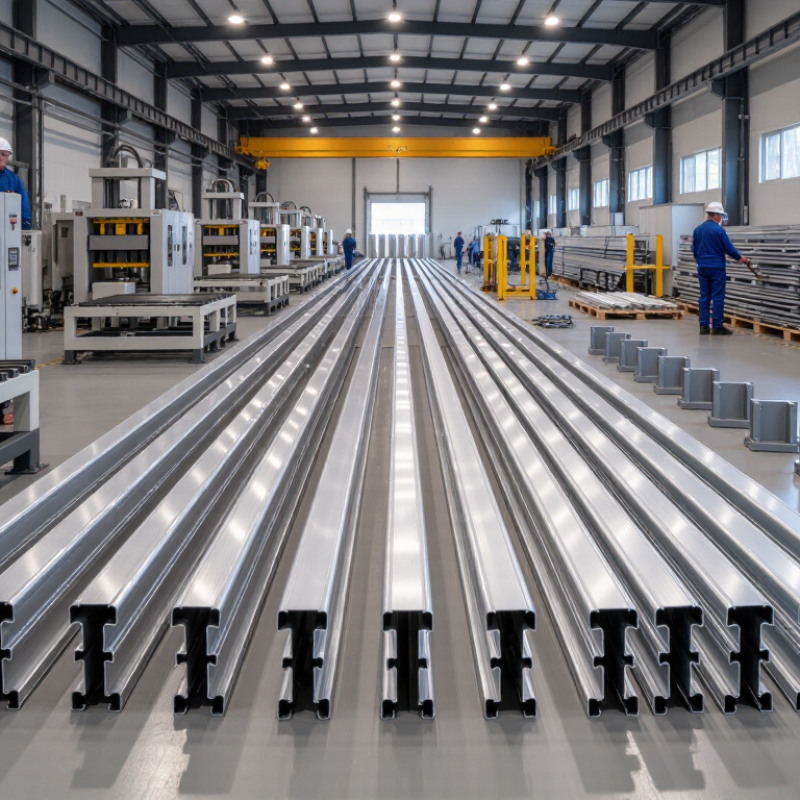
China’s aluminum railing industry is a network of specialized suppliers, not a single production model. Some factories extrude profiles; others focus on cutting, drilling, welding, coating, or final assembly. Larger manufacturers may coordinate several steps, while smaller workshops often serve project-specific orders. The distinction matters. A polished sample does not reveal who controls each stage.
Production usually starts with alloy selection and profile design. Components are cut to measured lengths, then joined with brackets, fasteners, or welds. Surface finishes may include powder coating or anodizing, depending on appearance and exposure conditions. Coastal projects need particular attention to corrosion resistance. Details count: a poorly sealed joint can collect water, even when the railing looks sound.
The industry serves residential, commercial, and infrastructure projects through custom fabrication and standardized systems. Buyers should review drawings, material specifications, finish samples, and inspection records before placing an order. Ask how dimensions are checked and how parts are protected during shipping. Not glamorous, but useful. Factory capacity alone says little about consistency. A drawing can still miss installation constraints, and that gap deserves a second look. Dialogue between designers, fabricators, and installers helps clarify what the finished railing must actually do.
Materials, Production Methods, and Common Railing Systems
When comparing aluminum railing manufacturers in China, look beyond the catalog finish. Systems commonly use extruded aluminum profiles for posts, top rails, and infill. Alloy choice and wall thickness affect stiffness, weight, and movement across long spans. For outdoor installations, surface preparation and powder coating help protect the metal; cleaning and curing matter as much as the color. A smooth finish alone does not prove sound construction.
Production usually involves cutting profiles to length, drilling connection points, and joining parts by welding or mechanical fasteners. Welded joints can appear seamless, while bolted connections may be easier to adjust or replace. Neither method is automatically better. Poor alignment can leave visible gaps or uneven rail heights. Common systems include balcony guards, stair railings, and deck barriers, with vertical balusters, horizontal members, or panels as infill. Measurements vary by design.
Tips: Check alloy details, profile dimensions, coating steps, and installation drawings before comparing suppliers. Ask how corners, drainage paths, and cut edges are finished. These details are easy to overlook. A sample may differ from a full production batch, so ask how final inspections check dimensions, joints, and coating consistency.
Quality Standards and Certifications for Chinese Manufacturers
Top Aluminum Railing Manufacturers in China?
Quality Standards and Certifications for Chinese Manufacturers
For Chinese aluminum railing manufacturers, quality claims matter only when certificates match the factory, product, and target market. ISO 9001 can show that a quality management system is in place, but it does not certify a railing’s strength. Ask for the certificate scope, issuing body, and current validity. Small details matter.
Request test reports for the exact railing configuration, not just a similar sample. Reports should identify the alloy and temper, post spacing, fasteners, finish, and applied load. Check whether testing was performed by a competent laboratory, ideally one accredited to ISO/IEC 17025. The International Aluminium Institute reports that recycling aluminium uses about 95% less energy than producing primary aluminium; recycled-content claims should therefore be supported by traceable material records. A certificate is a useful start, not proof that every shipment meets specification.
Tips: Match batch numbers on material certificates to production records. Ask for coating-thickness readings and clear photos of joints, welds, and anchor points. Paperwork can look tidy; on-site installation still deserves careful inspection.
Leading Aluminum Railing Manufacturers in China
Leading aluminum railing manufacturers in China operate within a substantial industrial base. The USGS Mineral Commodity Summaries 2024 estimated China’s primary aluminum production at 41 million metric tons in 2023. China’s National Bureau of Statistics reported construction output value of about RMB 31.6 trillion that year. These figures show manufacturing capacity and building activity, not product quality. That distinction matters. Buyers should assess a factory’s extrusion control, alloy traceability, weld consistency, and coating process rather than relying on production scale alone.
For a practical review, request drawings, material certificates, coating specifications, and test records for the exact railing system. Check whether posts feel rigid, handrails join cleanly, and water can drain from hollow sections. Ask how the supplier verifies coating thickness and conducts load testing; a polished sample is not enough. Clarify tolerances, packaging, and replacement-part arrangements before production. Small details count. China’s broad supplier base can support varied project requirements, but capabilities differ between workshops. I would not treat a low quote as proof of efficiency; unclear alloy grades or vague inspection records deserve follow-up.
Top Aluminum Railing Manufacturers in China: Industry Context
China’s large primary aluminum output provides important context for its aluminum railing industry. This chart shows estimated national production, not railing manufacturer rankings or company output.
Source: U.S. Geological Survey, Mineral Commodity Summaries 2024. Production figures are estimates in million metric tons.
How to Compare Manufacturers by Products, Capacity, and Export Services
Comparing Chinese aluminum railing manufacturers starts with the product system, not the showroom photo. Check alloy grade, profile dimensions, wall thickness, finish options, and available post-and-glass configurations. Ask for drawings, tolerances, and test records for the exact model you plan to buy. The International Aluminium Institute reported about 70.6 million tonnes of global primary aluminum production in 2023. That figure describes raw-material scale, not railing capacity. Numbers need context.
For capacity, request monthly output by product type, production lead time, and recent delivery records. Ask which processes happen in-house: extrusion, cutting, surface treatment, and assembly. A factory tour or live video call can help confirm equipment and storage conditions. Still, capacity claims are not always easy to compare. I would check whether quoted output reflects normal production or a best-case month. One detail matters: can the factory repeat the same dimensions and finish across a full order?
Export services deserve equal scrutiny. Request a sample packing plan showing corner protection, moisture control, bundle labeling, and container loading. Confirm who prepares commercial invoices, packing lists, and shipping arrangements, and ask for a sample document set. The World Bank’s Logistics Performance Index 2023 highlights customs and shipment reliability as important measures of trade performance. Ask how the supplier handles delays, damaged parts, and replacement shipments. Get those terms in writing.





