Who Are the Top Aluminum Profile Manufacturers in China?
China’s aluminum extrusion sector serves construction, transport, machinery, solar, and consumer-product markets. For buyers, choosing an Aluminum Profile manufacturer involves more than comparing prices or factory size. Alloy selection, extrusion capacity, dimensional control, surface finishing, and delivery reliability all affect the final result. Small details matter. A slightly inconsistent wall thickness can complicate assembly, while uneven anodizing may stand out across a large façade. This guide introduces leading Chinese manufacturers and the capabilities buyers commonly assess. It also explains why “top” depends on the application, order volume, and required level of customization.
A useful comparison should consider more than polished catalogs. Buyers can review available alloys and temper conditions, die-making support, machining options, quality documentation, and experience with similar projects. Ask for current specifications, inspection records, samples, and realistic production schedules. These checks help distinguish proven capacity from marketing claims. No single supplier fits every project. A company with extensive architectural experience may not be the best match for precision components or a short pilot run. There is room for judgment, too: public rankings rarely reveal how consistently a factory handles revisions, packaging, or communication under pressure. The manufacturers discussed here should therefore be treated as candidates, not automatic endorsements. A careful shortlist, supported by direct technical questions and sample evaluation, gives buyers a sounder basis for choosing an Aluminum Profile partner in China.
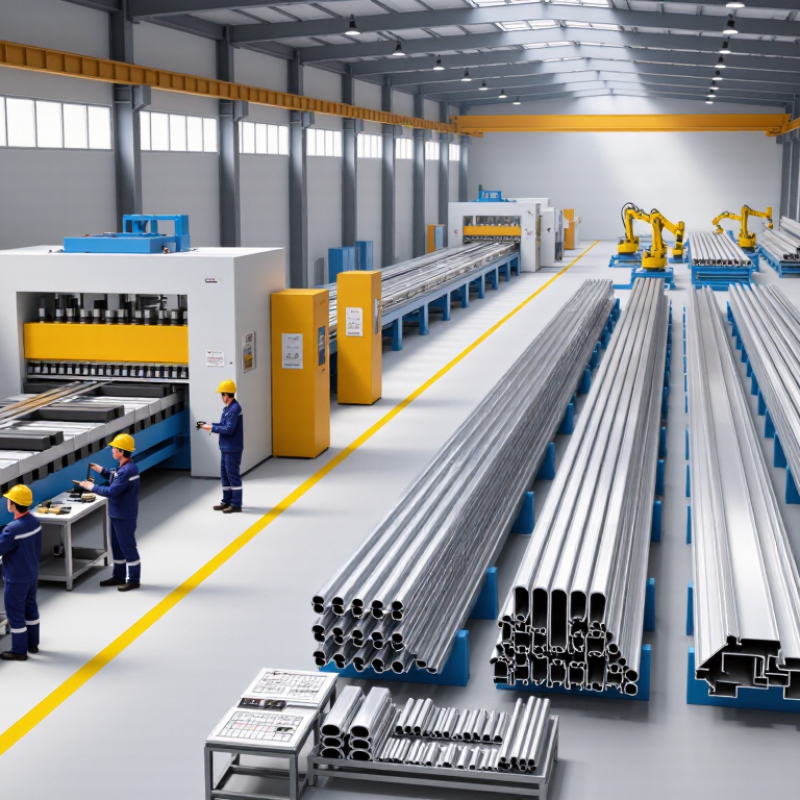
What Defines a Top Aluminum Profile Manufacturer in China?
What Defines a Top Aluminum Profile Manufacturer in China?
A top aluminum profile manufacturer is defined by control, not just production volume. Consistent alloy composition and billet temperature help profiles emerge with fewer surface defects. Skilled teams also manage die design, press speed, and cooling. These details matter when a window frame must fit tightly or a heat sink needs uniform fins. Ask how the supplier verifies dimensions, straightness, and wall thickness. Clear inspection records are more useful than broad claims.
Manufacturing quality should continue after extrusion. Reliable suppliers explain their finishing options, such as anodizing or powder coating, and show how coating thickness is checked. They should also discuss packaging, lead times, and how they handle rejected parts. Review sample profiles under good light; small scratches or uneven color can reveal process gaps. No factory is perfect. A candid answer about limits can be more credible than a flawless sales pitch.
Tips: Request a production sample and its inspection report. Compare measurements with your drawing, especially corner radii and critical tolerances. Ask for traceable material records and a written defect-handling process. Then test communication with one specific technical question. A capable team should answer clearly, or say what it needs to verify.
How China's Aluminum Profile Industry Is Structured
China’s aluminum profile industry is a chain, not a single factory category. Upstream producers supply aluminum billet; extrusion plants heat billets, push them through shaped dies, and then cool, cut, and finish the profiles. Some companies integrate several stages, while smaller specialists focus on extrusion, anodizing, powder coating, or precision machining. The structure varies by region and customer.
The National Bureau of Statistics reported 41.59 million tonnes of primary aluminum production in China in 2023. That figure describes metal output, not profile production, so it should not be used to estimate the profile market directly. Still, it shows the scale of the upstream supply base. Downstream demand is broad: building frames, curtain walls, factory equipment, rail transport, and solar-panel structures use different profile shapes and specifications.
The details matter. A window-frame producer may prioritize surface finish and consistent dimensions; an industrial buyer may care more about strength, tolerances, and repeatable machining. Large orders can favor integrated suppliers, while specialist plants may handle unusual dies or smaller batches. The picture is uneven. Capacity alone does not prove quality, and public data rarely separates profile grades or end uses clearly. That gap makes supplier comparisons harder than headline production figures suggest.
Which Companies Lead China's Aluminum Profile Market?
China’s aluminum profile market is led by manufacturers that combine production scale with reliable process control. There is no single, lasting ranking: a supplier strong in architectural systems may not lead in industrial or transport profiles. Capable producers often coordinate billet preparation, extrusion, heat treatment, and surface finishing. This helps maintain consistent dimensions across large orders.
Buyers can compare companies through measurable evidence, not polished claims. Ask for alloy and temper records, inspection data, coating specifications, and samples from actual production. Check whether the supplier can hold tolerances on a complex hollow section, not just a simple bar. Capacity matters, but tooling support and clear communication matter too. I would not treat one impressive sample as proof of stable production. Market leadership can be harder to judge than brochures suggest.
Tips: Request a trial batch before placing a volume order. Inspect cut ends, finish uniformity, and packaging. Confirm lead times, and ask how defects are tracked. Profile length and bundle protection can also affect freight damage.
What Products and Industries Do These Manufacturers Serve?
Chinese aluminum profile manufacturers serve construction, transportation, electronics, renewable energy, and general industrial production. Their catalogs may include standard bars, custom hollow sections, window and curtain-wall frames, heat sinks, and lightweight structural rails. Some suppliers also offer cutting, drilling, machining, and surface treatments such as anodizing or powder coating. Details matter.
In building projects, profiles support doors, façades, partitions, and solar-panel frames, where dimensions and corrosion resistance affect installation and service life. Transport makers use shaped sections for vehicle interiors, equipment housings, and structural components, while electronics producers often need narrow, finned profiles to move heat away from components. Industrial customers may request slots, channels, or reinforced sections that fit existing assembly systems. Not every profile fits.
A useful supplier review should go beyond a product catalog. Ask about alloy and temper options, dimensional tolerances, surface consistency, sample availability, and inspection records. For example, a small mismatch in a mounting channel can slow an entire assembly line. Requesting a trial batch can reveal problems that drawings miss. Catalog descriptions are helpful, but they do not prove performance in a specific application. That takes testing.
Who Are the Top Aluminum Profile Manufacturers in China?
Typical Products and Industries Served
Aluminum profiles are commonly supplied for building systems, transport structures, electrical equipment, industrial machinery, consumer products, and renewable-energy applications. Each bar indicates that the sector is a common application area (1 = yes); it does not represent market share, production volume, or a company ranking.
How to Compare Chinese Aluminum Profile Manufacturers
Comparing Chinese aluminum profile manufacturers starts with the drawing, not the sales brochure. Send each supplier the same alloy, temper, dimensions, and finish requirements. Then compare quotations line by line. A low price may exclude die costs, surface treatment, inspection, or export packaging. Ask for the proposed tolerance table and identify critical dimensions. A profile that looks straight on a screen can still twist after cutting.
Request a recent sample made with the intended tooling and process. Measure wall thickness, corner radii, and length with suitable instruments, then record the results. For anodized or coated parts, check color consistency and edges in daylight. Ask how batches are identified and whether material certificates and inspection records can be matched to each shipment. Good answers are specific. Vague promises are not evidence.
Factory visits, video walkthroughs, and independent audits can help, but each has limits. Check press capacity, die maintenance, and how the factory prevents mixed orders. Compare response times when you report a defect, not only before placing an order. Evaluation sheets can favor polished presentations; that is an easy mistake. Leave one technical question open and see whether the supplier clarifies it carefully. No process is perfect.





