China Top Aluminum Perfume Bottles Suppliers for Buyers
China remains an important sourcing base for fragrance packaging, but choosing a supplier takes more than comparing unit prices. Grand View Research estimated the global fragrance market at USD 52.7 billion in 2023 and projected a 5.5% compound annual growth rate from 2024 to 2030. That growth raises practical questions for buyers: Can a factory maintain consistent bottle dimensions, finish quality, and delivery schedules as orders expand?
Aluminum Perfume Bottles appeal to brands seeking lightweight packaging and a distinctive metallic finish. The International Aluminium Institute has projected substantial growth in global aluminum demand by 2030. However, broad material forecasts cannot confirm a supplier’s recycled content, coating performance, or production capacity. Request dated specifications and supporting records. Then compare sample bottles under real filling and transport conditions.
Details matter. Inspect the neck finish, cap fit, inner coating, and spray compatibility. Ask how the supplier checks leakage and surface defects. A polished sample is useful, but it does not prove that every production batch will match. This is where buyers should be cautious, including when a quotation looks unusually attractive. The sections ahead examine China-based suppliers, verification questions, and selection criteria. No report can replace a factory audit or a tested sample. Still, reliable evidence makes the shortlist stronger.
Understanding Aluminum Perfume Bottles and Their Uses
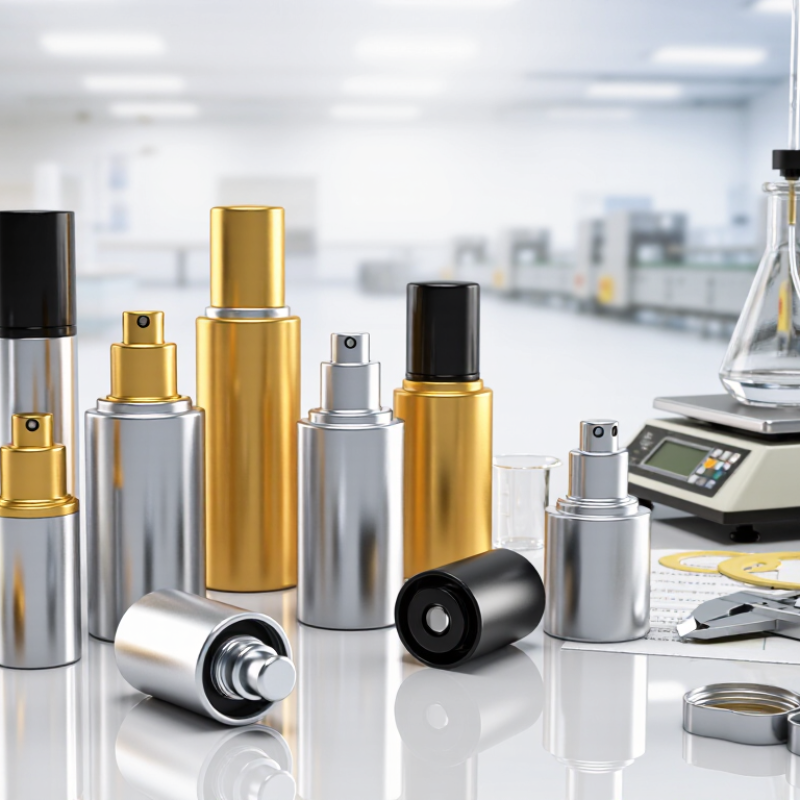
Aluminum perfume bottles are lightweight containers designed to hold fragrance and other suitable liquid products. Their low weight can make them practical for travel sets, sample sizes, and everyday bags. Unlike clear glass, aluminum blocks light from reaching the contents. This may help protect light-sensitive formulas, although storage conditions and the formula itself still matter.
The inside coating is important. Fragrance ingredients can interact differently with unlined metal, so buyers should ask suppliers about coating compatibility and request samples for testing. Check the spray pump, too: a fine mist should feel even, without leaks around the collar. Small details matter. A bottle that looks polished on a desk may still be awkward to refill or use with wet hands. Aluminum can also dent if dropped, and not every design suits every product. Buyers comparing suppliers can assess wall thickness, closure fit, decoration quality, and available sizes. Refillable formats may reduce packaging waste, but only when the bottle is easy to clean and reuse. That part is sometimes overlooked.
Key Factors for Evaluating Chinese Bottle Suppliers
Choosing a Chinese aluminum perfume bottle supplier requires more than comparing prices and catalog photos. Request samples made with the intended bottle size, finish, and closure. Check wall thickness, neck dimensions, and atomizer fit with simple measuring tools. Small details matter. Ask which aluminum grade and internal coating are used, then request compatibility testing with your actual fragrance formula. A bottle that looks flawless on a desk may still leak or change appearance after storage.
Evaluate quality controls, not just polished sample pieces. Ask how suppliers inspect dents, coating defects, dimensions, and spray performance across production batches. Review inspection records and agree on written acceptance criteria before placing an order. If possible, observe a production run or arrange an independent inspection. Also confirm minimum order quantities, sample charges, lead times, and how defects are handled. Clear answers are useful evidence; vague promises are not. A supplier’s first sample may be excellent, yet mass production can vary. That is worth checking, even when the conversation feels reassuring. Compare communication speed and technical detail, but do not treat quick replies as proof of manufacturing capability.
Comparing Manufacturing Capabilities and Product Options
When comparing China-based aluminum perfume bottle suppliers, look beyond catalog photos. Ask whether the factory forms bottles by impact extrusion or machining, and request samples with your intended pump and cap. Check wall thickness, neck dimensions, surface finish, and coating consistency. Small variations matter: a pump that fits one sample may leak on the next batch.
Manufacturing depth changes the options available. Some suppliers offer brushed, anodized, or colored finishes, while others outsource coating and printing. Ask for documented quality checks, production tolerances, and test results for coating adhesion and leakage. The International Aluminium Institute reports that recycling aluminum can use about 5% of the energy required for primary production. Recycled content may support lower-impact sourcing, but ask for traceable evidence; a claim alone proves little.
The detail is easy to miss. Compare minimum order quantities, tooling charges, sample lead times, and capacity for repeat production. The International Aluminium Institute also notes that roughly 75% of all aluminum ever produced remains in use, reflecting the material’s long service life and recyclability. Still, that figure is not a perfume-bottle recycling rate. Ask suppliers how they identify alloy grades and protect the inner surface, especially when fragrance oils contact the bottle. One overlooked coating issue can spoil an otherwise polished package.
Assessing Quality Standards, Customization, and Compliance
When comparing aluminum perfume bottle suppliers in China, assess repeatability, not just appearance. Ask for inspection records covering dimensions, coating adhesion, surface defects, and closure fit. A neck that varies slightly can cause a sprayer to sit crooked or leak during transit. Small details matter. Request samples from more than one production run when possible, and test the bottle with your actual fragrance. A polished sample can hide batch variation, and a quick visual check will not reveal every problem.
Customization should be evaluated alongside production limits. Confirm available capacities, cap styles, surface finishes, color tolerances, and minimum order quantities before approving artwork. Ask how changes to a finish or mold affect lead time and cost. Keep a signed reference sample. It helps, though it cannot replace documented quality checks. Compliance also needs clear evidence: request material specifications, relevant test reports, and documentation suited to the destination market. Requirements differ by market and product configuration, so verify them with qualified compliance staff. Review whether the supplier can trace production batches and explain corrective actions when a test fails. A supplier’s answers should be specific, not merely reassuring.
China Aluminum Perfume Bottles: Material Density for Buyer Evaluation
Typical material densities offer a practical reference when comparing bottle weight and construction options. Aluminum is lightweight, while glass is commonly used for the perfume-contact container; stainless steel may be used for selected components. Actual density varies by alloy and material composition.
Typical reference densities in g/cm³; values are approximate and vary by grade and composition.
Planning Supplier Communication, Sampling, and Orders
Clear communication with a China-based aluminum perfume bottle supplier starts with a usable specification. Share the bottle capacity, dimensions, finish, color reference, closure type, and expected order quantity. A photo helps, but it cannot replace a drawing with measurements. Small details matter. Ask how the inner coating, neck finish, and pump fit will be checked, since these can affect filling and dispensing.
Treat sampling as a working test, not just a visual approval. Request samples that match the proposed material and surface treatment, then check weight, color under natural light, and closure fit. If the bottle will be filled on an automated line, test it with the intended equipment where possible. Keep feedback specific: “the shoulder is too glossy” is more useful than “the finish looks wrong.” I have seen vague comments create another avoidable sample round. A clear checklist helps, though it may still miss something.
Before placing an order, confirm the approved sample, packaging method, production schedule, inspection points, and acceptable tolerances in writing. Ask the supplier to flag any change in material or process before production begins. Keep it written. Review a pre-production sample if the order is large or the design has changed. Even careful planning cannot remove every variation, so agree on how defects will be documented and handled before shipment.





