


China has become an important source of industrial heating equipment, including aluminium melting furnace systems. Manufacturers serve foundries, die-casting plants, recycling facilities, and specialized metal processors. Their products may differ greatly in fuel type, capacity, control systems, and after-sales support.
A reliable comparison should examine more than catalogue photographs. Review furnace capacity, melting speed, temperature accuracy, energy consumption, refractory design, and emission-control features. Ask whether the supplier provides test records, component specifications, installation guidance, and maintenance training. Factory experience matters, especially when the furnace must operate beside casting lines, charging equipment, and cooling systems.
Technical credibility also comes from evidence. Look for documented projects, traceable materials, independent certifications, and clear warranty conditions. A serious manufacturer should explain burner performance, crucible life, safety interlocks, and expected aluminium recovery rates. These details reveal practical knowledge.
No shortlist is perfect. Public information can be incomplete, translated poorly, or presented selectively. A supplier with impressive equipment may still lack responsive service in your region. Direct video inspections, customer references, and written performance guarantees can reduce uncertainty. Buyers should compare total operating costs, not only the purchase price.
This guide examines leading Chinese aluminium melting furnace manufacturers through practical and verifiable criteria. It considers product quality, engineering capability, customization, delivery reliability, and technical support. The goal is not to promote the loudest company. It is to help buyers identify a dependable partner for safe, efficient, and stable aluminium melting operations.
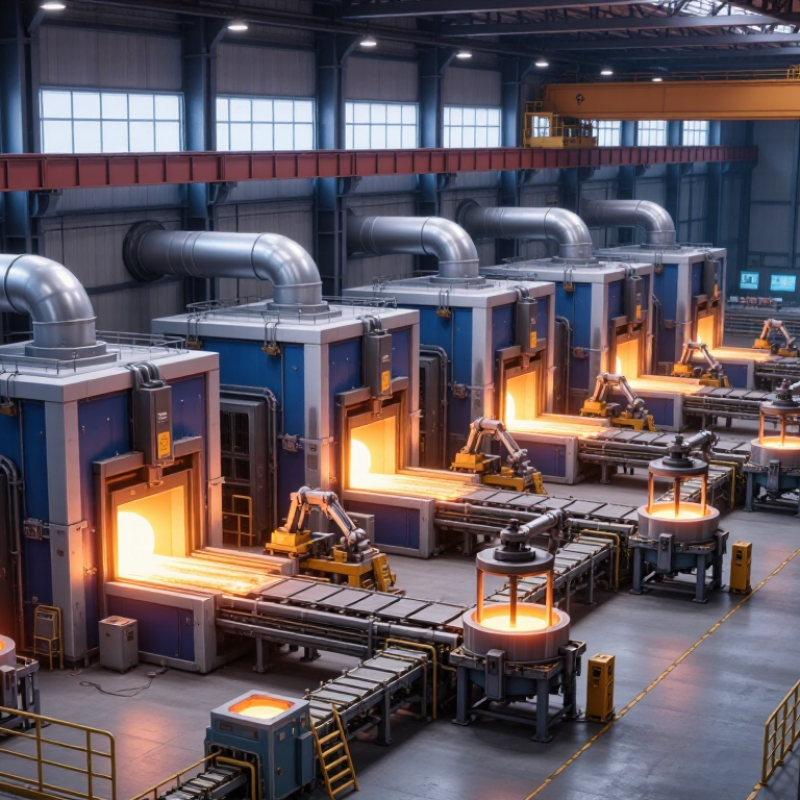
An aluminium melting furnace is industrial equipment designed to convert solid aluminium into a controlled liquid melt. It uses gas, electricity, or induction heating to raise the metal above its melting range. The chamber contains a crucible or refractory-lined hearth that withstands repeated thermal cycling. Temperature sensors monitor the melt, while burners or heating elements supply consistent energy. This sounds simple. It is not.
In practical production, furnace performance depends on more than maximum temperature. A well-designed unit limits heat loss, reduces oxidation, and supports steady pouring. Operators must remove dross carefully because excessive stirring can trap oxides inside the metal. The furnace should also provide clear access, reliable controls, ventilation, and emergency shutoff systems. I have found that small design details matter, especially door sealing and thermocouple placement. A furnace can meet its specification yet perform poorly when maintenance is neglected.
When comparing aluminium melting furnace manufacturers in China, buyers should examine material quality, test records, energy consumption, and after-sales support. Ask for working temperature data under realistic loading conditions, not empty-furnace results. Check whether the lining, control cabinet, and safety interlocks match local requirements. No furnace is perfect. Fuel quality, operator habits, and alloy selection can change results. A dependable manufacturer explains these limits openly and provides operating guidance, inspection schedules, and replacement information. That transparency is often more valuable than a low initial quotation.

Aluminium melting furnaces are designed around heat transfer, metal protection, and controlled handling. The chamber usually combines refractory lining, insulation, burners or electric elements, and temperature sensors. These parts must work together without creating excessive oxidation or aluminium loss.
In practical workshops, furnaces are classified by heat source, structure, and operating method. Fuel-fired models use gas or oil, while electric models rely on resistance or induction heating. Crucible furnaces melt aluminium inside a removable vessel. Reverberatory furnaces heat metal in a larger chamber, often supporting higher production volumes. Some units remain stationary, while tilting designs pour metal through controlled movement.
Capacity also matters. A small furnace may serve casting trials or repair work. Larger systems need stronger charging platforms, exhaust control, and automated temperature regulation. Engineers often select the lining according to operating temperature and alloy chemistry. Moisture control is essential, because damp tools can create dangerous splashing during charging.
A reliable design should limit heat loss and allow easy cleaning. It should also provide clear access to sensors, burners, and refractory surfaces. Yet classification is not always simple. A furnace may combine induction heating, tilting discharge, and automatic holding control. Labels alone can hide important differences.
From field experience, operators should examine melt rate, energy use, dross formation, maintenance access, and pouring accuracy. The cheapest furnace may become expensive when lining repairs interrupt production. Performance records are valuable, but real results can change with charge size, operator habits, and alloy selection.
China’s leading aluminium melting furnace manufacturers are established engineering firms with proven industrial installations, not merely large online catalogs. They typically design gas-fired, electric, or regenerative furnaces for die casting, extrusion, and secondary aluminium plants. The International Aluminium Institute reported China’s primary aluminium output at approximately 41.5 million tonnes in 2023. That scale creates demanding requirements for stable temperature control, fast charging, and reduced metal loss.
Look for manufacturers that publish furnace capacity, fuel consumption, melting rates, and emissions data. A serious supplier should provide trial-melt records, refractory specifications, burner details, and documented after-sales support. Practical testing matters. A 5-ton furnace should show consistent aluminium temperature near 660°C, limited dross, and repeatable cycle times. The IAI also notes that recycled aluminium uses roughly 5% of the energy required for primary production. Efficient remelting equipment therefore has strong commercial value.
China’s strongest candidates often combine furnace manufacturing with automation, combustion engineering, and refractory maintenance. They should explain how their systems handle contaminated scrap, alloy changes, and heat recovery. Published numbers are not always comparable. Some manufacturers report ideal laboratory performance rather than factory results. Buyers should request references from similar plants, inspect operating records, and calculate energy use per tonne. No supplier is perfect. A careful audit still reveals who can deliver reliably.
| Manufacturer Capability Category | Common Furnace Type | Typical Capacity Range | Typical Fuel or Power Source | Primary Application | Important Selection Criteria |
|---|---|---|---|---|---|
| Small-batch furnace specialists | Electric resistance crucible furnace | 25–500 kg per batch | Electricity | Prototype work, laboratories, maintenance casting and small foundries | Temperature stability, crucible life, compact footprint and simple controls |
| Medium-capacity foundry equipment suppliers | Gas-fired or electric crucible furnace | 300–2,000 kg per batch | Natural gas, LPG or electricity | General aluminum casting and non-ferrous metal foundries | Heating efficiency, burner control, refractory quality and maintenance access |
| High-throughput melting system manufacturers | Tilting or fixed reverberatory furnace | 1–30 tonnes per batch | Natural gas, LPG or oil, depending on configuration | Continuous casting, die casting and large-scale production | Melting rate, metal recovery, holding performance, emissions control and automation |
| Energy-efficiency focused manufacturers | Regenerative burner furnace | 1–15 tonnes per batch | Natural gas or LPG | High-volume remelting and recycled aluminum production | Heat recovery, fuel consumption, combustion control and exhaust treatment |
| Clean-melting technology suppliers | Medium-frequency induction furnace | 100 kg–5 tonnes per batch | Electricity | Controlled alloy production, casting shops and recycled-metal melting | Power factor, coil design, cooling system, electromagnetic stirring and safety interlocks |
| Holding and dosing furnace manufacturers | Electric holding or dosing furnace | 100–2,000 kg holding capacity | Electricity | High-pressure die casting and automated metal delivery | Level control, dosing accuracy, thermal uniformity and integration with casting machines |
| Recycled-aluminum furnace specialists | Rotary or side-well melting furnace | 2–30 tonnes per batch | Natural gas or LPG | Scrap, chips, cans and contaminated aluminum recycling | Scrap-feed flexibility, dross reduction, refractory protection and fume management |
| Turnkey furnace-system integrators | Customized melting, holding and charging line | Project-specific; commonly 1–30 tonnes per batch | Electricity, natural gas or LPG | Foundry modernization and complete production-line projects | Layout engineering, PLC integration, installation, operator training and after-sales service |
The capacity figures are representative industry ranges rather than rankings of individual manufacturers. Actual specifications depend on alloy, charge material, melting rate, operating temperature, local energy costs and required automation level.
China Top Aluminium Melting Furnace Manufacturers?
How to Compare Chinese Aluminium Furnace Manufacturers
China’s aluminium furnace market serves casting plants, recyclers, and foundries worldwide. The International Aluminium Institute reported about 72.8 million tonnes of global primary aluminium production in 2024. China represented over half of that output. This scale creates strong manufacturing experience, but capacity alone proves little.
Compare manufacturers through measured performance, not attractive catalogues. Request a full trial report using your alloy, charge size, and scrap ratio. Check melting rate, fuel consumption, temperature uniformity, and metal loss. A reliable supplier should explain burner turndown, refractory thickness, thermocouple calibration, and emissions controls. Ask for references from plants with similar production schedules. The International Energy Agency continues to identify industrial energy efficiency as a major decarbonisation opportunity. Therefore, ask for energy data under defined operating conditions. “Low consumption” without test boundaries is weak evidence.
Tips: Inspect the furnace before payment. Review weld quality, access doors, spare-part lists, and control-system backups. Confirm whether performance data comes from factory testing or customer operation. A short video is not enough. Third-party inspection can expose small defects early. My practical concern is often overlooked: after-sales response may matter more than the initial quotation. Request response times, technician availability, and warranty exclusions in writing. Compare total ownership cost over five years, including refractory replacement, downtime, fuel, controls, and training. Some specifications still remain unclear, and that uncertainty deserves a lower evaluation score.
Typical specific energy consumption by furnace technology
Lower energy consumption generally indicates better thermal efficiency, but actual results depend on furnace capacity, metal temperature, charge composition, holding time, insulation, and operating conditions. When comparing manufacturers, request measured energy data, melting capacity, temperature uniformity, metal recovery, automation level, emission controls, and after-sales support under the same test conditions.
Benchmark values are typical industry ranges for aluminium melting applications and should be verified through supplier test reports and site trials.
China Top Aluminium Melting Furnace Manufacturers? What Standards and Services Should Buyers Evaluate?
A reliable furnace supplier should prove performance, not just display impressive photographs. Ask for measured melting rate, energy use per tonne, temperature uniformity, and metal loss. The International Aluminium Institute reports that recycled aluminium requires about 5% of the energy used for primary aluminium production. Therefore, furnace efficiency matters greatly in secondary aluminium operations. Request test data using your actual alloy, charge size, and operating cycle.
Safety and quality documents deserve equal attention. Check ISO 9001 quality procedures, ISO 12100 machinery risk assessment, and IEC 60204-1 electrical safety compliance. For fuel-fired equipment, buyers should also review applicable combustion and industrial furnace requirements. A serious manufacturer can provide material certificates, control-system documentation, factory acceptance testing, and technician training. Service response time matters too. A furnace that waits weeks for a replacement sensor can stop an entire casting line.
Tips: Compare kWh per tonne, not heating power alone. Ask for references from similar production volumes. Read the warranty exclusions carefully. The IAI’s Aluminium Sector Greenhouse Gas Pathways to 2050 highlights energy efficiency as a major decarbonisation lever. Still, claimed savings may depend on perfect loading and ideal scrap. That is where evaluation becomes uncomfortable. Insist on witnessed trials, written acceptance limits, and local maintenance capability.


For those larger-sized parts, or smaller quantity runs, we have 2 independent powder coat booths and ovens. The quality, durability and affordability of today’s powder coating finishes make this the process of choice for world-class companies.
Powder coating advantages over other forms of coating are many. Materials used in the Powder coating process can be metals and non-metals that come in a multitude of thicknesses, textures, colors, etc. Another of Powder coating’s biggest advantages over conventional coatings is its ability to create finishes in many different textures. Powder Coating Booths allow us the ability to apply these advantages to large products.
Tri-State Fabricators runs a full-service conveyor line for painting. Wet painting can provide protection or decoration to many different part styles. From start to finish, every project is easier to undergo random and point-based inspection by our skilled painting team.
Advantages to our Wet Paint Line are these lines start with product prep and ends with a thorough inspection of a high quality finished product. Our ability to complete large and small projects with a superior finish and doing so in a timely and economical fashion. This passes along the savings in production to our customers. When powder coating ins not an option, our Wet Paint Line gets the job done right the first time.
When the parts get big and heavy we roll-out our custom paint racks and oversize booth. By utilizing our partnerships with all the major paint brands, we can match virtually any color with wet paint.
The advantages of having access to a Wet Paint Booth are many. Large projects of many different shapes can be loaded into the booth. The Wet Paint Booth offers an environment that is much more controlled than a typical parts painting operation.
Not only are they used because of their controlled environment, but they’re are also advantageous when it comes to applying paint to parts that are needed in industries that require specialty coatings such as medical, aerospace, etc.
Our military forces have some very high standards when it comes to the finish of their vehicles and equipment. From the first pre-treatment step to final coat, it takes a great deal of knowledge and experience to protect the men and women of our armed forces. They deserve only the best, and Tri-State Fabricators provides it.
All of our processes are closely monitored by our staff and management teams. Both of which are highly trained in the processes of metal fabrication and finishing. Tri-State Fabricators’ goal is to always fully satisfy each and every customer, including the military. We will always put a 110% into what we do.
Abrasive media blasting is an excellent way to remove old paint, rust, and increase the paint/powder adhesion. Glass beads produce a much smoother and brighter finish than angular abrasives; leaving the part clean yet without any dimensional change. Chemically inert and environmentally friendly, we can recycle our beads approximately 30 times; making them a more preferred method of metal cleaning or surface finishing.
Advantages to Glass Bead Blasting are many. Glass bead blast media is used when a project is needing rough surfaces need to become smooth for applications of coatings such as paint. It is typically used to clean paint and rust from a product surface without deforming the surface it is being used on. Overall, compared to many other blasting media, Glass Bead Blasting is a very economical choice and those savings are always passed on to our customers.
Tri-State Fabricators utilize a zinc phosphate wash to clean and etch the material to ensure the best paint adhesion possible. The unique design of our 3-stage wash system does the work like a 5-stage. From Cleaning and rinsing to conversion coating and post-treatment, Our Part Washing process is a complete service and works throughout the fabrication service and the finishing service.
Along with the previously mentioned benefits, Curing is a vital chemical reaction that leaves the product finish hard and relatively safe from mild abrasion and aggressive corrosion. This process can be done in more than one way; ambient air-dry or in curing ovens at temps that exceed 240°.
From fixing paint mistakes (someone else’s of course) to simply cleaning our paint line hooks, our burn-off oven is put to good use. After a quick burn-off, a little clean up, and a fresh coat of paint, your parts will look better than new.
Why does our Burn-Off Oven work so well? Because super heating the air around parts turns the materials into ashes. From paint and powder coatings to rubber and machining oils, high temps do the job without degrading the integrity of the part.
Masking is a vital part of producing high quality products. We have die-cut masking patterns to protect machined surfaces as well as a wide range of plugs and caps to protect threaded holes and bolts. We provide permanent and temporary masking.
Masking allows the selected sections of a product to be protected from a fabrication or finishing service. This can be with both chemicals when etching and tapes, paints when only finishing just a section of the product. Masking is great in aiding the customization process of a project.
Screen printing is a photographic process that transfers artwork onto a porous nylon screen which allows colored ink to flow through the screen and be deposited on an aluminum or plastic component. We can generally have just about any design created onto a screen for your parts.
Some of the advantages of Screen Printing are, brand recognition for your business displaying on your products, assembly instructions, product warnings/hazards, etc. Tri-State Fabricators produces Screen Printing of the highest quality so you know it’s durable.
Metal Finishing is the art of treating the exterior portion of product, often metal but can also be made of other materials, so that the surface is clean and free of any debris. Then the process of applying coats or either paint of powder coat takes place. This coating process improves the quality of the product in both appearance and resistance to wear and corrosion.
Tri-State Fabricators, Inc., understands that a project typically isn’t complete until a high-quality finish has been added to your product. This is why our painting and powder coating teams continuously inspect the products throughout the Metal Finishing process.

