


Choosing reliable Air Seat Control Valve suppliers requires more than comparing prices or browsing polished product pages. Global buyers must examine valve performance, material quality, manufacturing experience, and after-sales support. A dependable supplier should explain pressure ratings, port sizes, sealing materials, temperature ranges, and compatible pneumatic systems. Clear technical drawings matter, especially when a valve must fit an existing actuator or control panel.
This guide introduces leading suppliers serving international industrial markets. It considers documented quality systems, production capacity, inspection procedures, export experience, and customer feedback. Practical evidence is valuable. For example, buyers may request dimensional reports, pressure-test records, batch identification, and sample valves before placing a larger order. These details can reveal whether a supplier controls production consistently or simply resells generic components.
No supplier is perfect.
Even experienced manufacturers may have occasional delays, specification misunderstandings, or communication gaps. A strong evaluation should therefore include response time, spare-part availability, packaging quality, and warranty clarity. Buyers should also confirm whether the supplier understands regional certification and installation expectations. One overlooked thread size can stop an entire pneumatic line. This article offers a realistic framework for comparing Air Seat Control Valve suppliers, while recognizing that the best choice depends on application pressure, operating environment, order volume, and required support. Careful verification remains essential.
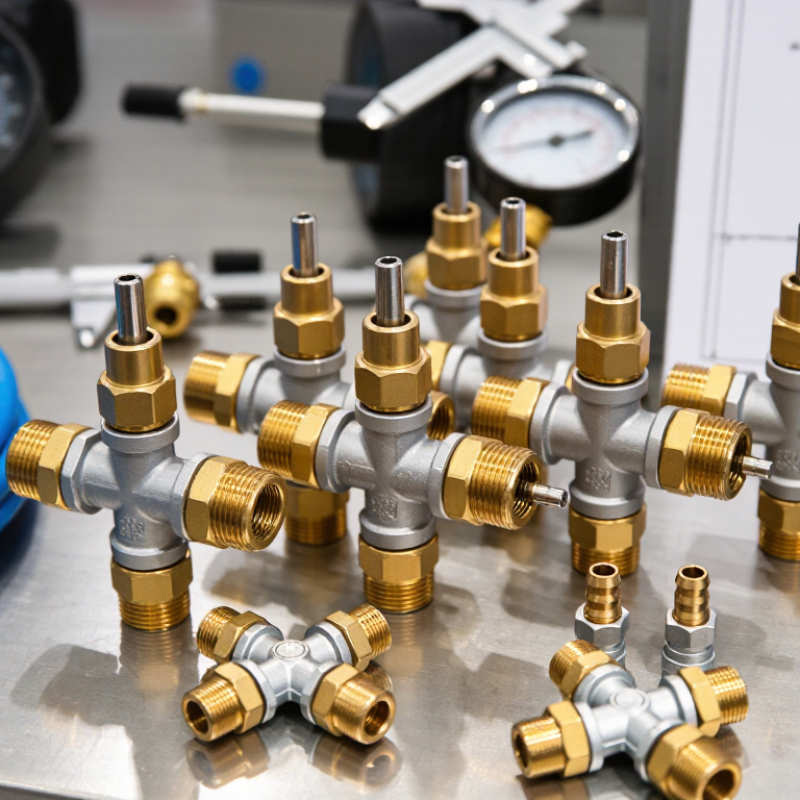
An air seat control valve is a pneumatic device that regulates fluid flow through a sealed opening. Its name can confuse buyers. Here, “seat” usually means the machined sealing surface inside the valve.
When compressed air enters the actuator, pressure moves a diaphragm or piston. The stem then moves a plug, ball, or disc against the seat. This action opens, restricts, or stops the passage.
Small movement changes flow gradually. A spring can return the valve when air pressure disappears. That feature supports fail-open or fail-closed operation, depending on process safety needs.
Clean, dry control air improves response and protects internal parts. Moisture can cause corrosion, sticking, or unstable movement.
Buyers should check inlet pressure, flow coefficient, port size, temperature range, body material, and seal compatibility. Do not select by connection size alone.
The simple diagram is useful, but incomplete. Real installations include vibration, pressure surges, and imperfect alignment. Small leaks matter.
During inspection, check the stem, seat, seals, and actuator for wear. A valve may look sound while losing control accuracy. For dependable purchasing, request dimensional drawings, pressure test records, material details, traceability, and replacement seal information from the supplier. Clear documentation often prevents costly mistakes during installation.

Reliable air seat control valves begin with stable performance, not attractive catalogs. Buyers should check pressure range, flow capacity, response time, and connection accuracy. The valve must match the actuator and air system without forcing awkward adjustments. Small leaks matter. Even a minor seal defect can reduce clamping force, increase energy use, and interrupt production.
Durable suppliers provide clear material details for the body, seals, springs, and moving parts. Stainless steel may suit humid or washdown areas, while engineered polymers can reduce weight. Confirm temperature limits before installation. A dependable supplier also documents pressure testing, leakage inspection, and batch traceability. These records support maintenance teams when a valve fails months later. Field experience shows that clean, dry air often protects valve life better than expensive hardware alone.
Response consistency deserves practical attention. Ask for cycle-test data, not only a headline performance number. Check how the valve behaves after repeated switching, pressure changes, and long storage. No specification sheet tells the whole story. Samples should be tested under real operating conditions, including the actual tubing length and air quality. I have seen technically suitable valves perform poorly after careless fittings were installed. Supplier support, replacement availability, and honest limits therefore matter as much as price. A reliable source admits where its product is not suitable. That is not weakness. It is professional risk control.
Top Air Seat Control Valve Suppliers for Global Buyers?
How to Evaluate Global Air Seat Control Valve Suppliers
Evaluating an air seat control valve supplier starts with application details, not catalog claims. Confirm media, pressure range, temperature, port size, and control method. Ask which seat materials suit your process. Request drawings with tolerances and connection dimensions. Small differences can cause installation delays. Samples matter.
A reliable supplier should provide material certificates, pressure-test records, and clear inspection procedures. Check whether each valve receives functional testing before shipment. Ask for batch traceability and documented change control. An experienced supplier will discuss failure modes openly, including leakage, sticking, and actuator wear. Avoid vague answers. They usually become expensive later.
Review production capacity, lead times, packaging, and technical support across time zones. A factory audit can reveal calibration practices, spare-part storage, and assembly cleanliness. If an audit is impossible, request dated inspection videos and independent test evidence. Compare total ownership cost, not only the unit price. Include maintenance intervals and replacement availability. Communication speed also matters during commissioning.
Use a supplier scorecard with weighted criteria, such as quality, engineering support, delivery reliability, and corrective-action speed. Speak with recent industrial buyers when possible. Their experience may expose weaknesses that brochures hide. I have learned that polished documentation does not guarantee consistent production. Ask why specifications changed. Then record every answer before approving a purchase.
| No. | Evaluation Dimension | What Global Buyers Should Verify | Relevant Technical Reference or Benchmark | Suggested Weight | Score |
|---|---|---|---|---|---|
| 1 | Product Configuration | Confirm valve type, nominal size, pressure rating, connection standard, flow characteristic, fail position, and pneumatic actuator arrangement. | Specifications should clearly identify DN/NPS size, pressure class, body pattern, actuator type, and air-to-open or air-to-close operation. | 15% | __/5 |
| 2 | Pressure and Temperature Capability | Match the pressure-temperature envelope to the actual medium, operating pressure, design pressure, and minimum and maximum process temperatures. | Pressure-temperature ratings should be supported by applicable material tables and design requirements such as ASME B16.34 or EN 12516. | 15% | __/5 |
| 3 | Material Compatibility | Review body, trim, seat, stem, gasket, and actuator materials against corrosion, erosion, abrasion, gas composition, water content, and cleaning chemicals. | Typical material choices include carbon steel, stainless steel, alloy steel, PTFE, reinforced PTFE, PEEK, and metal seats; final selection must follow the process medium. | 12% | __/5 |
| 4 | Leakage and Shut-Off Performance | Request documented seat leakage results, test medium, test pressure, test duration, and allowable leakage class for each valve size. | Common references include IEC 60534-4, ANSI/FCI 70-2, and EN 12266-1. The required leakage class should be stated in the purchase specification. | 15% | __/5 |
| 5 | Flow Capacity and Control Accuracy | Check Cv/Kv data, required flow range, controllable turndown, cavitation risk, noise, flashing risk, and sizing calculations. | Sizing should use operating flow, differential pressure, specific gravity, viscosity, vapor pressure, and gas compressibility where applicable. | 12% | __/5 |
| 6 | Actuator and Instrumentation | Verify torque or thrust margin, supply-air pressure, air consumption, spring-return behavior, positioner compatibility, solenoid voltage, and feedback options. | Pneumatic accessories should be compatible with the buyer’s control system and environmental requirements; actuator sizing should include a documented safety factor. | 10% | __/5 |
| 7 | Quality Management and Traceability | Request quality certificates, heat-number traceability, inspection plans, calibration records, nonconformance procedures, and final inspection reports. | ISO 9001 certification is useful evidence of a quality management system, but it should not replace product-specific inspection and test documentation. | 10% | __/5 |
| 8 | Applicable Certifications and Compliance | Identify the destination-country requirements for pressure equipment, hazardous areas, emissions, materials, customs, and documentation. | Depending on the application, buyers may need evidence related to PED 2014/68/EU, ATEX 2014/34/EU, IECEx, UKCA, or other local regulations. | 8% | __/5 |
| 9 | Delivery Capability | Compare quoted lead time, production capacity, spare-parts availability, packaging method, export experience, and ability to support repeat orders. | Lead time should be confirmed in writing for the exact configuration, including engineering approval, testing, documentation, and shipping preparation. | 7% | __/5 |
| 10 | Commercial and Lifecycle Value | Evaluate purchase price together with maintenance cost, seal and seat replacement intervals, spare-part pricing, warranty terms, and technical support. | A total-cost-of-ownership comparison is more reliable than comparing the initial valve price alone. | 6% | __/5 |
| Total Weighted Evaluation | 100% | __/5 | |||
Choosing top air seat control valve suppliers requires matching supplier categories with application demands. Aviation seating needs lightweight valves, stable pressure control, low leakage, and documented traceability. Industrial air suspension seats demand rugged construction, quick response, and resistance to vibration, dust, and temperature changes.
Aviation-certified suppliers serve aircraft seating and cabin systems. They typically provide aerospace-grade alloys, controlled production records, and qualification evidence.
Industrial pneumatic suppliers support construction equipment, agricultural machinery, forklifts, and factory vehicles.
MarketsandMarkets reported that the pneumatic valves market could grow from about USD 9.9 billion in 2023 to USD 13.3 billion by 2028. This growth reflects wider automation and mobile equipment demand.
Custom engineering suppliers fit unusual seat layouts or pressure ranges. They can modify port geometry, spring force, seals, and mounting patterns.
MRO-focused distributors are useful when buyers need replacement valves quickly, especially across multiple regions.
Grand View Research estimated the global industrial valves market at over USD 76 billion in 2022, showing the scale of the wider supply base. However, market size does not prove component reliability.
Buyers should verify cycle-life testing, leakage limits, material compatibility, and ISO-based quality controls. A cheaper valve may still create higher costs through seat downtime. That risk is easy to underestimate.
When global buyers evaluate air seat control valve suppliers, price is rarely the hardest variable. The real test is evidence. Ask for pressure ratings, leak-test methods, material certificates, and production-lot traceability. A reliable supplier should explain how each valve performs after repeated actuation, vibration, and temperature changes. Request sample units before approving volume orders. Small details matter: thread dimensions, connector fit, and packaging protection can prevent costly installation delays.
International purchasing requires more than a familiar conformity logo. Confirm the valve’s intended application, destination requirements, and applicable product rules with qualified personnel. Depending on the system, buyers may need declarations, chemical substance information, export documents, or safety test records. Supplier questionnaires should cover factory controls, calibration schedules, corrective actions, and subcontracted processes. A polished file is not proof of consistent quality. Verify certificates directly and match them against the shipped part numbers.
During inspection, check seals for cuts, ports for debris, and labels against the packing list. Record opening pressure and leakage results under defined conditions. Independent testing can expose differences between a laboratory sample and routine production. That extra step feels slow. It often saves time. Still, procurement teams should review their specifications honestly; vague flow requirements or missing service-life targets can create avoidable disputes. Good suppliers welcome technical questions, report deviations promptly, and provide stable communication across time zones.


For those larger-sized parts, or smaller quantity runs, we have 2 independent powder coat booths and ovens. The quality, durability and affordability of today’s powder coating finishes make this the process of choice for world-class companies.
Powder coating advantages over other forms of coating are many. Materials used in the Powder coating process can be metals and non-metals that come in a multitude of thicknesses, textures, colors, etc. Another of Powder coating’s biggest advantages over conventional coatings is its ability to create finishes in many different textures. Powder Coating Booths allow us the ability to apply these advantages to large products.
Tri-State Fabricators runs a full-service conveyor line for painting. Wet painting can provide protection or decoration to many different part styles. From start to finish, every project is easier to undergo random and point-based inspection by our skilled painting team.
Advantages to our Wet Paint Line are these lines start with product prep and ends with a thorough inspection of a high quality finished product. Our ability to complete large and small projects with a superior finish and doing so in a timely and economical fashion. This passes along the savings in production to our customers. When powder coating ins not an option, our Wet Paint Line gets the job done right the first time.
When the parts get big and heavy we roll-out our custom paint racks and oversize booth. By utilizing our partnerships with all the major paint brands, we can match virtually any color with wet paint.
The advantages of having access to a Wet Paint Booth are many. Large projects of many different shapes can be loaded into the booth. The Wet Paint Booth offers an environment that is much more controlled than a typical parts painting operation.
Not only are they used because of their controlled environment, but they’re are also advantageous when it comes to applying paint to parts that are needed in industries that require specialty coatings such as medical, aerospace, etc.
Our military forces have some very high standards when it comes to the finish of their vehicles and equipment. From the first pre-treatment step to final coat, it takes a great deal of knowledge and experience to protect the men and women of our armed forces. They deserve only the best, and Tri-State Fabricators provides it.
All of our processes are closely monitored by our staff and management teams. Both of which are highly trained in the processes of metal fabrication and finishing. Tri-State Fabricators’ goal is to always fully satisfy each and every customer, including the military. We will always put a 110% into what we do.
Abrasive media blasting is an excellent way to remove old paint, rust, and increase the paint/powder adhesion. Glass beads produce a much smoother and brighter finish than angular abrasives; leaving the part clean yet without any dimensional change. Chemically inert and environmentally friendly, we can recycle our beads approximately 30 times; making them a more preferred method of metal cleaning or surface finishing.
Advantages to Glass Bead Blasting are many. Glass bead blast media is used when a project is needing rough surfaces need to become smooth for applications of coatings such as paint. It is typically used to clean paint and rust from a product surface without deforming the surface it is being used on. Overall, compared to many other blasting media, Glass Bead Blasting is a very economical choice and those savings are always passed on to our customers.
Tri-State Fabricators utilize a zinc phosphate wash to clean and etch the material to ensure the best paint adhesion possible. The unique design of our 3-stage wash system does the work like a 5-stage. From Cleaning and rinsing to conversion coating and post-treatment, Our Part Washing process is a complete service and works throughout the fabrication service and the finishing service.
Along with the previously mentioned benefits, Curing is a vital chemical reaction that leaves the product finish hard and relatively safe from mild abrasion and aggressive corrosion. This process can be done in more than one way; ambient air-dry or in curing ovens at temps that exceed 240°.
From fixing paint mistakes (someone else’s of course) to simply cleaning our paint line hooks, our burn-off oven is put to good use. After a quick burn-off, a little clean up, and a fresh coat of paint, your parts will look better than new.
Why does our Burn-Off Oven work so well? Because super heating the air around parts turns the materials into ashes. From paint and powder coatings to rubber and machining oils, high temps do the job without degrading the integrity of the part.
Masking is a vital part of producing high quality products. We have die-cut masking patterns to protect machined surfaces as well as a wide range of plugs and caps to protect threaded holes and bolts. We provide permanent and temporary masking.
Masking allows the selected sections of a product to be protected from a fabrication or finishing service. This can be with both chemicals when etching and tapes, paints when only finishing just a section of the product. Masking is great in aiding the customization process of a project.
Screen printing is a photographic process that transfers artwork onto a porous nylon screen which allows colored ink to flow through the screen and be deposited on an aluminum or plastic component. We can generally have just about any design created onto a screen for your parts.
Some of the advantages of Screen Printing are, brand recognition for your business displaying on your products, assembly instructions, product warnings/hazards, etc. Tri-State Fabricators produces Screen Printing of the highest quality so you know it’s durable.
Metal Finishing is the art of treating the exterior portion of product, often metal but can also be made of other materials, so that the surface is clean and free of any debris. Then the process of applying coats or either paint of powder coat takes place. This coating process improves the quality of the product in both appearance and resistance to wear and corrosion.
Tri-State Fabricators, Inc., understands that a project typically isn’t complete until a high-quality finish has been added to your product. This is why our painting and powder coating teams continuously inspect the products throughout the Metal Finishing process.

