Top 10 Air Centrifugal Blower Manufacturers Worldwide
An Air Centrifugal Blower is more than a motor, wheel, and metal casing. Its performance depends on how those parts work within a real air system. Duct length, pressure losses, operating hours, and required airflow all shape the choice. A blower that looks impressive on a catalog page may perform poorly after installation.
Frank P. Bleier, author of Fan Handbook, is a respected technical reference in fan and blower engineering. A fair paraphrase of the engineering lesson in his work is: “Match the machine to the system, not just to the nameplate.” This is a paraphrase, not a verbatim quotation. It reflects a useful buying principle: compare operating conditions, efficiency data, construction, service access, and support—not headline capacity alone.
The manufacturers in this guide serve different markets and operating needs. Some focus on compact equipment for process lines. Others build larger units for wastewater treatment, pneumatic conveying, or industrial ventilation. Their product ranges can differ in pressure capability, materials, controls, and maintenance requirements. Details matter. A few millimeters of impeller clearance, a noisy bearing, or a hard-to-reach filter can affect daily operation.
This Top 10 overview is a starting point, not a universal ranking. Company capabilities change, and published specifications may not reflect every site condition. Verify current data with each manufacturer. Ask for performance curves at your actual duty point, plus clear information on energy use and service intervals. The best Air Centrifugal Blower is the one that fits the process reliably—not merely the one with the strongest marketing.
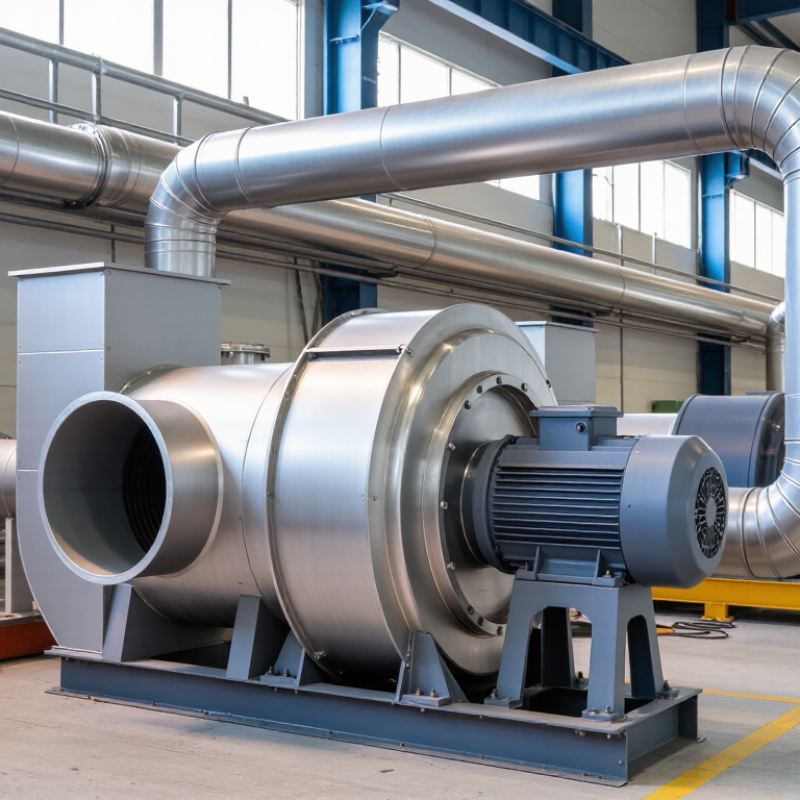
Air Centrifugal Blowers: Design, Operation, and Core Components
An air centrifugal blower raises pressure by accelerating air outward through a rotating impeller. Air enters near the center, then curved blades guide it toward the wheel’s outer edge. The housing collects this faster-moving air and directs it into the outlet. Small changes in blade shape, clearance, or rotational speed can affect performance.
Core components include the inlet, impeller, casing, shaft, bearings, and drive motor. A diffuser may help convert air velocity into static pressure. During operation, the motor turns the impeller while the inlet and outlet conditions shape airflow. A partially blocked duct, for example, can shift the blower away from its intended operating point. The calculation is only a starting point.
Good design matches the blower to the system’s required airflow and pressure, rather than selecting by power alone. Engineers also consider temperature, dust, vibration, and noise. A balanced impeller helps limit vibration, while sound bearings support stable rotation. Regular checks can reveal loose fasteners, unusual heat, or changes in sound. Still, operating data does not explain every problem; installation details and changing duct conditions deserve attention too.
How to Assess Manufacturers and Compare Blower Technologies
Assessing air centrifugal blower manufacturers starts with the operating point, not the catalogue headline. Record required airflow, discharge pressure, inlet conditions, and expected load changes. Then compare certified performance curves at that exact duty point. A high peak-efficiency figure can mislead if the blower runs far from its best-efficiency range. Check turndown, surge limits, and power consumption across realistic operating hours. Small details matter. For example, a plant running at partial load most days may benefit more from stable control than from a stronger maximum-flow rating.
Technology comparisons should include the impeller, drive, bearings, cooling method, and control system. Direct-drive designs may reduce transmission losses, while gear-driven units can suit particular speed and pressure requirements. Neither is automatically better. Ask for sound-pressure data, vibration limits, footprint drawings, and maintenance intervals. Request test results and clarify whether they reflect factory conditions or the installation site. Manufacturer quality also shows in commissioning support, spare-parts availability, and documented service response times. Speak with operators at comparable facilities, if possible. Their experience can reveal practical issues that specifications miss. Still, reference checks are imperfect; one plant’s dust, humidity, and duty cycle may differ from yours. Compare total ownership costs, but question assumptions about energy prices and maintenance frequency.
Air Centrifugal Blower Technologies: Typical Pressure-Rise Ranges
Indicative pressure-rise ranges for common centrifugal blower configurations, shown in kPa. Actual capability depends on the specific design and operating conditions; use the required duty point, efficiency, turndown, and maintenance needs when comparing equipment.
Ten Leading Air Centrifugal Blower Manufacturers Worldwide
Ten leading air centrifugal blower manufacturers worldwide are often distinguished by engineering depth, product consistency, and support after installation. Their designs move air through rotating impellers, converting mechanical energy into pressure and flow. Compare performance at the operating point your system actually needs, not only at a headline efficiency figure. A unit handling dusty process air may require different clearances and materials than one serving a clean ventilation line. Details matter.
Review the published performance curve, motor rating, control range, and noise data. Ask whether figures reflect the specified air density and inlet conditions. Check casing access, bearing arrangements, and replacement-part availability before selecting a supplier. A quiet test room can be misleading; actual pipework may add turbulence, vibration, and sound. No comparison is perfect, and a small mismatch in duty assumptions can distort the result.
Tips: Share measured flow, pressure, temperature, and operating hours when requesting a quotation. Ask for test conditions in writing, and verify that the proposed controls suit expected load changes. If vibration limits or sound levels matter, define them early. It is easy to overlook maintenance access. Then regret it later.
Top 10 Air Centrifugal Blower Manufacturers Worldwide - Ten Leading Air Centrifugal Blower Manufacturers Worldwide
This table summarizes established centrifugal-blower technologies and application areas. It does not identify companies or present a verified ranking of manufacturers.
| No. | Manufacturer Capability Area | Typical Design or Function | Common Application |
| 1 | High-speed turbo blowers | Use a high-speed impeller drive; variable-speed control is commonly available. | Wastewater aeration and other continuous process-air duties. |
| 2 | Integrally geared centrifugal blowers | Use gears to drive one or more impellers at their designed operating speeds. | Industrial process air and applications requiring engineered flow and pressure. |
| 3 | Multistage centrifugal blowers | Pass air through multiple impellers in series to build pressure in stages. | Continuous aeration, combustion air, and general industrial services. |
| 4 | Single-stage centrifugal blowers | Use one impeller to move air; operating performance depends on the impeller and system design. | Ventilation, air supply, and other industrial air-moving systems. |
| 5 | Oil-free process-air designs | Many centrifugal designs keep lubricating oil out of the compressed-air path; configuration varies by model. | Process applications where oil carryover in the air stream must be controlled. |
| 6 | Aeration blower systems | Supply air to diffusers or other aeration equipment; airflow control is matched to process demand. | Municipal and industrial wastewater treatment. |
| 7 | Industrial process-air systems | Can be configured for continuous operation and integrated with process controls. | Industrial processes that require a controlled supply of air. |
| 8 | Pneumatic conveying applications | Provide airflow for conveying systems when the required operating point suits a centrifugal design. | Movement of suitable bulk materials through conveying lines. |
| 9 | Ventilation and HVAC applications | Centrifugal impellers move air through ductwork and equipment; selection depends on system resistance. | Building ventilation and industrial air-handling systems. |
| 10 | Custom-engineered blower packages | May combine a blower with a motor, controls, inlet filtration, silencers, or other package components. | Sites with specific installation, control, or operating requirements. |
Product Applications Across Key Industries
Air centrifugal blowers supply process air where steady, high-volume flow matters. In wastewater plants, they feed aeration tanks; in food processing, they support drying and conveying. Cement and steel facilities use them for combustion air and material handling. Each duty has a different pressure, temperature, and contamination profile, so a blower selected by capacity alone may underperform.
Energy makes the choice significant. The U.S. Environmental Protection Agency’s 2013 guidance estimates that water and wastewater services use roughly 3–4% of U.S. electricity. The International Energy Agency’s 2011 motor-systems report estimates that electric motor-driven systems account for about 45% of global electricity use. These figures cover broader systems, not blowers alone, but they show why efficient motors and suitable controls deserve attention. A neat specification can still miss real operating conditions. Measure demand over a full production cycle.
Tips: Check inlet temperature, altitude, dust levels, and turndown needs. Compare measured operating points with the blower curve, and revisit the choice after commissioning. Small details count.
Global Market Trends and Manufacturer Selection Factors
Industrial blower procurement is shifting from headline efficiency claims toward verified performance at actual operating conditions. The U.S. Department of Energy’s Improving Compressed Air System Performance: A Sourcebook for Industry reports that compressed-air systems use about 10% of industrial electricity, with shares above 30% at some facilities. This is broader plant context, not a centrifugal-blower-specific figure. That distinction matters. Buyers should compare power draw, airflow, and pressure at their own duty point, rather than relying on a single maximum-efficiency number. Variable-speed control can help where demand fluctuates, but poor system design can erase expected savings.
When assessing manufacturers, request certified performance curves and ask how testing follows standards such as ISO 5801. Check surge limits, inlet conditions, operating range, noise data, materials, and service access. Small details matter. A dusty intake or a hot equipment room can change real-world performance. Compare lifecycle costs, including maintenance intervals, spare-part availability, commissioning support, and energy use over expected operating hours. Ask suppliers to explain assumptions behind their calculations; some proposals leave them unclear. A technically strong blower is not automatically the best fit if local service response is slow or the unit runs far from its most efficient operating point.





