5 Best Relay Transmitters for Global Buyers
Choosing the right Relay Transmitter can feel simple until installation conditions, signal ranges, and regional requirements enter the discussion. Global buyers need more than attractive specifications. They need dependable performance, clear documentation, and support that remains useful after purchase.
This guide reviews five relay transmitters selected for practical industrial applications. We consider switching capacity, communication distance, response time, enclosure quality, and setup requirements. We also examine compatibility with control panels, monitoring systems, and common automation environments. A transmitter may perform well in a clean factory but struggle near vibration, moisture, or electrical interference. Small details matter.
The comparison draws on manufacturer information, technical specifications, and practical sourcing considerations. Buyers should still confirm local certification requirements before ordering. Standards and installation rules can differ between markets. Do not rely on marketing language alone.
Real-world fit matters most.
A compact model may suit a crowded cabinet. A stronger unit may offer better stability in demanding conditions. However, higher specifications do not always mean better value. Some products require specialist configuration, while others provide simpler installation and maintenance. That difference can affect labor costs significantly.
No model is perfect. Even reliable equipment can face wiring errors, compatibility issues, or limited technical support. For this reason, the guide highlights both strengths and possible weaknesses. It aims to help distributors, engineers, and procurement teams make a careful decision based on verified needs, not assumptions.
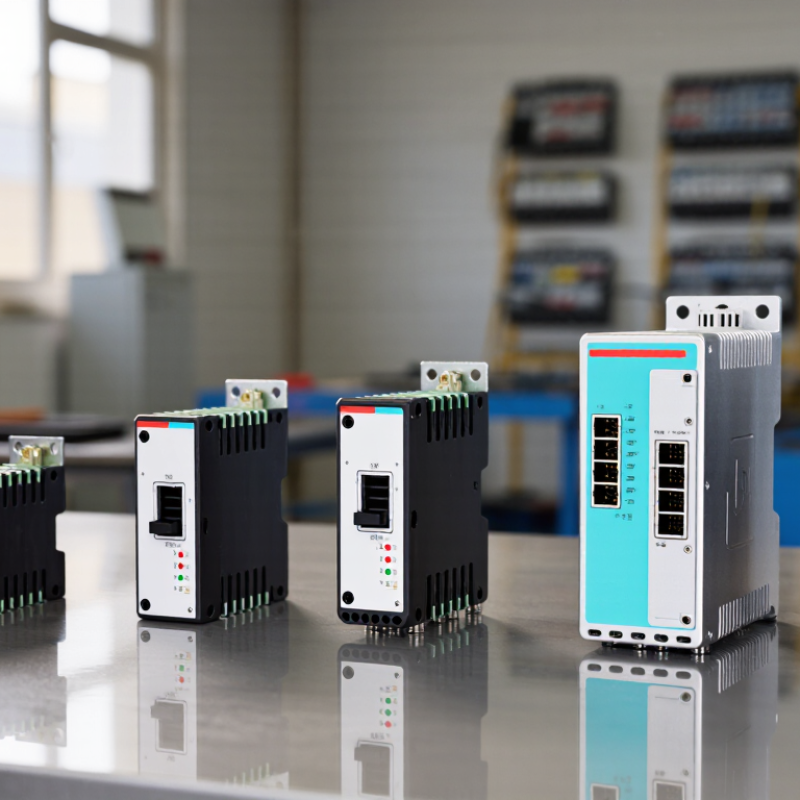
Relay Transmitters: Functions, Applications, and Key Specifications
5 Best Relay Transmitters for Global Buyers
Relay Transmitters: Functions, Applications, and Key Specifications
The best relay transmitter depends on the signal, load, and installation environment. Temperature relay transmitters suit ovens, cold rooms, and process tanks. Pressure versions support pumps, compressors, and water systems. Current and voltage models monitor motors, panels, and battery equipment. Signal isolating transmitters help reduce ground-loop errors between control devices. Each unit should provide stable switching, clear alarm settings, and dependable signal conversion.
Check input range, relay contact rating, response time, and measurement accuracy. A transmitter handling 4–20 mA should match the controller’s input precisely. Adjustable hysteresis can prevent rapid relay cycling near the alarm point. Galvanic isolation is valuable in noisy industrial cabinets. Also review supply voltage, terminal design, enclosure rating, and operating temperature. Global buyers should verify regional electrical requirements and required conformity documents. A technically strong device may still fail if its wiring diagram is unclear.
Tips: Choose the sensing range before comparing prices. Leave safety margin around normal readings. Confirm whether the relay is normally open or normally closed. Ask for calibration records when accuracy affects production. In field work, installation errors cause many “instrument failures.” I have seen a correct transmitter perform poorly because the cable shield was grounded incorrectly. No model wins everywhere. Cost, availability, documentation, and service support still need careful review.
5 Best Relay Transmitter Types for Global Buyers
Typical maximum resistive switching current for commonly used relay transmitter categories. Values are representative industry specifications and are not linked to any company or brand.
How to read the chart: Electromechanical and latching relay transmitters generally support higher contact loads, while reed and solid-state designs are often selected for compact systems, fast switching, long service life, or electrical isolation.
How to Evaluate Relay Transmitters for International Use
5 Best Relay Transmitters for Global Buyers
How to Evaluate Relay Transmitters for International Use
Choosing the best relay transmitter starts with the destination, not the product photo. Check input voltage, frequency bands, relay contact ratings, and supported communication protocols. A unit designed for a 24-volt cabinet may fail in a region using different power standards. Confirm operating temperature, humidity resistance, and enclosure protection before comparing prices.
I have learned to request test reports, wiring diagrams, and calibration records from the supplier. Look for documented EMC performance and compliance with applicable regional requirements. Radio-enabled models may require separate approval in each market. Ask whether the transmitter supports local frequency rules, replaceable antennas, and secure firmware updates. Small details matter.
The strongest choices usually fit five needs: stable industrial switching, long-range wireless signaling, compact control panels, harsh outdoor environments, or multi-protocol integration. Still, categories can mislead. I once treated a wide voltage range as proof of universal compatibility. It was not. Connector types, installation space, and local service access caused greater trouble. Test a sample with your actual relay load and cable length. Compare signal stability after several hours, not just during a quick bench test. Request clear warranty terms and traceable technical support. Vague documentation is a warning sign. Sometimes, the cheapest transmitter becomes the most expensive after installation.
Five Leading Relay Transmitter Options for Global Buyers
Five Leading Relay Transmitter Options for Global Buyers
Global buyers usually compare five practical relay transmitter options: compact DIN-rail models, isolated analog units, wireless transmitters, programmable multi-input devices, and safety-rated versions. Each serves a different control environment. DIN-rail models fit crowded cabinets and suit simple 24 VDC switching. Isolated units reduce ground-loop problems when sensors and controllers use separate power sources. Wireless versions simplify installation across storage areas, but metal walls and radio interference can weaken signals.
Programmable models accept several input types, including temperature, pressure, and current signals. They can reduce spare-parts requirements, though setup software may slow commissioning. Safety-rated transmitters offer stronger protection for critical processes, but buyers must verify certificates for the destination market. Do not rely on a product label alone. Check input range, relay capacity, insulation rating, operating temperature, terminal layout, and expected service life.
During panel testing, I prefer connecting the transmitter to a real load, not only a simulator. A relay may switch correctly without handling motor inrush. That detail is easy to miss. Request wiring diagrams, calibration records, test reports, and replacement guidance from the supplier. One option may look affordable until adapters, enclosure changes, and customs requirements are added. Wireless equipment can be excellent. It can also become unreliable in dense industrial spaces. Careful site measurements remain necessary.
Comparing Performance, Compatibility, Safety, and Total Cost
5 Best Relay Transmitters for Global Buyers
The five most practical choices are electromechanical, solid-state, safety-rated, modular DIN-rail, and remotely monitored relay transmitters. Each serves a different operating reality. Electromechanical units tolerate simple control tasks and offer visible contact separation. Solid-state versions switch faster, last longer under frequent cycling, and create less audible noise. For hazardous process shutdowns, safety-rated equipment should meet relevant IEC 61508 requirements and provide diagnostic feedback. Modular units simplify replacement. Remote-monitoring models reduce inspection travel but add network-security responsibilities.
Performance is only useful when compatibility is proven. Check coil voltage, contact load, switching frequency, isolation, terminal spacing, and ambient temperature. A relay rated for 10 amperes may perform poorly with inductive motors. Thermal derating matters inside a crowded control cabinet. The 2024 World Robotics report recorded 541,302 new industrial robots in 2023, showing how quickly automated systems are expanding. That growth increases demand for faster switching and dependable signal integration. However, I would not trust a specification sheet alone. Test the transmitter with the actual controller, cable length, and load.
Safety and total cost often separate the best option from the cheapest one. IEC 60255 testing can help verify electrical endurance and environmental behavior. A complete cost review should include installation labor, spare modules, energy use, calibration, cybersecurity controls, and downtime exposure. The Ponemon Institute reported an average data-breach cost of 4.88 million dollars in 2024, although that figure is not relay-specific. It still shows why connected equipment deserves careful protection. Safety comes first. Still, an over-specified device can waste budget, especially where switching is infrequent. My choice would favor verified compatibility, accessible diagnostics, and five-year service records over impressive peak ratings.
International Sourcing, Certification, Shipping, and After-Sales Support
5 Best Relay Transmitters for Global Buyers
The five best relay transmitters are not identical for every market. A practical shortlist may include industrial RF, cellular, Ethernet, LoRa-based, and dual-mode transmitters. Each option suits different distances, network conditions, and control systems. Check the operating frequency before comparing prices. Local spectrum rules can change the purchase decision. For industrial sites, verified range, enclosure rating, and stable relay switching matter more than attractive product photos. Ask for test records, wiring diagrams, and sample units. Real testing often reveals small delays or connection gaps.
Certification deserves careful review. Request documents for electromagnetic compatibility, electrical safety, and restricted substances where applicable. Certificates should match the exact model, hardware revision, and destination market. Generic files are warning signs. Shipping also needs planning. Use shock-resistant cartons, moisture protection, clear serial labels, and complete commercial invoices. Confirm the delivery term, insurance responsibility, customs code, and expected port delays. A low unit price can become expensive after inspections, storage, or replacement freight.
Tips: Order a sample before a large purchase. Test it with your actual relay load and network. Keep two spare units for urgent field repairs. Require firmware records and a written warranty process. After-sales support should include response times, troubleshooting guides, replacement procedures, and remote technical assistance. A common mistake is accepting vague support promises. Service quality can vary between regions. That risk deserves a written agreement, even when the supplier appears reliable.





