10 Best 304 Stainless Plate Suppliers Worldwide
Choosing the right supplier for 304 Stainless Plate requires more than comparing online prices. It demands technical judgment, documented experience, and careful attention to material consistency. The best suppliers should provide clear mill certificates, heat numbers, dimensional tolerances, surface finishes, and independent testing records. These details matter when plates face food-processing equipment, architectural panels, pressure vessels, or corrosive factory environments. A polished surface may look impressive. It proves very little alone.
Metallurgy educator David H. Peckner offers a useful principle: “Stainless steel selection must follow service conditions, not appearance alone.” That idea shapes this review of the 10 Best 304 Stainless Plate Suppliers Worldwide. Each company is considered through practical criteria, including grade verification, production capacity, export experience, packaging quality, lead times, and after-sales support. Supplier transparency also matters. Can the company explain its annealing process? Can it trace a plate back to the original heat? Small questions expose major weaknesses.
No ranking is perfectly universal. A low-cost supplier may suit standard stock, while a certified mill may better serve demanding projects. Regional freight, currency changes, minimum order quantities, and inspection requirements can alter the final decision. Some supplier websites provide incomplete information. That is worth admitting.
This guide aims to reduce uncertainty, not remove every risk. Buyers should still request current certificates, sample plates, inspection reports, and written commercial terms before placing an order. Reliable sourcing begins with evidence. Not promises.
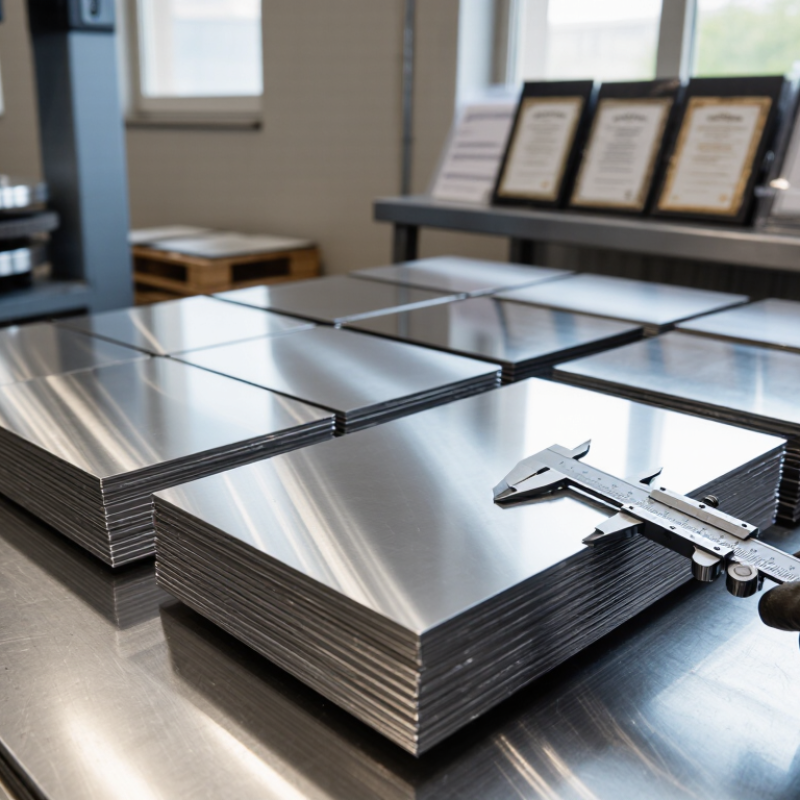
304 Stainless Plate Standards: ASTM A240, 18–20% Chromium and 8–10.5% Nickel
When comparing 304 stainless plate suppliers worldwide, begin with ASTM A240 compliance. This standard covers stainless steel plate, sheet, and strip for general and pressure-related applications. A reliable mill certificate should identify the heat number, thickness, condition, and chemical composition. For 304 grade, chromium generally ranges from 18% to 20%. Nickel commonly falls between 8% and 10.5%. These elements support corrosion resistance and stable forming performance. The balance still matters. Carbon, manganese, and testing records can affect fabrication results.
Tips: Request the original material test certificate, not only a product brochure. Match the heat number on the plate with the certificate. Check thickness tolerance, surface finish, edge condition, and ultrasonic testing requirements before payment. A low price can hide extra grinding, poor flatness, or delayed documentation.
Experienced buyers also verify whether the supplier understands the intended service environment. Plate used near saltwater, food equipment, or elevated temperatures may require different inspection controls. ASTM A240 alone does not guarantee perfect performance in every application. That point is easy to overlook. Ask for tensile, yield, elongation, and hardness results when the project needs traceable engineering data. Independent inspection can add confidence, although it increases cost and lead time. Some purchasing decisions still rely too heavily on chemistry alone. That deserves a second look.
How to Evaluate Global Suppliers by Grade, Thickness, Capacity and Certifications
Choosing among the 10 Best 304 Stainless Plate Suppliers Worldwide requires more than comparing quoted prices. Confirm the exact grade first. A reliable supplier should identify 304 or 304L clearly, with chemical limits and mechanical properties shown on the mill test certificate. Check the heat number against the plate marking. Small details matter.
Thickness control deserves practical attention. Ask for the nominal thickness, permitted tolerance, plate dimensions, surface finish, and flatness standard. A 12 mm plate may not perform equally if its actual thickness varies across the sheet. Request inspection records from recent production, not only a polished sample. Samples can look perfect.
Capacity is also easy to overestimate. Review monthly output, rolling width, available gauges, export packing, and realistic lead times. Ask how the supplier handles urgent orders or production interruptions. Certifications should support the claim, not decorate it. Verify ISO 9001 status, material traceability, inspection methods, and certificates relevant to your destination or application. Third-party audits can reveal gaps that brochures hide. A certificate alone can mislead. Procurement teams should also check previous delivery records and communication quality. If answers remain vague, pause before signing. I have seen technically acceptable plates delayed by poor planning. That risk is often missed.
Profiles of 10 Leading 304 Stainless Plate Suppliers Worldwide
A northern European mill supplies 304 stainless plate with strong heat documentation and consistent flatness. Its plates suit food-processing frames and clean-room equipment. A coastal East Asian producer focuses on polished surfaces, offering reliable finishes for architectural interiors. Its packing deserves attention because corners can suffer during long transport. A North American distributor keeps common thicknesses in regional warehouses, helping fabricators shorten delivery times. Buyers should still confirm current stock before approving production schedules.
A South Asian manufacturer offers wide plates for pressure-free structural applications and custom cutting. Its technical team explains tolerance limits clearly, although response times may vary during busy periods. A southern European supplier specializes in brushed and decorative plate, with careful surface inspection under bright lighting. A Middle Eastern stockholder supports urgent projects with mixed-size inventories and export documentation. An Australian distributor provides traceable material from qualified mills and usually explains shipping conditions in practical terms. It may charge more for smaller orders.
A Central European processor combines laser cutting, edge preparation, and plate supply in one service. This can reduce handling, but buyers should verify cut tolerances independently. A Southeast Asian exporter offers competitive pricing and protective wrapping for humid routes. Its certificates must be checked against heat numbers, not only invoices. A South American supplier serves mining and processing projects with thicker plate and practical fabrication advice. A Canadian service center provides test reports, inspection photographs, and responsive after-sales support. Even reliable suppliers can make mistakes. Requesting samples, certificates, and dimensional checks remains wise before committing to a large order.
10 Best 304 Stainless Plate Suppliers Worldwide
ASTM A240 Composition Benchmark for 304 Stainless Plate
This chart presents the standard chemical-composition limits commonly used to evaluate 304 stainless steel plate. The values are based on ASTM A240/A240M requirements and provide a neutral technical benchmark for comparing supplier product data without displaying company or brand information.
Supplier Comparison: Mill Standards, Surface Finishes, Testing and Lead Times
10 Best 304 Stainless Plate Suppliers Worldwide
Comparing 304 stainless plate suppliers requires more than checking price. Confirm the mill standard before requesting a quotation. ASTM A240, EN 10088, and JIS G4304 may describe similar products, but dimensions and inspection documents can differ. Ask whether the plate is 304 or 304L, especially for welded assemblies. A reliable supplier should provide a heat number, material test certificate, chemical analysis, and mechanical test results. PMI testing is useful when traceability matters.
Surface finish affects both appearance and fabrication. Common options include 2B, BA, No. 4 brushed, and hot-rolled finishes. Check roughness values, protective film quality, and edge condition. A clean 2B sheet should not show deep scratches under warehouse lighting.
Plate flatness also deserves attention. It can influence cutting accuracy and fit-up. Lead times need equal care. Stocked sizes may ship within days, while nonstandard thicknesses can require several weeks. Confirm the production schedule, packing method, export documents, and replacement policy in writing.
Tips: Request a sample inspection report before placing a large order. Compare test scope, not only certificate format. Ask how suppliers handle mixed heat numbers. A lower quote may exclude film, testing, or special packing. No comparison is perfect. Supplier websites can also contain outdated stock information, so verify availability on the quotation date. For critical projects, use an independent inspection before dispatch, even when the paperwork looks complete.
Global Purchasing Factors: MOQ, Pricing, Logistics and Technical Support
Selecting among the 10 best 304 stainless plate suppliers worldwide requires more than comparing headline prices. Buyers should check minimum order quantities, available thicknesses, surface finishes, and production capacity. A supplier may quote a low price but require a full container, making the offer unsuitable for a small fabrication project. Request a clear quotation for grade 304, dimensions, tolerance, surface finish, packing, and delivery terms.
Pricing changes with nickel markets, plate thickness, order volume, and destination. Compare landed cost, not only the ex-works figure. Freight, insurance, customs handling, and port charges can alter the final budget. Ask how long the quotation remains valid. Prices can change quickly. A practical buyer should also confirm whether the supplier supports trial orders or mixed-size loading, even when the standard MOQ seems rigid.
Reliable logistics depend on accurate packing and documents. Plates need moisture-resistant wrapping, strong pallets, and edge protection during ocean transport. Request heat numbers, a material test certificate, and inspection records before shipment. Technical support matters when the plate will be cut, welded, formed, or exposed to corrosive conditions. Experienced suppliers can advise on tolerances, welding procedures, and suitable finishes. Still, supplier claims require verification. Independent inspection may cost more, but it can reveal flatness issues, wrong thickness, or damaged surfaces before the cargo leaves the port. My own purchasing experience suggests that the cheapest offer is rarely the simplest one.





