


Top 10 Welded Ball Valve Manufacturers Worldwide

Choosing a dependable welded ball valve manufacturer requires more than comparing product catalogs or factory photographs. A Welded Ball Valve must withstand pressure, temperature changes, vibration, and demanding installation conditions. This guide introduces ten established manufacturers worldwide and examines the practical strengths behind their market positions.

The comparison considers manufacturing experience, material control, welding procedures, machining accuracy, and pressure-testing practices. It also reviews traceability, quality systems, product customization, delivery capability, and technical support. These details matter on real projects, where a small sealing defect can cause costly shutdowns. Factory audits, inspection records, and documented testing often reveal more than promotional claims. Look closely.

The selected companies serve industries such as oil and gas, chemical processing, power generation, water treatment, and industrial manufacturing. Their product ranges may include forged bodies, stainless steel options, cryogenic designs, and automated actuation packages. However, no ranking can suit every project. A manufacturer trusted for offshore service may not offer the best solution for a compact utility line. Buyer requirements, local standards, operating media, and maintenance resources must guide the final decision. Some information changes over time, and published specifications may require direct confirmation. That limitation deserves attention. A careful buyer should request current certificates, reference projects, welding qualifications, and test documentation before approval. This overview provides a professional starting point, not a substitute for engineering review.
Top 10 Welded Ball Valve Manufacturers Worldwide

Welded Ball Valves: Design, Materials, and API 6D Classification

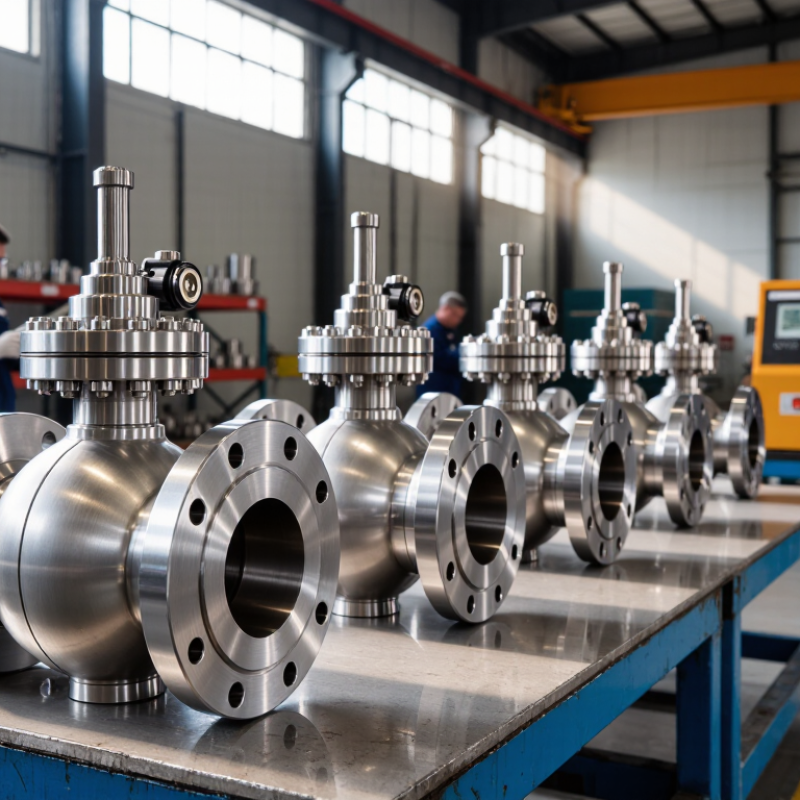
Welded ball valves are built for demanding pipeline service, where leakage control and structural strength matter. Their welded bodies remove many bolted joints, reducing potential leak paths and maintenance points. A full-bore design also supports efficient flow and allows pipeline cleaning tools to pass through the valve.

Material selection depends on pressure, temperature, and the transported medium. Carbon steel suits many standard pipeline applications, while stainless steel improves resistance in corrosive environments. Internal trim may use hardened alloys to reduce wear around the ball and seats.

In field inspections, small surface damage near the seat pocket can become a serious operating problem. It deserves careful attention.

API 6D classification indicates that a valve meets recognized requirements for pipeline valve design, manufacturing, testing, and documentation. Buyers should review pressure ratings, fire-safe performance, shell tests, seat tests, and operating torque. Double-block-and-bleed capability can help verify isolation during maintenance, but it should not replace site-specific safety procedures. Traceable material certificates and calibrated test records strengthen technical confidence. Still, certification alone is not enough. Installation quality, welding control, and correct actuator sizing affect real performance. A well-designed valve can fail when these details are ignored.


Global Market Scope: ASME B16.34 Classes 150–2500 and DN15–DN1400

Top 10 Welded Ball Valve Manufacturers Worldwide

The global market spans ASME B16.34 Classes 150–2500 and DN15–DN1400. This range covers compact utility lines and massive transmission systems. Class 150 may suit moderate pressure service, while Class 2500 demands strict design, material, and testing control. ASME B16.34 defines pressure-temperature ratings, wall thickness, and examination expectations. DN size alone does not confirm suitability. Temperature, fluid density, corrosion, and operating cycles matter equally.

Industry reports show strong demand for industrial valves. Grand View Research valued the global industrial valves market at over USD 78 billion in 2023. MarketsandMarkets also identifies oil and gas, power, water, and chemical processing as major demand sectors. These figures support careful supplier screening, especially for welded valves above DN600. In plant inspections, I would check weld procedure qualification, radiographic or ultrasonic examination, body testing, fugitive-emission performance, and traceable material certificates. A polished datasheet can still hide weak documentation.

Tips: Match the valve rating to the complete pressure-temperature envelope. Request test records for the exact size and class. Inspect actuator torque margins, end-to-end dimensions, and repair access before approval. For DN1400 valves, lifting plans and field alignment deserve early review. A neat spreadsheet can still mislead. Allow room for uncertainty, because real service rarely matches ideal laboratory conditions.

Evaluation Criteria: ISO 15848 Emissions, Testing, Capacity, and Certification

Top 10 Welded Ball Valve Manufacturers Worldwide

A credible Top 10 should begin with evidence, not market visibility. ISO 15848-1 classifies fugitive emissions through tightness classes and mechanical endurance testing. For welded ball valves, evaluators should review stem-seal performance, thermal cycling, and documented test conditions. ISO 15848-2 adds production acceptance testing, which helps separate tested samples from repeatable factory quality. Evidence beats claims.

Emissions deserve commercial attention. The International Energy Agency’s Global Methane Tracker 2024 estimates that fossil-fuel operations released about 120 million tonnes of methane in 2023. The World Bank’s Global Gas Flaring Tracker Report 2024 recorded approximately 148 billion cubic metres of gas flared worldwide. These figures do not measure valve leakage directly, but they show why reliable isolation and sealing matter. A manufacturer’s ranking should therefore include ISO 15848 results, helium or methane test records, cycle counts, and failure rates.

Capacity must mean more than factory size. Check annual welded-valve output, available bore sizes, pressure classes, welding procedures, and heat-treatment control. Review hydrostatic, seat, fire-safe, and low-temperature testing. Certification should include current quality systems, material traceability, and applicable pressure-equipment approvals. An independent witness adds confidence. Still, certificates can hide weak sampling. That gap deserves scrutiny. Purchase records, calibration logs, and nonconformance data often reveal more than polished brochures. The strongest candidates provide serial-level documentation, not generic declarations.

Top 10 Welded Ball Valve Manufacturers Worldwide — Evaluation Criteria

This standards-based evaluation framework emphasizes fugitive-emission performance under ISO 15848, pressure and fire-safe testing, manufacturing capacity, quality systems, and regulatory certification. The percentages represent suggested assessment weights rather than rankings of individual companies.

Top 10 Welded Ball Valve Manufacturers Worldwide: Product and Regional Comparison

Top 10 Welded Ball Valve Manufacturers Worldwide: Product and Regional Comparison

The global welded ball valve market reflects wider industrial valve demand. MarketsandMarkets valued the industrial valve market at about USD 79.4 billion in 2024. It expects the market to reach roughly USD 102.1 billion by 2029. These figures cover more than welded ball valves, but they show strong infrastructure demand. The top ten manufacturers should therefore be compared by product design, not reputation alone.

European suppliers often emphasize low-emission stems, compact forged bodies, and strict testing. North American producers commonly focus on pipeline transmission, fire-safe construction, and API 6D compliance. Asian manufacturers may offer competitive pricing, short lead times, and broad customization. However, quality consistency can vary between production sites. That point deserves closer inspection. Key comparisons include pressure class, bore design, materials, actuator options, and weld procedure qualification. ISO 5208 leakage testing and documented traceability also matter in real projects.

Tips: Match the valve to the medium, temperature, pressure, and installation method. For buried pipelines, inspect coating systems and weld-end dimensions carefully. For hydrogen or sour-service applications, request material records and independent test evidence. A 2024 valve market review by Fortune Business Insights also links growth with energy, water, and process-industry investment. Regional demand is not identical. Buyers should evaluate local service support, spare-part access, and certification acceptance before selecting a manufacturer. Even a well-engineered valve can underperform when installation records are incomplete.

Top 10 Welded Ball Valve Manufacturers Worldwide - Top 10 Welded Ball Valve Manufacturers Worldwide: Product and Regional Comparison

Rank Regional Manufacturer Profile Primary Market Region Typical Valve Design Common Size Range Typical Pressure Rating Body and Ball Materials End Connection Applicable Standards Typical Applications
1 Profile A North America Full-bore, two-piece or three-piece welded body DN15–DN600 / NPS ½–24 ASME Class 150–600 Carbon steel or stainless steel; stainless steel or plated ball Butt-weld, socket-weld, or flanged API 6D, ASME B16.34, ASME B16.25, ISO 15848 Oil and gas transmission, terminals, and process plants
2 Profile B Western Europe Reduced-bore or full-bore compact welded valve DN15–DN500 PN16–PN100 Carbon steel, duplex, or austenitic stainless steel Butt-weld or EN flanged EN 1983, EN 12266-1, EN 1092-1, ISO 5211 District heating, water infrastructure, and chemical processing
3 Profile C East Asia Top-entry or side-entry welded ball valve DN25–DN1000 / NPS 1–40 ASME Class 150–900 Forged carbon steel, alloy steel, or stainless steel Butt-weld and flanged API 6D, API 607, NACE MR0175/ISO 15156 LNG, gas processing, petrochemicals, and export pipelines
4 Profile D Central and Eastern Europe Fully welded buried-service ball valve DN25–DN1200 PN25–PN100 Carbon steel body with stainless steel trim Butt-weld, extended stem EN 14141, EN 12516, ISO 15848 Natural-gas pipelines, underground networks, and heating systems
5 Profile E Middle East Fire-safe, anti-static welded ball valve DN25–DN900 / NPS 1–36 ASME Class 150–1500 Forged carbon steel, stainless steel, or low-temperature alloy steel Butt-weld or flanged API 6FA, API 607, API 6D, ISO 10497 Crude-oil production, refineries, LNG, and export facilities
6 Profile F Southeast Asia Compact two-piece welded valve for general service DN15–DN400 / NPS ½–16 ASME Class 150–300 Stainless steel, carbon steel, or ductile iron body Socket-weld, butt-weld, or threaded ASME B16.34, API 598, ISO 5211 Water treatment, utilities, food processing, and light industry
7 Profile G Australia and Oceania Heavy-duty welded valve for abrasive or remote service DN25–DN600 PN16–PN100 and ASME Class 150–600 Carbon steel or duplex stainless steel with hard-faced trim options Butt-weld or flanged AS 1219, API 6D, ASME B16.34 Mining slurry boundaries, gas pipelines, water, and minerals processing
8 Profile H Latin America Full-bore welded valve with extended stem options DN25–DN800 / NPS 1–32 ASME Class 150–600 Carbon steel, stainless steel, and corrosion-resistant alloy trim Butt-weld or ASME flanged API 6D, API 598, ASME B16.5, NACE MR0175 Oil production, gas gathering, pipelines, and hydroelectric utilities
9 Profile I South Asia Economical welded ball valve for process piping DN15–DN500 PN16–PN63 and ASME Class 150–300 Cast or forged carbon steel; stainless steel trim Butt-weld, socket-weld, or flanged API 6D, ASME B16.34, API 598 Power generation, fertilizers, water, and general process systems
10 Profile J Africa Robust welded valve for infrastructure and energy projects DN25–DN600 / NPS 1–24 ASME Class 150–600 Carbon steel, stainless steel, or low-temperature carbon steel Butt-weld or flanged API 6D, ISO 5208, ASME B16.34, ISO 5211 Water infrastructure, mining, oil and gas, and power projects

Note: The profiles are anonymized regional product categories. Size ranges, pressure classes, materials, and standards represent commonly specified configurations; exact availability depends on the manufacturer, design code, service medium, temperature, and project requirements.

Selection Guide: Pipeline, Oil and Gas, LNG, and Chemical-Service Requirements

Top 10 Welded Ball Valve Manufacturers Worldwide: Selection Guide for Pipeline, Oil and Gas, LNG, and Chemical Service

Selecting a welded ball valve requires more than comparing pressure ratings. Pipeline service demands a strong body, full-bore flow, reliable sealing, and resistance to soil-side corrosion. Oil and gas systems may require fire-safe design, anti-static features, and controlled fugitive emissions. Check API 6D, ASME B16.34, and project-specific inspection requirements. Materials must match pressure, temperature, fluid composition, and corrosion risks. Traceable mill certificates matter.

LNG service creates a colder challenge. Valve bodies, seats, and stem seals must remain stable near cryogenic temperatures. Thermal contraction can affect torque and leakage. Chemical service is less predictable. Some fluids attack elastomers, coatings, or stainless steel surfaces. Confirm compatibility with actual concentration, temperature, and exposure time. Field reviews often reveal one weakness: actuator sizing is treated as an afterthought. It should not be. Emergency shutdown valves need dependable torque margins, position feedback, and accessible maintenance points. A perfect valve rarely exists. Recheck the assumptions.

Tips: Ask for cryogenic test records when LNG is involved. Review fugitive-emission data, not just pressure-test results. For buried pipelines, inspect weld quality, coating systems, and cathodic-protection compatibility. Specify double-block-and-bleed only when the process genuinely needs it. Keep spare seals available, but verify storage limits. Supplier experience matters, yet documented testing matters more.

Powder Coat Booths

For those larger-sized parts, or smaller quantity runs, we have 2 independent powder coat booths and ovens. The quality, durability and affordability of today’s powder coating finishes make this the process of choice for world-class companies.

Powder coating advantages over other forms of coating are many. Materials used in the Powder coating process can be metals and non-metals that come in a multitude of thicknesses, textures, colors, etc. Another of Powder coating’s biggest advantages over conventional coatings is its ability to create finishes in many different textures. Powder Coating Booths allow us the ability to apply these advantages to large products.

Wet Paint Line

Tri-State Fabricators runs a full-service conveyor line for painting. Wet painting can provide protection or decoration to many different part styles. From start to finish, every project is easier to undergo random and point-based inspection by our skilled painting team.

Advantages to our Wet Paint Line are these lines start with product prep and ends with a thorough inspection of a high quality finished product. Our ability to complete large and small projects with a superior finish and doing so in a timely and economical fashion. This passes along the savings in production to our customers. When powder coating ins not an option, our Wet Paint Line gets the job done right the first time.

Wet Paint Booths

When the parts get big and heavy we roll-out our custom paint racks and oversize booth. By utilizing our partnerships with all the major paint brands, we can match virtually any color with wet paint.

The advantages of having access to a Wet Paint Booth are many. Large projects of many different shapes can be loaded into the booth. The Wet Paint Booth offers an environment that is much more controlled than a typical parts painting operation.

Not only are they used because of their controlled environment, but they’re are also advantageous when it comes to applying paint to parts that are needed in industries that require specialty coatings such as medical, aerospace, etc.

Military CARC

Our military forces have some very high standards when it comes to the finish of their vehicles and equipment. From the first pre-treatment step to final coat, it takes a great deal of knowledge and experience to protect the men and women of our armed forces. They deserve only the best, and Tri-State Fabricators provides it.

All of our processes are closely monitored by our staff and management teams. Both of which are highly trained in the processes of metal fabrication and finishing. Tri-State Fabricators’ goal is to always fully satisfy each and every customer, including the military. We will always put a 110% into what we do.

Glass-Bead Blasting

Abrasive media blasting is an excellent way to remove old paint, rust, and increase the paint/powder adhesion. Glass beads produce a much smoother and brighter finish than angular abrasives; leaving the part clean yet without any dimensional change. Chemically inert and environmentally friendly, we can recycle our beads approximately 30 times; making them a more preferred method of metal cleaning or surface finishing.

Advantages to Glass Bead Blasting are many. Glass bead blast media is used when a project is needing rough surfaces need to become smooth for applications of coatings such as paint. It is typically used to clean paint and rust from a product surface without deforming the surface it is being used on. Overall, compared to many other blasting media, Glass Bead Blasting is a very economical choice and those savings are always passed on to our customers.

Part Washing

Tri-State Fabricators utilize a zinc phosphate wash to clean and etch the material to ensure the best paint adhesion possible. The unique design of our 3-stage wash system does the work like a 5-stage. From Cleaning and rinsing to conversion coating and post-treatment, Our Part Washing process is a complete service and works throughout the fabrication service and the finishing service.

Along with the previously mentioned benefits, Curing is a vital chemical reaction that leaves the product finish hard and relatively safe from mild abrasion and aggressive corrosion. This process can be done in more than one way; ambient air-dry or in curing ovens at temps that exceed 240°.

Burn-Off Oven

From fixing paint mistakes (someone else’s of course) to simply cleaning our paint line hooks, our burn-off oven is put to good use. After a quick burn-off, a little clean up, and a fresh coat of paint, your parts will look better than new.

Why does our Burn-Off Oven work so well? Because super heating the air around parts turns the materials into ashes. From paint and powder coatings to rubber and machining oils, high temps do the job without degrading the integrity of the part.

Masking

Masking is a vital part of producing high quality products. We have die-cut masking patterns to protect machined surfaces as well as a wide range of plugs and caps to protect threaded holes and bolts. We provide permanent and temporary masking.

Masking allows the selected sections of a product to be protected from a fabrication or finishing service. This can be with both chemicals when etching and tapes, paints when only finishing just a section of the product. Masking is great in aiding the customization process of a project.

Screen Printing

Screen printing is a photographic process that transfers artwork onto a porous nylon screen which allows colored ink to flow through the screen and be deposited on an aluminum or plastic component. We can generally have just about any design created onto a screen for your parts.

Some of the advantages of Screen Printing are, brand recognition for your business displaying on your products, assembly instructions, product warnings/hazards, etc. Tri-State Fabricators produces Screen Printing of the highest quality so you know it’s durable.

Metal Finishing

Metal Finishing is the art of treating the exterior portion of product, often metal but can also be made of other materials, so that the surface is clean and free of any debris. Then the process of applying coats or either paint of powder coat takes place. This coating process improves the quality of the product in both appearance and resistance to wear and corrosion.

Tri-State Fabricators, Inc., understands that a project typically isn’t complete until a high-quality finish has been added to your product. This is why our painting and powder coating teams continuously inspect the products throughout the Metal Finishing process.
