


Choosing among China’s top water tank manufacturers requires more than comparing factory prices. This guide examines the companies behind Water Supply Tanks for residential, commercial, industrial, and municipal use. It considers product quality, manufacturing experience, material selection, customization, testing procedures, and after-sales support.
The featured manufacturers may offer stainless steel, galvanized steel, GRP, HDPE, or sectional tanks. Each material suits different conditions. A coastal hotel may need stronger corrosion resistance. A factory may require large storage capacity and easy maintenance. A hospital needs dependable hygiene control and stable water protection. Details such as panel thickness, welding quality, internal coatings, access ladders, and drainage design can influence long-term performance.
Small details matter.
This overview is based on practical purchasing concerns and publicly available company information. It also considers production facilities, export experience, quality systems, installation guidance, and customer communication. However, no ranking is permanently absolute. Company capabilities, certifications, lead times, and project references can change. Some manufacturers publish limited technical information, so buyers should verify test reports, material grades, warranty terms, and applicable drinking-water approvals directly.
A good supplier should explain its design assumptions clearly. Tank volume alone does not prove suitability. Buyers should also review water temperature, installation space, local climate, cleaning access, and expected service life. The following selection aims to provide a useful starting point, not a substitute for engineering review. Careful comparison remains essential, especially when a small specification error could affect hygiene, structural safety, or future maintenance costs.
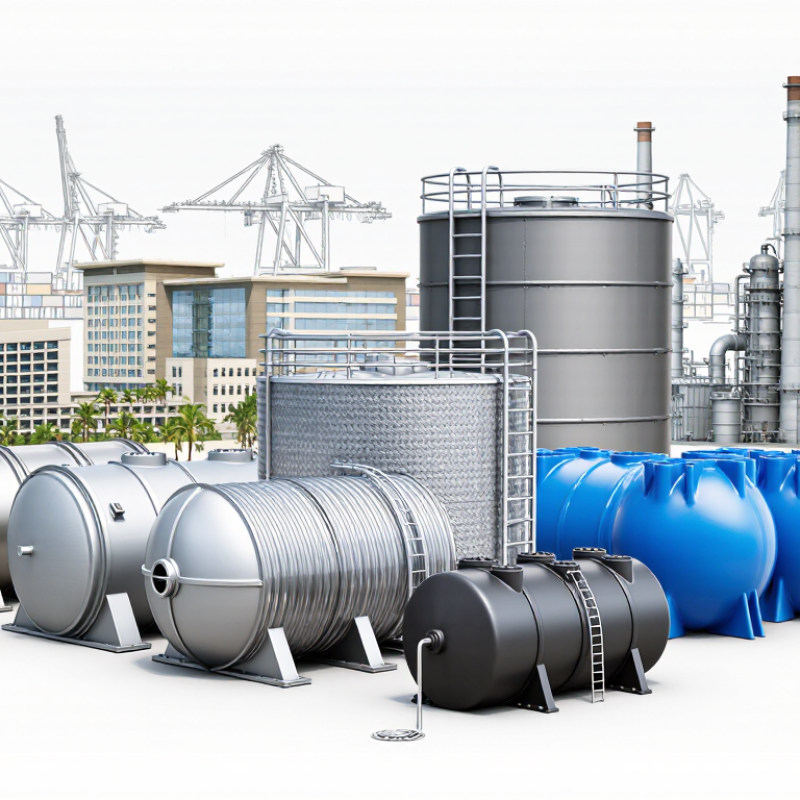
Water supply tanks are engineered containers for storing and distributing clean water. In China, they support homes, factories, hospitals, farms, and high-rise buildings. Their main role is practical: they balance demand, reduce pump cycling, and maintain supply during short interruptions. Some systems also use tanks to stabilize pressure across different floors. No tank is perfect.
Common designs include stainless steel, fiberglass, galvanized steel, concrete, and polyethylene tanks. Material selection depends on water quality, temperature, installation space, and expected service life. A rooftop tank must resist wind, sunlight, and structural movement. An underground tank needs protection from soil pressure, groundwater, and difficult maintenance access. Poor ventilation can also create hygiene problems.
Reliable Chinese manufacturers usually control plate thickness, welding quality, internal coatings, and component traceability. Buyers should request material certificates, dimensional drawings, leak-test records, and cleaning instructions. Food-contact surfaces need suitable sanitary documentation for the intended application. It is also wise to inspect drainage, access covers, overflow pipes, and level sensors before delivery. In my experience, these small details often matter more than polished catalog images. A larger tank is not automatically better. Oversizing can leave water stagnant, while undersizing may increase pump starts and service complaints. Local codes, seismic conditions, and actual consumption should guide the final specification.

China Top 10 Water Supply Tank Manufacturers?
Key Criteria for Ranking Chinese Water Supply Tank Manufacturers
A credible ranking should begin with product safety, not advertising reach. For drinking water projects, inspect stainless steel grade, liner quality, weld consistency, and internal surface treatment. Materials should match recognized potable-water requirements. Factory test records must be available, traceable, and easy to verify.
Manufacturing experience also matters. Review completed projects with similar capacity, water pressure, climate, and installation conditions. A reliable supplier should explain panel thickness, reinforcement design, inlet placement, overflow control, and drainage access. Independent inspections can confirm dimensional accuracy and leakage resistance. Factory audits reveal more than polished catalog images.
Service quality deserves equal weight. Assess engineering drawings, installation guidance, spare-part access, response times, and warranty procedures. Delivery performance should include realistic lead times, packaging standards, and export documentation. A low price may hide thinner panels or weak after-sales support.
A ranking is never perfect.
Some evidence remains difficult to compare. One manufacturer may publish detailed test data, while another has stronger field experience but fewer online records. For this reason, scoring should combine verified documents, customer references, production capacity, quality controls, and lifecycle costs. The best candidate is not always the largest factory. It is the one that communicates limitations clearly, accepts technical questions, and maintains consistent quality after the contract is signed.
Benchmark weighting model based on common drinking-water safety, engineering, quality-control, and procurement requirements.
Higher weights indicate greater importance in a practical supplier evaluation. Material safety and regulatory compliance receive the highest weighting because water-contact products should satisfy applicable drinking-water hygiene requirements, including GB/T 17219 where relevant. The percentages represent evaluation priorities rather than the performance of any named company.
China’s Top 10 Water Supply Tank Manufacturers
China’s top 10 water supply tank manufacturers should be judged by evidence, not publicity. The WHO and UNICEF Joint Monitoring Programme reported that 2.2 billion people lacked safely managed drinking water in 2022. This gap increases demand for dependable storage and pressure-control equipment. China’s manufacturing base supports large stainless steel, galvanized, and composite tank production. Yet capacity alone proves little.
During supplier reviews, buyers should inspect weld uniformity, internal coating thickness, panel tolerances, and cleaning access. A tank may look polished outside but hide weak seams inside. The UN World Water Development Report 2023 noted that global water demand could rise by 20% to 30% by 2050. Efficient tank design therefore matters in hospitals, factories, apartment towers, and rural systems.
Useful comparisons include tested material grades, leakage records, pressure performance, warranty terms, and export documentation. ISO-based quality systems can support consistency, but certificates need verification. Factory audits remain valuable. Production photos are not enough. Some rankings also overvalue low prices, which can ignore installation losses and maintenance costs. That is a weakness worth admitting. Buyers should request recent test reports, project references, and clear delivery schedules before selecting among China’s top 10 water supply tank manufacturers.
China Top 10 Water Supply Tank Manufacturers: Tank Types, Materials, and Manufacturing Capabilities
A credible top-ten list should compare engineering capability, not advertising language. China’s water supply tank sector commonly produces stainless steel, galvanized steel, GRP/SMC, HDPE, and concrete tanks. Stainless steel suits hygienic facilities and compact rooftops. GRP/SMC panels offer corrosion resistance and easier transport. Galvanized steel remains practical for industrial storage, although coating quality needs close inspection. HDPE tanks resist many chemicals but require careful support under full load.
Capacity is only one measure. Strong manufacturers provide panel molds, automated welding, controlled fiber placement, and certified assembly procedures. Look for documented water-contact testing, dimensional inspection, leak testing, and traceable material records. ISO 9001 certification supports process control, but it does not replace independent product testing. The standard is useful. It is not magic.
UNICEF and WHO’s Joint Monitoring Programme reported that 2.2 billion people lacked safely managed drinking water in 2022. UNESCO’s United Nations World Water Development Report 2024 also states that agriculture represents roughly 70% of global freshwater withdrawals. These figures show why tank selection must consider hygiene, reserve volume, and local water pressure. A manufacturer should calculate structural loads, temperature changes, foundation settlement, and cleaning access. In my experience, the weakest detail is often the outlet connection, not the tank shell. A perfect specification rarely exists. Buyers should question unclear weld procedures, vague food-grade claims, and capacity figures measured without usable freeboard.
China Top 10 Water Supply Tank Manufacturers
Choosing a suitable Chinese water supply tank manufacturer requires more than reading a top-ten list. The best supplier should understand your water quality, storage volume, installation space, and local compliance requirements. Ask for material certificates, production drawings, welding procedures, and recent inspection records. For drinking water projects, confirm that liners, seals, and coatings are approved for potable use in your market.
Experience is visible in details. A reliable factory can explain panel thickness, corrosion protection, thermal expansion, and cleaning access without vague promises. Request photos of comparable tanks, pressure or leakage test results, and a clear quality-control process. A factory audit can reveal welding conditions, calibration records, and how materials are stored. Third-party inspection is useful for large orders. It costs more, but hidden defects cost more.
Tips: Compare at least three quotations. Check the warranty exclusions. Confirm delivery terms and spare parts. Ask who handles installation support. Never choose by price alone.
I once underestimated access space around a tank. The design looked correct, yet maintenance became difficult. That mistake taught me to review foundation drawings, ladder positions, drain outlets, and replacement routes before signing. Suppliers should also provide technical responses in writing. If an answer keeps changing, pause. A dependable manufacturer welcomes precise questions and admits what still needs verification.
| No. | Evaluation Dimension | What to Verify | Practical Reference or Acceptance Point | Recommended Weight | Selection Risk if Not Verified |
|---|---|---|---|---|---|
| 1 | Application and Water Quality | Confirm whether the tank is intended for potable water, fire protection, process water, irrigation, or raw water. | For drinking-water applications, materials and internal coatings should be suitable for contact with potable water and aligned with applicable requirements such as China’s GB 5749-2022. | 15% | Material contamination, odor, corrosion, or rejection during project inspection. |
| 2 | Tank Material | Check the exact grade, thickness, certificates, and traceability of stainless steel, galvanized steel, coated steel, or glass-fused material. | For stainless-steel tanks, the supplier should clearly identify the steel grade, welding method, surface finish, and material test documentation rather than using only the term “food grade.” | 12% | Premature corrosion, reduced service life, and difficult warranty claims. |
| 3 | Capacity and Hydraulic Design | Compare effective volume, peak demand, reserve volume, inlet flow, outlet flow, overflow, drain, and access requirements. | Useful capacity should be calculated from the actual operating water level, not only the external tank dimensions. The design should account for dead volume and required reserve capacity. | 12% | Insufficient water supply, pump cycling, overflow, or unusable nominal capacity. |
| 4 | Structural Strength | Review panel reinforcement, tie rods, base frame, roof loading, seismic requirements, wind exposure, and installation conditions. | The manufacturer should provide engineering calculations or drawings showing hydrostatic loading, support spacing, panel deflection, and applicable site loads. | 12% | Panel deformation, leakage, unstable foundations, or structural failure. |
| 5 | Fabrication and Welding Quality | Inspect welding procedures, weld penetration, corner joints, polishing, passivation, dimensional tolerances, and leak-testing methods. | A complete inspection plan should include visual inspection, dimensional inspection, and a documented water-fill or hydrostatic leakage test before shipment or handover. | 12% | Hidden leakage, weld corrosion, contamination, and costly site rework. |
| 6 | Hygiene and Internal Cleanability | Check internal corners, dead zones, access manholes, ventilation, insect protection, cleaning access, and disinfection procedures. | Internal surfaces should be smooth, cleanable, and free from untreated rust, oil, welding residue, sharp projections, and materials that can support contamination. | 10% | Bacterial growth, sediment accumulation, poor water quality, and difficult maintenance. |
| 7 | Connections and Accessories | Verify the quantity, size, location, material, and connection standard of inlet, outlet, drain, overflow, level indicator, manhole, ladder, and vent. | Flanges, valves, gaskets, and fittings should match the project piping standard and the selected water quality. Overflow and drain lines should be sized for safe discharge. | 8% | Installation delays, leakage at interfaces, and incompatible replacement parts. |
| 8 | Quality Management and Traceability | Request quality certificates, inspection records, batch identification, production drawings, and a documented quality-control process. | ISO 9001 certification can support process control, but it should not replace product-specific inspections, material certificates, and project acceptance records. | 7% | Unclear responsibility, inconsistent batches, and limited evidence during disputes. |
| 9 | Production Capacity and Delivery Control | Assess factory production equipment, welding capability, monthly workload, packaging method, export experience, and realistic lead time. | Delivery commitments should identify drawing approval, production, inspection, packing, shipping, installation, and commissioning milestones separately. | 5% | Project delays, damaged panels, missing accessories, or incomplete delivery. |
| 10 | After-Sales Service and Total Cost | Compare warranty scope, spare-parts availability, installation support, response time, cleaning guidance, and lifecycle maintenance cost. | Evaluate total cost including tank panels, supports, fittings, transport, installation, testing, foundation requirements, maintenance, and future replacement parts. | 7% | Low purchase price but higher installation, maintenance, and replacement costs. |
| Total Recommended Evaluation Weight | 100% | Use documented evidence before final selection. | |||


For those larger-sized parts, or smaller quantity runs, we have 2 independent powder coat booths and ovens. The quality, durability and affordability of today’s powder coating finishes make this the process of choice for world-class companies.
Powder coating advantages over other forms of coating are many. Materials used in the Powder coating process can be metals and non-metals that come in a multitude of thicknesses, textures, colors, etc. Another of Powder coating’s biggest advantages over conventional coatings is its ability to create finishes in many different textures. Powder Coating Booths allow us the ability to apply these advantages to large products.
Tri-State Fabricators runs a full-service conveyor line for painting. Wet painting can provide protection or decoration to many different part styles. From start to finish, every project is easier to undergo random and point-based inspection by our skilled painting team.
Advantages to our Wet Paint Line are these lines start with product prep and ends with a thorough inspection of a high quality finished product. Our ability to complete large and small projects with a superior finish and doing so in a timely and economical fashion. This passes along the savings in production to our customers. When powder coating ins not an option, our Wet Paint Line gets the job done right the first time.
When the parts get big and heavy we roll-out our custom paint racks and oversize booth. By utilizing our partnerships with all the major paint brands, we can match virtually any color with wet paint.
The advantages of having access to a Wet Paint Booth are many. Large projects of many different shapes can be loaded into the booth. The Wet Paint Booth offers an environment that is much more controlled than a typical parts painting operation.
Not only are they used because of their controlled environment, but they’re are also advantageous when it comes to applying paint to parts that are needed in industries that require specialty coatings such as medical, aerospace, etc.
Our military forces have some very high standards when it comes to the finish of their vehicles and equipment. From the first pre-treatment step to final coat, it takes a great deal of knowledge and experience to protect the men and women of our armed forces. They deserve only the best, and Tri-State Fabricators provides it.
All of our processes are closely monitored by our staff and management teams. Both of which are highly trained in the processes of metal fabrication and finishing. Tri-State Fabricators’ goal is to always fully satisfy each and every customer, including the military. We will always put a 110% into what we do.
Abrasive media blasting is an excellent way to remove old paint, rust, and increase the paint/powder adhesion. Glass beads produce a much smoother and brighter finish than angular abrasives; leaving the part clean yet without any dimensional change. Chemically inert and environmentally friendly, we can recycle our beads approximately 30 times; making them a more preferred method of metal cleaning or surface finishing.
Advantages to Glass Bead Blasting are many. Glass bead blast media is used when a project is needing rough surfaces need to become smooth for applications of coatings such as paint. It is typically used to clean paint and rust from a product surface without deforming the surface it is being used on. Overall, compared to many other blasting media, Glass Bead Blasting is a very economical choice and those savings are always passed on to our customers.
Tri-State Fabricators utilize a zinc phosphate wash to clean and etch the material to ensure the best paint adhesion possible. The unique design of our 3-stage wash system does the work like a 5-stage. From Cleaning and rinsing to conversion coating and post-treatment, Our Part Washing process is a complete service and works throughout the fabrication service and the finishing service.
Along with the previously mentioned benefits, Curing is a vital chemical reaction that leaves the product finish hard and relatively safe from mild abrasion and aggressive corrosion. This process can be done in more than one way; ambient air-dry or in curing ovens at temps that exceed 240°.
From fixing paint mistakes (someone else’s of course) to simply cleaning our paint line hooks, our burn-off oven is put to good use. After a quick burn-off, a little clean up, and a fresh coat of paint, your parts will look better than new.
Why does our Burn-Off Oven work so well? Because super heating the air around parts turns the materials into ashes. From paint and powder coatings to rubber and machining oils, high temps do the job without degrading the integrity of the part.
Masking is a vital part of producing high quality products. We have die-cut masking patterns to protect machined surfaces as well as a wide range of plugs and caps to protect threaded holes and bolts. We provide permanent and temporary masking.
Masking allows the selected sections of a product to be protected from a fabrication or finishing service. This can be with both chemicals when etching and tapes, paints when only finishing just a section of the product. Masking is great in aiding the customization process of a project.
Screen printing is a photographic process that transfers artwork onto a porous nylon screen which allows colored ink to flow through the screen and be deposited on an aluminum or plastic component. We can generally have just about any design created onto a screen for your parts.
Some of the advantages of Screen Printing are, brand recognition for your business displaying on your products, assembly instructions, product warnings/hazards, etc. Tri-State Fabricators produces Screen Printing of the highest quality so you know it’s durable.
Metal Finishing is the art of treating the exterior portion of product, often metal but can also be made of other materials, so that the surface is clean and free of any debris. Then the process of applying coats or either paint of powder coat takes place. This coating process improves the quality of the product in both appearance and resistance to wear and corrosion.
Tri-State Fabricators, Inc., understands that a project typically isn’t complete until a high-quality finish has been added to your product. This is why our painting and powder coating teams continuously inspect the products throughout the Metal Finishing process.

