


Top 10 Versal Board Manufacturers for Global Buyers

Selecting a Versal Board supplier is not just a price comparison. Buyers must assess design support, manufacturing controls, traceability, and delivery capacity. These details matter when a board must fit a defined power, thermal, and interface envelope. A polished product page is useful, but it is not proof of production capability.

The market context is expanding. The World Semiconductor Trade Statistics (WSTS) Fall 2024 forecast estimated global semiconductor sales at $627.6 billion in 2024 and $697.2 billion in 2025. This forecast describes the wider chip market, not Versal Board demand specifically. Still, it helps explain why buyers face more options—and why careful supplier checks remain essential. AMD’s Versal product documentation also gives buyers a technical baseline for evaluating device families, interfaces, and design requirements. Start there. Then compare each manufacturer’s board-level evidence.

This guide examines ten manufacturers serving global buyers, with attention to engineering depth, customization, quality processes, and communication across regions. Ask for concrete proof: test procedures, revision controls, sample lead times, and support for integration issues. A supplier may publish impressive specifications yet provide limited documentation. That gap can be easy to miss. No ranking can replace direct technical review, and company capabilities may change over time. The comparisons that follow are a starting point—not a substitute for checking the exact board, project requirements, and current manufacturing terms.
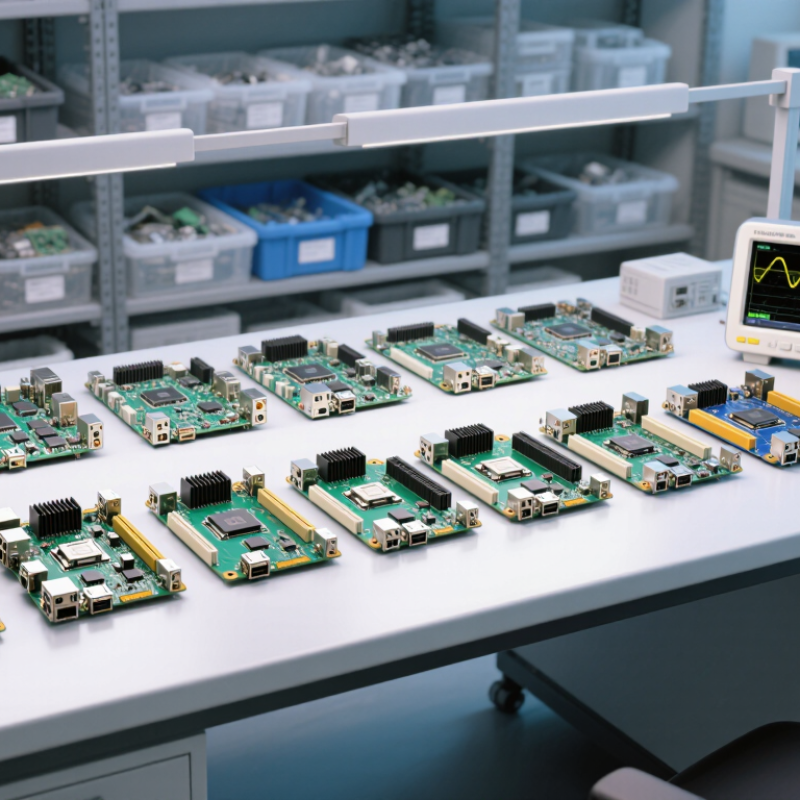
Top 10 Versal Board Manufacturers for Global Buyers

Define Versal ACAP Boards and Their 7 nm Adaptive-Compute Foundation

Versal ACAP boards combine programmable logic, processing systems, and adaptable compute resources on a 7 nm foundation. The term ACAP describes an adaptive compute platform: hardware can be configured for specific workloads rather than relying only on fixed-function processors. On a board, this flexibility supports tasks such as signal processing, data movement, and machine-learning inference. The exact mix of resources varies by device and board design.

Details matter.

The 7 nm process enables dense integration, but it does not guarantee lower system power or higher performance in every application. Cooling, memory bandwidth, software tools, and workload design all shape real results. A compact board still needs careful thermal planning; airflow around heat sinks can make a measurable difference.

The Semiconductor Industry Association reported global semiconductor sales of $627.6 billion in 2024, underscoring the scale of demand for advanced computing components. That figure describes the wider chip market, not ACAP boards specifically.

Buyers should compare published specifications with measured board-level results. One caveat: headline compute figures can obscure bottlenecks in memory access and data transfer. That deserves scrutiny.


Compare Board Designs for AI, Embedded Processing, and High-Speed Connectivity

A Versal-class board should be judged by the work it needs to do, not by its headline specifications. For AI workloads, check the available logic resources, memory capacity, and data paths between the processor and programmable fabric. A board that feeds data steadily can outperform one with more theoretical compute but limited memory bandwidth. Heat matters, too. Under sustained inference, small cooling solutions may become a real constraint.

For embedded processing, examine boot options, power input, and the connectors needed for sensors or control equipment. A compact board can fit neatly into a test rig, yet leave little room for cables or airflow. Check whether the design supports the operating temperature and maintenance access your deployment requires. These details are easy to overlook. I have seen tidy prototypes become awkward once extra wiring is added.

High-speed connectivity calls for a closer look at lane counts, supported interface standards, and how those lanes are routed. Compare the board’s published diagrams with your intended network, storage, or expansion cards; connector presence alone does not guarantee the bandwidth you expect. Ask for thermal data and repeatable performance results, not just peak figures. One weak point: vendor measurements may use different test conditions, so direct comparisons can remain imperfect. A careful shortlist should include documentation quality, software support, and the time needed to bring up a working design.

Top 10 Versal Board Manufacturers for Global Buyers

Compare board designs for AI, embedded processing, and high-speed connectivity using theoretical interface signaling rates.

Values show published maximum signaling rates per lane or port, not guaranteed application throughput. Actual performance depends on the board implementation, configuration, and protocol overhead.

Evaluate I/O Requirements Against Versal Premium’s 112-Gb/s PAM4 Transceivers

Selecting a Versal board starts with the I/O map, not the headline data rate. Versal Premium devices offer 112-Gb/s PAM4 transceivers, but usable link performance depends on the complete channel. Check lane count, connector type, trace length, and expected cable reach. A short backplane route and a long optical-module path create different design demands. Measure the channel budget carefully. Equalization and forward error correction may help, yet they cannot fix every layout problem. I have seen teams focus on peak bandwidth and overlook connector transitions; that is an easy mistake to make.

Tips: Ask for channel-loss data, reference layouts, and documented transceiver settings. Confirm whether the board exposes the lanes you need, rather than assuming every lane is routed. Check cooling under sustained traffic, too. PAM4 can carry more bits per symbol, but signal integrity margins become tighter. Very tight.

When comparing manufacturers, request test conditions alongside performance claims. Look for eye-diagram results, bit-error-rate measurements, and details about test fixtures. Also verify clocking options and access to debug signals. A board that fits today’s I/O plan may be awkward to expand later. Leave room for spare lanes where practical. Still, extra capacity adds cost and power, so the right balance depends on the actual system. Don’t treat a published maximum as a guaranteed application rate.

Top 10 Versal Board Manufacturers for Global Buyers - Evaluate I/O Requirements Against Versal Premium’s 112-Gb/s PAM4 Transceivers

Use this vendor-neutral checklist to compare board suppliers. Versal Premium GTM transceiver capability can reach 112 Gb/s PAM4, but supported rates, lane counts, connectors, and board routing depend on the specific device, board design, and implementation. Confirm details in the device documentation and the supplier’s schematics.

No. Evaluation dimension What to verify with the board supplier Why it matters for 112-Gb/s PAM4 I/O Buyer check
1 Device and package Exact Versal Premium device, package, speed grade, and enabled transceiver resources. Transceiver availability and supported operating rates are device- and configuration-dependent. Request the complete part number and resource map.
2 Transceiver lane count Number of GTM lanes routed to usable board connectors, plus any lanes reserved or left unrouted. A device’s transceiver resources do not automatically translate into accessible board I/O. Compare routed lanes with system lane demand.
3 Rate and modulation support Documented line rates, PAM4/NRZ modes, reference-clock requirements, and applicable operating conditions. 112 Gb/s PAM4 is a transceiver capability ceiling for applicable GTM configurations, not a guarantee for every board channel. Validate the target protocol and rate against device documentation.
4 Connector and cage options Connector type, lane mapping, cage/mechanical compatibility, and supported optical or electrical module interfaces. Connector choice and module implementation affect channel loss, reach, and system interoperability. Request connector pinout and module compatibility details.
5 PCB stack-up and materials Layer stack-up, dielectric material data, copper specifications, and controlled-impedance targets for high-speed routes. Loss and impedance discontinuities can constrain high-speed channel performance. Ask for stack-up and impedance-control documentation.
6 Channel characterization Insertion-loss and return-loss data, channel models, simulation results, and measurement reference planes. Channel performance must be assessed across the complete path, including package, PCB, connector, and module. Request measured or modeled channel evidence at the target rate.
7 Clocking and jitter Reference-clock sources, frequency options, jitter specifications, clock routing, and any required clock-cleaning circuitry. High-speed links require clocking that meets the selected transceiver and protocol requirements. Check clock plans against the target protocol configuration.
8 Power and thermal design Power-rail capacity, sequencing, cooling provisions, airflow assumptions, and thermal monitoring. Transceiver operation and overall system stability depend on suitable power integrity and thermal conditions. Review power budgets and cooling requirements for the intended workload.
9 Bring-up and debug access JTAG access, status indicators, loopback options, test points, and documented transceiver diagnostic workflows. Accessible diagnostics help isolate link, clocking, configuration, and signal-integrity issues. Confirm the debug method and available board support files.
10 Documentation and support Schematics, constraints, reference designs, software examples, compliance evidence, lifecycle status, and support terms. Complete documentation reduces integration risk and supports reproducible validation. Assess documentation completeness and long-term availability.

Note: This is a vendor-neutral evaluation checklist, not a ranked list or a claim about individual manufacturers. Confirm all device, board, protocol, and performance details with current technical documentation and supplier validation data.

Compare the Top 10 Manufacturers by Integration, Customization, and Support

Selecting a Versal board manufacturer means comparing the complete engineering partnership, not just the processor and memory listed on a datasheet.

Integration shows in practical details: power sequencing, cooling, high-speed routing, and whether the board arrives with tested boot software. Ask for thermal measurements under sustained workloads, not only peak results. Small differences matter.

Customization should fit the application without turning every order into a new development project. Compare available I/O, memory options, carrier-board design, and documented lead times.

Gartner reported that worldwide semiconductor revenue reached $626 billion in 2024, an 18.1% increase from 2023.

That growth reflects a busy supply environment, but it does not guarantee consistent availability for any particular board. Request written lifecycle and component-substitution policies. Check them carefully.

Support is easiest to judge through evidence: response targets, revision histories, schematic access, and help reproducing a reported fault.

NIST’s Platform Firmware Resiliency Guidelines (SP 800-193) emphasize protecting, detecting, and recovering platform firmware.

Buyers can use that framework to ask how recovery images and update procedures are handled. Ask for an example.

A manufacturer may offer extensive customization yet provide sparse documentation; that trade-off deserves scrutiny.

Compare integration, customization, and support against your actual workload, production volume, and maintenance capacity—not a polished demonstration alone.

Select a Versal Board Using Workload, Lifecycle, and Supply-Chain Criteria

Top 10 Versal Board Manufacturers for Global Buyers

Choosing a Versal board starts with the workload, not the product photograph. Estimate required compute, memory bandwidth, and interface count using a representative task. A board handling several high-speed sensor streams may need different connectivity from one running a compact inference model. Check power draw and cooling, too. A small enclosure can turn an otherwise suitable board into a thermal problem. Benchmarks help, but test your own data path where possible. Published figures rarely show every bottleneck.

Lifecycle and supply-chain details deserve equal attention. Ask how long the board configuration is expected to remain available, and whether component substitutions affect validation. Confirm lead times, regional support, documentation quality, and access to replacement units. These details matter when a prototype becomes a production system. Request written answers. Verbal assurances can fade. I would also compare second-source options, though they may require extra engineering work. That trade-off is easy to underestimate.

Tips: Build a short evaluation checklist. Include workload performance, thermal behavior, delivery estimates, and revision control. Test the board in its intended chassis, then record results. Leave room for uncertainty; early estimates are often wrong.

Article Source:

Powder Coat Booths

For those larger-sized parts, or smaller quantity runs, we have 2 independent powder coat booths and ovens. The quality, durability and affordability of today’s powder coating finishes make this the process of choice for world-class companies.

Powder coating advantages over other forms of coating are many. Materials used in the Powder coating process can be metals and non-metals that come in a multitude of thicknesses, textures, colors, etc. Another of Powder coating’s biggest advantages over conventional coatings is its ability to create finishes in many different textures. Powder Coating Booths allow us the ability to apply these advantages to large products.

Wet Paint Line

Tri-State Fabricators runs a full-service conveyor line for painting. Wet painting can provide protection or decoration to many different part styles. From start to finish, every project is easier to undergo random and point-based inspection by our skilled painting team.

Advantages to our Wet Paint Line are these lines start with product prep and ends with a thorough inspection of a high quality finished product. Our ability to complete large and small projects with a superior finish and doing so in a timely and economical fashion. This passes along the savings in production to our customers. When powder coating ins not an option, our Wet Paint Line gets the job done right the first time.

Wet Paint Booths

When the parts get big and heavy we roll-out our custom paint racks and oversize booth. By utilizing our partnerships with all the major paint brands, we can match virtually any color with wet paint.

The advantages of having access to a Wet Paint Booth are many. Large projects of many different shapes can be loaded into the booth. The Wet Paint Booth offers an environment that is much more controlled than a typical parts painting operation.

Not only are they used because of their controlled environment, but they’re are also advantageous when it comes to applying paint to parts that are needed in industries that require specialty coatings such as medical, aerospace, etc.

Military CARC

Our military forces have some very high standards when it comes to the finish of their vehicles and equipment. From the first pre-treatment step to final coat, it takes a great deal of knowledge and experience to protect the men and women of our armed forces. They deserve only the best, and Tri-State Fabricators provides it.

All of our processes are closely monitored by our staff and management teams. Both of which are highly trained in the processes of metal fabrication and finishing. Tri-State Fabricators’ goal is to always fully satisfy each and every customer, including the military. We will always put a 110% into what we do.

Glass-Bead Blasting

Abrasive media blasting is an excellent way to remove old paint, rust, and increase the paint/powder adhesion. Glass beads produce a much smoother and brighter finish than angular abrasives; leaving the part clean yet without any dimensional change. Chemically inert and environmentally friendly, we can recycle our beads approximately 30 times; making them a more preferred method of metal cleaning or surface finishing.

Advantages to Glass Bead Blasting are many. Glass bead blast media is used when a project is needing rough surfaces need to become smooth for applications of coatings such as paint. It is typically used to clean paint and rust from a product surface without deforming the surface it is being used on. Overall, compared to many other blasting media, Glass Bead Blasting is a very economical choice and those savings are always passed on to our customers.

Part Washing

Tri-State Fabricators utilize a zinc phosphate wash to clean and etch the material to ensure the best paint adhesion possible. The unique design of our 3-stage wash system does the work like a 5-stage. From Cleaning and rinsing to conversion coating and post-treatment, Our Part Washing process is a complete service and works throughout the fabrication service and the finishing service.

Along with the previously mentioned benefits, Curing is a vital chemical reaction that leaves the product finish hard and relatively safe from mild abrasion and aggressive corrosion. This process can be done in more than one way; ambient air-dry or in curing ovens at temps that exceed 240°.

Burn-Off Oven

From fixing paint mistakes (someone else’s of course) to simply cleaning our paint line hooks, our burn-off oven is put to good use. After a quick burn-off, a little clean up, and a fresh coat of paint, your parts will look better than new.

Why does our Burn-Off Oven work so well? Because super heating the air around parts turns the materials into ashes. From paint and powder coatings to rubber and machining oils, high temps do the job without degrading the integrity of the part.

Masking

Masking is a vital part of producing high quality products. We have die-cut masking patterns to protect machined surfaces as well as a wide range of plugs and caps to protect threaded holes and bolts. We provide permanent and temporary masking.

Masking allows the selected sections of a product to be protected from a fabrication or finishing service. This can be with both chemicals when etching and tapes, paints when only finishing just a section of the product. Masking is great in aiding the customization process of a project.

Screen Printing

Screen printing is a photographic process that transfers artwork onto a porous nylon screen which allows colored ink to flow through the screen and be deposited on an aluminum or plastic component. We can generally have just about any design created onto a screen for your parts.

Some of the advantages of Screen Printing are, brand recognition for your business displaying on your products, assembly instructions, product warnings/hazards, etc. Tri-State Fabricators produces Screen Printing of the highest quality so you know it’s durable.

Metal Finishing

Metal Finishing is the art of treating the exterior portion of product, often metal but can also be made of other materials, so that the surface is clean and free of any debris. Then the process of applying coats or either paint of powder coat takes place. This coating process improves the quality of the product in both appearance and resistance to wear and corrosion.

Tri-State Fabricators, Inc., understands that a project typically isn’t complete until a high-quality finish has been added to your product. This is why our painting and powder coating teams continuously inspect the products throughout the Metal Finishing process.
