


China’s automotive component market includes many plunger switch manufacturers, but supplier selection requires more than a low quoted price. A reliable Unionwell automotive plunger switch supplier should demonstrate stable contact performance, consistent dimensions, and practical production experience. These details matter when a switch operates inside a hood latch, brake pedal assembly, door sensor, or seat mechanism.
Automotive electrical engineer Daniel Wu explains, “A dependable plunger switch must respond consistently, even when vibration, dust, and repeated compression challenge its design.” This view reflects an important purchasing reality. Buyers should examine operating force, travel distance, contact arrangement, terminal quality, sealing options, and temperature resistance. Factory audits also reveal useful details. Look for organized testing benches, traceable samples, calibrated measuring tools, and clear inspection records. A polished brochure is not enough.
This guide introduces China’s top 10 Unionwell automotive plunger switch suppliers and considers their strengths, applications, and manufacturing credibility. The comparison will focus on product consistency, customization support, delivery capability, and after-sales communication. Some suppliers may appear strong on paper but provide limited evidence. That deserves caution. Even experienced buyers can overlook small differences in actuator length or mounting tolerance. A switch may fit during a sample test, then fail after thousands of cycles. This is why direct testing remains essential. Supplier rankings are useful, but they are not absolute. Actual vehicle conditions, purchasing volume, and design requirements can change the final choice.
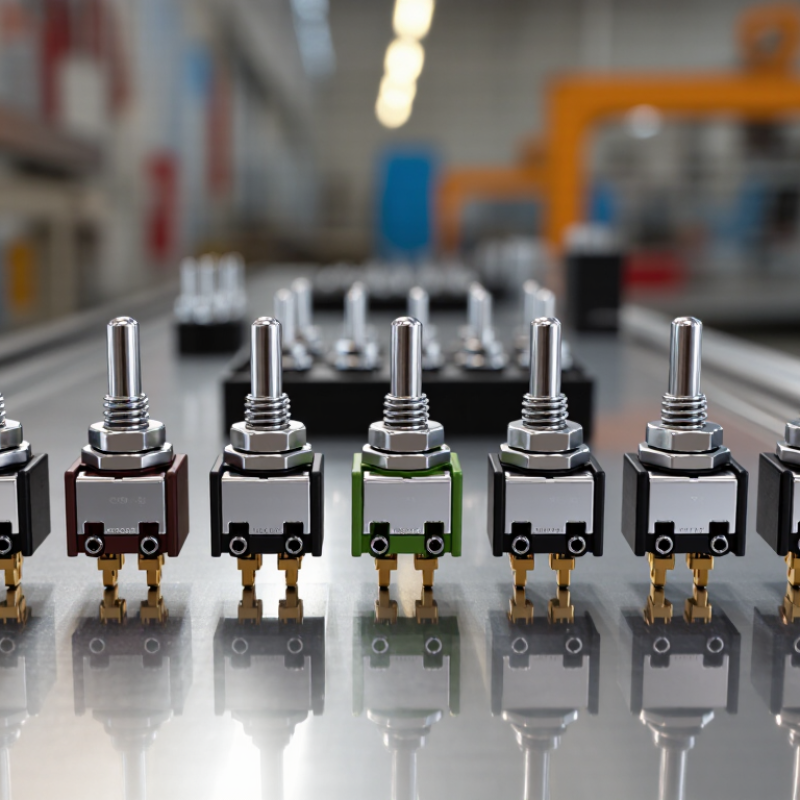
An automotive plunger switch is a compact electromechanical sensor with a spring-loaded stem. It changes an electrical circuit when a vehicle part presses the stem. Common locations include doors, hoods, trunks, pedals, and seat mechanisms. Some switches are normally open, while others are normally closed.
The operation is simple. A door closes, pushing the plunger inward. Internal contacts then open or close, sending a signal through the wiring harness. A body control module may use this signal to control interior lighting, alarms, or dashboard warnings. In older systems, the switch can operate a lamp directly. In newer vehicles, software interprets the signal.
Small details matter. During service, I check continuity with a multimeter while moving the plunger slowly. The reading should change cleanly, without sudden gaps. I also inspect loose terminals, cracked insulation, and water around the mounting hole. Vibration, dust, temperature changes, and repeated impacts can shorten service life. A switch may look normal but still create intermittent faults.
Installation needs careful alignment. If the plunger is pressed too far, the contacts may wear early. If it barely moves, the signal may remain unstable. Selecting a suitable travel distance, contact rating, sealing level, and connector is essential.
One limitation deserves attention: a basic plunger switch only reports position. It cannot confirm whether the related mechanical part is truly safe or fully locked.

Automotive plunger switches play a small but critical role in vehicle systems. They detect movement, position, pressure, or closure. A door switch may activate a warning lamp when the latch moves. A brake switch can signal control modules during pedal operation. Small errors can create confusing faults.
When comparing suppliers in China, buyers should examine contact materials, spring strength, sealing, and electrical ratings. The switch must match the vehicle’s voltage, current, temperature range, and mechanical travel. A reliable supplier should provide inspection records, sample testing, and traceable production details. In practical testing, repeated pressing matters. Vibration, dust, moisture, and sudden temperature changes can expose weak designs. A switch may look perfect on paper, yet fail after thousands of cycles. That possibility deserves honest attention.
Tips: Confirm the actuator’s travel before installation. Check whether the mounting thread fits tightly. Test the switch under real load, not only with a multimeter. Ask for cycle-life data and environmental test results. Leave enough clearance around the plunger. Excessive side pressure can cause uneven wear. Do not ignore a slightly delayed response; it may indicate contact fatigue. A low purchase price can become expensive after repeated replacements. Specification sheets help, but hands-on validation remains necessary.
Evaluating China’s leading automotive plunger switch suppliers requires more than comparing quoted prices. A practical review should begin with factory capability, engineering experience, and production consistency. Ask whether the supplier controls stamping, molding, assembly, and testing internally. Visit the facility when possible. Observe material storage, clean work areas, and operator training. Photos alone can mislead.
Request samples from regular production lines, not specially prepared units. Measure operating force, travel distance, contact resistance, and return speed. Test switches under vibration, moisture, dust, and temperature changes. Automotive components often face repeated pressure near doors, pedals, seats, and engine compartments. A reliable supplier should provide cycle-life data, inspection records, and clear traceability for each batch. Certification helps, but it never replaces physical testing.
Communication also reveals professional maturity. Engineers should explain tolerances, failure risks, and proposed design changes in practical language. Check whether drawings, control plans, and inspection reports match the delivered samples. Confirm packaging details, labeling, lead times, and corrective-action procedures. Small inconsistencies matter. A delayed reply may become a delayed shipment. However, no supplier is perfect; even experienced factories can overlook a weak spring or unstable plating layer. Independent validation remains necessary, especially before large-volume purchasing. Supplier performance should be reviewed again after several production batches.
China’s top 10 automotive plunger switch suppliers serve applications such as door latches, pedals, hoods, and seat mechanisms. Their products usually combine a spring-loaded actuator, sealed housing, and corrosion-resistant terminals. A reliable supplier should provide contact ratings, operating force, travel distance, and electrical-life data. These details matter more than attractive catalog photos.
In practical sourcing, request samples from all ten suppliers before approving production. Check whether each switch works consistently after dust exposure, vibration, moisture, and repeated pressing. Automotive projects may require stable performance from -40°C to 125°C, depending on installation. Ask for traceable inspection records and lot-based testing. Factory audits can reveal weak assembly controls or unclear material sources. Some suppliers respond quickly but offer limited engineering support. Others provide strong testing yet need longer tooling schedules. That trade-off deserves attention. The ranking is not absolute. It can change with order size, customization, certification needs, and delivery performance. A small error in plunger length may cause intermittent contact, even when the sample appears acceptable. Keep this risk visible. Supplier reviews should continue after mass production begins, using return rates, field feedback, and periodic sample checks.
Automotive plunger switches are used across different vehicle electrical architectures. The chart compares common nominal system-voltage segments, from conventional passenger vehicles to high-voltage electric vehicles. These reference values describe application environments rather than supplier or brand performance.
Selecting the right automotive plunger switch supplier begins with the application, not the catalog. Define operating voltage, current load, travel distance, actuator force, and installation space. Check temperature, dust, moisture, vibration, and expected switching cycles. A switch beside a heated engine component needs different protection than one inside a cabin.
Ask suppliers for measured test data, not broad performance claims. Review electrical-life results, contact resistance, sealing ratings, material specifications, and traceability records. Request samples from the same production line used for volume orders. Test them with your actual connector, wiring, mounting bracket, and load. Small differences in alignment can cause intermittent signals.
Supplier experience also matters. A capable partner should explain tolerance control, inspection methods, change management, and failure analysis. Confirm whether they support prototypes, pilot runs, and stable production schedules. I once trusted a promising sample without checking actuator wear after repeated side loading. That mistake delayed validation. Real-world testing exposes details that factory drawings may miss.
Compare communication quality as carefully as price. Clear drawings, prompt corrective actions, and consistent technical answers indicate stronger control. Ask how rejected parts are contained and how replacement batches are verified. Do not overlook packaging; crushed terminals or mixed lots can create expensive confusion. A lower quotation may hide testing gaps, tooling limits, or weak after-sales support. Select the supplier that can prove repeatable performance under your exact conditions.
| No. | Evaluation Dimension | Automotive Requirement | Practical Screening Benchmark | Evidence to Request | Best Application Fit |
|---|---|---|---|---|---|
| 01 | Switch Configuration | Select normally open, normally closed, changeover, momentary, or maintained operation according to the circuit logic. | The contact arrangement should match the control unit without relying on field modifications. | Approved wiring diagram, contact-state diagram, and sample continuity test. | Door, hood, trunk, pedal, brake, clutch, and position detection. |
| 02 | Electrical Rating | The switch must handle the actual voltage, current, inrush, inductive load, and duty cycle of the vehicle circuit. | Use a rating suitable for the load type; resistive and inductive ratings should be reviewed separately. | Rated-load test report, derating curve, contact-material specification, and load-life data. | Low-current signal circuits and direct control of lamps, relays, or actuators. |
| 03 | Mechanical Life | Repeated plunger operation should not cause excessive contact resistance, sticking, or loss of switching accuracy. | For frequently operated functions, compare mechanical life and electrical life under the intended load. | Life-cycle test conditions, operating speed, load profile, failure criteria, and post-test measurements. | Brake-pedal, clutch-pedal, shift-position, and repeated door applications. |
| 04 | Operating Temperature | Materials, lubricants, seals, and contact systems must remain stable across the temperature range of the installation location. | Screen for a minimum range of approximately -40°C to +85°C, then confirm the vehicle-specific requirement. | Temperature-cycle results, low-temperature actuation data, and high-temperature electrical measurements. | Engine compartments, exterior body panels, cabins, and underbody locations. |
| 05 | Ingress and Contamination Protection | The housing and sealing system should resist water, dust, mud, oil mist, cleaning agents, and road contaminants. | Select the enclosure protection level according to exposure; commonly reviewed levels include IP54, IP65, or higher. | Ingress-protection report, sealing drawings, material compatibility data, and contamination test results. | Exterior doors, tailgates, hood latches, wheel-area mechanisms, and underbody systems. |
| 06 | Actuation Characteristics | Plunger travel, operating force, release force, overtravel, and switching position must suit the mechanical tolerance stack-up. | Require defined actuation and release points with sufficient overtravel to prevent incomplete switching. | Force-travel curve, tolerance range, dimensional drawing, and sample measurement records. | Latch detection, pedal position sensing, limit detection, and end-stop monitoring. |
| 07 | Vibration and Shock Resistance | The switch should maintain contact stability and mechanical integrity under vehicle vibration and impact loads. | Evaluate resonance, contact bounce, terminal retention, and housing damage under the vehicle’s vibration profile. | Vibration and shock test method, frequency range, acceleration level, duration, and failure limits. | Powertrain areas, chassis systems, doors, seats, and commercial-vehicle installations. |
| 08 | Terminal and Connector Design | Terminals must provide secure crimping or soldering, low contact resistance, and compatibility with the vehicle harness. | Confirm terminal plating, wire range, retention force, sealing method, and connector mating-cycle requirements. | Terminal drawings, crimp-pull results, contact-resistance data, and harness compatibility samples. | High-volume harness assemblies and applications requiring quick installation. |
| 09 | Quality and Traceability | Consistent production control is essential because small dimensional or contact variations can affect vehicle safety signals. | Prefer documented incoming, in-process, and final inspection with batch-level traceability. | Control plan, process-flow chart, inspection records, change-control procedure, and corrective-action history. | Safety-related signals, high-volume programs, and long-term replacement supply. |
| 10 | Customization and Supply Capability | A suitable supplier should support drawings, prototypes, tooling, engineering changes, packaging, and stable mass production. | Assess sample lead time, minimum order quantity, production capacity, tooling ownership, and continuity planning. | Prototype schedule, capacity statement, packaging specification, change-notification policy, and delivery-performance data. | Special plunger lengths, mounting dimensions, cable assemblies, sealed housings, and private-label projects. |


For those larger-sized parts, or smaller quantity runs, we have 2 independent powder coat booths and ovens. The quality, durability and affordability of today’s powder coating finishes make this the process of choice for world-class companies.
Powder coating advantages over other forms of coating are many. Materials used in the Powder coating process can be metals and non-metals that come in a multitude of thicknesses, textures, colors, etc. Another of Powder coating’s biggest advantages over conventional coatings is its ability to create finishes in many different textures. Powder Coating Booths allow us the ability to apply these advantages to large products.
Tri-State Fabricators runs a full-service conveyor line for painting. Wet painting can provide protection or decoration to many different part styles. From start to finish, every project is easier to undergo random and point-based inspection by our skilled painting team.
Advantages to our Wet Paint Line are these lines start with product prep and ends with a thorough inspection of a high quality finished product. Our ability to complete large and small projects with a superior finish and doing so in a timely and economical fashion. This passes along the savings in production to our customers. When powder coating ins not an option, our Wet Paint Line gets the job done right the first time.
When the parts get big and heavy we roll-out our custom paint racks and oversize booth. By utilizing our partnerships with all the major paint brands, we can match virtually any color with wet paint.
The advantages of having access to a Wet Paint Booth are many. Large projects of many different shapes can be loaded into the booth. The Wet Paint Booth offers an environment that is much more controlled than a typical parts painting operation.
Not only are they used because of their controlled environment, but they’re are also advantageous when it comes to applying paint to parts that are needed in industries that require specialty coatings such as medical, aerospace, etc.
Our military forces have some very high standards when it comes to the finish of their vehicles and equipment. From the first pre-treatment step to final coat, it takes a great deal of knowledge and experience to protect the men and women of our armed forces. They deserve only the best, and Tri-State Fabricators provides it.
All of our processes are closely monitored by our staff and management teams. Both of which are highly trained in the processes of metal fabrication and finishing. Tri-State Fabricators’ goal is to always fully satisfy each and every customer, including the military. We will always put a 110% into what we do.
Abrasive media blasting is an excellent way to remove old paint, rust, and increase the paint/powder adhesion. Glass beads produce a much smoother and brighter finish than angular abrasives; leaving the part clean yet without any dimensional change. Chemically inert and environmentally friendly, we can recycle our beads approximately 30 times; making them a more preferred method of metal cleaning or surface finishing.
Advantages to Glass Bead Blasting are many. Glass bead blast media is used when a project is needing rough surfaces need to become smooth for applications of coatings such as paint. It is typically used to clean paint and rust from a product surface without deforming the surface it is being used on. Overall, compared to many other blasting media, Glass Bead Blasting is a very economical choice and those savings are always passed on to our customers.
Tri-State Fabricators utilize a zinc phosphate wash to clean and etch the material to ensure the best paint adhesion possible. The unique design of our 3-stage wash system does the work like a 5-stage. From Cleaning and rinsing to conversion coating and post-treatment, Our Part Washing process is a complete service and works throughout the fabrication service and the finishing service.
Along with the previously mentioned benefits, Curing is a vital chemical reaction that leaves the product finish hard and relatively safe from mild abrasion and aggressive corrosion. This process can be done in more than one way; ambient air-dry or in curing ovens at temps that exceed 240°.
From fixing paint mistakes (someone else’s of course) to simply cleaning our paint line hooks, our burn-off oven is put to good use. After a quick burn-off, a little clean up, and a fresh coat of paint, your parts will look better than new.
Why does our Burn-Off Oven work so well? Because super heating the air around parts turns the materials into ashes. From paint and powder coatings to rubber and machining oils, high temps do the job without degrading the integrity of the part.
Masking is a vital part of producing high quality products. We have die-cut masking patterns to protect machined surfaces as well as a wide range of plugs and caps to protect threaded holes and bolts. We provide permanent and temporary masking.
Masking allows the selected sections of a product to be protected from a fabrication or finishing service. This can be with both chemicals when etching and tapes, paints when only finishing just a section of the product. Masking is great in aiding the customization process of a project.
Screen printing is a photographic process that transfers artwork onto a porous nylon screen which allows colored ink to flow through the screen and be deposited on an aluminum or plastic component. We can generally have just about any design created onto a screen for your parts.
Some of the advantages of Screen Printing are, brand recognition for your business displaying on your products, assembly instructions, product warnings/hazards, etc. Tri-State Fabricators produces Screen Printing of the highest quality so you know it’s durable.
Metal Finishing is the art of treating the exterior portion of product, often metal but can also be made of other materials, so that the surface is clean and free of any debris. Then the process of applying coats or either paint of powder coat takes place. This coating process improves the quality of the product in both appearance and resistance to wear and corrosion.
Tri-State Fabricators, Inc., understands that a project typically isn’t complete until a high-quality finish has been added to your product. This is why our painting and powder coating teams continuously inspect the products throughout the Metal Finishing process.

