


What Are the Top 10 Types of Driving Laser Diodes?

Driving Laser Diodes are becoming essential across communications, sensing, manufacturing, healthcare, and consumer electronics. Their compact size supports precise optical performance.

The market is expanding, but “top” depends on application. A 405 nm diode may read optical media, while a 905 nm device can support automotive sensing. A 980 nm diode often pumps fiber lasers and amplifiers. These differences affect wavelength, output power, beam quality, cooling, lifetime, and cost.

Industry reports show strong demand. MarketsandMarkets’ Laser Diode Market report identifies communications, industrial applications, and photonics as major growth areas. Yole Group’s automotive LiDAR research also highlights rising interest in semiconductor emitters for vehicle sensing. Meanwhile, the International Energy Agency reports continued global electric vehicle growth, supporting demand for reliable optical sensing systems. These reports do not describe identical markets, so their figures should not be compared directly.

That distinction matters.

This guide examines ten widely used types of Driving Laser Diodes. It considers edge-emitting, vertical-cavity, single-mode, multimode, high-power, and wavelength-specific designs. Each type has practical strengths and limitations. Some offer excellent beam quality but lower power. Others deliver intense output but require careful thermal management.

The classification is not universal. Manufacturers may name similar products differently. Datasheets can also hide important details, such as duty cycle, spectral width, or temperature drift. Engineers should verify test conditions before selecting a device. Safety remains equally important, especially under IEC 60825-1 requirements.

A useful comparison must connect specifications with real operating conditions. That is where many simple rankings fall short.
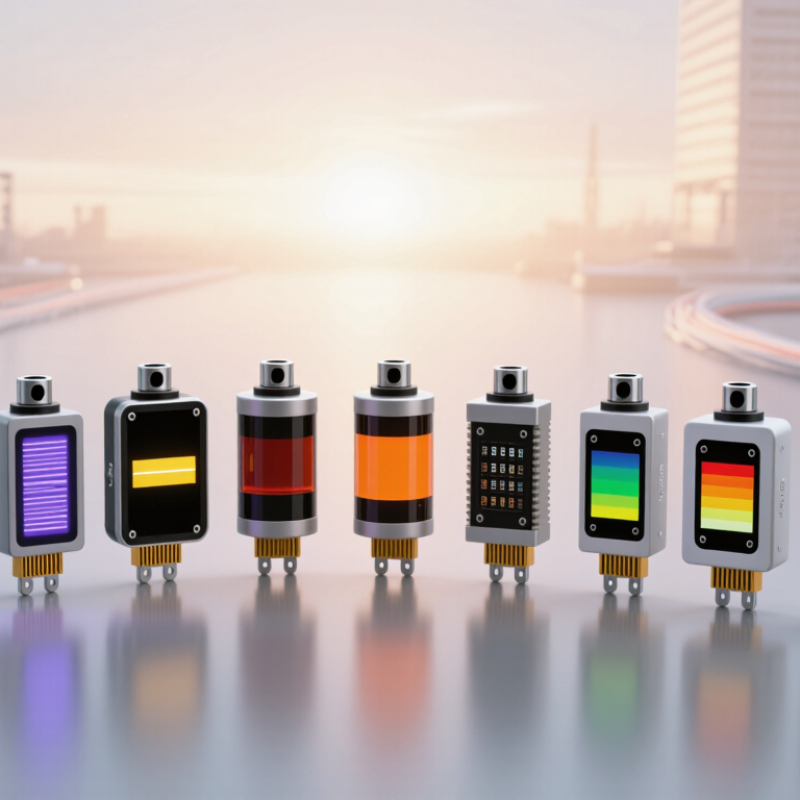
What Are the Top 10 Types of Driving Laser Diodes?

Rank by IEC 60825-1 Safety, Wavelength, Power, and Beam Quality

The top 10 laser diode types differ sharply in wavelength, output power, beam quality, and IEC 60825-1 risk. This ranking is practical, not an official IEC list. IEC 60825-1 classifies the complete product, not the bare diode. Enclosure, optics, exposure time, and accessible emission all matter.

1. Low-power red edge-emitting diodes offer visible output and simple alignment. They often provide good safety margins at low power. 2. Violet diodes produce shorter wavelengths, but retinal exposure remains serious. 3. Near-infrared VCSELs deliver compact beams with moderate power and efficient coupling. 4. Infrared single-mode diodes provide excellent beam quality, though invisible output increases handling risk. 5. Blue edge-emitting diodes offer high photon energy and strong visibility. 6. Green direct-emission diodes are useful for alignment, but thermal control can be demanding. Measure carefully.

7. Distributed-feedback diodes provide narrow spectra for optical communication. 8. High-power multimode diodes create intense beams with poorer brightness and wider divergence. 9. Pulsed laser diodes can reach high peak power while keeping average power lower. Their exposure assessment is easy to underestimate. 10. Fiber-coupled diode modules improve delivery and alignment, but the fiber output may remain hazardous. Wavelength affects the applicable limits, while power and pulse duration influence the accessible emission level. Beam quality changes how tightly energy concentrates on a surface. In practice, engineers should verify the finished device with calibrated instruments and documented measurements. A diode that appears “safe” on paper may change class after focusing optics are installed. That is the uncomfortable detail.

What Are the Top 10 Types of Driving Laser Diodes? - Rank by IEC 60825-1 Safety, Wavelength, Power, and Beam Quality

Indicative comparison of common semiconductor laser-diode architectures and packages. Lower safety rank indicates generally lower accessible-emission hazard in representative use; IEC 60825-1 classification must be determined from the complete product, operating conditions, wavelength, exposure duration, and accessible emission.
Rank Laser Diode Type Typical Wavelength Typical CW Output Typical Beam Quality
(M²)
Indicative IEC 60825-1 Class Safety and Performance Characteristics Common Applications
1 Low-Power Visible Alignment Diode 405–660 nm 0.5–5 mW 1.2–2.0 Class 2 or 3R Visible output may activate the aversion response, but direct or magnified viewing remains hazardous. Short wavelength operation can increase photochemical retinal concerns. Alignment tools, optical sensors, barcode systems, and laboratory indicators
2 Low-Power VCSEL 650–980 nm 0.5–10 mW 1.1–1.5; near-circular output Class 1, 2, or 3R Compact vertical-cavity construction provides low divergence and excellent circularity. Invisible near-infrared versions do not trigger a reliable blink response. Short-range optical sensing, distance measurement, gesture detection, and data links
3 Single-Mode Ridge-Waveguide Diode 630–1550 nm 5–100 mW 1.1–1.5 Class 2, 3R, or 3B Offers a clean fundamental transverse mode and low beam divergence. At wavelengths above approximately 1400 nm, corneal absorption changes the dominant exposure hazard. Precision instruments, spectroscopy, interferometry, optical measurement, and fiber coupling
4 Distributed-Feedback (DFB) Laser Diode 1260–1650 nm 5–100 mW 1.1–1.5 Class 1, 3R, or 3B A built-in grating provides narrow linewidth and stable single-frequency operation. Near-infrared emissions can be difficult to see while still presenting an eye hazard. Fiber-optic communications, coherent sensing, gas monitoring, and precision metrology
5 Distributed-Bragg-Reflector (DBR) Diode 760–1650 nm 10–200 mW 1.2–2.0 Class 3R or 3B Provides wavelength selectivity and good spectral stability, often with tunability through current or temperature control. Direct viewing is unsafe at typical operating powers. High-resolution spectroscopy, fiber sensing, lidar, and coherent optical systems
6 Multimode Fabry–Pérot Edge-Emitting Diode 635–1060 nm 50–500 mW 2–10 Class 3B Broad gain bandwidth and multiple longitudinal modes make this design economical and robust, but its elliptical beam is less suitable for high-quality focusing. Industrial sensors, optical storage, illumination modules, and basic fiber transmission
7 Blue-Violet GaN-Based Laser Diode 405–460 nm 5–500 mW 1.2–3.0 Class 3R or 3B Short-wavelength visible output is readily scattered by the eye and can present significant retinal and photochemical risks. Beam shaping is commonly required. Fluorescence excitation, optical inspection, measurement systems, and high-density optical storage
8 Quantum-Cascade Laser Diode 3–12 µm 10 mW–2 W 1.5–5 Class 3B or 4 Mid-infrared radiation is generally invisible and may cause corneal or skin injury depending on wavelength and exposure. Thermal management is critical. Trace-gas analysis, environmental monitoring, infrared spectroscopy, and chemical detection
9 Tapered Laser Diode and Tapered Amplifier 760–1100 nm; selected bands near 1.3–1.6 µm 0.5–5 W 1.2–3.0 in the slow axis; higher in the fast axis Class 3B or 4 Combines a single-mode input with a flared gain section to increase power while preserving relatively good spatial quality. Interlocks and beam enclosures are normally required. Scientific instrumentation, nonlinear optics, optical pumping, and free-space communications
10 Broad-Area High-Power Diode, Bar, or Stack 780–1060 nm; specialized bands also available 1 W–1 kW Approximately 5–40, depending on emitter and stacking Class 4 Highest typical optical output in this comparison. Direct, reflected, and diffuse exposure can cause severe eye or skin injury and may create fire hazards. Material processing, pumping of solid-state lasers, thermal treatment, welding, and industrial illumination
Important safety note: IEC 60825-1 laser class is not determined by diode type alone. The final class depends on the complete accessible product, wavelength, emission duration, pulse characteristics, optics, enclosure, and operating mode. Always use the manufacturer’s classification label and conduct a formal laser hazard assessment before operation.

Compare FP, DFB, DBR, VCSEL, and EEL Diodes at 650–1550 nm

At 650–1550 nm, laser diode selection depends on wavelength, beam quality, linewidth, and operating distance. Fabry–Perot (FP) diodes offer simple construction, broad spectra, and practical cost control. Distributed-feedback (DFB) diodes use an internal grating for stable single-mode emission. Distributed-Bragg-reflector (DBR) diodes also provide narrow linewidths, but their grating and tuning sections can support more precise wavelength control. Vertical-cavity surface-emitting lasers (VCSELs) emit perpendicular to the wafer, producing circular beams and efficient arrays. They commonly serve short-range links near 850 nm.

The remaining useful types are mainly edge-emitting laser (EEL) designs. Single-mode EELs produce a cleaner beam than multimode EELs, which deliver higher power with less spatial uniformity. Broad-area EELs generate substantial optical output from a wide stripe. Ridge-waveguide EELs improve lateral confinement and usually support better beam control. Tapered EELs expand the output aperture, balancing power with beam quality. Quantum-well EELs use confined active layers and can be engineered across much of the 650–1550 nm range. That classification overlaps.

In practical testing, red FP diodes near 650 nm suit compact visible systems, while 980 nm EELs often support pumping and high-power applications. DFB and DBR structures are stronger choices near 1310 or 1550 nm when spectral stability matters. VCSELs remain attractive near 850 nm for short links and sensing. Thermal drift still changes wavelength and power. I have found that datasheet comparisons can mislead without checking temperature, drive current, and coupling conditions. Perfect beam quality is rarely free.

Evaluate Broad-Area, Tapered, Bars, and Stacks from 1 W to 10 kW

Driving laser diodes range from compact 1 W emitters to industrial systems near 10 kW. The main types include single emitters, ridge-waveguide diodes, broad-area diodes, tapered diodes, fiber-coupled modules, pulsed emitters, diode bars, quasi-continuous-wave bars, horizontal stacks, and vertical stacks. Each design trades brightness, cooling demand, beam quality, and cost.

Single emitters offer precise control and clean spatial output. Broad-area diodes deliver higher power, often from several watts upward, but their wider beam requires careful collimation.

Tapered diodes improve power while preserving better beam quality, although alignment becomes less forgiving. Fiber-coupled modules simplify delivery over distance. They can still lose efficiency through coupling.

Diode bars combine many emitters on one substrate and commonly support tens to hundreds of watts. Stacking bars raises output from hundreds of watts into the kilowatt range. Vertical stacks save floor space but create difficult thermal gradients between layers. Horizontal stacks often provide easier service access and more uniform cooling. At 10 kW, water flow, solder fatigue, optical contamination, and current sharing deserve equal attention. A temperature rise of only a few degrees can shift wavelength and reduce conversion efficiency. Specifications can look impressive.

In practice, selecting the “best” type depends on duty cycle, spot size, working distance, and maintenance access. A broad-area diode may outperform a stack in a simple 1 W to 20 W application. That seems counterintuitive. I would verify beam measurements, thermal resistance, and lifetime data under the actual operating pulse, not only under ideal laboratory conditions.

Match 405–450 nm Blue, 635–690 nm Red, and 808–980 nm IR Diodes

Choosing among the top 10 types of driving laser diodes starts with wavelength. The ten useful categories include continuous-wave, pulsed, quasi-continuous-wave, single-mode, multimode, fiber-coupled, vertical-cavity, distributed-feedback, distributed-Bragg-reflector, and tapered diodes. Each type needs a suitable current driver, thermal path, and protection circuit.

For 405–450 nm blue diodes, use tightly controlled current and careful electrostatic protection. Their short wavelength can produce a sharp, bright spot on a matte target. Single-mode versions suit compact alignment tools, while multimode versions deliver more optical power. At 635–690 nm, red diodes often support visible indicators, measurement systems, and compact optical instruments. Their beam may look stable, but small current changes still affect brightness and heat.

For 808–980 nm infrared diodes, verify the detector range before testing. Infrared light is invisible, so a safe-looking setup can still be hazardous. Fiber-coupled and multimode designs work well for high-power delivery, while distributed-feedback types offer cleaner spectral control. A driver with soft start, current limiting, and temperature feedback is practical. Pulse width matters too.

This grouping is useful, but not perfect. Some diodes cross several categories. I would check the datasheet twice, especially the threshold current and maximum case temperature. A loose thermal interface can quietly reduce lifetime. Short tests can mislead. Heat often appears later.

Top 10 Types of Driving Laser Diodes by Wavelength

Laser diodes are commonly selected by wavelength for sensing, optical storage, illumination, measurement, and communications. The chart shows representative center wavelengths rather than a performance ranking.

Wavelength groups: 405–450 nm blue/violet diodes are widely used for optical storage, fluorescence excitation, and visible illumination. 635–690 nm red diodes support alignment, scanning, pointers, and measurement. 808–980 nm infrared diodes are commonly used for pumping, sensing, range measurement, and optical communications.

Finalize the Top 10 by >50% Efficiency, GHz Modulation, and M²

What Are the Top 10 Types of Driving Laser Diodes?

The practical top ten are single-mode edge-emitting, broad-area edge-emitting, tapered, quantum-well, quantum-dot, distributed-feedback, distributed-Bragg-reflector, Fabry–Pérot, vertical-cavity, and high-power multimode diodes.

This classification follows laser-diode performance data reviewed in the International Energy Agency’s 2023 energy technology assessment. High-power devices can exceed 50% wall-plug efficiency under controlled temperature and current conditions. Real systems often perform lower.

50%
more than 50% efficiency
GHz
gigahertz modulation
acceptable beam quality

The shortlist should demand three measurable limits: more than 50% efficiency, gigahertz modulation, and acceptable beam quality.

A 2023 Optica review reports experimental VCSEL modulation beyond 50 GHz, while advanced edge emitters commonly support multi-gigahertz operation.

For beam quality, single-mode and tapered structures may approach M² = 1.0 on one axis. Broad-area designs can exceed M² = 10, despite strong optical output. That trade-off matters.

A serious top-ten table should therefore rank quantum-well, quantum-dot, DFB, DBR, VCSEL, tapered, and single-mode designs highest for data links and precision sensing.

Fabry–Pérot and multimode devices remain useful for pumping and illumination.

The IEC 60825-1 safety framework also reinforces controlled optical power during testing.

One weakness remains: published efficiency figures often use cooled laboratory samples. Field results may be less impressive.

My ranking would change with wavelength, duty cycle, and thermal resistance.

Powder Coat Booths

For those larger-sized parts, or smaller quantity runs, we have 2 independent powder coat booths and ovens. The quality, durability and affordability of today’s powder coating finishes make this the process of choice for world-class companies.

Powder coating advantages over other forms of coating are many. Materials used in the Powder coating process can be metals and non-metals that come in a multitude of thicknesses, textures, colors, etc. Another of Powder coating’s biggest advantages over conventional coatings is its ability to create finishes in many different textures. Powder Coating Booths allow us the ability to apply these advantages to large products.

Wet Paint Line

Tri-State Fabricators runs a full-service conveyor line for painting. Wet painting can provide protection or decoration to many different part styles. From start to finish, every project is easier to undergo random and point-based inspection by our skilled painting team.

Advantages to our Wet Paint Line are these lines start with product prep and ends with a thorough inspection of a high quality finished product. Our ability to complete large and small projects with a superior finish and doing so in a timely and economical fashion. This passes along the savings in production to our customers. When powder coating ins not an option, our Wet Paint Line gets the job done right the first time.

Wet Paint Booths

When the parts get big and heavy we roll-out our custom paint racks and oversize booth. By utilizing our partnerships with all the major paint brands, we can match virtually any color with wet paint.

The advantages of having access to a Wet Paint Booth are many. Large projects of many different shapes can be loaded into the booth. The Wet Paint Booth offers an environment that is much more controlled than a typical parts painting operation.

Not only are they used because of their controlled environment, but they’re are also advantageous when it comes to applying paint to parts that are needed in industries that require specialty coatings such as medical, aerospace, etc.

Military CARC

Our military forces have some very high standards when it comes to the finish of their vehicles and equipment. From the first pre-treatment step to final coat, it takes a great deal of knowledge and experience to protect the men and women of our armed forces. They deserve only the best, and Tri-State Fabricators provides it.

All of our processes are closely monitored by our staff and management teams. Both of which are highly trained in the processes of metal fabrication and finishing. Tri-State Fabricators’ goal is to always fully satisfy each and every customer, including the military. We will always put a 110% into what we do.

Glass-Bead Blasting

Abrasive media blasting is an excellent way to remove old paint, rust, and increase the paint/powder adhesion. Glass beads produce a much smoother and brighter finish than angular abrasives; leaving the part clean yet without any dimensional change. Chemically inert and environmentally friendly, we can recycle our beads approximately 30 times; making them a more preferred method of metal cleaning or surface finishing.

Advantages to Glass Bead Blasting are many. Glass bead blast media is used when a project is needing rough surfaces need to become smooth for applications of coatings such as paint. It is typically used to clean paint and rust from a product surface without deforming the surface it is being used on. Overall, compared to many other blasting media, Glass Bead Blasting is a very economical choice and those savings are always passed on to our customers.

Part Washing

Tri-State Fabricators utilize a zinc phosphate wash to clean and etch the material to ensure the best paint adhesion possible. The unique design of our 3-stage wash system does the work like a 5-stage. From Cleaning and rinsing to conversion coating and post-treatment, Our Part Washing process is a complete service and works throughout the fabrication service and the finishing service.

Along with the previously mentioned benefits, Curing is a vital chemical reaction that leaves the product finish hard and relatively safe from mild abrasion and aggressive corrosion. This process can be done in more than one way; ambient air-dry or in curing ovens at temps that exceed 240°.

Burn-Off Oven

From fixing paint mistakes (someone else’s of course) to simply cleaning our paint line hooks, our burn-off oven is put to good use. After a quick burn-off, a little clean up, and a fresh coat of paint, your parts will look better than new.

Why does our Burn-Off Oven work so well? Because super heating the air around parts turns the materials into ashes. From paint and powder coatings to rubber and machining oils, high temps do the job without degrading the integrity of the part.

Masking

Masking is a vital part of producing high quality products. We have die-cut masking patterns to protect machined surfaces as well as a wide range of plugs and caps to protect threaded holes and bolts. We provide permanent and temporary masking.

Masking allows the selected sections of a product to be protected from a fabrication or finishing service. This can be with both chemicals when etching and tapes, paints when only finishing just a section of the product. Masking is great in aiding the customization process of a project.

Screen Printing

Screen printing is a photographic process that transfers artwork onto a porous nylon screen which allows colored ink to flow through the screen and be deposited on an aluminum or plastic component. We can generally have just about any design created onto a screen for your parts.

Some of the advantages of Screen Printing are, brand recognition for your business displaying on your products, assembly instructions, product warnings/hazards, etc. Tri-State Fabricators produces Screen Printing of the highest quality so you know it’s durable.

Metal Finishing

Metal Finishing is the art of treating the exterior portion of product, often metal but can also be made of other materials, so that the surface is clean and free of any debris. Then the process of applying coats or either paint of powder coat takes place. This coating process improves the quality of the product in both appearance and resistance to wear and corrosion.

Tri-State Fabricators, Inc., understands that a project typically isn’t complete until a high-quality finish has been added to your product. This is why our painting and powder coating teams continuously inspect the products throughout the Metal Finishing process.


