


Three Phase Transformer equipment is central to moving electricity from generation sites to factories, commercial buildings, and local distribution networks. Its importance grows as grids expand and adapt to new sources of power. The International Energy Agency’s 2023 report, Electricity Grids and Secure Energy Transitions, estimates that 80 million kilometres of grid infrastructure must be added or refurbished by 2040. That is roughly the length of today’s entire global grid. The report also says annual grid investment must rise above USD 600 billion by 2030. A substantial challenge.
These figures do not measure transformer demand directly. They do, however, show why dependable transformer supply, efficient designs, and maintenance support matter to utilities and industrial buyers. A transformer installed in a substation must match its voltage, load profile, cooling needs, and operating environment. Details count. So does service after delivery.
This overview of 10 manufacturers worldwide considers product range, technical capabilities, international presence, and support networks. It is a practical starting point, not a universal ranking. A company’s scale alone cannot establish the best fit for every project. Procurement teams should verify current specifications, certifications, delivery schedules, and local service capacity against their own requirements. Some comparisons remain imperfect because manufacturers report capabilities differently. That limitation is worth keeping in view.
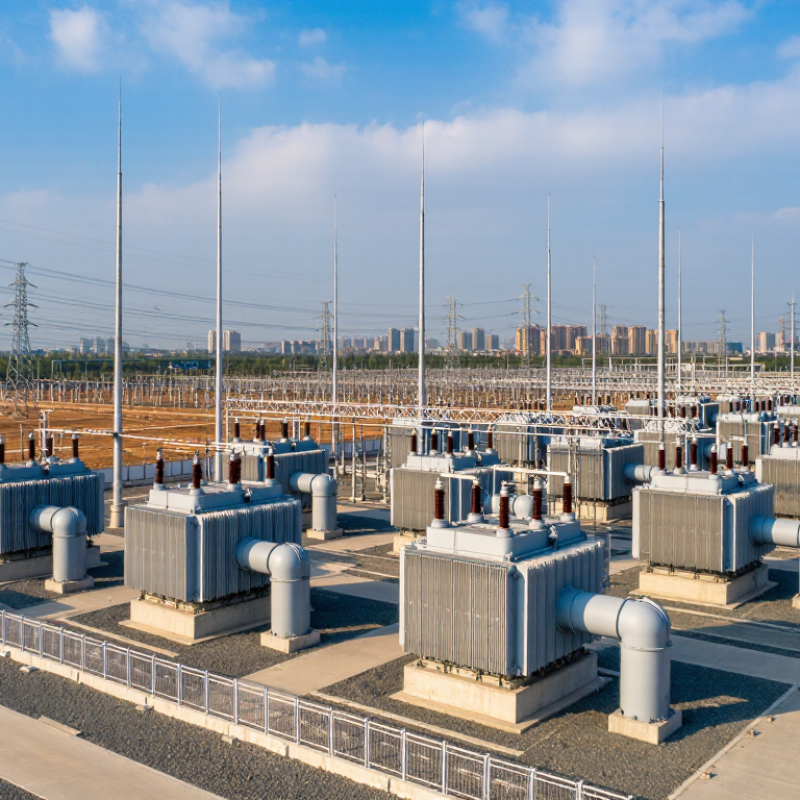
A three-phase transformer transfers energy between circuits through electromagnetic induction. Three primary windings create changing magnetic flux in a shared core, inducing voltage in three secondary windings. The phases are separated by 120 electrical degrees. Turns ratio sets the voltage change; winding connections shape how the system handles grounding and certain harmonics. The core matters. In practice, engineers also weigh insulation, cooling, load profile, and fault levels. A neat wiring diagram cannot capture every site condition.
These units serve utility substations, factories, commercial buildings, and renewable-energy connections. They can step voltage up for transmission or down for distribution, while supplying steady power to motors, pumps, and other three-phase loads. The International Energy Agency’s 2023 report, Electricity Grids and Secure Energy Transitions, says annual grid investment must rise from about US$300 billion to more than US$600 billion by 2030. That figure covers grids broadly, not transformers alone, but it signals the scale of network upgrades. Selection still needs careful review: an efficient unit may perform poorly if its cooling, noise limits, or protection settings do not fit the installation. There is no universal best configuration.

Selecting a leading three-phase transformer manufacturer requires more than comparing price lists. Start with the intended duty: voltage levels, load profile, installation environment, and expected service life. A supplier should explain how its design addresses heat, insulation, noise, and fault conditions. Ask for test records tied to the proposed unit, not just general product sheets. Details matter.
Review engineering depth and quality controls. Look for documented factory testing, traceable materials, and clear procedures for handling design changes. Confirm that testing and compliance claims match the relevant project requirements, such as applicable IEC or IEEE standards. A neat brochure proves little. Where possible, speak with operators who have used similar units under comparable conditions.
Service capability deserves equal attention. Check access to spare parts, response times, commissioning support, and the scope of the warranty. Delivery history and financial stability can also affect project risk. No scorecard is perfect. A factory visit may reveal orderly test bays, but one visit cannot guarantee consistent work across every production run. Weigh evidence from several sources, and record where information remains uncertain.
Profiles of ten major three-phase transformer manufacturers should compare more than rated capacity. A useful profile records voltage range, cooling method, insulation system, factory locations, and service coverage. It also checks whether a supplier builds power, distribution, or specialized industrial units. These differences matter when a project faces tight space, high ambient temperatures, or variable renewable output.
The International Energy Agency’s 2023 report, Electricity Grids and Secure Energy Transitions, says annual grid investment must rise above USD 600 billion by 2030, from roughly USD 300 billion today. That expansion increases demand for dependable transformer supply, but a large factory does not guarantee short delivery times. Ask for test documentation, repair support, and realistic lead-time evidence. Details matter.
Tips: Compare like with like. Request losses at the same rating and loading conditions, plus guaranteed sound levels and temperature-rise limits. One awkward gap in many comparisons is that public profiles rarely disclose factory utilization, so published capacity can overstate near-term availability.
Comparing the top three-phase transformer manufacturers means looking beyond nameplate capacity. Product ranges may include distribution units, medium-power equipment, and large power transformers for utility networks. Check voltage classes, insulation options, cooling methods, and stated loss levels. These details affect installation space, operating costs, and maintenance planning. A broad catalog is useful, but it does not guarantee a suitable design for every site.
Tips: Request verified test data. Compare efficiency at realistic loading, not just peak ratings. Check whether the supplier can support commissioning and spare-parts access in your region. Small details matter.
Technology comparisons should cover core materials, winding design, temperature monitoring, and noise control. Ask how testing follows the relevant IEC or IEEE requirements, and confirm which requirements apply to your project. Global reach also means more than shipping capacity: local engineering support, delivery timelines, and service coverage can vary by country. A polished comparison table can still miss these practical differences. I would treat published performance figures as a starting point, then confirm them against project-specific documents. Even experienced buyers can overlook how site altitude, ambient temperature, or load variation changes the specification.
Comparison note: Company and brand names are intentionally omitted. The anonymous entries below are illustrative capability profiles based on common industry product categories and technologies; they are not a verified ranking or company-attributed specifications. Actual ratings and availability vary by design, standards, and project requirements.
| Profile | Typical Three-Phase Product Range | Common Applications | Relevant Technologies | Global Reach Benchmark | Typical Selection Considerations |
|---|---|---|---|---|---|
| Manufacturer 01 Grid-scale portfolio | Power transformers across high-voltage and extra-high-voltage classes; ratings are project-specific. | Transmission networks, grid interconnections, and large substations. | Oil-immersed designs; ONAN, ONAF, and OFAF cooling options; online condition-monitoring systems. | Multi-region project delivery, commonly supported by local service or engineering partners. | System voltage, short-circuit withstand, transport limits, losses, and grid-code requirements. |
| Manufacturer 02 Distribution-focused portfolio | Three-phase distribution units for utility and commercial distribution networks, commonly in medium-voltage classes. | Distribution substations, commercial buildings, and light industrial facilities. | Liquid-filled and dry-type designs; standard taps and enclosure options; efficiency-focused core designs. | Regional manufacturing and distribution with export availability varying by market. | Primary and secondary voltage, installation environment, efficiency rules, and maintenance access. |
| Manufacturer 03 Industrial power portfolio | Medium- and high-voltage three-phase units engineered for industrial loads and site-specific duty. | Mining, metals, petrochemicals, manufacturing, and large process plants. | Robust winding and insulation designs; impedance customization; forced cooling where required. | Project-based international supply, often combined with commissioning and field services. | Load cycles, harmonics, ambient conditions, fault levels, and plant expansion plans. |
| Manufacturer 04 Renewable integration portfolio | Three-phase transformers for collection systems, step-up duties, and grid connection. | Wind and solar plants, battery energy storage, and renewable-energy substations. | Application-specific insulation and cooling; adaptable voltage ratios and impedance; monitoring options. | International project reach shaped by renewable-energy development and local grid requirements. | Variable loading, harmonics, environmental exposure, grid connection rules, and maintenance logistics. |
| Manufacturer 05 Dry-type specialist profile | Three-phase cast-resin or other dry-type transformers, typically for indoor and space-constrained installations. | Buildings, data centers, hospitals, transport infrastructure, and industrial interiors. | Air cooling; cast-resin insulation options; temperature sensors and enclosure configurations. | Often served through regional sales, distribution, and installation networks. | Fire-safety requirements, ventilation, noise limits, enclosure rating, and indoor access. |
| Manufacturer 06 Special-purpose portfolio | Custom three-phase transformers designed around unusual electrical, mechanical, or environmental requirements. | Furnaces, rectifier systems, traction power, test facilities, and specialized industrial processes. | Custom winding arrangements, tap-changer configurations, impedance design, and thermal management. | Typically supplied internationally on an engineered-to-order basis. | Duty cycle, waveform, overload profile, harmonic spectrum, and site-specific standards. |
| Manufacturer 07 Compact substation portfolio | Three-phase transformers supplied as standalone units or integrated into compact substations. | Urban distribution, commercial developments, utilities, and infrastructure projects. | Packaged layouts; liquid-filled or dry-type options; coordinated protection and monitoring interfaces. | Availability commonly depends on local assembly, utility approvals, and regional partners. | Footprint, access for replacement, enclosure requirements, protection coordination, and noise. |
| Manufacturer 08 High-efficiency portfolio | Distribution and power transformer designs offered with loss-conscious configuration options. | Utilities, energy-conscious buildings, and network modernization programs. | Optimized magnetic cores; low-loss design options; efficiency testing and performance documentation. | Market coverage varies with applicable efficiency regulations and procurement specifications. | Capital cost versus lifetime losses, loading profile, energy prices, and local efficiency rules. |
| Manufacturer 09 Grid modernization portfolio | Three-phase distribution and power transformers designed for modernized and monitored networks. | Smart-grid projects, substations, utility upgrades, and critical infrastructure. | Digital sensors and monitoring interfaces; online dissolved-gas analysis may be specified for suitable oil-filled units. | Multi-market project support is generally paired with local utility and service requirements. | Data integration, cybersecurity requirements, condition-monitoring strategy, and service capability. |
| Manufacturer 10 Regional utility portfolio | Three-phase distribution and substation transformers aligned with regional utility specifications. | Local and national utility networks, rural electrification, and network replacement programs. | Utility-standard designs; liquid preservation options; tap settings and accessories configured to specification. | Strongest coverage is typically within established home markets, with export scope varying by project. | Utility qualification, applicable IEC or IEEE requirements, lead time, spare parts, and service access. |
When comparing three phase transformer manufacturers, begin with the actual operating conditions. Record the load profile, voltage levels, frequency, installation location, and expected room for future growth. A unit serving a dusty factory floor faces different demands from one installed in a clean utility room. Details matter.
Check how the manufacturer verifies performance. Ask for test records covering temperature rise, losses, insulation, and routine electrical checks. Confirm that the proposed design fits applicable technical standards and your site requirements. Ask for evidence. Clear drawings, material specifications, and traceable test results make reviews easier. A polished brochure is not enough. One detail teams sometimes miss is access for lifting and maintenance; a transformer that fits on paper may be awkward to install.
Consider service over the full equipment life, not just the quoted price. Review warranty terms, spare-parts availability, technical support, delivery schedules, and the clarity of maintenance guidance. Ask how the manufacturer handles design changes and unexpected delays. Compare total operating costs, including energy losses and cooling needs. Be cautious with claims that lack supporting data. No checklist removes every risk, and project requirements can change; document assumptions before choosing a supplier.
Check that a transformer’s rated frequency matches the electrical grid at its installation site.
50 Hz and 60 Hz are common nominal AC grid frequencies worldwide. Actual requirements depend on the installation location; confirm frequency compatibility and other specifications with the manufacturer.


For those larger-sized parts, or smaller quantity runs, we have 2 independent powder coat booths and ovens. The quality, durability and affordability of today’s powder coating finishes make this the process of choice for world-class companies.
Powder coating advantages over other forms of coating are many. Materials used in the Powder coating process can be metals and non-metals that come in a multitude of thicknesses, textures, colors, etc. Another of Powder coating’s biggest advantages over conventional coatings is its ability to create finishes in many different textures. Powder Coating Booths allow us the ability to apply these advantages to large products.
Tri-State Fabricators runs a full-service conveyor line for painting. Wet painting can provide protection or decoration to many different part styles. From start to finish, every project is easier to undergo random and point-based inspection by our skilled painting team.
Advantages to our Wet Paint Line are these lines start with product prep and ends with a thorough inspection of a high quality finished product. Our ability to complete large and small projects with a superior finish and doing so in a timely and economical fashion. This passes along the savings in production to our customers. When powder coating ins not an option, our Wet Paint Line gets the job done right the first time.
When the parts get big and heavy we roll-out our custom paint racks and oversize booth. By utilizing our partnerships with all the major paint brands, we can match virtually any color with wet paint.
The advantages of having access to a Wet Paint Booth are many. Large projects of many different shapes can be loaded into the booth. The Wet Paint Booth offers an environment that is much more controlled than a typical parts painting operation.
Not only are they used because of their controlled environment, but they’re are also advantageous when it comes to applying paint to parts that are needed in industries that require specialty coatings such as medical, aerospace, etc.
Our military forces have some very high standards when it comes to the finish of their vehicles and equipment. From the first pre-treatment step to final coat, it takes a great deal of knowledge and experience to protect the men and women of our armed forces. They deserve only the best, and Tri-State Fabricators provides it.
All of our processes are closely monitored by our staff and management teams. Both of which are highly trained in the processes of metal fabrication and finishing. Tri-State Fabricators’ goal is to always fully satisfy each and every customer, including the military. We will always put a 110% into what we do.
Abrasive media blasting is an excellent way to remove old paint, rust, and increase the paint/powder adhesion. Glass beads produce a much smoother and brighter finish than angular abrasives; leaving the part clean yet without any dimensional change. Chemically inert and environmentally friendly, we can recycle our beads approximately 30 times; making them a more preferred method of metal cleaning or surface finishing.
Advantages to Glass Bead Blasting are many. Glass bead blast media is used when a project is needing rough surfaces need to become smooth for applications of coatings such as paint. It is typically used to clean paint and rust from a product surface without deforming the surface it is being used on. Overall, compared to many other blasting media, Glass Bead Blasting is a very economical choice and those savings are always passed on to our customers.
Tri-State Fabricators utilize a zinc phosphate wash to clean and etch the material to ensure the best paint adhesion possible. The unique design of our 3-stage wash system does the work like a 5-stage. From Cleaning and rinsing to conversion coating and post-treatment, Our Part Washing process is a complete service and works throughout the fabrication service and the finishing service.
Along with the previously mentioned benefits, Curing is a vital chemical reaction that leaves the product finish hard and relatively safe from mild abrasion and aggressive corrosion. This process can be done in more than one way; ambient air-dry or in curing ovens at temps that exceed 240°.
From fixing paint mistakes (someone else’s of course) to simply cleaning our paint line hooks, our burn-off oven is put to good use. After a quick burn-off, a little clean up, and a fresh coat of paint, your parts will look better than new.
Why does our Burn-Off Oven work so well? Because super heating the air around parts turns the materials into ashes. From paint and powder coatings to rubber and machining oils, high temps do the job without degrading the integrity of the part.
Masking is a vital part of producing high quality products. We have die-cut masking patterns to protect machined surfaces as well as a wide range of plugs and caps to protect threaded holes and bolts. We provide permanent and temporary masking.
Masking allows the selected sections of a product to be protected from a fabrication or finishing service. This can be with both chemicals when etching and tapes, paints when only finishing just a section of the product. Masking is great in aiding the customization process of a project.
Screen printing is a photographic process that transfers artwork onto a porous nylon screen which allows colored ink to flow through the screen and be deposited on an aluminum or plastic component. We can generally have just about any design created onto a screen for your parts.
Some of the advantages of Screen Printing are, brand recognition for your business displaying on your products, assembly instructions, product warnings/hazards, etc. Tri-State Fabricators produces Screen Printing of the highest quality so you know it’s durable.
Metal Finishing is the art of treating the exterior portion of product, often metal but can also be made of other materials, so that the surface is clean and free of any debris. Then the process of applying coats or either paint of powder coat takes place. This coating process improves the quality of the product in both appearance and resistance to wear and corrosion.
Tri-State Fabricators, Inc., understands that a project typically isn’t complete until a high-quality finish has been added to your product. This is why our painting and powder coating teams continuously inspect the products throughout the Metal Finishing process.

