


China Top 10 Solvent Free Lamination Machine Manufacturers?

China’s flexible packaging industry has become a serious source of solvent-free equipment. This guide examines China’s top 10 Solvent Free Lamination machine manufacturers. It focuses on practical performance, not attractive brochures alone.

A capable machine should control adhesive coating weight, web tension, nip pressure, and curing conditions. These details affect bond strength, curl, wrinkles, and production waste. Some lines handle films, aluminium foil, paper, and metallised substrates. Others perform better with narrower webs or specific adhesive systems. Factory trials matter.

Antonio Sada, president of Nordmeccanica, has often described the industry’s direction simply: “Solventless is the future of laminating.” His view reflects a clear manufacturing shift. Solvent-free systems can reduce solvent handling, drying energy, and workplace emissions when properly installed and operated. However, the process is not automatically perfect. Incorrect adhesive temperature or uneven coating can create bubbles, weak bonds, and expensive downtime.

That is the difficult part.

This overview compares manufacturers through engineering experience, machine configuration, automation, after-sales support, and documented customer use. It also considers working width, maximum speed, adhesive technology, inspection options, and operator training. Public information is sometimes incomplete, so no ranking should be treated as permanent. A machine that performs well on snack-film structures may not suit pharmaceutical foil or heavy paper laminates.

Readers should request sample trials, technical drawings, reference contacts, and total operating costs. The lowest purchase price may hide slower commissioning or limited service coverage. Reliable selection requires evidence from the finished laminate, not promises made during a sales meeting.
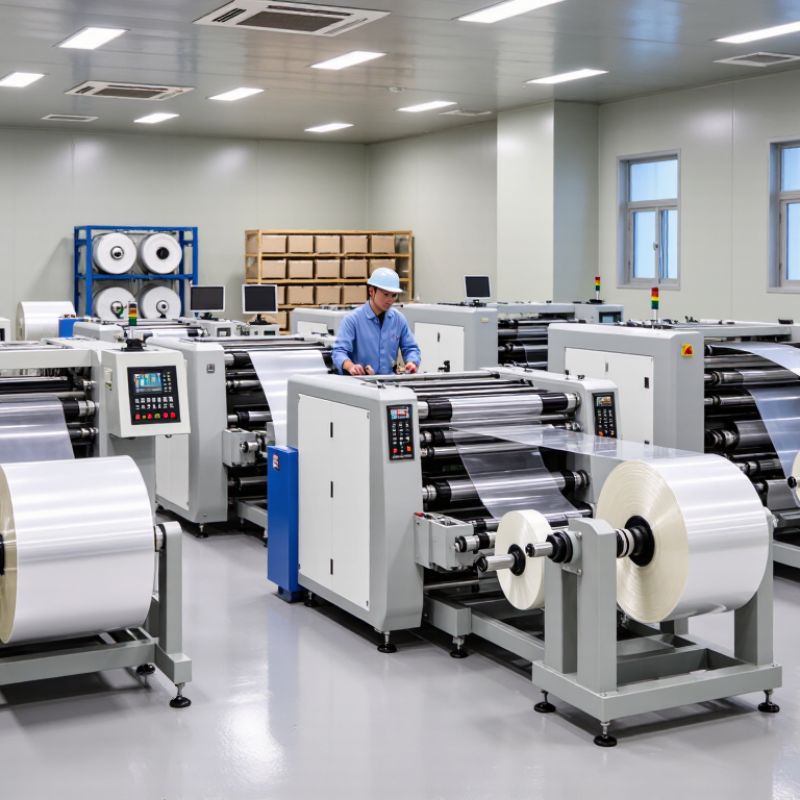
China Top 10 Solvent Free Lamination Machine Manufacturers?

Market Scope: Solvent-Free Lamination Speeds of 300–600 m/min

China’s top ten solvent-free lamination machine manufacturers are increasingly judged by one practical figure: line speed. In the 300–600 m/min range, speed is not a marketing ornament. It affects coating stability, web tension, curing time, and waste control. Experienced converters know that a machine reaching 600 m/min in a trial may run closer to 420 m/min during everyday production. Real conditions matter. Film thickness, adhesive temperature, and substrate stiffness can change the result.

At 300–400 m/min, operators often gain a wider process window and easier setup. This range suits many flexible packaging jobs, especially when graphics, film gauge, or humidity varies. Above 450 m/min, small errors become visible quickly. A slight tension imbalance can create wrinkles, telescoping rolls, or uneven bonding. Good equipment should provide responsive tension control, accurate metering, automatic splice handling, and clear data logs. Safety guarding and maintenance access also deserve serious attention.

A credible supplier should demonstrate stable production, not only peak speed. Ask for test results using comparable films, adhesive grades, coating weights, and roll widths. Inspect bond strength, residual odor, energy use, and changeover time. Visit a working installation when possible. It is easy to underestimate training. Even advanced automation cannot correct poor parameter choices. The uncomfortable truth is that the fastest line is not always the most profitable one. Uptime, repeatability, and controlled waste usually decide the investment.


Selection Criteria: Output, Coating Weight, VOC Control, and Certifications

China Top 10 Solvent Free Lamination Machine Manufacturers?

When comparing solvent-free lamination machine manufacturers in China, output should mean more than maximum line speed. Check stable running speed, usable web width, roll diameter, and changeover time. A machine rated at 400 meters per minute may perform differently with thin film, paper, or aluminum foil. Ask for trial data using your actual materials. My experience is that realistic output matters more than impressive brochure figures. Data can still mislead.

Coating weight control directly affects bond strength, cost, and appearance. Look for precise metering systems, automatic gap adjustment, and clear weight feedback. Request coating results at low, medium, and high settings. Small variations can create wrinkles or weak edges. VOC control also needs careful review. Solvent-free systems reduce solvent use, but curing, adhesive odor, exhaust design, and cleaning procedures still deserve attention. A good supplier should explain these details without vague promises.

Tips: Inspect sample rolls under light. Measure coating weight across the web, not only at the center. Review factory acceptance records, maintenance access, and operator training. Certifications such as ISO 9001, CE, or region-specific documents should match the delivered machine. Verify certificate scope and validity. Do not accept copied files. One overlooked detail can delay production. A perfect test is rare, so record every limitation before purchasing.

China Top 10 Solvent Free Lamination Machine Manufacturers? - Selection Criteria: Output, Coating Weight, VOC Control, and Certifications

Anonymous technical benchmark of ten Chinese solvent-free lamination equipment profiles. Figures are indicative machine-selection data and should be confirmed through factory documentation, trials, and acceptance testing.
Rank Anonymous Manufacturer Profile Maximum Web Width
(mm)
Designed Line Speed
(m/min)
Typical Adhesive Coating Weight
(g/m²)
Coating Weight Tolerance VOC-Control Characteristics Typical Application Range Certification or Compliance Evidence to Request
1 Profile A — High-output flexible-packaging platform 1,300 400–500 1.0–2.5 Typically ±0.10 g/m² Solvent-free adhesive system; enclosed metering section; no intentional solvent emissions from the adhesive process. PET, BOPP, CPP, PE, aluminum foil, paper, and multilayer packaging films. CE-related technical file, electrical safety documentation, ISO 9001 evidence, and machine risk assessment.
2 Profile B — Wide-web industrial laminator 1,600 300–450 1.2–3.0 Typically ±0.12 g/m² 100% solids adhesive process; heated adhesive supply; closed circulation to reduce operator exposure and material waste. Large-format packaging, technical films, foil laminates, and hygienic-material structures. CE conformity documentation, ISO 9001 certificate, electrical component declarations, and factory acceptance test records.
3 Profile C — Precision coating and laminating system 1,300 250–400 0.8–2.2 Typically ±0.08 g/m² Closed gravimetric or precision pump control; solvent-free adhesive formulation; VOC levels depend on incoming substrates and inks. High-barrier films, retort structures, pharmaceutical packaging, and thin-gauge webs. ISO 9001 evidence, calibration certificates for weighing systems, CE documentation, and documented coating uniformity results.
4 Profile D — Medium-speed packaging laminator 1,050 250–350 1.5–3.5 Typically ±0.15 g/m² Solvent-free coating head with temperature-controlled adhesive delivery; no drying oven required for the adhesive layer. General food packaging, labels, sachets, and standard film-to-film laminations. CE-related documents, ISO 9001 evidence, food-contact material compatibility documentation where applicable, and FAT protocol.
5 Profile E — Compact high-efficiency laminator 1,000 200–300 1.0–3.0 Typically ±0.15 g/m² Low-inventory adhesive circuit, automatic temperature monitoring, and solvent-free operation with reduced energy demand. Short and medium production runs, flexible packaging, paper-film combinations, and specialty laminates. ISO 9001 evidence, electrical safety test reports, CE technical documentation, and operator-safety validation.
6 Profile F — Foil and barrier-film specialist platform 1,300 220–350 1.5–3.5 Typically ±0.15 g/m² Heated adhesive and nip-temperature control; solvent-free process supports low VOC emissions from the machine itself. Aluminum foil, metallized films, high-barrier packaging, and chemical-resistant structures. CE documentation, ISO 9001 evidence, pressure and temperature calibration records, and material compatibility test reports.
7 Profile G — Paper, film, and nonwoven laminator 1,200 180–300 2.0–4.0 Typically ±0.20 g/m² Solvent-free adhesive application with controlled web tension and enclosed heated reservoirs for stable processing. Paper packaging, nonwoven materials, release liners, and absorbent-product components. ISO 9001 evidence, CE-related machine documentation, web-tension calibration records, and applicable product-safety declarations.
8 Profile H — Flexible modular laminating line 1,300 200–320 1.0–3.5 Typically ±0.15 g/m² Modular solvent-free coating unit, automatic adhesive temperature control, and reduced exhaust requirements compared with solvent-based lines. Mixed-substrate packaging, decorative films, labels, and customized production configurations. CE technical file, ISO 9001 evidence, PLC and electrical conformity documents, and line-integration risk assessment.
9 Profile I — Entry-to-mid-range solvent-free laminator 1,000 150–250 1.5–4.0 Typically ±0.20 g/m² Basic enclosed adhesive system; no intentional solvent addition; ventilation requirements remain dependent on inks, primers, and substrate materials. Standard flexible packaging, sampling, pilot production, and lower-volume converting. CE-related documentation, ISO 9001 evidence, electrical safety testing, and documented trial-lamination results.
10 Profile J — Customized specialty-film laminator 1,300 180–300 0.8–3.0 Typically ±0.10–0.20 g/m² Application-specific solvent-free coating head, recipe control, and minimized VOC contribution from adhesive application. Medical-packaging films, electronics materials, specialty labels, and engineered multilayer webs. CE documentation, ISO 9001 evidence, process validation records, calibration certificates, and customer-specific compliance documents.
Selection note: Output speed depends on web structure, adhesive chemistry, curing time, substrate tension, coating width, and required bond strength. VOC performance should be verified through substrate and finished-laminate testing rather than inferred from machine design alone.

China’s Top 10 Manufacturers by Technology, Capacity, and Export Reach

China’s top 10 solvent-free lamination machine manufacturers are increasingly judged by technology, production capacity, and export reach. Their equipment typically combines two-component adhesive dosing, automatic tension control, and precision coating systems. These features support thinner films, stable bonding, and lower energy use.

Technology matters most.

Industry research from Smithers, including The Future of Flexible Packaging to 2028, identifies sustainability and material efficiency as major packaging priorities. Solvent-free lamination responds to both demands.

Several leading Chinese manufacturers now offer line speeds above 400 meters per minute, while advanced models can exceed 600 meters per minute under suitable material conditions. However, advertised speed is not final proof. Adhesive curing, film width, and operator skill can change real output.

Capacity separates established suppliers from smaller workshops. The strongest manufacturers operate large assembly facilities, maintain testing laboratories, and provide machines for film, foil, and paper structures.

Export reach is another key measure. According to UN Comtrade data, China remains a major exporter of packaging machinery, serving converters across Southeast Asia, the Middle East, Europe, and Latin America. Service networks, spare-parts response, and commissioning experience often matter more than catalog claims.

The ranking still has limits. Public data is uneven, and some capacity figures are self-reported. A reliable buyer should inspect factory tests, energy records, adhesive waste, and installed references before choosing among the ten.

Numbers can look impressive. Production evidence is better.

Machine Comparison: 0.8–2.5 g/m² Adhesive Coating and Substrate Range

Comparing the China top 10 solvent-free lamination machine manufacturers requires more than checking maximum speed. The key test is stable adhesive coating between 0.8 and 2.5 g/m². At the lower setting, small metering errors can create weak bonds or dry edges. At the higher setting, excess adhesive may increase curing time and waste. A practical comparison should include measured coating samples, not only catalog figures.

Substrate range also changes machine value. Flexible film, aluminum foil, paper, and metallized structures need different tension control and nip pressure. A machine handling 12-micron film may not run thick paper smoothly. Ask suppliers for trial records using your actual width, thickness, and surface treatment. Watch the web near the coating head. Wrinkles often reveal problems before the final laminate does.

Experienced operators also inspect temperature stability, pump response, mixing accuracy, and cleaning access. These details affect daily reliability. A useful trial should record coating weight, bond strength, line speed, and curing results after 24 and 72 hours. Numbers matter.

Some comparisons remain imperfect. Laboratory samples may look excellent, while long production runs expose edge buildup or uneven tension. Therefore, procurement teams should challenge test conditions and repeat critical trials. A broad substrate list is only a starting point. The better machine is the one that holds 0.8–2.5 g/m² consistently across real materials and changing production demands.

Buyer Guide: Line Configuration, Energy Use, Maintenance, and ROI

When comparing China’s top solvent-free lamination machine manufacturers, examine the complete line, not only the laminator. A practical configuration includes adhesive dosing, mixing, coating, unwinding, rewinding, tension control, and curing space. Automatic viscosity monitoring can reduce coating variation. However, sensors cannot replace trained operators.

Energy use is often lower because solvent-free systems avoid large drying ovens and exhaust treatment. The European Commission’s Best Available Techniques guidance identifies solvent control and heat recovery as major efficiency factors in coating operations. The Flexible Packaging Association also reports that flexible packaging can use about 60% less plastic than comparable rigid formats. That advantage depends on stable coating weight and low scrap. A poorly tuned line wastes materials quickly.

Maintenance planning should cover pumps, filters, mixing heads, web guides, and temperature controls. Ask for cleaning intervals, spare-part availability, and documented service response times. Smithers’ flexible packaging market reports show continued demand for high-performance barrier structures, increasing pressure on uptime and quality consistency. For ROI, calculate output per hour, adhesive consumption, labor, rejected rolls, electricity, and curing inventory. Use real production records, not optimistic quotations. A spreadsheet can look convincing and still be wrong. Payback may change sharply when a line runs shorter jobs, thicker films, or frequent product changes. Test samples under actual humidity and speed conditions before approving the final configuration.

Powder Coat Booths

For those larger-sized parts, or smaller quantity runs, we have 2 independent powder coat booths and ovens. The quality, durability and affordability of today’s powder coating finishes make this the process of choice for world-class companies.

Powder coating advantages over other forms of coating are many. Materials used in the Powder coating process can be metals and non-metals that come in a multitude of thicknesses, textures, colors, etc. Another of Powder coating’s biggest advantages over conventional coatings is its ability to create finishes in many different textures. Powder Coating Booths allow us the ability to apply these advantages to large products.

Wet Paint Line

Tri-State Fabricators runs a full-service conveyor line for painting. Wet painting can provide protection or decoration to many different part styles. From start to finish, every project is easier to undergo random and point-based inspection by our skilled painting team.

Advantages to our Wet Paint Line are these lines start with product prep and ends with a thorough inspection of a high quality finished product. Our ability to complete large and small projects with a superior finish and doing so in a timely and economical fashion. This passes along the savings in production to our customers. When powder coating ins not an option, our Wet Paint Line gets the job done right the first time.

Wet Paint Booths

When the parts get big and heavy we roll-out our custom paint racks and oversize booth. By utilizing our partnerships with all the major paint brands, we can match virtually any color with wet paint.

The advantages of having access to a Wet Paint Booth are many. Large projects of many different shapes can be loaded into the booth. The Wet Paint Booth offers an environment that is much more controlled than a typical parts painting operation.

Not only are they used because of their controlled environment, but they’re are also advantageous when it comes to applying paint to parts that are needed in industries that require specialty coatings such as medical, aerospace, etc.

Military CARC

Our military forces have some very high standards when it comes to the finish of their vehicles and equipment. From the first pre-treatment step to final coat, it takes a great deal of knowledge and experience to protect the men and women of our armed forces. They deserve only the best, and Tri-State Fabricators provides it.

All of our processes are closely monitored by our staff and management teams. Both of which are highly trained in the processes of metal fabrication and finishing. Tri-State Fabricators’ goal is to always fully satisfy each and every customer, including the military. We will always put a 110% into what we do.

Glass-Bead Blasting

Abrasive media blasting is an excellent way to remove old paint, rust, and increase the paint/powder adhesion. Glass beads produce a much smoother and brighter finish than angular abrasives; leaving the part clean yet without any dimensional change. Chemically inert and environmentally friendly, we can recycle our beads approximately 30 times; making them a more preferred method of metal cleaning or surface finishing.

Advantages to Glass Bead Blasting are many. Glass bead blast media is used when a project is needing rough surfaces need to become smooth for applications of coatings such as paint. It is typically used to clean paint and rust from a product surface without deforming the surface it is being used on. Overall, compared to many other blasting media, Glass Bead Blasting is a very economical choice and those savings are always passed on to our customers.

Part Washing

Tri-State Fabricators utilize a zinc phosphate wash to clean and etch the material to ensure the best paint adhesion possible. The unique design of our 3-stage wash system does the work like a 5-stage. From Cleaning and rinsing to conversion coating and post-treatment, Our Part Washing process is a complete service and works throughout the fabrication service and the finishing service.

Along with the previously mentioned benefits, Curing is a vital chemical reaction that leaves the product finish hard and relatively safe from mild abrasion and aggressive corrosion. This process can be done in more than one way; ambient air-dry or in curing ovens at temps that exceed 240°.

Burn-Off Oven

From fixing paint mistakes (someone else’s of course) to simply cleaning our paint line hooks, our burn-off oven is put to good use. After a quick burn-off, a little clean up, and a fresh coat of paint, your parts will look better than new.

Why does our Burn-Off Oven work so well? Because super heating the air around parts turns the materials into ashes. From paint and powder coatings to rubber and machining oils, high temps do the job without degrading the integrity of the part.

Masking

Masking is a vital part of producing high quality products. We have die-cut masking patterns to protect machined surfaces as well as a wide range of plugs and caps to protect threaded holes and bolts. We provide permanent and temporary masking.

Masking allows the selected sections of a product to be protected from a fabrication or finishing service. This can be with both chemicals when etching and tapes, paints when only finishing just a section of the product. Masking is great in aiding the customization process of a project.

Screen Printing

Screen printing is a photographic process that transfers artwork onto a porous nylon screen which allows colored ink to flow through the screen and be deposited on an aluminum or plastic component. We can generally have just about any design created onto a screen for your parts.

Some of the advantages of Screen Printing are, brand recognition for your business displaying on your products, assembly instructions, product warnings/hazards, etc. Tri-State Fabricators produces Screen Printing of the highest quality so you know it’s durable.

Metal Finishing

Metal Finishing is the art of treating the exterior portion of product, often metal but can also be made of other materials, so that the surface is clean and free of any debris. Then the process of applying coats or either paint of powder coat takes place. This coating process improves the quality of the product in both appearance and resistance to wear and corrosion.

Tri-State Fabricators, Inc., understands that a project typically isn’t complete until a high-quality finish has been added to your product. This is why our painting and powder coating teams continuously inspect the products throughout the Metal Finishing process.
