


Please provide the source articles or a verifiable Scavenging Pump expert quotation. No articles were included, and I can’t responsibly invent an expert’s name or words.
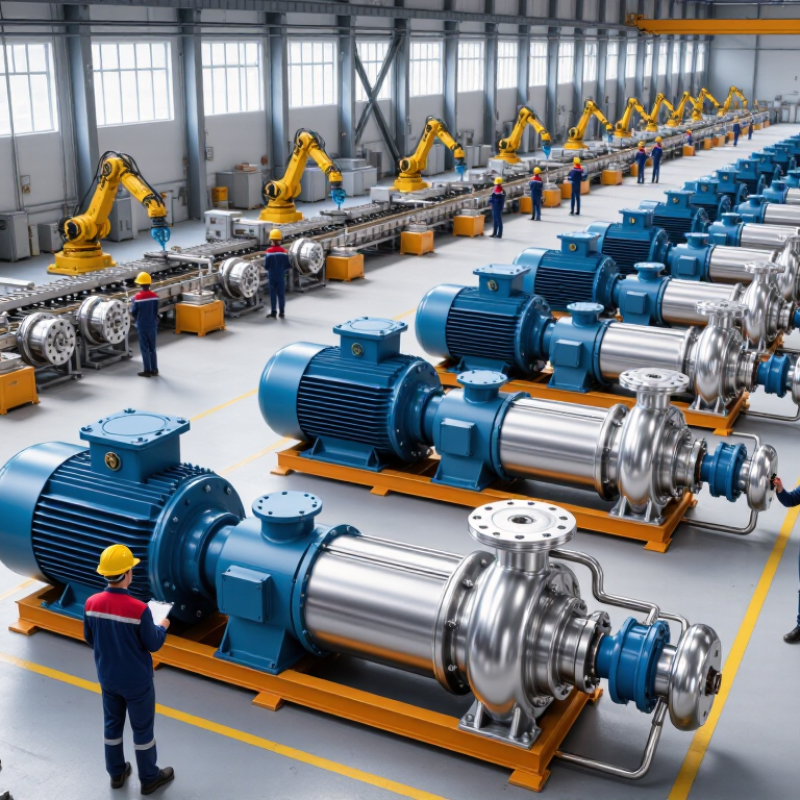
A scavenging pump removes oil, fuel, or other fluid from a low point and returns it to a reservoir or circulation system. In a dry-sump engine, for example, it pulls oil from the shallow crankcase pan after lubrication. Some engines use several scavenge stages, each serving a separate area. Small, but essential. The term describes a duty, not one universal pump design; gear, gerotor, and other pump types may perform it.
Scavenging pumps also serve turbine-engine lubrication systems and industrial equipment that must clear fluid from housings or sumps. Selection depends on fluid viscosity, temperature, flow rate, entrained air, and suction conditions. A pump that handles clean oil may struggle with foamy oil or debris. The U.S. Department of Energy’s Improving Pumping System Performance: A Sourcebook for Industry reports that pumping systems use nearly 20% of global electricity demand; in some industrial facilities, they account for 25–50% of energy use. These figures cover pumping systems broadly, not scavenging pumps alone, but they underline why correct sizing and maintenance matter. A practical inspection should check for leaks, unusual noise, restricted inlets, and unstable return flow. That last point is easy to overlook.
Choosing a scavenging pump manufacturer starts with your operating conditions, not a catalogue headline. Share the fluid type, viscosity, temperature range, suction lift, and expected duty cycle. A supplier should explain how these details affect pump selection. Numbers need context. Check that the proposed flow rate and pressure match your real setup, including start-up conditions.
Ask for a pump performance curve and test records for a comparable model. Review the materials used for the casing, seals, and internal parts, especially if the fluid is hot or contains fine debris. Request clear information about inspection steps, spare parts, and warranty coverage. A factory visit can reveal assembly practices, but it cannot prove long-term reliability by itself. That part takes time. Compare written specifications with a sample test, and note any gaps before ordering.
China’s top ten scavenging pump manufacturers should be compared by application fit, not catalogue claims alone. Buyers should check flow and pressure at the required duty point, fluid compatibility, seal design, and tolerance for entrained air or particles. Ask for test curves, material specifications, and documented inspection procedures. Details matter. A compact pump may suit a tight machine room, while a larger unit may be necessary for continuous duty.
The U.S. Department of Energy’s Improving Pumping System Performance sourcebook estimates that pumping systems use nearly 20% of global electricity demand. It also notes that pumping can consume 25–50% of energy in some industrial plants.
These figures make efficiency and correct sizing practical purchasing concerns, not decorative specifications. Compare measured performance at similar operating conditions, and ask whether service parts and technical support are available near the installation site. One caveat: a published efficiency figure does not guarantee the same result in your system. Actual performance depends on piping, controls, fluid properties, and maintenance. A useful at-a-glance comparison should show these limits clearly, even when that makes the shortlist less tidy.
China’s leading scavenging pump manufacturers offer several product families for removing gas, vapor, or process residues from enclosed systems.
Oil-sealed rotary vane pumps suit compact vacuum duties and provide steady operation at moderate costs.
Dry screw and claw pumps avoid oil in the compression chamber, which can simplify maintenance where clean exhaust handling matters.
Roots boosters increase pumping speed when paired with a suitable backing pump.
Liquid ring models tolerate wet gas and some condensable vapor, though their utility needs careful review.
Strengths vary by design, not just advertised capacity. A well-matched pump can reach target pressure without excessive energy use or frequent servicing. Check the operating curve, gas composition, inlet temperature, seal materials, and expected duty cycle.
Ask for measured performance at your actual working pressure, rather than relying only on a maximum-flow figure.
Small details matter.
A drain placed poorly can complicate routine cleaning.
Some suppliers stand out through customized skids, local machining, spare-parts availability, or responsive technical support. Others offer broad catalogs and shorter lead times for standard configurations. These advantages need verification through test records, service references, and clear warranty terms.
One limitation deserves attention: published specifications may not reflect performance with a hot, humid, or contaminated gas stream. A factory acceptance test can expose that gap before installation.
Before requesting quotes, define the liquid and operating conditions in writing. Specify temperature, viscosity, pH, solids size, flow rate, and suction conditions. The U.S. Department of Energy’s Improving Pumping System Performance sourcebook estimates that pumping systems use nearly 20% of global electricity. The IEA’s Energy Efficiency 2018 report estimates that electric motor systems account for about 45%. These figures make efficiency worth checking, not assuming. Request a performance curve, motor efficiency data, and test conditions at your duty point. Ask about solids passage, seal materials, and permitted dry-running time. Small details matter. A 3 mm particle limit, for example, may affect impeller choice and clogging risk.
Request a factory test report and confirm the acceptance criteria before payment. ISO 9906:2012 provides hydraulic performance test grades for rotodynamic pumps; check whether it applies to the model offered. Ask how the supplier handles deviations, warranty claims, replacement parts, and delivery delays. For a China-based order, verify the factory’s production capacity and inspection process, then document packaging requirements for the shipping route. I would not treat a polished curve as proof by itself. Confirm that the tested configuration matches the quoted materials, motor, and operating point. If the supplier cannot explain a mismatch clearly, pause before signing.
Use these ten checks to compare suppliers. Confirm that the pump type and test method match the intended service; vacuum and liquid-pumping applications require different performance criteria.
| No. | Buyer check | Data to request | What to confirm before ordering | Useful evidence |
|---|---|---|---|---|
| 1 | Application and pump type | Pumped medium, gas or liquid, operating temperature, solids or condensate content, and duty cycle | The proposed design is suitable for the actual medium and process conditions, not just a similar application. | Completed application questionnaire and written technical proposal |
| 2 | Capacity at the duty point | Flow or pumping speed, with the corresponding inlet and outlet pressure; state units such as m³/h, L/min, or Pa | Compare capacity at the required operating point, rather than relying on a maximum or free-air rating alone. | Performance curve or test data with stated test conditions |
| 3 | Pressure or vacuum range | Required inlet pressure, discharge pressure, pressure differential, and ultimate pressure where relevant | Check that the stated range covers normal operation, start-up, and any specified peak condition. | Model-specific operating envelope and pressure or vacuum test report |
| 4 | Power and operating costs | Motor rated power in kW, supply voltage and frequency, running current, and input power at the duty point | Verify that electrical ratings match the site supply and compare power consumption at equivalent operating conditions. | Motor nameplate data and, where available, measured input-power results |
| 5 | Materials and corrosion resistance | Materials for casing, impeller or rotor, shaft, wetted parts, and coatings | Match materials to the medium, temperature, and corrosion or abrasion risks; confirm any material substitutions in writing. | Bill of materials, material specifications, and coating details |
| 6 | Seals, leakage, and lubrication | Seal type, leakage limits if specified, lubrication method, lubricant type, and maintenance intervals | Confirm compatibility with the pumped medium and whether oil carryover, leakage, or contamination is acceptable. | Seal and lubrication specifications plus maintenance instructions |
| 7 | Performance testing and acceptance | Test method, measured operating point, tolerances, and pass/fail criteria | Agree the test standard and acceptance limits in the purchase contract. ISO 21360-1 is relevant to vacuum-pump performance measurement; ISO 9906 applies to specified rotodynamic pump hydraulic acceptance tests. | Factory test report showing instrument readings and test conditions |
| 8 | Safety and electrical protection | Guarding, emergency or overload protection, enclosure rating, and applicable electrical documentation | Specify site safety and environmental requirements; confirm the declared protection rating suits the installation conditions. | Risk and safety documentation, wiring diagram, and enclosure-rating details where applicable |
| 9 | Controls and installation | Control method, required sensors, connection sizes, mounting dimensions, weight, and allowable installation orientation | Check interfaces against the existing system and identify any required valves, filters, silencers, or control equipment. | General arrangement drawing, connection schedule, and control diagram |
| 10 | Warranty, service, and spare parts | Warranty period and exclusions, recommended spare-parts list, delivery lead times, and service response arrangements | Clarify warranty start date, wear-part coverage, parts availability, and the documentation supplied with the pump. | Written warranty terms, spare-parts list, and operation and maintenance manual |
Procurement note: Request model-specific documents and record agreed performance, materials, accessories, testing, and acceptance criteria in the purchase order.



For those larger-sized parts, or smaller quantity runs, we have 2 independent powder coat booths and ovens. The quality, durability and affordability of today’s powder coating finishes make this the process of choice for world-class companies.
Powder coating advantages over other forms of coating are many. Materials used in the Powder coating process can be metals and non-metals that come in a multitude of thicknesses, textures, colors, etc. Another of Powder coating’s biggest advantages over conventional coatings is its ability to create finishes in many different textures. Powder Coating Booths allow us the ability to apply these advantages to large products.
Tri-State Fabricators runs a full-service conveyor line for painting. Wet painting can provide protection or decoration to many different part styles. From start to finish, every project is easier to undergo random and point-based inspection by our skilled painting team.
Advantages to our Wet Paint Line are these lines start with product prep and ends with a thorough inspection of a high quality finished product. Our ability to complete large and small projects with a superior finish and doing so in a timely and economical fashion. This passes along the savings in production to our customers. When powder coating ins not an option, our Wet Paint Line gets the job done right the first time.
When the parts get big and heavy we roll-out our custom paint racks and oversize booth. By utilizing our partnerships with all the major paint brands, we can match virtually any color with wet paint.
The advantages of having access to a Wet Paint Booth are many. Large projects of many different shapes can be loaded into the booth. The Wet Paint Booth offers an environment that is much more controlled than a typical parts painting operation.
Not only are they used because of their controlled environment, but they’re are also advantageous when it comes to applying paint to parts that are needed in industries that require specialty coatings such as medical, aerospace, etc.
Our military forces have some very high standards when it comes to the finish of their vehicles and equipment. From the first pre-treatment step to final coat, it takes a great deal of knowledge and experience to protect the men and women of our armed forces. They deserve only the best, and Tri-State Fabricators provides it.
All of our processes are closely monitored by our staff and management teams. Both of which are highly trained in the processes of metal fabrication and finishing. Tri-State Fabricators’ goal is to always fully satisfy each and every customer, including the military. We will always put a 110% into what we do.
Abrasive media blasting is an excellent way to remove old paint, rust, and increase the paint/powder adhesion. Glass beads produce a much smoother and brighter finish than angular abrasives; leaving the part clean yet without any dimensional change. Chemically inert and environmentally friendly, we can recycle our beads approximately 30 times; making them a more preferred method of metal cleaning or surface finishing.
Advantages to Glass Bead Blasting are many. Glass bead blast media is used when a project is needing rough surfaces need to become smooth for applications of coatings such as paint. It is typically used to clean paint and rust from a product surface without deforming the surface it is being used on. Overall, compared to many other blasting media, Glass Bead Blasting is a very economical choice and those savings are always passed on to our customers.
Tri-State Fabricators utilize a zinc phosphate wash to clean and etch the material to ensure the best paint adhesion possible. The unique design of our 3-stage wash system does the work like a 5-stage. From Cleaning and rinsing to conversion coating and post-treatment, Our Part Washing process is a complete service and works throughout the fabrication service and the finishing service.
Along with the previously mentioned benefits, Curing is a vital chemical reaction that leaves the product finish hard and relatively safe from mild abrasion and aggressive corrosion. This process can be done in more than one way; ambient air-dry or in curing ovens at temps that exceed 240°.
From fixing paint mistakes (someone else’s of course) to simply cleaning our paint line hooks, our burn-off oven is put to good use. After a quick burn-off, a little clean up, and a fresh coat of paint, your parts will look better than new.
Why does our Burn-Off Oven work so well? Because super heating the air around parts turns the materials into ashes. From paint and powder coatings to rubber and machining oils, high temps do the job without degrading the integrity of the part.
Masking is a vital part of producing high quality products. We have die-cut masking patterns to protect machined surfaces as well as a wide range of plugs and caps to protect threaded holes and bolts. We provide permanent and temporary masking.
Masking allows the selected sections of a product to be protected from a fabrication or finishing service. This can be with both chemicals when etching and tapes, paints when only finishing just a section of the product. Masking is great in aiding the customization process of a project.
Screen printing is a photographic process that transfers artwork onto a porous nylon screen which allows colored ink to flow through the screen and be deposited on an aluminum or plastic component. We can generally have just about any design created onto a screen for your parts.
Some of the advantages of Screen Printing are, brand recognition for your business displaying on your products, assembly instructions, product warnings/hazards, etc. Tri-State Fabricators produces Screen Printing of the highest quality so you know it’s durable.
Metal Finishing is the art of treating the exterior portion of product, often metal but can also be made of other materials, so that the surface is clean and free of any debris. Then the process of applying coats or either paint of powder coat takes place. This coating process improves the quality of the product in both appearance and resistance to wear and corrosion.
Tri-State Fabricators, Inc., understands that a project typically isn’t complete until a high-quality finish has been added to your product. This is why our painting and powder coating teams continuously inspect the products throughout the Metal Finishing process.