China Top 10 PPR Heater Machine Suppliers?
China’s Ppr Heater Machine market includes manufacturers with different production capabilities, price levels, and service standards. This guide introduces ten notable Chinese suppliers for buyers comparing equipment for PPR pipe socket fusion. The selection focuses on practical purchasing concerns, not promotional claims.
A reliable supplier should explain heating plate materials, temperature accuracy, socket sizes, voltage options, and machine durability. Buyers should request product drawings, test records, manuals, and clear warranty terms. Factory photographs can help, but an independent inspection is more convincing. Small details matter, such as stable temperature recovery after each joint and secure handles during installation. These features affect daily work on construction sites.
The research also considers manufacturing experience, export communication, customization ability, spare-part access, and delivery consistency. Certifications may support credibility, but buyers should verify their scope and validity. Customer feedback deserves careful reading because one successful order cannot prove long-term performance. No ranking is perfect. Supplier information changes, and some online descriptions remain incomplete. A careful buyer should compare current quotations, sample quality, inspection results, and after-sales responses before making a decision. This approach supports a more balanced understanding of China’s top PPR Heater Machine suppliers, especially for contractors, distributors, and engineering companies seeking dependable equipment rather than the lowest initial price.
The best choice depends on real working conditions. Pipe diameter, jobsite power, production volume, and technician skill all matter. A compact machine may suit maintenance teams, while larger operations may need multiple heating sets. Practical testing reveals more than attractive brochures.
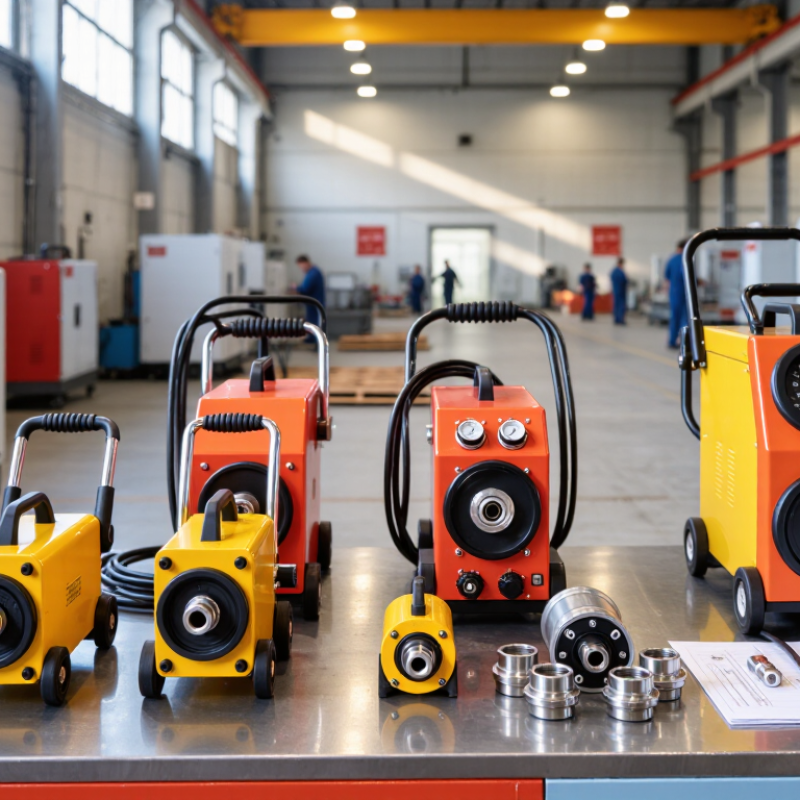
What Is a PPR Heater Machine and Where Is It Used?
A PPR heater machine is a thermal fusion tool for joining polypropylene random copolymer pipes and fittings. It heats matching surfaces until they soften, then allows them to bond under controlled pressure. A typical set includes a heating plate, interchangeable dies, a temperature controller, and a support stand. Many models operate near 260°C, but installers should follow the pipe and tool specifications.
The machine is widely used for residential water supply, hot-water circulation, building heating, and selected industrial fluid systems.
In a workshop, an operator cuts the pipe squarely, removes surface dust, and marks the insertion depth. The pipe and fitting are then heated on separate dies.
After removal, they are pressed together without twisting. The joint looks simple. It is not.
Field inspections often find weak joints caused by poor alignment, excessive heating, or movement during cooling. A darkened pipe end can indicate overheating, while a shallow fusion mark may show insufficient insertion.
These details matter in concealed walls, where repairs become expensive. Moisture, unstable voltage, and worn dies can also affect results.
Suppliers in China’s top ten market should provide temperature accuracy data, die-size options, electrical certifications, operating instructions, and replacement-part support. Buyers should still test samples before large orders. Specifications can look convincing, yet practical performance may disappoint.
Supplier Profiles and Their Core Product Capabilities
China Top 10 PPR Heater Machine Suppliers?
A practical supplier review should examine capabilities, not catalog rankings. The ten leading supplier profiles usually cover socket-fusion heaters, hydraulic butt-fusion systems, pipe extrusion lines, and customized heating plates. Strong factories use digital temperature controllers, aluminum heating surfaces, replaceable PTFE coatings, and insulated handles. These details matter on a dusty installation site. Factory audits should also check calibration records, welding temperature stability, spare-part access, and operator training.
Industry demand supports this equipment segment. Grand View Research valued the global plastic pipes market at about USD 12.8 billion in 2022 and projected continued growth through 2030. PPR remains important for hot-water plumbing because it resists corrosion and supports thermal applications. The International Energy Agency also reports that buildings account for roughly 30% of global energy demand, increasing attention on efficient water and heating systems. Supplier profiles with energy-efficient heaters, low standby consumption, and accurate thermal control may therefore gain practical advantages.
The best-performing Chinese suppliers often combine machine manufacturing with mold design, electrical integration, and export documentation. Some focus on compact manual heaters for contractors. Others build automated lines with data logging and pressure testing. Several offer private-label production, but quality can vary. A polished brochure proves little. Buyers should request sample welds, temperature test curves, factory videos, and recent inspection records. My assessment would remain cautious: after-sales response time is often less visible than machine specifications, yet it can determine whether a production line stays idle for one day or several weeks.
China PPR Heater Machine Suppliers: Core Capability Benchmark
This benchmark compares commonly published capability ranges for PPR socket-fusion equipment rather than ranking individual companies. Compact machines generally cover 20–63 mm pipe, while workshop and heavy-duty configurations can support larger diameters. PPR socket-fusion work is commonly performed at approximately 260°C, subject to the applicable equipment specification and installation standard.
Comparing Quality, Certifications, Prices, and Technical Support
When comparing China’s top ten PPR heater machine suppliers, quality should start with measurable performance. Check heater plate temperature uniformity, welding cycle stability, and pressure control. A reliable machine should heat pipes evenly, without soft edges or visible distortion. Ask for test records using your actual pipe sizes. Factory videos help, but live demonstrations are more convincing. Small details matter.
Certifications also deserve careful review. Request valid CE documentation, ISO 9001 records, electrical test reports, and a clear component list. Certificates should match the exact machine model, not a similar product. Prices can differ because of heating elements, control systems, spare parts, and warranty coverage. The cheapest quotation may exclude installation or replacement sensors. That can become expensive later. In my experience, suppliers with documented inspection procedures usually offer more predictable results, although paperwork alone cannot prove long-term durability.
Tips: Compare at least three detailed quotations. Check temperature recovery after repeated welds. Ask how quickly engineers respond to technical problems, and whether remote video support is included. Confirm training materials, spare-part availability, and response times in writing. A useful supplier should explain maintenance clearly, not only promote specifications. I would also request customer references, while remembering that even good references may not match your production conditions. Some comparisons remain imperfect. Test before committing.
How to Choose the Right PPR Heater Machine Supplier in China
How to Choose the Right PPR Heater Machine Supplier in China
China Top 10 PPR heater machine suppliers may look similar online. The better choice depends on verified performance, not ranking lists. Grand View Research reported that the global plastic pipes market reached about USD 60 billion in 2023. This demand increases pressure on heating equipment suppliers. Ask for welding temperature stability, heating-plate coating details, and replacement-part availability. A practical test should use your actual pipe sizes and resin grades.
Supplier evaluation needs measurable evidence. Request factory videos, calibration records, and sample welding reports. Check whether the equipment follows relevant requirements in ISO 15874 and applicable electrical safety standards. ISO 9001 certification can support process control, but it does not prove machine quality alone. The 2024 Plastics Processing Machinery Market analysis from Research and Markets identifies automation, energy efficiency, and production consistency as major purchasing factors. Therefore, compare cycle time, power consumption, and temperature recovery after each joint.
Small details often reveal reliability. Inspect cable protection, handle insulation, timer accuracy, and the flatness of the heating plate. Ask how quickly faulty sensors are replaced. A low quotation may hide weak components or limited technical support. That mistake is costly. A supplier should provide operating instructions, inspection records, and clear warranty terms. Some buyers focus too heavily on price; that approach needs reconsideration. A slightly higher initial cost may reduce rejected joints, downtime, and operator training problems. Still, supplier promises require independent checks before payment. past performance matters more than polished catalog language.
China Top 10 PPR Heater Machine Suppliers? - How to Choose the Right PPR Heater Machine Supplier in China
Anonymous supplier comparison based on commonly published PPR socket-fusion machine specifications and standard purchasing criteria.
| Rank | Anonymous Supplier Profile | Machine Configuration | Pipe Range | Heater Power | Temperature Range | Control Method | Typical Warranty | Typical Lead Time | Quality Documents | Buyer Suitability |
| 01 | Supplier Profile A | Manual socket-fusion kit with interchangeable dies | 20–63 mm | 800 W | 0–300°C | Thermostatic | 12 months | 7–15 days | CE; test report on request | Small contractors |
| 02 | Supplier Profile B | Digital socket-fusion kit with temperature display | 20–63 mm | 1,000 W | 0–300°C | Digital thermostat | 12 months | 10–20 days | CE; calibration record | General installation |
| 03 | Supplier Profile C | High-output socket-fusion kit for frequent field use | 20–110 mm | 1,500 W | 0–300°C | Digital thermostat | 12 months | 15–25 days | CE; inspection report | Professional installers |
| 04 | Supplier Profile D | Compact portable fusion kit for maintenance teams | 20–63 mm | 800–1,000 W | 0–300°C | Thermostatic or digital | 6–12 months | 7–14 days | CE; user manual | Repair and maintenance |
| 05 | Supplier Profile E | Heavy-duty socket-fusion machine with metal case | 20–110 mm | 1,500 W | 0–300°C | Electronic thermostat | 12 months | 20–30 days | CE; factory inspection | Rental fleets |
| 06 | Supplier Profile F | Workshop fusion kit with multiple die sets | 20–75 mm | 1,000 W | 0–300°C | Digital display | 12 months | 10–20 days | CE; spare-parts list | Plumbing workshops |
| 07 | Supplier Profile G | Basic manual fusion kit for occasional use | 20–63 mm | 800 W | 0–300°C | Thermostatic | 6–12 months | 5–12 days | CE; basic manual | Budget buyers |
| 08 | Supplier Profile H | Export-oriented kit with customized plug options | 20–110 mm | 1,000–1,500 W | 0–300°C | Digital thermostat | 12 months | 20–35 days | CE; export packing record | Import distributors |
| 09 | Supplier Profile I | Entry-level kit with aluminum-coated heating plate | 20–63 mm | 800 W | 0–300°C | Thermostatic | 6 months | 7–15 days | CE; material declaration | Light-duty work |
| 10 | Supplier Profile J | Custom private-label kit with optional accessories | 20–110 mm | 1,000–1,500 W | 0–300°C | Digital thermostat | 12 months | 25–40 days | CE; pre-shipment inspection | OEM and wholesale buyers |
Key Selection Criteria
Confirm the required pipe diameter range and die sizes.
Request a temperature calibration or inspection record.
Check voltage, plug type, frequency, and electrical safety documents.
Compare warranty coverage, spare parts, and technical support.
Verify packaging, lead time, payment terms, and inspection procedures.
Note: Specifications, certifications, warranty terms, and delivery times should be verified directly with each supplier before purchase.





