


China Top 10 Pallet Conveyor Manufacturers in 2026

China Top 10 Pallet Conveyor Manufacturers in 2026 examines a market shaped by speed, accuracy, and practical factory demands. A Pallet Conveyor may look simple, yet every roller, sensor, frame, and transfer point affects production flow. In a busy warehouse, one misaligned pallet can create noise, stoppage, and costly manual handling. The best manufacturers understand these details.

This guide compares ten Chinese suppliers through engineering capability, product range, customization, quality control, installation support, and after-sales service. It considers systems for warehouses, distribution centers, food plants, automotive facilities, and manufacturing lines. Technical specifications matter. So do field experience, response time, spare-part access, and honest communication.

Small details matter.

Michael ten Hompel, a recognized intralogistics researcher, has expressed a useful principle: “Automation must serve the process, not decorate it.” That idea guides this review. A modern Pallet Conveyor should match pallet weight, floor conditions, traffic patterns, safety requirements, and future expansion plans. A cheaper quotation may not remain cheaper after redesigns and downtime.

The ranking is not absolute. Supplier strengths change by project, region, and application. Some manufacturers show impressive customization but limited overseas support. Others offer strong export experience but fewer specialized options. Buyers should verify certifications, factory capabilities, reference projects, and maintenance commitments before making a decision. This article provides a practical starting point, not a final verdict.
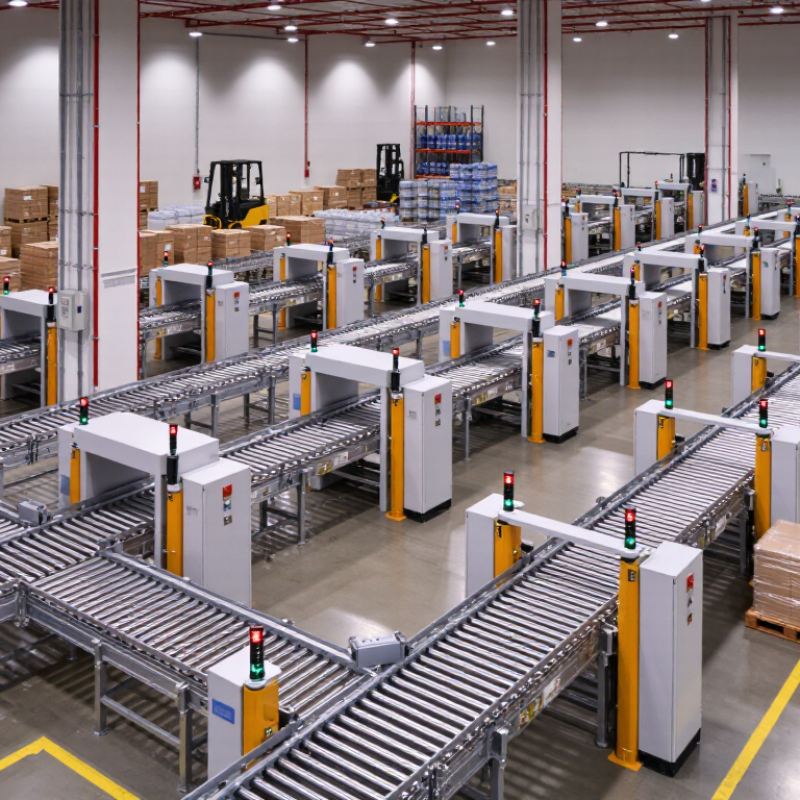
China Top 10 Pallet Conveyor Manufacturers in 2026

China’s Pallet Conveyor Manufacturing Landscape in 2026

China’s pallet conveyor manufacturing landscape in 2026 is becoming more specialized. The top ten manufacturers compete through engineering depth, delivery reliability, and after-sales support. Their systems serve warehouses, factories, cold-chain facilities, and distribution centers. Roller conveyors remain common for heavy pallets. Chain conveyors handle transfers, turns, and uneven loads more effectively.

Manufacturers now combine modular frames with sensors, barcode readers, and warehouse control software. A typical line may include pallet accumulation, lifting units, safety fencing, and automatic positioning. Steel quality matters. So does motor access during maintenance. Experienced buyers often inspect welds, bearing protection, emergency stops, and spare-parts availability before signing contracts. Small design details can prevent hours of downtime.

The market is not perfectly uniform. Some suppliers provide strong automation integration but limited overseas service. Others offer competitive pricing while relying on standard configurations. This difference can affect installation schedules and long-term operating costs. Export projects also require careful attention to voltage, floor conditions, documentation, and local safety rules. Factory visits remain useful, although a polished showroom does not prove field performance. Requesting load tests, reference data, and maintenance records creates a more reliable comparison. One weakness remains visible: some product claims sound broader than the evidence supports. Buyers should verify every promised cycle rate under real pallet weight and working conditions.


How the Top 10 Pallet Conveyor Manufacturers Were Selected

Selecting China’s top pallet conveyor manufacturers requires more than checking production capacity. Our method combines factory experience, engineering evidence, customer performance, and service reliability. The 2024 MHI Annual Industry Report found that 55% of supply chain professionals face workforce shortages, while 83% expect higher technology investment within five years. These pressures make dependable pallet movement a practical business requirement.

We reviewed manufacturers against six measurable areas: conveyor load capacity, speed control, safety design, system integration, delivery performance, and after-sales response. Technical teams examined drawings, test records, control architecture, and maintenance procedures. Factory visits also helped verify welding quality, motor protection, sensor placement, and spare-parts storage. A supplier could not rank highly through attractive brochures alone.

Operational evidence carried the greatest weight. We requested installation references, uptime records, fault histories, and documented acceptance tests.

We also checked whether systems supported barcode tracking, warehouse management software, and future expansion. The selection reflects common industry practice, but it is not perfectly objective. Some manufacturers disclose limited failure data, which weakens direct comparison. That limitation deserves attention.

The ranking therefore favors consistent evidence over impressive claims, using findings from the MHI report and automation benchmarks published by the International Federation of Robotics.

Profiles of China’s Top 10 Pallet Conveyor Manufacturers

China Top 10 Pallet Conveyor Manufacturers in 2026 highlights ten manufacturers serving warehouses, factories, and distribution centers. Their profiles are based on pallet load ratings, conveyor speed, control integration, safety design, and after-sales capability. Some focus on heavy steel-frame roller lines. Others develop chain conveyors, turntables, lifts, and pallet shuttle interfaces. Their strongest projects often show clear layout drawings, measured cycle times, and stable performance under dusty conditions. Yet supplier websites rarely reveal long-term failure rates. That limitation deserves attention.

Market data supports this sector’s expansion. MarketsandMarkets estimates the global conveyor system market will grow from about USD 8.9 billion in 2023 to USD 12.6 billion by 2028. MHI’s 2024 Annual Industry Report also identified labor availability as a major supply-chain concern. These figures explain the demand for automated pallet movement in Chinese manufacturing. The ten profiles therefore examine engineering depth, not only quoted prices. Practical checks include motor protection, sensor placement, spare-parts access, and software compatibility. A lower purchase cost can become expensive after repeated stoppages.

Tips: Ask each manufacturer for a recent reference project with similar pallet weight and footprint. Request acceptance-test records, noise measurements, and emergency-stop response times. Inspect welded joints and cable routing during a factory visit. Do not assume a polished demonstration reflects continuous production. An independent integrator review may reveal overlooked risks.

Key Technologies and Applications of Pallet Conveyor Systems

China Top 10 Pallet Conveyor Manufacturers in 2026

Pallet conveyor systems are becoming central to China’s automated warehouses and production plants. Deloitte’s 2024 Smart Manufacturing and Operations Survey found that 86% of manufacturers view smart manufacturing as essential for competitiveness. This pressure is visible on factory floors, where pallets move between storage, assembly, inspection, and dispatch.

The core technology combines powered roller conveyors, chain conveyors, photoelectric sensors, barcode or RFID identification, and programmable logic controllers. Variable-frequency drives adjust speed when pallets carry different loads. Warehouse control software then coordinates conveyors with stacker cranes, shuttle systems, and robotic vehicles. A practical line may move a 1,000-kilogram pallet through accumulation zones without stopping upstream equipment.

Safety still needs closer attention. ISO 3691-4 provides safety requirements for driverless industrial trucks, while conveyor designs require guarding, emergency stops, and controlled restart functions. The MHI Annual Industry Report 2024 reported that 55% of supply-chain professionals planned to increase technology investment over the following two years. However, investment alone does not guarantee performance. Poor pallet quality, uneven floors, and inaccurate sensor positions can create repeated stoppages. This is where experienced integrators matter.

Applications differ by industry. Food and beverage plants need washable components and careful contamination control. Automotive facilities prioritize high cycle rates and precise positioning. E-commerce warehouses often require dense accumulation and flexible routing. China’s leading manufacturers increasingly provide modular frames, digital monitoring, and energy-saving drives, but maintenance data should be tested under real operating conditions. Pilot projects remain wiser than attractive specifications.

How to Compare and Choose a Chinese Pallet Conveyor Manufacturer

Choosing among China’s top pallet conveyor manufacturers in 2026 requires more than comparing catalog prices. Start with your pallet data: load weight, dimensions, throughput, accumulation spacing, floor conditions, and operating hours. A reliable supplier should provide calculations for chain, roller, motor, frame, and control-system capacity. Ask for drawings, load tests, safety documentation, and a factory acceptance test. I have found that small design assumptions can create costly installation changes.

Industry data supports a careful technology review. MHI’s 2024 Annual Industry Report found that 55% of supply chain leaders increased technology investment, while 92% expected further investment within two years. This indicates stronger demand for connected material-handling systems, not merely mechanical conveyors. Compare PLC compatibility, sensor quality, fault records, remote diagnostics, spare-parts availability, and response times. The cheapest proposal is rarely the lowest total cost. Sometimes, however, buyers over-specify equipment and waste budget.

Tips: Request three comparable quotations using the same technical specification. Visit an operating reference site, if possible. Check whether the supplier measures throughput under real pallet conditions. Review warranty exclusions carefully. Ask for a line-layout simulation before signing. Independent inspection can verify welding quality, electrical labeling, and emergency-stop performance. Also examine installation training and local service coverage. A supplier may promise fast support, but written service levels are more dependable than friendly conversations.

China Top 10 Pallet Conveyor Manufacturers in 2026 - How to Compare and Choose a Chinese Pallet Conveyor Manufacturer

Anonymized comparison based on commonly published technical ranges and standard procurement criteria for Chinese pallet conveyor suppliers. Actual specifications, compliance documents, pricing, and delivery dates should be confirmed in the supplier’s formal quotation.

Rank Supplier Profile Primary Conveyor Portfolio Typical Pallet Load Pallet Width Compatibility Conveying Speed Range Drive and Control Options Customization Capability Common Compliance Documentation Typical Production Lead Time Standard Warranty Best-Fit Application
1 Supplier Profile 01 Roller conveyors, chain conveyors, transfers, turntables, pallet lifts 500–2,000 kg per pallet 800–1,400 mm 8–18 m/min Variable-frequency drive; PLC and photoelectric sensors High
Layout engineering and integrated line design
CE file, risk assessment, electrical drawings, factory test records 35–55 days 12 months Automotive, general manufacturing, distribution centers
2 Supplier Profile 02 Heavy-duty roller conveyors, chain transfers, pallet accumulation systems 1,000–3,000 kg per pallet 1,000–1,600 mm 6–15 m/min Motorized rollers or geared motors; PLC control High
Heavy-load frames and reinforced supports
CE declaration, load calculations, welding inspection records 40–60 days 12 months Steel, building materials, heavy industrial warehousing
3 Supplier Profile 03 Powered roller conveyors, pallet shuttles, lifts, barcode-ready stations 500–1,500 kg per pallet 800–1,300 mm 10–20 m/min PLC, HMI, barcode interface, WMS communication gateway High
Software and material-flow integration
CE file, FAT documents, network and I/O lists 45–70 days 12 months E-commerce, third-party logistics, automated warehouses
4 Supplier Profile 04 Chain conveyors, pallet dispensers, pallet stackers, transfer cars 800–2,500 kg per pallet 900–1,500 mm 5–12 m/min Geared motor drives; PLC, sensors, emergency-stop circuits Medium–High
Mechanical customization and safety guarding
CE declaration, machine drawings, safety-circuit documentation 30–50 days 12 months Food and beverage, chemical packaging, cold-chain facilities
5 Supplier Profile 05 Stainless-steel pallet conveyors, washdown conveyors, transfer units 300–1,200 kg per pallet 800–1,200 mm 5–15 m/min Stainless-steel motors, sensors, PLC control, IP-rated components Medium–High
Hygienic construction and corrosion-resistant finishes
Material certificates, CE documentation, ingress-protection data 40–65 days 12 months Food processing, pharmaceuticals, clean production areas
6 Supplier Profile 06 Modular roller conveyors, pallet accumulation lines, dock conveyors 500–1,500 kg per pallet 800–1,400 mm 8–16 m/min AC geared motors; basic PLC and sensor controls Medium
Standard modules with adjustable lengths and widths
CE declaration, installation drawings, operation manuals 25–45 days 12 months Warehouses, retail distribution, packaging plants
7 Supplier Profile 07 Warehouse conveyor systems, pallet lifts, vertical reciprocating conveyors 500–2,000 kg per pallet 800–1,500 mm 6–14 m/min PLC, HMI, safety interlocks, position encoders High
Multi-level storage and building-interface design
CE file, structural calculations, lift safety documentation 50–75 days 12 months Multi-level warehouses, factories with limited floor space
8 Supplier Profile 08 Low-profile pallet conveyors, flexible lines, packing-line conveyors 300–1,000 kg per pallet 700–1,200 mm 6–18 m/min Compact geared motors; sensors and standalone control panels Medium
Fast adaptation to compact production layouts
CE declaration, wiring diagrams, maintenance instructions 25–40 days 12 months Small and medium factories, packing and assembly lines
9 Supplier Profile 09 Heavy-duty pallet rollers, chain transfers, automated loading conveyors 1,000–3,000 kg per pallet 1,000–1,800 mm 5–12 m/min High-torque geared motors; PLC and load-position sensors High
Custom structures for oversized or irregular pallets
Load-test records, CE documentation, mechanical inspection reports 45–70 days 12 months Paper, timber, metal products, industrial raw materials
10 Supplier Profile 10 Standard pallet conveyors, gravity sections, accumulation and transfer modules 500–1,500 kg per pallet 800–1,300 mm 5–15 m/min AC motors, photoelectric sensors, relay or PLC control Medium
Cost-focused standardization and modular expansion
CE declaration, product datasheets, installation manuals 20–40 days 12 months General warehousing, pallet buffering, local distribution centers
Recommended comparison checklist: verify usable pallet dimensions, maximum static and dynamic load, conveyor height, throughput, accumulation logic, safety design, spare-parts availability, installation scope, factory acceptance testing, export packaging, and after-sales response time before placing an order.

Powder Coat Booths

For those larger-sized parts, or smaller quantity runs, we have 2 independent powder coat booths and ovens. The quality, durability and affordability of today’s powder coating finishes make this the process of choice for world-class companies.

Powder coating advantages over other forms of coating are many. Materials used in the Powder coating process can be metals and non-metals that come in a multitude of thicknesses, textures, colors, etc. Another of Powder coating’s biggest advantages over conventional coatings is its ability to create finishes in many different textures. Powder Coating Booths allow us the ability to apply these advantages to large products.

Wet Paint Line

Tri-State Fabricators runs a full-service conveyor line for painting. Wet painting can provide protection or decoration to many different part styles. From start to finish, every project is easier to undergo random and point-based inspection by our skilled painting team.

Advantages to our Wet Paint Line are these lines start with product prep and ends with a thorough inspection of a high quality finished product. Our ability to complete large and small projects with a superior finish and doing so in a timely and economical fashion. This passes along the savings in production to our customers. When powder coating ins not an option, our Wet Paint Line gets the job done right the first time.

Wet Paint Booths

When the parts get big and heavy we roll-out our custom paint racks and oversize booth. By utilizing our partnerships with all the major paint brands, we can match virtually any color with wet paint.

The advantages of having access to a Wet Paint Booth are many. Large projects of many different shapes can be loaded into the booth. The Wet Paint Booth offers an environment that is much more controlled than a typical parts painting operation.

Not only are they used because of their controlled environment, but they’re are also advantageous when it comes to applying paint to parts that are needed in industries that require specialty coatings such as medical, aerospace, etc.

Military CARC

Our military forces have some very high standards when it comes to the finish of their vehicles and equipment. From the first pre-treatment step to final coat, it takes a great deal of knowledge and experience to protect the men and women of our armed forces. They deserve only the best, and Tri-State Fabricators provides it.

All of our processes are closely monitored by our staff and management teams. Both of which are highly trained in the processes of metal fabrication and finishing. Tri-State Fabricators’ goal is to always fully satisfy each and every customer, including the military. We will always put a 110% into what we do.

Glass-Bead Blasting

Abrasive media blasting is an excellent way to remove old paint, rust, and increase the paint/powder adhesion. Glass beads produce a much smoother and brighter finish than angular abrasives; leaving the part clean yet without any dimensional change. Chemically inert and environmentally friendly, we can recycle our beads approximately 30 times; making them a more preferred method of metal cleaning or surface finishing.

Advantages to Glass Bead Blasting are many. Glass bead blast media is used when a project is needing rough surfaces need to become smooth for applications of coatings such as paint. It is typically used to clean paint and rust from a product surface without deforming the surface it is being used on. Overall, compared to many other blasting media, Glass Bead Blasting is a very economical choice and those savings are always passed on to our customers.

Part Washing

Tri-State Fabricators utilize a zinc phosphate wash to clean and etch the material to ensure the best paint adhesion possible. The unique design of our 3-stage wash system does the work like a 5-stage. From Cleaning and rinsing to conversion coating and post-treatment, Our Part Washing process is a complete service and works throughout the fabrication service and the finishing service.

Along with the previously mentioned benefits, Curing is a vital chemical reaction that leaves the product finish hard and relatively safe from mild abrasion and aggressive corrosion. This process can be done in more than one way; ambient air-dry or in curing ovens at temps that exceed 240°.

Burn-Off Oven

From fixing paint mistakes (someone else’s of course) to simply cleaning our paint line hooks, our burn-off oven is put to good use. After a quick burn-off, a little clean up, and a fresh coat of paint, your parts will look better than new.

Why does our Burn-Off Oven work so well? Because super heating the air around parts turns the materials into ashes. From paint and powder coatings to rubber and machining oils, high temps do the job without degrading the integrity of the part.

Masking

Masking is a vital part of producing high quality products. We have die-cut masking patterns to protect machined surfaces as well as a wide range of plugs and caps to protect threaded holes and bolts. We provide permanent and temporary masking.

Masking allows the selected sections of a product to be protected from a fabrication or finishing service. This can be with both chemicals when etching and tapes, paints when only finishing just a section of the product. Masking is great in aiding the customization process of a project.

Screen Printing

Screen printing is a photographic process that transfers artwork onto a porous nylon screen which allows colored ink to flow through the screen and be deposited on an aluminum or plastic component. We can generally have just about any design created onto a screen for your parts.

Some of the advantages of Screen Printing are, brand recognition for your business displaying on your products, assembly instructions, product warnings/hazards, etc. Tri-State Fabricators produces Screen Printing of the highest quality so you know it’s durable.

Metal Finishing

Metal Finishing is the art of treating the exterior portion of product, often metal but can also be made of other materials, so that the surface is clean and free of any debris. Then the process of applying coats or either paint of powder coat takes place. This coating process improves the quality of the product in both appearance and resistance to wear and corrosion.

Tri-State Fabricators, Inc., understands that a project typically isn’t complete until a high-quality finish has been added to your product. This is why our painting and powder coating teams continuously inspect the products throughout the Metal Finishing process.
