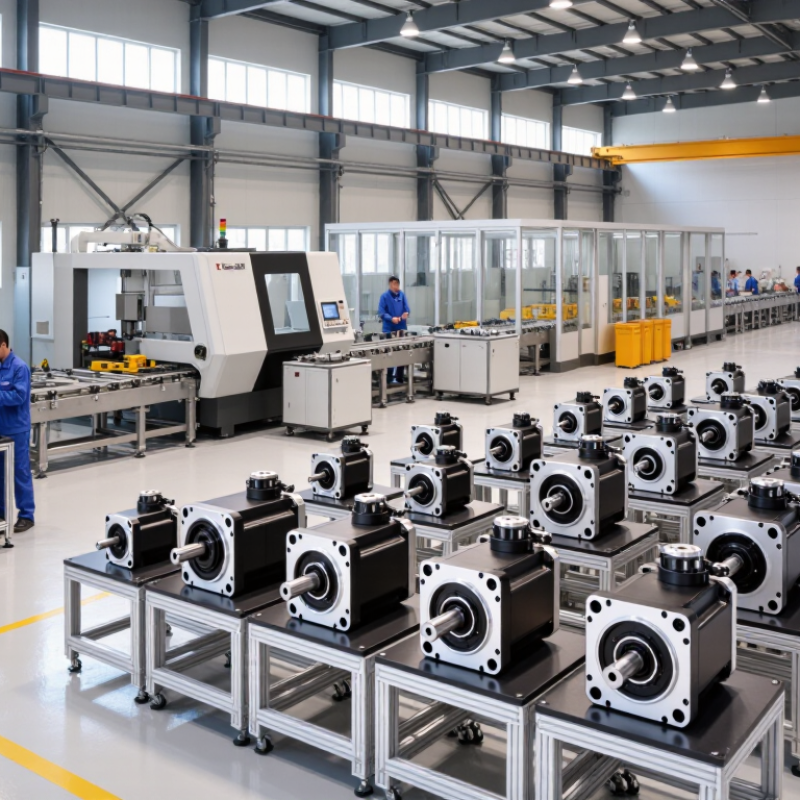
China Top 10 Mount Motor Manufacturers for Global Buyers

Choosing a Mount Motor supplier in China involves more than comparing prices or catalog photographs. Global buyers need evidence of stable output, suitable engineering, and dependable communication. A motor that fits the drawing may still disappoint if vibration, heat, or installation conditions were not checked carefully. Details matter.

Quality-management expert W. Edwards Deming is widely associated with the principle, “Quality is everyone’s responsibility.” It offers a useful lens for assessing manufacturers, though it is not a Mount Motor-specific quotation. Buyers should look beyond final inspection: ask how suppliers control winding, balancing, assembly, and testing. Request clear specifications, sample test records, and confirmation that the proposed mounting design matches the application. A polished brochure is not proof.

This guide introduces ten Chinese Mount Motor manufacturers for global buyers, with attention to product range, manufacturing capability, customization, and export support. The goal is practical comparison, not a claim that one supplier suits every project. A shortlist can help, but it cannot replace factory due diligence or application testing. Some information may be difficult to compare consistently; that is worth acknowledging. Before placing an order, verify current certifications, lead times, warranty terms, and the exact motor configuration in writing.

China Top 10 Mount Motor Manufacturers for Global Buyers

Mount Motor Basics: IEC 60034-7 IM Codes and Common Mounting Forms

An IEC 60034-7 IM code describes how an electric motor is arranged and mounted. It helps buyers compare installation needs across suppliers. The code can indicate shaft direction, mounting method, and whether feet or a flange support the motor. It does not replace a dimensional drawing. Small detail. Easy to miss.

IM B3 is a common foot-mounted form for horizontal installation. Its feet usually sit on a baseplate, where bolt spacing and shaft height must match the driven equipment. IM B5 uses a large flange for direct attachment to a machine or housing. IM B35 combines feet with a flange, giving installers more support options. For compact equipment, IM B14 uses a smaller face flange. The exact frame and flange dimensions still matter.

Vertical arrangements need particular care. For example, IM V1 generally indicates a flange-mounted motor with its shaft pointing downward. Check the complete designation and supplier drawing before ordering, especially when the shaft faces upward or carries an axial load. In practical installations, a mounting code alone may not reveal clearance for a fan cover, cable entry, or maintenance access. I would verify those details early; overlooking them can turn a standard fit into a site modification.

IEC 60034-7: Common Horizontal Motor Mounting Forms

A practical comparison of the mounting interfaces used in four common IM designations.

How to read it: IM B3 uses feet, IM B5 uses a flange, IM B35 combines feet and a flange, and IM B14 uses a face flange. All forms shown are for horizontal shaft arrangements. Confirm the full IM designation and dimensions against the motor manufacturer’s specification before installation.

China’s Top 10 Mount Motor Manufacturers: Products, Capacity, and Markets

China’s leading mount motor manufacturers cover induction, permanent-magnet, servo, and geared models for pumps, fans, conveyors, and factory automation. Product comparisons should include rated power, torque, speed, mounting dimensions, insulation class, and efficiency—not just catalog breadth. The International Energy Agency’s 2011 report, Energy-Efficiency Policy Opportunities for Electric Motor-Driven Systems, estimates these systems use about 45% of global electricity. Efficiency and operating conditions matter.

Production capacity varies widely. Ask suppliers for monthly output by motor type, sample lead time, test procedures, and evidence of repeatable performance. A large factory floor alone proves little. Check whether its winding and balancing equipment suits your required frame sizes, and request test records for temperature rise, vibration, and load performance. Export experience also differs by destination market; confirm packaging, documentation, and after-sales support for your region. Figures in brochures can be optimistic, so verify them against a recent production schedule or order reference.

Tips: Send a drawing and duty cycle with your inquiry. Request a sample test under realistic load, then compare measured efficiency, noise, and temperature—not price alone.

China Top 10 Mount Motor Manufacturers for Global Buyers - China’s Top 10 Mount Motor Manufacturers: Products, Capacity, and Markets

Data note: The entries below are anonymized supplier profiles based on common motor-manufacturing specializations and Chinese industrial clusters; they are not a verified company ranking. Individual manufacturers’ comparable production capacities are generally not available from public information, so no company-specific capacity figures are asserted.

Profile Representative manufacturing area Typical product focus Common product range or feature Public capacity information Typical buyer markets and applications Buyer checks
1. General-purpose AC motor supplier Zhejiang, China Three-phase and single-phase induction motors Common IEC frame sizes and foot- or flange-mounted configurations; output and efficiency depend on the model. Supplier-specific annual output is not stated here; confirm factory capacity and lead time directly. Pumps, fans, compressors, conveyors, and general machinery; buyers may include domestic and export distributors. Check rated voltage, frequency, duty, enclosure protection, mounting dimensions, and applicable efficiency rules.
2. High-efficiency industrial motor supplier Jiangsu, China Industrial induction motors designed for higher efficiency classes Products may be offered in efficiency classes such as IE3 or IE4 where the model and market regulations support them. Not publicly comparable across individual suppliers; request production and test records for the quoted model. Industrial plants, water treatment, HVAC, material handling, and energy-conscious equipment projects. Verify the efficiency class on the nameplate and documentation; requirements vary by destination market.
3. Geared motor supplier Zhejiang and nearby manufacturing clusters Gear motors combining an electric motor with a speed reducer Helical, worm, and other reducer configurations are available across different ratios and mounting arrangements. Capacity depends on the product mix and assembly setup; obtain a model-specific production schedule. Packaging lines, conveyors, mixers, food-processing equipment, and warehouse machinery. Confirm output speed, torque, service factor, reducer type, lubricant, and shaft or flange interface.
4. Small appliance motor supplier Guangdong, China Compact AC and DC motors for appliances and light equipment Small-frame designs with specifications tailored to the appliance’s electrical, thermal, and dimensional requirements. Public capacity figures are not established by this profile; ask about tooling, monthly availability, and minimum order quantities. Household appliances, ventilation products, small pumps, and light commercial equipment. Request endurance, noise, thermal-rise, and safety test results for the intended operating conditions.
5. Brushless DC motor supplier Pearl River Delta, China BLDC motors and, depending on the product, matched electronic controllers Compact designs for variable-speed operation; performance depends on the motor-controller combination. Supplier-specific volume should be confirmed; controller availability can affect delivery schedules. Fans, pumps, small automation systems, appliances, and other variable-speed equipment. Check control method, speed range, feedback options, electromagnetic compatibility, and controller compatibility.
6. Servo motor supplier Shanghai and Jiangsu industrial belt Servo motors for closed-loop motion-control systems Motor, encoder, and drive combinations vary by series; torque-speed curves are model-specific. No general capacity figure can be assigned; confirm production slots for the complete motor-and-drive system. Packaging, robotics, machine tools, printing, and precision automation. Match the motor to the drive, feedback device, inertia, peak torque, and required positioning performance.
7. Pump and fan motor supplier Shandong and eastern China manufacturing areas Motors designed for pump, fan, and ventilation equipment Options may include different enclosures, cooling arrangements, and mounting forms according to the application. Capacity and product mix must be verified directly with the factory for the requested specification. Water systems, building services, agriculture, ventilation, and industrial process equipment. Confirm the operating environment, duty cycle, enclosure rating, corrosion protection, and starting method.
8. Explosion-protected motor supplier Multiple industrial regions in China Motors intended for specified hazardous-area applications Protection type, gas or dust group, temperature class, and permitted zone depend on the certified model. Do not infer capacity from a general product description; verify the certified model’s availability and lead time. Oil and gas, chemical processing, mining, and other installations with classified hazardous areas. Independently verify certificates, markings, equipment group, zone suitability, and destination-market acceptance.
9. Large industrial motor supplier North and eastern China industrial centers Higher-output induction and other industrial motor designs Large frames and project-specific configurations; ratings, cooling, and installation details are design-dependent. Project capacity is not represented by a generic figure; request a production plan and factory inspection if needed. Heavy industry, large pumps, compressors, mills, and infrastructure projects. Review drawings, foundation and shaft interfaces, cooling system, test protocol, and spare-parts plan.
10. Custom OEM motor supplier China’s major coastal manufacturing clusters Application-specific motors built to customer drawings or jointly developed specifications Customization may cover winding, shaft, mounting, connector, enclosure, and performance requirements. Available capacity depends on engineering approval, tooling, and component sourcing; obtain a written capacity commitment. Equipment OEMs, automation integrators, appliance makers, and specialty machinery manufacturers. Agree on drawings, change control, sample approval, quality requirements, tooling ownership, and after-sales support.

Compare Motor Performance: IEC 60034-30-1 IE1–IE4 Efficiency Classes

For global buyers comparing mounted motors, IE ratings offer a common efficiency benchmark. IEC 60034-30-1 defines IE1, IE2, IE3, and IE4 classes, from Standard to Super Premium Efficiency. The exact minimum depends on motor output, pole count, and frequency; an IE label alone is not a complete comparison. Check the rated power, speed, duty, and mounting arrangement against the application. Then verify the test basis and efficiency figure on the motor documentation. Small details matter. A motor on a conveyor may run near full load, while a pump motor may spend hours partly loaded.

The International Energy Agency’s report Energy-Efficiency Policy Opportunities for Electric Motor-Driven Systems estimates that motor-driven systems use about 45% of global electricity. That scale makes efficiency worth checking, but a higher class does not guarantee the lowest operating cost in every installation. Compare purchase price with expected annual hours, electricity rates, and the actual load profile. Also confirm that the selected frame and mounting dimensions fit the equipment; replacement work can expose overlooked clearance or alignment issues. One imperfect assumption to challenge: buyers sometimes compare catalogue efficiencies as if operating conditions were identical. They rarely are. Ask suppliers for test data tied to the stated rating, and record the assumptions used in any savings estimate.

Verify Fit and Protection: Frame Size, IP55 Rating, Voltage, and Duty

A mount motor can match a catalog photo and still fail to fit the machine. Check the frame size, foot spacing, shaft diameter, and shaft extension against the existing base. Measure from fixed reference points, not from a worn motor or a blurry drawing. Measure twice. Small gaps matter. A few millimeters can shift a coupling or make belt tension uneven. Ask the manufacturer for a dimensioned drawing, then compare it with the equipment layout before ordering. This simple check can prevent costly rework.

IP55 is a useful protection level for many industrial settings, but it does not mean waterproof. It limits dust entry and protects against water jets from various directions; it is not intended for immersion. Confirm the motor’s voltage, phase, and frequency match the site supply. Not quite. A voltage match alone is not enough if frequency or wiring differs. Also verify the duty rating against the real operating pattern, including starts per hour, load changes, and running time. A motor listed for continuous duty may still need a suitability check if it runs hot in a confined enclosure. Share these conditions with the supplier and request written confirmation. Catalog data helps, but site details can be incomplete. That uncertainty deserves a second look.

Assess Global Supply: CCC and CE Requirements, Export Reach, and Lead Times

For global buyers comparing mount motor manufacturers, a certificate is only useful when its scope matches the exact model and intended market. CCC applies to designated product categories, so confirm whether the motor configuration falls within its scope. For European sales, ask which applicable requirements support the CE marking and request the technical documents and declaration. Check model numbers, ratings, and manufacturing details against the paperwork. Small mismatches can delay approval.

Export experience deserves the same scrutiny. Ask for recent shipments to your destination region, sample shipping documents, and details about packaging for moisture and vibration. A supplier’s export history is helpful, but it does not guarantee smooth delivery to every port. Lead time should be broken into sample approval, component sourcing, production, inspection, and transit. Get each estimate in writing, with a buffer for busy seasons. Lead time varies. I have seen a short production estimate hide a much longer component wait.

Tips: Request a dated production schedule and confirm when the clock starts. Ask who arranges pre-shipment inspection and what happens if test results fail. Compare promised delivery dates with past records, not just a sales estimate. Allow extra time for certification checks and customs paperwork. One detail is easy to overlook: clarify whether quoted lead times include packing and final testing.

Article Source:

Powder Coat Booths

For those larger-sized parts, or smaller quantity runs, we have 2 independent powder coat booths and ovens. The quality, durability and affordability of today’s powder coating finishes make this the process of choice for world-class companies.

Powder coating advantages over other forms of coating are many. Materials used in the Powder coating process can be metals and non-metals that come in a multitude of thicknesses, textures, colors, etc. Another of Powder coating’s biggest advantages over conventional coatings is its ability to create finishes in many different textures. Powder Coating Booths allow us the ability to apply these advantages to large products.

Wet Paint Line

Tri-State Fabricators runs a full-service conveyor line for painting. Wet painting can provide protection or decoration to many different part styles. From start to finish, every project is easier to undergo random and point-based inspection by our skilled painting team.

Advantages to our Wet Paint Line are these lines start with product prep and ends with a thorough inspection of a high quality finished product. Our ability to complete large and small projects with a superior finish and doing so in a timely and economical fashion. This passes along the savings in production to our customers. When powder coating ins not an option, our Wet Paint Line gets the job done right the first time.

Wet Paint Booths

When the parts get big and heavy we roll-out our custom paint racks and oversize booth. By utilizing our partnerships with all the major paint brands, we can match virtually any color with wet paint.

The advantages of having access to a Wet Paint Booth are many. Large projects of many different shapes can be loaded into the booth. The Wet Paint Booth offers an environment that is much more controlled than a typical parts painting operation.

Not only are they used because of their controlled environment, but they’re are also advantageous when it comes to applying paint to parts that are needed in industries that require specialty coatings such as medical, aerospace, etc.

Military CARC

Our military forces have some very high standards when it comes to the finish of their vehicles and equipment. From the first pre-treatment step to final coat, it takes a great deal of knowledge and experience to protect the men and women of our armed forces. They deserve only the best, and Tri-State Fabricators provides it.

All of our processes are closely monitored by our staff and management teams. Both of which are highly trained in the processes of metal fabrication and finishing. Tri-State Fabricators’ goal is to always fully satisfy each and every customer, including the military. We will always put a 110% into what we do.

Glass-Bead Blasting

Abrasive media blasting is an excellent way to remove old paint, rust, and increase the paint/powder adhesion. Glass beads produce a much smoother and brighter finish than angular abrasives; leaving the part clean yet without any dimensional change. Chemically inert and environmentally friendly, we can recycle our beads approximately 30 times; making them a more preferred method of metal cleaning or surface finishing.

Advantages to Glass Bead Blasting are many. Glass bead blast media is used when a project is needing rough surfaces need to become smooth for applications of coatings such as paint. It is typically used to clean paint and rust from a product surface without deforming the surface it is being used on. Overall, compared to many other blasting media, Glass Bead Blasting is a very economical choice and those savings are always passed on to our customers.

Part Washing

Tri-State Fabricators utilize a zinc phosphate wash to clean and etch the material to ensure the best paint adhesion possible. The unique design of our 3-stage wash system does the work like a 5-stage. From Cleaning and rinsing to conversion coating and post-treatment, Our Part Washing process is a complete service and works throughout the fabrication service and the finishing service.

Along with the previously mentioned benefits, Curing is a vital chemical reaction that leaves the product finish hard and relatively safe from mild abrasion and aggressive corrosion. This process can be done in more than one way; ambient air-dry or in curing ovens at temps that exceed 240°.

Burn-Off Oven

From fixing paint mistakes (someone else’s of course) to simply cleaning our paint line hooks, our burn-off oven is put to good use. After a quick burn-off, a little clean up, and a fresh coat of paint, your parts will look better than new.

Why does our Burn-Off Oven work so well? Because super heating the air around parts turns the materials into ashes. From paint and powder coatings to rubber and machining oils, high temps do the job without degrading the integrity of the part.

Masking

Masking is a vital part of producing high quality products. We have die-cut masking patterns to protect machined surfaces as well as a wide range of plugs and caps to protect threaded holes and bolts. We provide permanent and temporary masking.

Masking allows the selected sections of a product to be protected from a fabrication or finishing service. This can be with both chemicals when etching and tapes, paints when only finishing just a section of the product. Masking is great in aiding the customization process of a project.

Screen Printing

Screen printing is a photographic process that transfers artwork onto a porous nylon screen which allows colored ink to flow through the screen and be deposited on an aluminum or plastic component. We can generally have just about any design created onto a screen for your parts.

Some of the advantages of Screen Printing are, brand recognition for your business displaying on your products, assembly instructions, product warnings/hazards, etc. Tri-State Fabricators produces Screen Printing of the highest quality so you know it’s durable.

Metal Finishing

Metal Finishing is the art of treating the exterior portion of product, often metal but can also be made of other materials, so that the surface is clean and free of any debris. Then the process of applying coats or either paint of powder coat takes place. This coating process improves the quality of the product in both appearance and resistance to wear and corrosion.

Tri-State Fabricators, Inc., understands that a project typically isn’t complete until a high-quality finish has been added to your product. This is why our painting and powder coating teams continuously inspect the products throughout the Metal Finishing process.