


10 Best Modular Container House Suppliers Worldwide

Choosing a reliable Modular Container House supplier requires more than comparing attractive photographs and low prices. This article examines ten respected suppliers worldwide, focusing on design quality, structural engineering, insulation, customization, delivery experience, and after-sales support. A polished showroom may hide weak ventilation, limited floor insulation, or unclear installation responsibilities. Real evaluation begins with the details.

Peter DeMaria, an early pioneer in container architecture, has described the shipping container as “a new building material.” His view remains useful today. A container is not automatically a comfortable home. It needs careful cutting, reinforcement, thermal control, moisture protection, and safe electrical planning. Experienced suppliers explain these choices clearly. They also provide drawings, material specifications, project references, and realistic lead times.

Small details matter. Look for welded steel frames, sealed window joints, durable flooring, and roof systems suited to local weather. Check how the supplier handles transport, crane access, foundations, and on-site assembly. Some companies excel in rapid production. Others offer stronger architectural customization. Few perform equally well in every category.

That is worth remembering.

This ranking is not a perfect universal verdict. Supplier performance can change by region, project scale, and communication quality. Pricing may also exclude foundations, permits, shipping, or utility connections. Therefore, readers should verify current certifications, visit completed projects when possible, and request a detailed quotation. The best Modular Container House supplier is not always the cheapest. It is the company that delivers a safe, practical, transparent, and genuinely livable building.
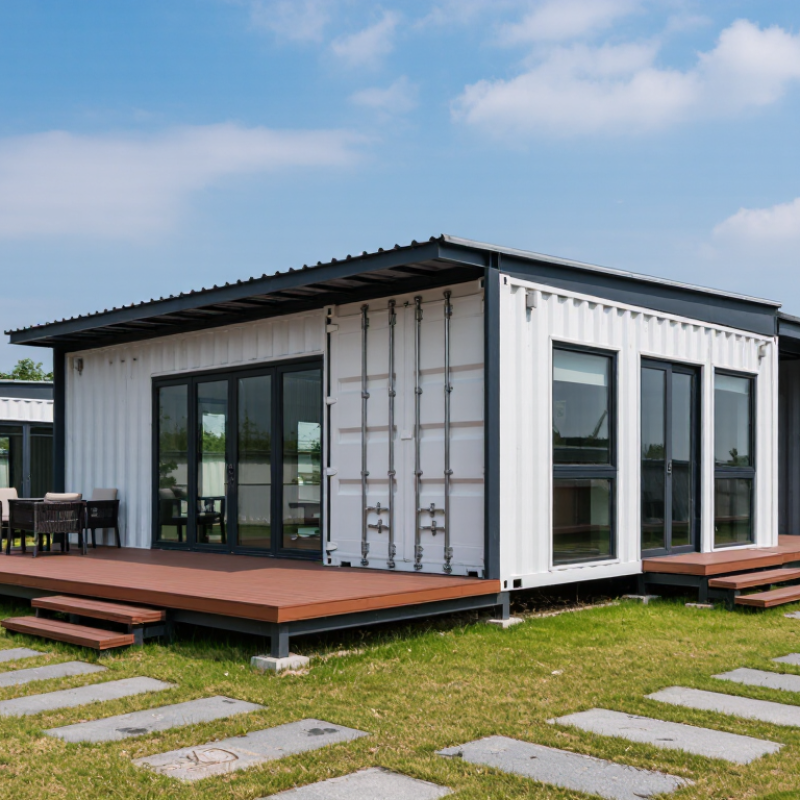
10 Best Modular Container House Suppliers Worldwide

Understanding Modular Container Houses and Global Supplier Standards

Modular container houses combine steel shipping-style frames with factory-built walls, floors, roofs, and services. Their appeal comes from controlled production and faster site installation. Yet a familiar container shape does not guarantee safe housing. A qualified supplier should explain structural design, insulation performance, fire resistance, ventilation, and moisture control in clear technical documents.

Global supplier standards should include traceable materials, documented factory inspections, and testing suited to the destination country. Electrical systems must match local voltage and protection rules. Plumbing layouts should address freezing temperatures, drainage, and maintenance access. Wind, snow, seismic, and coastal corrosion risks also require project-specific calculations. Certifications matter, but certificates alone are not enough. Check their scope, testing date, and issuing authority.

Site experience often reveals small weaknesses. A poorly sealed corner can cause condensation behind interior panels. An undersized roof drain may fail during one intense storm. Reliable suppliers provide drawings, inspection records, installation guidance, and realistic delivery schedules. They should also explain transport limits, foundation requirements, replacement parts, and warranty exclusions before payment. No supplier is flawless. A factory may produce excellent modules but struggle with remote installation support. That gap deserves careful questioning. Photographs, client references, and independent inspections can expose differences between polished promises and dependable performance.


How the Top 10 Worldwide Suppliers Were Selected

The top 10 worldwide suppliers were selected through evidence, not advertising claims. The review compared factory capacity, completed projects, delivery regions, structural systems, insulation standards, and after-sales support. Grand View Research valued the global modular construction market at approximately USD 91.3 billion in 2022, with continued growth expected through 2030. That expansion demands measurable supplier performance.

Project experience carried serious weight. We examined installation records, documented lead times, transport planning, and customer references. Suppliers also needed clear quality-control procedures, including material inspections and repeatable factory testing. ISO 9001-based processes offered useful evidence, although certification alone cannot prove good workmanship. Site photographs and independent project records helped challenge polished sales language.

Energy performance was another screening factor. The 2023 Global Status Report for Buildings and Construction reported that buildings produced about 37% of global energy-related and process emissions in 2022. Therefore, the comparison considered insulation thickness, airtightness, glazing, ventilation, and the availability of energy data. Suppliers with transparent specifications ranked higher than those offering vague “green” promises. No ranking is flawless. Public information differs by country, and some suppliers disclose little beyond attractive renderings. That weakness was noted rather than ignored. A practical shortlist must still reflect climate suitability, local codes, foundations, shipping access, warranty terms, and repair response. Fancy modules can fail when ordinary details are missed.

Leading Modular Container House Suppliers by Region and Specialty

Choosing among the 10 best modular container house suppliers requires regional judgment, not only attractive catalogs. Suppliers serving Northern Europe should understand insulation, snow loads, ventilation, and short winter daylight. In tropical regions, practical expertise includes raised foundations, shaded windows, corrosion control, and cross-ventilation. Coastal suppliers need stronger protective coatings and careful fastening details. I have found that local climate knowledge often matters more than a polished showroom.

Supplier specialties also vary. Some focus on compact studios for urban sites, while others produce larger workforce accommodation or emergency housing. A reliable supplier should provide structural drawings, material specifications, factory inspection records, and clear installation guidance. Look for experience with plumbing connections, electrical standards, transport limits, and local permits. Ask who handles site leveling and utility coordination. Small omissions become expensive delays.

Quality is easier to judge through evidence. Request photographs of completed projects, not only computer renderings. Speak with previous clients about delivery accuracy and after-sales support. A supplier may offer excellent steelwork but weak interior finishing. That difference deserves attention. Compare warranty terms, moisture protection, fire-rated materials, and replacement procedures. Factory production can improve consistency, yet it does not remove every risk. Some schedules slip. Good suppliers explain why, document changes, and revise plans before problems reach the site.

Comparing Designs, Costs, Certifications, and Delivery Services

10 Best Modular Container House Suppliers Worldwide: Comparing Designs, Costs, Certifications, and Delivery Services

The strongest suppliers offer more than attractive steel boxes. Their designs should show insulation thickness, thermal bridges, ventilation, fire resistance, and usable floor layouts. Energy performance deserves attention. The 2023 Global Status Report for Buildings and Construction reports that buildings consumed about 30% of global energy and produced around 26% of energy-related emissions in 2022. A container home with poor insulation can become an oven in summer and a refrigerator in winter.

Cost comparisons often mislead. McKinsey’s 2019 report, Modular construction: From projects to products, found that modular methods may reduce construction schedules by 20–50% and costs by up to 20%. These figures are not guaranteed. Ask whether quotes include foundations, transport, cranes, permits, utility connections, taxes, and local labor. A cheaper factory price may create expensive site work. That mistake is common.

Certifications need careful checking. ISO 9001 supports quality management, but it does not prove a finished house meets local building codes. Request structural calculations, welding records, fire-test results, electrical approvals, and material declarations. Delivery service should include factory inspection, moisture protection, tracking, unloading, installation guidance, and after-sales support. Confirm delivery terms in writing. This comparison remains imperfect because climate, land access, and national regulations vary widely. A supplier that performs well in a dry region may struggle with coastal corrosion or heavy snow.

10 Best Modular Container House Suppliers Worldwide

Market reference comparison of common container-house configurations, including indicative unit costs, production lead times, and commonly requested certification standards. Prices exclude land, foundations, utility connections, taxes, and final-site installation.

Configuration Typical Cost Range Typical Production Time Common Compliance Documents
20-foot basic studio US$20,000–45,000 8–12 weeks ISO 9001, local building approval
40-foot basic residence US$35,000–70,000 10–16 weeks ISO 9001, electrical and structural approvals
40-foot premium residence US$70,000–150,000 14–22 weeks ISO 9001, CE or UKCA where applicable, local code approval
Two-unit modular home US$90,000–180,000 16–26 weeks ISO 9001, structural certification, local building approval
Off-grid or high-specification home US$120,000–250,000+ 20–32 weeks ISO 9001, energy-system certificates, local building approval

These are indicative international market ranges rather than quotations from individual companies. Actual costs depend on insulation, interior finishes, engineering requirements, shipping distance, customs procedures, and site conditions.

How to Choose the Right Supplier for Your Project

Choosing the right modular container house supplier requires more than comparing attractive catalog images. Request detailed drawings, material specifications, insulation values, and delivery schedules before discussing price. A dependable supplier should explain how the unit performs in your climate, including summer heat, winter moisture, wind, and heavy rain.

Ask for recent project references and inspect completed units when possible. Speak with owners about leaks, door alignment, electrical faults, and after-sales response. Small details matter. Check whether the supplier coordinates transport, lifting equipment, foundations, utility connections, and local building approvals. Confirm which tasks remain your responsibility.

Experience reveals hidden costs. During one project review, I underestimated the space needed for crane access. The house arrived, but installation became slower and more expensive than planned. That mistake changed my checklist. I now verify road width, turning space, ground stability, and unloading dates with site workers, not only sales staff.

Professional suppliers provide clear contracts with model numbers, quantities, payment stages, warranty terms, inspection procedures, and replacement policies. Independent quality reports can support their claims, but they should not replace a physical inspection. Ask how steel is treated against corrosion and whether wiring, plumbing, windows, and fire-resistant materials meet applicable local standards.

Some suppliers promise everything. Be careful. A trustworthy team admits limitations, documents changes, and answers technical questions without vague language. Compare at least three quotations, but compare their scope line by line. The cheapest offer may exclude foundations, interior fittings, or weatherproofing. Leave room for practical revisions after a qualified engineer reviews the site.

Powder Coat Booths

For those larger-sized parts, or smaller quantity runs, we have 2 independent powder coat booths and ovens. The quality, durability and affordability of today’s powder coating finishes make this the process of choice for world-class companies.

Powder coating advantages over other forms of coating are many. Materials used in the Powder coating process can be metals and non-metals that come in a multitude of thicknesses, textures, colors, etc. Another of Powder coating’s biggest advantages over conventional coatings is its ability to create finishes in many different textures. Powder Coating Booths allow us the ability to apply these advantages to large products.

Wet Paint Line

Tri-State Fabricators runs a full-service conveyor line for painting. Wet painting can provide protection or decoration to many different part styles. From start to finish, every project is easier to undergo random and point-based inspection by our skilled painting team.

Advantages to our Wet Paint Line are these lines start with product prep and ends with a thorough inspection of a high quality finished product. Our ability to complete large and small projects with a superior finish and doing so in a timely and economical fashion. This passes along the savings in production to our customers. When powder coating ins not an option, our Wet Paint Line gets the job done right the first time.

Wet Paint Booths

When the parts get big and heavy we roll-out our custom paint racks and oversize booth. By utilizing our partnerships with all the major paint brands, we can match virtually any color with wet paint.

The advantages of having access to a Wet Paint Booth are many. Large projects of many different shapes can be loaded into the booth. The Wet Paint Booth offers an environment that is much more controlled than a typical parts painting operation.

Not only are they used because of their controlled environment, but they’re are also advantageous when it comes to applying paint to parts that are needed in industries that require specialty coatings such as medical, aerospace, etc.

Military CARC

Our military forces have some very high standards when it comes to the finish of their vehicles and equipment. From the first pre-treatment step to final coat, it takes a great deal of knowledge and experience to protect the men and women of our armed forces. They deserve only the best, and Tri-State Fabricators provides it.

All of our processes are closely monitored by our staff and management teams. Both of which are highly trained in the processes of metal fabrication and finishing. Tri-State Fabricators’ goal is to always fully satisfy each and every customer, including the military. We will always put a 110% into what we do.

Glass-Bead Blasting

Abrasive media blasting is an excellent way to remove old paint, rust, and increase the paint/powder adhesion. Glass beads produce a much smoother and brighter finish than angular abrasives; leaving the part clean yet without any dimensional change. Chemically inert and environmentally friendly, we can recycle our beads approximately 30 times; making them a more preferred method of metal cleaning or surface finishing.

Advantages to Glass Bead Blasting are many. Glass bead blast media is used when a project is needing rough surfaces need to become smooth for applications of coatings such as paint. It is typically used to clean paint and rust from a product surface without deforming the surface it is being used on. Overall, compared to many other blasting media, Glass Bead Blasting is a very economical choice and those savings are always passed on to our customers.

Part Washing

Tri-State Fabricators utilize a zinc phosphate wash to clean and etch the material to ensure the best paint adhesion possible. The unique design of our 3-stage wash system does the work like a 5-stage. From Cleaning and rinsing to conversion coating and post-treatment, Our Part Washing process is a complete service and works throughout the fabrication service and the finishing service.

Along with the previously mentioned benefits, Curing is a vital chemical reaction that leaves the product finish hard and relatively safe from mild abrasion and aggressive corrosion. This process can be done in more than one way; ambient air-dry or in curing ovens at temps that exceed 240°.

Burn-Off Oven

From fixing paint mistakes (someone else’s of course) to simply cleaning our paint line hooks, our burn-off oven is put to good use. After a quick burn-off, a little clean up, and a fresh coat of paint, your parts will look better than new.

Why does our Burn-Off Oven work so well? Because super heating the air around parts turns the materials into ashes. From paint and powder coatings to rubber and machining oils, high temps do the job without degrading the integrity of the part.

Masking

Masking is a vital part of producing high quality products. We have die-cut masking patterns to protect machined surfaces as well as a wide range of plugs and caps to protect threaded holes and bolts. We provide permanent and temporary masking.

Masking allows the selected sections of a product to be protected from a fabrication or finishing service. This can be with both chemicals when etching and tapes, paints when only finishing just a section of the product. Masking is great in aiding the customization process of a project.

Screen Printing

Screen printing is a photographic process that transfers artwork onto a porous nylon screen which allows colored ink to flow through the screen and be deposited on an aluminum or plastic component. We can generally have just about any design created onto a screen for your parts.

Some of the advantages of Screen Printing are, brand recognition for your business displaying on your products, assembly instructions, product warnings/hazards, etc. Tri-State Fabricators produces Screen Printing of the highest quality so you know it’s durable.

Metal Finishing

Metal Finishing is the art of treating the exterior portion of product, often metal but can also be made of other materials, so that the surface is clean and free of any debris. Then the process of applying coats or either paint of powder coat takes place. This coating process improves the quality of the product in both appearance and resistance to wear and corrosion.

Tri-State Fabricators, Inc., understands that a project typically isn’t complete until a high-quality finish has been added to your product. This is why our painting and powder coating teams continuously inspect the products throughout the Metal Finishing process.
