


China has become a major production base for touch display technology, serving automotive, industrial, medical, retail, and consumer electronics markets. This guide introduces China Top 10 LCD Touch Screen Manufacturers, focusing on practical manufacturing strengths rather than advertising claims. The selected companies are reviewed through product range, engineering experience, customization ability, quality systems, and export performance.
A reliable Lcd Touch Screen supplier should provide more than attractive samples. Buyers need clear details about brightness, viewing angle, touch accuracy, surface treatment, operating temperature, and expected service life. Factory audits, sample testing, and communication during development can reveal important differences. Some manufacturers specialize in standard modules, while others support optical bonding, cover glass design, rugged enclosures, or small-batch customization. These capabilities may affect both cost and delivery time.
Details matter.
This overview also considers how manufacturers respond to technical questions, documentation requests, and quality concerns. Certifications can support confidence, but they should be verified for the actual product and production site. Public information may remain incomplete, and rankings can change as equipment, management, and market focus develop. That limitation deserves attention. Therefore, this list should support supplier research, not replace independent testing or contract review. By comparing visible capabilities with real project requirements, purchasing teams can identify more suitable partners and reduce avoidable risks.
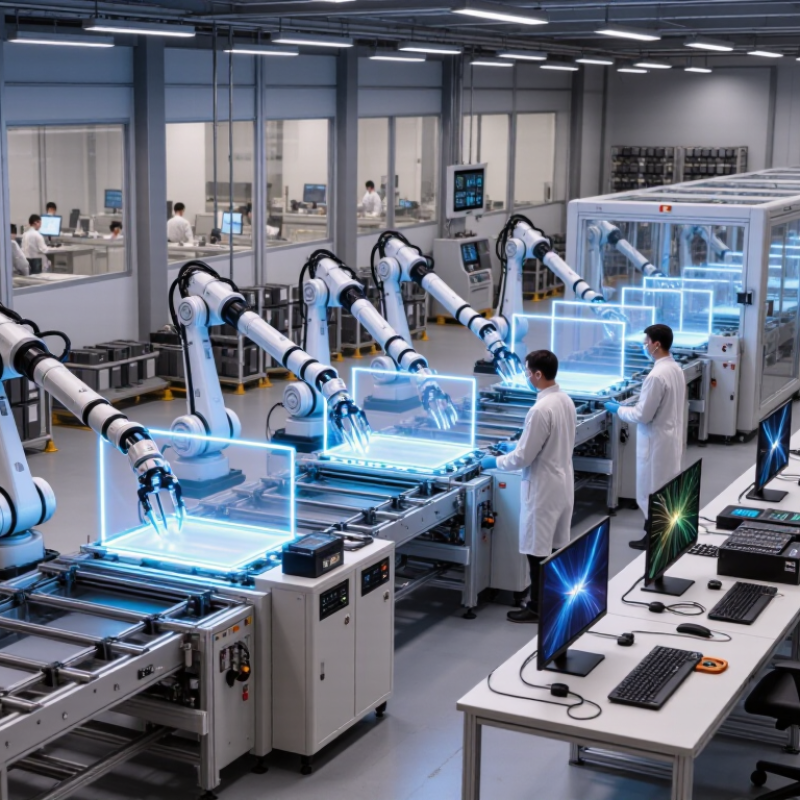
A leading LCD touch screen manufacturer in China is defined by controlled performance, not factory size. In production audits, I look for stable brightness, touch accuracy, optical bonding, and traceable materials. A minor dust particle can create a visible defect beneath the glass. No factory gets every batch perfect.
Industry data supports this pressure. MarketsandMarkets estimates the global touch screen market will grow from about USD 81 billion in 2023 to more than USD 110 billion by 2028. This growth increases demand for consistent volume and faster customization. Omdia’s display research also highlights continuing demand for automotive, industrial, and interactive display applications. These sectors require wider temperature testing, longer operating life, and stronger quality documentation.
A qualified Chinese supplier should provide measurable evidence. ISO 9001 systems matter, but they cannot replace process data. Ask for aging-test records, dead-pixel limits, touch linearity results, and incoming inspection controls. IEC 62341-related display testing can strengthen technical credibility. Engineers should also explain how they manage controller compatibility, glove touch, humidity, and electromagnetic interference. Fast samples are useful. Repeatable samples are better. My assessment is not always tidy: a lower defect rate may reflect stricter inspection, not better production. Buyers should compare identical test conditions, sample sizes, and failure definitions before choosing a long-term manufacturing partner.

Choosing among China’s top LCD touch screen manufacturers requires more than comparing prices. A capable supplier should explain its panel structure, touch technology, optical bonding process, and production limits. Ask for measured data, not broad claims. Brightness, contrast, viewing angle, touch accuracy, and response time should match the intended device.
Factory experience becomes visible during sampling. Review assembly cleanliness, connector protection, glass edges, and cable strain relief. Request samples from regular production lines, not only special engineering units. Test them with gloves, wet fingers, and repeated touches. Test it again. A stable supplier should provide traceable inspection records and clear corrective actions when defects appear.
Reliability evidence deserves close attention. Check quality certifications, environmental controls, aging tests, and temperature or humidity results. For industrial use, ask whether the screen survived vibration, surface impact, and long operating cycles. Communication also matters. Engineers who answer specific questions usually inspire more confidence than sales teams offering perfect promises. No supplier is flawless. One sample may pass while later batches reveal uneven backlight or touch noise. This is why incoming inspection, pilot orders, and agreed acceptance limits remain necessary. A practical evaluation should include response speed, documentation quality, replacement procedures, and the supplier’s willingness to disclose weaknesses.
This illustrative evaluation framework assigns a total weight of 100% to the factors commonly used when comparing LCD touch screen suppliers. Manufacturing capacity, quality systems, customization capability, and touch technology receive the highest weighting because they directly influence product consistency, scalability, and application performance.
The top ten profiles reveal different strengths across China’s LCD touch screen industry.
One manufacturer focuses on compact displays for handheld devices.
Another develops wide viewing panels for vehicle interiors.
A third specializes in high-brightness screens for outdoor terminals.
The fourth supplies custom sizes for medical equipment.
The fifth supports industrial control panels with rugged glass.
One profile highlights fast prototype production.
Another emphasizes optical bonding and reduced reflections.
The eighth serves retail kiosks and self-service machines.
The ninth develops projected capacitive touch solutions.
The tenth combines display assembly, firmware testing, and after-sales support.
Reliable profiles should include factory experience, testing procedures, production capacity, and export records.
Buyers should check sample consistency, touch accuracy, brightness uniformity, and response time.
A clear profile also explains quality controls, such as incoming glass inspection and aging tests.
Certifications can support credibility, but they should be verified through current documents.
No ranking is perfect. Some public information may remain incomplete.
Tips:
Request a sample before discussing large orders.
Test it with gloves, moisture, and repeated touches.
Ask for drawings, interface details, warranty terms, and inspection reports.
Compare actual samples, not only catalog data.
A low price may hide weaker glass or slower support.
Reflect on the application first; a kiosk screen and a medical screen need different priorities.
The top ten manufacturers distinguish themselves through flexible production capabilities. Many support custom LCD sizes, cover glass shapes, and touch sensor layouts. Their teams commonly work with TFT, IPS, and high-brightness display technologies. Some also provide optical bonding, which reduces internal reflections and improves outdoor readability. Projected capacitive touch remains common for modern interfaces. Resistive touch still serves users wearing gloves or operating in dusty environments.
Manufacturing depth matters more than a polished sample. Reliable suppliers usually control glass processing, module assembly, firmware matching, and quality inspection. They can adjust brightness, viewing angles, connector positions, and operating temperature ranges. Interfaces may include USB, HDMI, LVDS, or embedded control boards. In practical evaluations, buyers should inspect touch accuracy near screen edges. That detail is easy to miss. Water droplets, thick gloves, and repeated pressing can expose weak calibration.
These capabilities support industrial control panels, medical equipment, vehicle consoles, payment terminals, and smart home devices. Factory operators may need a 10-inch panel with physical buttons and a sealed front surface. Medical users often require clear images, stable brightness, and traceable testing records. Outdoor systems need stronger backlights and protective glass. Educational terminals usually favor wide viewing angles and simple maintenance. Not every manufacturer handles every application equally well. Some offer excellent customization but slower delivery. Others deliver quickly but provide fewer engineering revisions. Careful sample testing remains necessary before volume production.
Selecting the right Chinese LCD touch screen manufacturer requires more than comparing online prices. Define the display size, resolution, brightness, touch technology, operating temperature, and expected service life. Request a complete datasheet, not a short sales description. Ask whether the panel supports glove touch, water resistance, and sunlight readability if your product needs them.
Review production capability through samples and a factory audit. Check the cleanroom, bonding equipment, aging-test area, and calibration records. During a supplier audit, inspect several screens from one batch. Look for uneven backlighting, dead pixels, loose connectors, and delayed touch response. Small defects often become expensive field problems. Ask for test reports, quality-control procedures, material traceability, and relevant management certifications. Third-party verification can reduce guesswork.
Communication matters just as much as hardware. A reliable manufacturer should explain tooling costs, minimum order quantities, lead times, warranty terms, and replacement procedures clearly. Confirm who owns the drawing and how engineering changes are approved. I have seen projects slow down because a “standard” connector was not actually standard. That mistake is easy to miss. Compare at least three quotations, but never select by price alone. Test samples in the real enclosure, under actual lighting, temperature, and user conditions. A supplier may pass a laboratory test yet fail beside a sunny warehouse window. Recheck assumptions. Tiny details decide long-term performance.


For those larger-sized parts, or smaller quantity runs, we have 2 independent powder coat booths and ovens. The quality, durability and affordability of today’s powder coating finishes make this the process of choice for world-class companies.
Powder coating advantages over other forms of coating are many. Materials used in the Powder coating process can be metals and non-metals that come in a multitude of thicknesses, textures, colors, etc. Another of Powder coating’s biggest advantages over conventional coatings is its ability to create finishes in many different textures. Powder Coating Booths allow us the ability to apply these advantages to large products.
Tri-State Fabricators runs a full-service conveyor line for painting. Wet painting can provide protection or decoration to many different part styles. From start to finish, every project is easier to undergo random and point-based inspection by our skilled painting team.
Advantages to our Wet Paint Line are these lines start with product prep and ends with a thorough inspection of a high quality finished product. Our ability to complete large and small projects with a superior finish and doing so in a timely and economical fashion. This passes along the savings in production to our customers. When powder coating ins not an option, our Wet Paint Line gets the job done right the first time.
When the parts get big and heavy we roll-out our custom paint racks and oversize booth. By utilizing our partnerships with all the major paint brands, we can match virtually any color with wet paint.
The advantages of having access to a Wet Paint Booth are many. Large projects of many different shapes can be loaded into the booth. The Wet Paint Booth offers an environment that is much more controlled than a typical parts painting operation.
Not only are they used because of their controlled environment, but they’re are also advantageous when it comes to applying paint to parts that are needed in industries that require specialty coatings such as medical, aerospace, etc.
Our military forces have some very high standards when it comes to the finish of their vehicles and equipment. From the first pre-treatment step to final coat, it takes a great deal of knowledge and experience to protect the men and women of our armed forces. They deserve only the best, and Tri-State Fabricators provides it.
All of our processes are closely monitored by our staff and management teams. Both of which are highly trained in the processes of metal fabrication and finishing. Tri-State Fabricators’ goal is to always fully satisfy each and every customer, including the military. We will always put a 110% into what we do.
Abrasive media blasting is an excellent way to remove old paint, rust, and increase the paint/powder adhesion. Glass beads produce a much smoother and brighter finish than angular abrasives; leaving the part clean yet without any dimensional change. Chemically inert and environmentally friendly, we can recycle our beads approximately 30 times; making them a more preferred method of metal cleaning or surface finishing.
Advantages to Glass Bead Blasting are many. Glass bead blast media is used when a project is needing rough surfaces need to become smooth for applications of coatings such as paint. It is typically used to clean paint and rust from a product surface without deforming the surface it is being used on. Overall, compared to many other blasting media, Glass Bead Blasting is a very economical choice and those savings are always passed on to our customers.
Tri-State Fabricators utilize a zinc phosphate wash to clean and etch the material to ensure the best paint adhesion possible. The unique design of our 3-stage wash system does the work like a 5-stage. From Cleaning and rinsing to conversion coating and post-treatment, Our Part Washing process is a complete service and works throughout the fabrication service and the finishing service.
Along with the previously mentioned benefits, Curing is a vital chemical reaction that leaves the product finish hard and relatively safe from mild abrasion and aggressive corrosion. This process can be done in more than one way; ambient air-dry or in curing ovens at temps that exceed 240°.
From fixing paint mistakes (someone else’s of course) to simply cleaning our paint line hooks, our burn-off oven is put to good use. After a quick burn-off, a little clean up, and a fresh coat of paint, your parts will look better than new.
Why does our Burn-Off Oven work so well? Because super heating the air around parts turns the materials into ashes. From paint and powder coatings to rubber and machining oils, high temps do the job without degrading the integrity of the part.
Masking is a vital part of producing high quality products. We have die-cut masking patterns to protect machined surfaces as well as a wide range of plugs and caps to protect threaded holes and bolts. We provide permanent and temporary masking.
Masking allows the selected sections of a product to be protected from a fabrication or finishing service. This can be with both chemicals when etching and tapes, paints when only finishing just a section of the product. Masking is great in aiding the customization process of a project.
Screen printing is a photographic process that transfers artwork onto a porous nylon screen which allows colored ink to flow through the screen and be deposited on an aluminum or plastic component. We can generally have just about any design created onto a screen for your parts.
Some of the advantages of Screen Printing are, brand recognition for your business displaying on your products, assembly instructions, product warnings/hazards, etc. Tri-State Fabricators produces Screen Printing of the highest quality so you know it’s durable.
Metal Finishing is the art of treating the exterior portion of product, often metal but can also be made of other materials, so that the surface is clean and free of any debris. Then the process of applying coats or either paint of powder coat takes place. This coating process improves the quality of the product in both appearance and resistance to wear and corrosion.
Tri-State Fabricators, Inc., understands that a project typically isn’t complete until a high-quality finish has been added to your product. This is why our painting and powder coating teams continuously inspect the products throughout the Metal Finishing process.

