China Top 10 Joint Flange Manufacturers?
Choosing a Joint Flange manufacturer in China takes more than comparing prices. Buyers need to assess material traceability, dimensional control, pressure ratings, and inspection records. Small details matter. A stamped heat number, a clean sealing face, and a complete test file can prevent costly surprises during installation.
The scale of China’s steel industry provides useful context, but it does not prove any supplier’s quality. World Steel Association’s World Steel in Figures 2024 reports that China produced 1,019.1 million tonnes of crude steel in 2023, around 54% of global output. This is an indicator of industrial capacity, not a measure of flange production or manufacturer performance. For technical context, bolting specialist John H. Bickford’s published work emphasizes that bolted-joint performance depends on the assembly, including preload and gasket behavior—not flange dimensions alone. That distinction is easy to overlook.
This guide compares ten Chinese manufacturers using practical sourcing criteria: product range, documented standards, quality controls, export experience, and evidence buyers can verify. It also considers whether suppliers clearly identify materials and provide relevant inspection documentation. No ranking can replace a site audit or application-specific engineering review. A polished website is not proof. Check the records, ask direct questions, and confirm that the offered Joint Flange matches the service conditions.
Joint Flanges Explained: Lap-Joint Design, Stub Ends, and Typical Uses
Joint Flanges Explained: Lap-Joint Design, Stub Ends, and Typical Uses
A lap-joint flange works with a stub end, not by sealing directly against the pipe. The stub end is welded to the pipe, while a loose backing flange slides behind its flared face. When bolted, the backing flange presses the stub end against the matching flange. It can rotate before tightening. That helps align bolt holes during installation, especially where access is tight.
A useful detail: the backing flange does not normally contact the process fluid. The stub-end material must still suit the fluid, temperature, and corrosion conditions. Easy to overlook.
Lap-joint assemblies are often chosen for piping that needs frequent dismantling, or where alignment is difficult. They can also reduce costs when corrosion-resistant stub ends are paired with less costly backing flanges. But they are not automatically suitable for every pressure or service. Confirm the complete assembly’s pressure-temperature limits and dimensions against the project specification and applicable standards, such as ASME B16.5.
The International Stainless Steel Forum reported 58.4 million tonnes of stainless-steel crude production in 2023; this is useful industry context, not proof that any particular alloy suits an application. Check the actual fluid and operating conditions.
A small mismatch matters.
China’s Top 10 Joint Flange Manufacturers: Ranking Criteria and Scope
This ranking covers manufacturers in China that produce joint flanges for industrial piping systems. It considers factories with identifiable production capabilities, rather than trading companies with no disclosed manufacturing operations. Product scope includes common sizes, pressure classes, materials, and connection designs, where these details are supported by public specifications or technical records. The comparison does not assume every supplier serves every application. Buyers should match flange dimensions and material grades to their project requirements.
Ranking criteria include documented quality controls, material traceability, dimensional inspection, production capacity, and technical support. Evidence may include inspection procedures, test records, product drawings, and clear responses to specification questions. Export experience can inform the assessment, but it does not prove consistent quality. Details matter. Public information is uneven, and a polished website is not factory verification. No ranking is perfect. Site audits and sample checks can reveal gaps that online research cannot, so the order should be treated as a starting point for supplier evaluation, not a guarantee of performance.
ASME B16.5: NPS ½–24 and Classes 150–2500, With Limits by Size
China Top 10 Joint Flange Manufacturers?
ASME B16.5 defines the scope for pipe flanges and flanged fittings across NPS ½–24, with a key size limit. Its published range covers Classes 150–1500 through NPS 24, while Class 2500 extends only to NPS 12. These figures come from the ASME B16.5 standard, a primary engineering reference for flange dimensions and pressure-temperature ratings.
That limit matters. A 24-inch Class 2500 flange is outside the stated B16.5 range.
NPS means nominal pipe size, not the flange’s outside diameter. Class is not a pressure value in psi. ASME rating tables link allowable pressure to both material group and temperature, so a Class 600 rating cannot be read as one universal working pressure.
When comparing manufacturers, check the exact NPS, class, material, facing, bore, and drilling—not just the headline range. A catalog may list the full standard range, yet a particular material or design may not be available in every size. The table is useful, but it does not answer every procurement question. Verify the project specification against the applicable standard tables.
Materials and Inspection: ASTM A105 Forgings and EN 10204 Test Documents
For buyers comparing China’s top joint flange manufacturers, material traceability matters as much as machining accuracy. ASTM A105 covers forged carbon-steel piping components for ambient and higher-temperature service. A compliant flange should be linked to its heat number, not just labeled “A105.” Check that number against the material test certificate and the flange marking. Small details matter.
The World Steel Association’s World Steel in Figures 2024 reports 2023 crude-steel production of 1,888.2 million tonnes worldwide, including 1,019.1 million tonnes in China. These figures show the scale of production, not the quality of any individual forging. Ask suppliers for forging records, heat-treatment details where applicable, and chemical and mechanical test results. A polished certificate alone proves little.
EN 10204 defines inspection-document types; for many procurement checks, a Type 3.1 document provides test results validated by the manufacturer’s authorized inspection representative, independent of production. Type 3.2 adds validation by the purchaser’s representative or an appointed inspector. Match the document to the purchase specification. Verify heat numbers, tensile strength, yield strength, elongation, and impact results when specified. Do not assume every A105 order requires the same tests. One practical weakness: paperwork can look complete while traceability breaks between the test report and the flange. Check the physical markings before shipment.
ASTM A105 Forgings: Key Minimum Mechanical Properties
ASTM A105 specifies a minimum tensile strength of 485 MPa and minimum yield strength of 250 MPa for the applicable tensile test requirements. An EN 10204 Type 3.1 inspection document reports the manufacturer’s test results and confirms them against the order requirements; it is documentation, not a material grade. Verify the applicable standard edition, product dimensions, and purchase specification.
Comparing Suppliers: Production Capacity, Traceability, Lead Time, and Export Reach
China Top 10 Joint Flange Manufacturers?
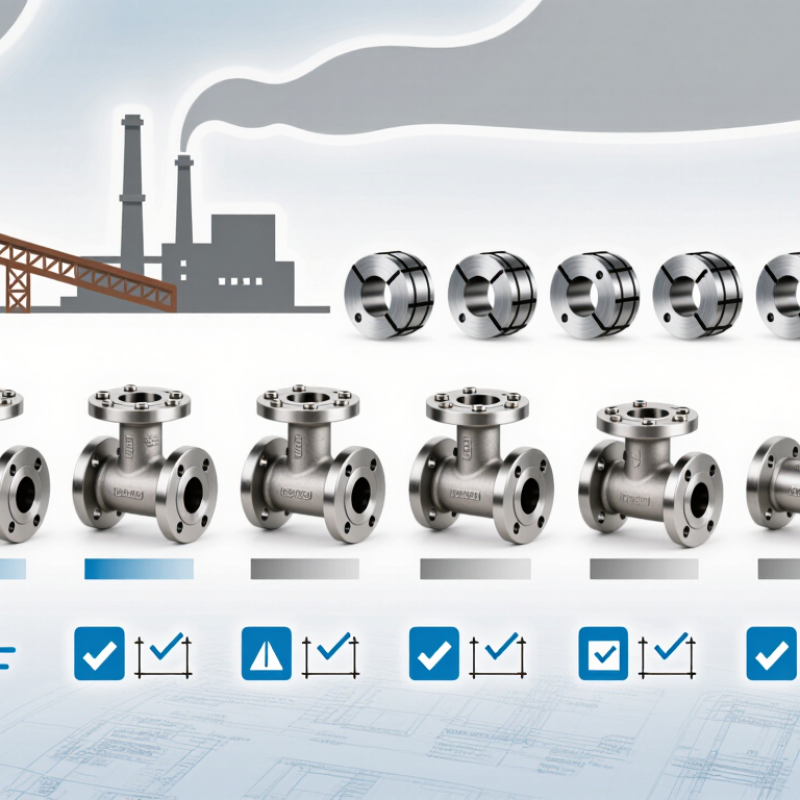
Comparing suppliers takes more than checking a catalogue. Production capacity should be tested against your actual grade, pressure class, and order quantity. The World Steel Association reported China produced 1,005.1 million tonnes of crude steel in 2024. That scale supports a broad supply base, but it does not prove a flange factory has spare forging, machining, or inspection capacity. Ask for monthly output by process, recent delivery performance, and a sample production schedule. Details matter.
Traceability is equally practical. Request heat numbers on the flange and matching material test reports, then check that inspection records follow the same order. For lead time, separate raw-material sourcing, forging, machining, testing, and packing; a quoted “30 days” can hide different starting points. Export reach also needs evidence. UNCTAD’s Review of Maritime Transport 2024 notes that over 80% of world trade by volume moves by sea, so port access and shipping experience affect delivery planning. Still, a large export footprint does not guarantee reliable documents or predictable transit.
Tips: Send the same specification sheet to every shortlisted supplier. Compare confirmed capacity, traceability samples, realistic dispatch dates, and recent export references—not promises alone. Keep one awkward question in the review: what happens when inspection finds a mismatch? The answer may reveal more than a polished brochure.





