


Choosing the right Insulating FRP Profiles requires more than comparing catalog prices. These profiles support electrical insulation, corrosion resistance, and dependable structural performance. A pultruded fiberglass channel may protect a cable tray in a chemical plant. An FRP angle may reinforce a lightweight equipment frame. Each shape serves a different purpose.
Dr. L. C. Bank, a recognized FRP composites researcher and author, emphasizes, “FRP design must account for the material’s anisotropy and environment.” That principle matters during purchasing. Fiber direction affects strength. Resin selection influences chemical resistance. Surface finish can change handling safety and long-term durability. A profile exposed to sunlight, salt spray, or continuous moisture needs careful specification.
This guide examines the top 10 types of Insulating FRP Profiles available for industrial, electrical, and construction applications. It considers channels, angles, beams, rods, tubes, ladders, rails, and custom sections. The discussion also covers dielectric performance, dimensional tolerance, flame behavior, UV stability, and load requirements.
Not every product suits every project. That is easy to overlook. A high-strength profile may still fail the real application if its resin system performs poorly in heat. A low-cost option may create installation problems through uneven cutting or weak surface quality. Buyers should review technical datasheets, test reports, and supplier experience before ordering. Field conditions often expose assumptions that look reasonable on paper. This imperfect step deserves attention.
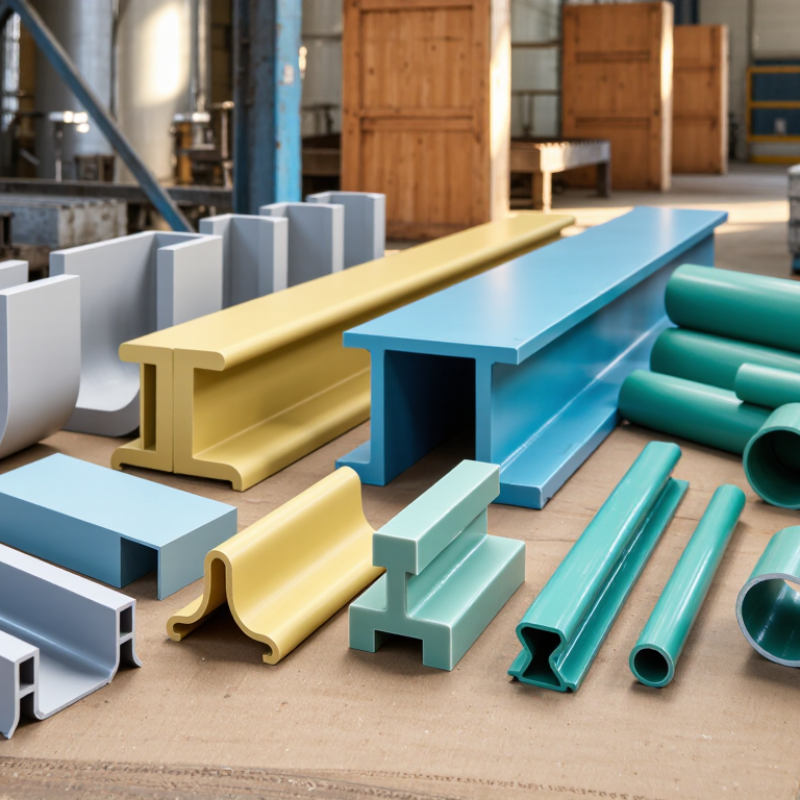
Insulating FRP profiles are structural shapes made from glass fibers embedded in a polymer resin. The fibers provide strength, while the resin binds them and resists moisture, corrosion, and electrical current. Pultrusion forms these profiles by pulling continuous fibers through a heated die. This process creates consistent dimensions and smooth surfaces. Continuous fibers usually run along the profile length, improving stiffness in the main load direction. They do not conduct electricity like steel. That matters near live equipment.
Common forms include angles, channels, I-beams, T-sections, square tubes, round tubes, flat bars, rods, ladder rails, and custom frames. Each shape distributes force differently. Angles support corners and brackets. Channels protect edges and carry moderate loads. I-beams suit longer spans, while tubes resist bending and twisting. Flat bars work well as spacers, covers, or mounting strips. Selection should consider load, span, temperature, hole placement, and surface exposure.
When FRP profiles act as supports or barriers, their low conductivity helps limit unwanted current paths. Their nonmagnetic behavior can also reduce interference around sensitive electrical systems. However, insulation is not automatic. Water, dirt, damaged resin, and metal fasteners can reduce system performance. FRP may also weaken under excessive heat or poorly controlled drilling. A common mistake is treating every profile as interchangeable. It is not. Engineers should verify mechanical data, dielectric requirements, resin compatibility, and installation tolerances before specifying a section. No profile is perfect. That is worth remembering.

The ten practical choices include I-beams, channels, angles, square tubes, round tubes, flat bars, rods, ladder rails, handrails, and grating. Each shape serves a different load path. However, geometry alone does not guarantee insulation or durability.
Longitudinal tensile strength often exceeds 300 MPa in pultruded glass-FRP profiles. The FHWA technical report on FRP infrastructure shows that fiber direction strongly controls structural capacity. That matters when selecting a channel for bending or a rod for tension. Check flexural strength, interlaminar shear, and compression performance from tested datasheets. ASTM D638, D790, and D2344 provide useful comparison methods.
Electrical resistance is equally important. IEC 60093 testing measures volume resistivity, while ASTM D149 evaluates dielectric breakdown. Dry profiles may perform well, yet moisture, dust, and damaged resin can reduce insulation reliability. Ask for wet-condition results, not only attractive dry numbers. Look for low water absorption, stable glass-transition temperature, and controlled thermal expansion. UV resistance also matters outdoors. Without it, the surface can chalk and expose fibers.
Small details matter. A smooth edge prevents handling injuries and reduces local stress. Resin-rich surfaces look neat, but they may hide poor fiber alignment. I have seen oversized profiles selected without checking bolt-hole crushing. That mistake is easy to repeat. Verify load direction, span, temperature, and installation damage before buying. Performance is not just a number.
Insulating FRP profiles combine low weight, corrosion resistance, and electrical separation. A 2023 Grand View Research assessment valued the global fiberglass market above USD 10 billion, with construction among its major applications. MarketsandMarkets also forecasts roughly 7% annual growth for the FRP composites sector through 2028. These figures reflect wider adoption, but they do not replace project-specific testing.
Ten common types serve different installation needs. Flat bars support brackets and equipment spacers. Equal angles reinforce frames and cable supports. Channels create lightweight rails and equipment bases. I-beams carry longer structural spans. Square tubes form clean, enclosed frames. Round tubes suit handrails, braces, and protective barriers. Solid rods work as pins, spacers, and tension elements. Molded grating provides slip-resistant platforms near damp equipment. Handrail profiles improve operator safety around energized areas. Ladder rails offer stable, nonconductive access systems.
Selection needs more than a catalog dimension. ASTM D149 dielectric testing helps evaluate electrical strength, while ASTM E84 may support flame-spread assessment where required. Resin choice also matters. Vinyl ester usually handles aggressive chemicals better than standard polyester, but cost and processing can change the decision. I have seen oversized profiles installed where a smaller section would suffice. I have also seen under-designed joints fail first. Check span, fastener pressure, UV exposure, temperature, and creepage distance before buying. No profile fits every site.
| No. | Insulating FRP Profile Type | Typical Cross-Section | Common Uses | Key Characteristics | Suitable Environment | Buying Considerations |
|---|---|---|---|---|---|---|
| 1 | FRP Angle Profile | Equal angle or unequal angle | Equipment frames, cable supports, structural brackets, transformer barriers, and electrical enclosures | Lightweight, corrosion-resistant, electrically nonconductive, and easy to cut or drill | Moist, coastal, chemical, and outdoor locations | Check leg dimensions, wall thickness, resin system, surface finish, and load direction |
| 2 | FRP Channel Profile | U-shaped channel | Cable trays, support rails, instrument frames, access platforms, and structural bases | Good bending stiffness, low maintenance, nonmagnetic, and resistant to many corrosive chemicals | Water-treatment plants, substations, chemical facilities, and industrial sites | Verify channel depth, flange width, span, support spacing, and allowable deflection |
| 3 | FRP I-Beam Profile | I-shaped beam | Insulating walkways, platforms, equipment supports, ladder structures, and secondary framing | High stiffness-to-weight ratio and strong resistance to rust and electrical conduction | High-humidity, corrosive, and electrically sensitive installations | Select the profile according to span, live load, deflection limit, and connection method |
| 4 | FRP T-Profile | T-shaped section | Panel edging, stiffeners, partition supports, busbar barriers, and lightweight frames | Provides directional reinforcement while maintaining low weight and electrical insulation | Indoor switchgear, control panels, transport equipment, and building systems | Confirm flange orientation, dimensional tolerances, cut-edge protection, and operating temperature |
| 5 | FRP Flat Bar | Rectangular flat strip | Spacers, clamps, mounting plates, electrical barriers, shims, and fabricated brackets | Simple to machine, dimensionally stable, corrosion-resistant, and electrically insulating | Control cabinets, generators, switchboards, and general industrial assemblies | Specify width, thickness, length, dielectric requirements, and surface smoothness |
| 6 | FRP Round Rod | Solid circular rod | Insulating standoffs, operating handles, linkage components, support pins, and antenna structures | High electrical resistance, good tensile strength, low moisture absorption, and easy machining | Electrical equipment, rail systems, outdoor communications, and industrial machinery | Check diameter tolerance, straightness, resin type, UV protection, and required mechanical strength |
| 7 | Frp Square Tube | Hollow square section | Guardrails, instrument stands, equipment frames, partition systems, and lightweight structures | Balanced strength in two directions, low thermal conductivity, and resistance to rust | Outdoor platforms, utility facilities, transportation, and corrosive industrial areas | Review outside dimensions, wall thickness, joint design, impact exposure, and fire performance |
| 8 | FRP Rectangular Tube | Hollow rectangular section | Cable-management frames, access structures, equipment housings, and architectural supports | Efficient section depth, lightweight construction, electrical insulation, and low maintenance | Substations, wastewater facilities, marine areas, and building-service installations | Match the long dimension with the primary bending direction and confirm connection details |
| 9 | FRP Pultruded H-Profile | H-shaped section | Panel joining, glazing supports, partition frames, cable support assemblies, and structural connectors | Useful for joining or supporting panels while maintaining corrosion resistance and insulation | Electrical rooms, clean facilities, transport systems, and chemical-processing areas | Confirm slot or panel compatibility, dimensional accuracy, clamping force, and load capacity |
| 10 | FRP Custom Pultruded Profile | Project-specific open or hollow section | Specialized rail systems, electrical housings, composite ladders, machine guards, and custom frames | Can be engineered for specific geometry, stiffness, insulation, weight, and corrosion requirements | Demanding industrial, infrastructure, marine, and electrical applications | Provide drawings, tolerances, load cases, resin requirements, fire rating, and production quantity |
Note: FRP profile performance depends on the reinforcement architecture, resin system, fiber orientation, manufacturing process, dimensions, temperature, chemical exposure, and installation method. Confirm project-specific electrical, structural, fire, and environmental requirements before purchase.
Choosing an insulating FRP profile starts with the load, environment, and installation method. Do not select by shape alone. Angle profiles suit equipment frames and bracing. Channels work well as lightweight supports. I-beams handle longer spans, while square and rectangular tubes improve stiffness in compact structures. Round tubes suit handrails, sleeves, and guarded supports. Solid rods, flat bars, grating supports, and custom pultruded sections complete the common ten types.
Start with the forces. Check bending, compression, impact, vibration, and connection loads. A thin angle may insulate effectively but twist under uneven loading. I have seen this mistake during field inspections. It looked economical, yet the bolts caused local cracking. Use washers, controlled torque, and drilled-hole guidance from the manufacturer. Avoid cutting corners.
The environment matters just as much. Select a resin system for moisture, chemicals, ultraviolet exposure, or elevated temperature. Confirm dielectric performance with documented test data, not a casual product statement. For outdoor platforms, check surface texture and drainage. For electrical enclosures, review creepage, clearance, and flame behavior with a qualified engineer. Ask for load tables, dimensional tolerances, batch traceability, and inspection records. A profile can be strong on paper but unsuitable after poor storage or incorrect fastening. That detail is easy to miss.
Top 10 Types of Insulating FRP Profiles to Buy
Quality, Safety, and Buying Checks for Insulating FRP Profiles
Insulating FRP profiles include ladder rails, handrails, tubes, rods, angles, channels, flat bars, I-sections, grating supports, and custom structural shapes. Each profile serves a different load path. A handrail needs comfortable grip and stiffness, while a tube may protect cables or support equipment. Global Market Insights reported that the FRP market exceeded USD 170 billion in 2023, showing strong industrial demand. However, market growth does not guarantee product quality.
Check the resin system, glass-fiber content, wall thickness, surface finish, and dimensional tolerance. Ask for dielectric test results, batch traceability, and a technical data sheet. ASTM F711 covers FRP rod and tube used in live-line tools, but it does not automatically approve every insulating profile. Request testing under conditions close to your site. Wet surfaces, dust, ultraviolet exposure, and sharp edges can reduce safe performance. Small details matter.
Inspect straightness and cut ends before installation. A rough edge may damage gloves or cables. Confirm the working temperature and load rating, not only the ultimate strength. Reports often present ideal laboratory values. Real sites are less forgiving. I would also challenge vague claims such as “non-conductive” without voltage, distance, and test-method details. One overlooked point remains humidity. Many purchasing checks understate it. That deserves closer review.
Quality, safety, and buying checks for common pultruded FRP insulating profiles.
The chart compares representative nominal section thicknesses or diameters commonly specified for insulating FRP profiles. Actual dimensions vary by load, span, resin system, glass-fiber content, temperature, voltage, and applicable test standard. Before purchasing, confirm dielectric strength, moisture resistance, flame performance, mechanical load, tolerances, surface finish, and certification requirements from the product datasheet.


For those larger-sized parts, or smaller quantity runs, we have 2 independent powder coat booths and ovens. The quality, durability and affordability of today’s powder coating finishes make this the process of choice for world-class companies.
Powder coating advantages over other forms of coating are many. Materials used in the Powder coating process can be metals and non-metals that come in a multitude of thicknesses, textures, colors, etc. Another of Powder coating’s biggest advantages over conventional coatings is its ability to create finishes in many different textures. Powder Coating Booths allow us the ability to apply these advantages to large products.
Tri-State Fabricators runs a full-service conveyor line for painting. Wet painting can provide protection or decoration to many different part styles. From start to finish, every project is easier to undergo random and point-based inspection by our skilled painting team.
Advantages to our Wet Paint Line are these lines start with product prep and ends with a thorough inspection of a high quality finished product. Our ability to complete large and small projects with a superior finish and doing so in a timely and economical fashion. This passes along the savings in production to our customers. When powder coating ins not an option, our Wet Paint Line gets the job done right the first time.
When the parts get big and heavy we roll-out our custom paint racks and oversize booth. By utilizing our partnerships with all the major paint brands, we can match virtually any color with wet paint.
The advantages of having access to a Wet Paint Booth are many. Large projects of many different shapes can be loaded into the booth. The Wet Paint Booth offers an environment that is much more controlled than a typical parts painting operation.
Not only are they used because of their controlled environment, but they’re are also advantageous when it comes to applying paint to parts that are needed in industries that require specialty coatings such as medical, aerospace, etc.
Our military forces have some very high standards when it comes to the finish of their vehicles and equipment. From the first pre-treatment step to final coat, it takes a great deal of knowledge and experience to protect the men and women of our armed forces. They deserve only the best, and Tri-State Fabricators provides it.
All of our processes are closely monitored by our staff and management teams. Both of which are highly trained in the processes of metal fabrication and finishing. Tri-State Fabricators’ goal is to always fully satisfy each and every customer, including the military. We will always put a 110% into what we do.
Abrasive media blasting is an excellent way to remove old paint, rust, and increase the paint/powder adhesion. Glass beads produce a much smoother and brighter finish than angular abrasives; leaving the part clean yet without any dimensional change. Chemically inert and environmentally friendly, we can recycle our beads approximately 30 times; making them a more preferred method of metal cleaning or surface finishing.
Advantages to Glass Bead Blasting are many. Glass bead blast media is used when a project is needing rough surfaces need to become smooth for applications of coatings such as paint. It is typically used to clean paint and rust from a product surface without deforming the surface it is being used on. Overall, compared to many other blasting media, Glass Bead Blasting is a very economical choice and those savings are always passed on to our customers.
Tri-State Fabricators utilize a zinc phosphate wash to clean and etch the material to ensure the best paint adhesion possible. The unique design of our 3-stage wash system does the work like a 5-stage. From Cleaning and rinsing to conversion coating and post-treatment, Our Part Washing process is a complete service and works throughout the fabrication service and the finishing service.
Along with the previously mentioned benefits, Curing is a vital chemical reaction that leaves the product finish hard and relatively safe from mild abrasion and aggressive corrosion. This process can be done in more than one way; ambient air-dry or in curing ovens at temps that exceed 240°.
From fixing paint mistakes (someone else’s of course) to simply cleaning our paint line hooks, our burn-off oven is put to good use. After a quick burn-off, a little clean up, and a fresh coat of paint, your parts will look better than new.
Why does our Burn-Off Oven work so well? Because super heating the air around parts turns the materials into ashes. From paint and powder coatings to rubber and machining oils, high temps do the job without degrading the integrity of the part.
Masking is a vital part of producing high quality products. We have die-cut masking patterns to protect machined surfaces as well as a wide range of plugs and caps to protect threaded holes and bolts. We provide permanent and temporary masking.
Masking allows the selected sections of a product to be protected from a fabrication or finishing service. This can be with both chemicals when etching and tapes, paints when only finishing just a section of the product. Masking is great in aiding the customization process of a project.
Screen printing is a photographic process that transfers artwork onto a porous nylon screen which allows colored ink to flow through the screen and be deposited on an aluminum or plastic component. We can generally have just about any design created onto a screen for your parts.
Some of the advantages of Screen Printing are, brand recognition for your business displaying on your products, assembly instructions, product warnings/hazards, etc. Tri-State Fabricators produces Screen Printing of the highest quality so you know it’s durable.
Metal Finishing is the art of treating the exterior portion of product, often metal but can also be made of other materials, so that the surface is clean and free of any debris. Then the process of applying coats or either paint of powder coat takes place. This coating process improves the quality of the product in both appearance and resistance to wear and corrosion.
Tri-State Fabricators, Inc., understands that a project typically isn’t complete until a high-quality finish has been added to your product. This is why our painting and powder coating teams continuously inspect the products throughout the Metal Finishing process.

