


Hydraulic oil filtration is becoming a purchasing decision, not a routine maintenance task. Grand View Research’s Hydraulic Filters Market report identifies industrial automation, construction equipment, and mobile machinery as important demand drivers. MarketsandMarkets also connects market growth with stricter equipment reliability requirements and rising maintenance costs. These trends make supplier quality increasingly important.
A reliable Hydraulic Oil Filter Element must do more than appear clean. Buyers should examine ISO 16889 multipass performance, beta ratios, collapse pressure, media construction, seal compatibility, and traceability. ISO 4406 cleanliness targets can help connect laboratory results with real hydraulic conditions. James C. Fitch, a recognized lubrication and contamination-control specialist, has often emphasized, “Contamination is the root cause of most hydraulic system failures.” His warning remains practical. One damaged seal can release particles into a valve, pump, and actuator within hours.
The suppliers in this guide are therefore assessed beyond catalog size. Manufacturing experience, test documentation, replacement consistency, technical support, and delivery capability all matter. A low-priced element may create higher costs through pressure loss or premature component wear. That risk is easy to underestimate. However, supplier rankings are never universal. A mining contractor may prioritize steel-capped elements, while a food-processing plant may require different materials and compliance documentation. Report coverage also varies by region and product definition. Readers should verify current certifications, laboratory data, and field references before purchasing. This guide offers a practical comparison, not an absolute verdict.
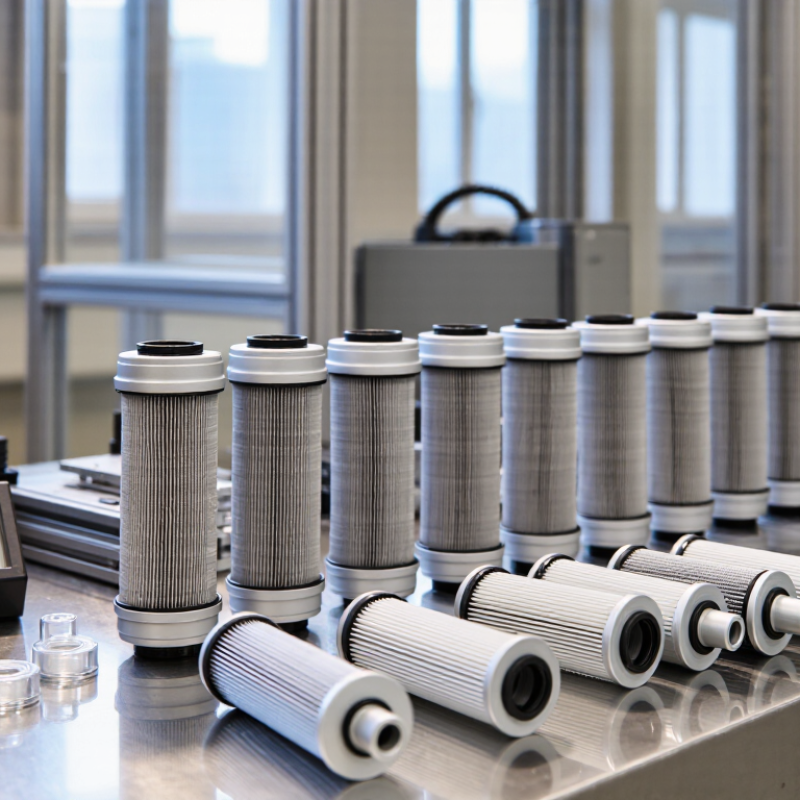
Hydraulic oil filter elements are the working barrier inside a hydraulic filter. They capture metal particles, dust, sealing debris, and other contaminants before these materials reach pumps, valves, and actuators. Clean oil reduces abrasive wear and helps maintain stable pressure. It also protects narrow valve clearances.
The element’s performance depends on more than its micron rating. ISO 16889 uses a multi-pass test to measure particle capture and beta ratio. A higher beta ratio indicates stronger filtration under controlled conditions. The 2024 Hydraulic Filters Market report projects industry growth of roughly 5% annually through 2028. That trend reflects wider investment in contamination control, not just replacement demand. In real workshops, selection is often less precise than manuals suggest. Viscosity changes, cold starts, pressure spikes, and poor sealing can reduce actual performance. A filter rated at 10 microns may not behave the same in every circuit.
Tips: Check the element’s beta ratio, dirt-holding capacity, collapse pressure, and bypass-valve setting. Match these values with the pump’s flow rate and operating temperature. Inspect the removed element. Shiny metal, rubber fragments, or dark sludge can reveal deeper faults. Do not extend service intervals only because the machine still operates. That assumption can be wrong. Record pressure-drop readings when possible, then compare them with the manufacturer’s replacement limit and ISO 16889 test data.

Top 10 Hydraulic Oil Filter Element Suppliers: Key Specifications for Comparing Filter Element Suppliers
Choosing among hydraulic oil filter element suppliers requires more than comparing prices. Start with the micron rating and beta ratio. A 10-micron element may remove fine particles, but efficiency depends on the test method. Check whether the supplier reports absolute or nominal filtration. Confirm the element’s collapse pressure, operating pressure, and flow capacity. These figures should match the hydraulic system, not just the catalog description. Filter media also matters. Glass fiber often provides consistent particle capture, while cellulose may suit less demanding applications. Seal material must tolerate the oil, temperature, and pressure range.
In practical inspections, dimensional accuracy often causes trouble. Measure the length, outer diameter, inner diameter, thread, and bypass valve setting before ordering. Ask for material certificates, inspection records, and traceability documents. Reliable suppliers should explain ISO-based testing and provide repeatable quality data. Lead time and packaging deserve attention too. A damaged element can fail before installation. My own comparison mistake was focusing on filtration grade while overlooking pressure drop at full flow. That error changed the operating temperature.
Tips: Request a sample and test it under real operating conditions. Compare pressure drop when the oil is cold and warm. Check dirt-holding capacity, not only micron ratings. Review batch consistency across several deliveries. If specifications seem vague, pause the purchase. A low price can hide higher maintenance costs. Supplier support should include clear installation guidance and practical replacement advice.
| Supplier Profile | Typical Filter Media | Available Filtration Ratings | Typical Beta Ratio | Collapse Pressure Range | Operating Temperature | Common Seal Materials | Hydraulic Fluid Compatibility | Common Industry Standards | Element Configuration | Customization Capability | Quality Documentation | Typical Production Lead Time |
|---|---|---|---|---|---|---|---|---|---|---|---|---|
| Supplier Profile 01 | Glass-fiber microglass with protective support layers | 3–20 μm | β5 ≥ 1,000; β10 ≥ 1,000 | 20–30 bar | -30°C to 100°C | Nitrile, FKM | Mineral oils, selected phosphate-esters, water-glycol fluids | ISO 16889; ISO 2941 | Return-line, pressure-line, suction-line | Micron rating, length, end caps, seals, bypass valve | Material certificate, test report, dimensional inspection report | 3–6 weeks |
| Supplier Profile 02 | Stainless-steel wire mesh with pleated or cylindrical construction | 25–200 μm | β25 typically 2–20 | 15–25 bar | -40°C to 200°C | Nitrile, FKM, EPDM by application | Mineral oils, high-temperature fluids, selected fire-resistant fluids | ISO 2941; ISO 2942 | Reusable cleanable element, suction strainer, return element | Mesh size, frame material, connection dimensions | Mesh certificate, pressure-test record, dimensional report | 4–8 weeks |
| Supplier Profile 03 | Cellulose or resin-impregnated synthetic blend | 5–25 μm | β10 ≥ 200; β20 ≥ 1,000 | 10–20 bar | -25°C to 100°C | Nitrile, FKM | Standard mineral-based hydraulic oils | ISO 16889; ISO 2941 | Return-line and low-pressure filter elements | Media grade, pleat count, length, end-cap geometry | Batch traceability, flow test, visual inspection report | 2–5 weeks |
| Supplier Profile 04 | High-strength synthetic fiber media | 1–15 μm | β3 ≥ 1,000; β6 ≥ 1,000 | 25–35 bar | -30°C to 120°C | FKM, Nitrile | Mineral oils, biodegradable oils, selected water-glycol fluids | ISO 16889; ISO 2941; ISO 3968 | High-pressure, servo-valve, proportional-valve protection | Absolute rating, pressure class, bypass setting, sealing system | Bubble-point test, cleanliness report, pressure-drop curve | 5–8 weeks |
| Supplier Profile 05 | Stainless-steel fiber sintered media | 3–60 μm | β5 typically 100–1,000 | 30–50 bar | -40°C to 300°C | Metal-to-metal sealing or FKM | High-temperature oils, aggressive fluids, selected synthetic fluids | ISO 2941; ISO 2942; ISO 3968 | High-pressure and high-temperature filter elements | Porosity, sintering density, weld points, housing dimensions | Sintering record, material certificate, pressure and flow test | 6–10 weeks |
| Supplier Profile 06 | Multi-layer stainless-steel mesh with pleated support screen | 10–100 μm | β10 typically 20–200 | 20–40 bar | -40°C to 180°C | Nitrile, FKM, EPDM by fluid type | Mineral oils, fire-resistant fluids, water-based hydraulic fluids | ISO 2941; ISO 2942 | Cleanable pressure and return-line elements | Layer count, mesh grade, weld pattern, end-cap design | Mesh analysis, weld inspection, dimensional report | 4–7 weeks |
| Supplier Profile 07 | Glass-fiber media with epoxy or polymer support structure | 2–25 μm | β3 ≥ 1,000; β10 ≥ 1,000 | 18–30 bar | -30°C to 110°C | Nitrile, FKM, EPDM | Mineral oils, biodegradable oils, water-glycol fluids | ISO 16889; ISO 2941; ISO 3968 | Pressure, return, and offline kidney-loop filtration | Media efficiency, flow capacity, seals, bypass assembly | Multi-pass test data, pressure-drop curve, batch certificate | 3–7 weeks |
| Supplier Profile 08 | Polyester or polyamide synthetic nonwoven media | 5–40 μm | β10 ≥ 200; β20 ≥ 1,000 | 12–25 bar | -30°C to 120°C | Nitrile, FKM | Mineral oils and selected biodegradable hydraulic fluids | ISO 16889; ISO 2941 | Return-line, breather, and low-pressure applications | Media weight, pleat density, dimensions, seal material | Raw-material certificate, flow test, dimensional inspection | 2–6 weeks |
| Supplier Profile 09 | High-capacity glass-fiber and cellulose hybrid media | 10–30 μm | β10 ≥ 100; β20 ≥ 1,000 | 15–28 bar | -25°C to 100°C | Nitrile, FKM | Mineral oils and general-purpose hydraulic fluids | ISO 16889; ISO 3968 | High-dirt-holding-capacity return-line elements | Filtration rating, media blend, pleat count, length | Dirt-holding test, pressure-drop data, batch traceability | 3–6 weeks |
| Supplier Profile 10 | Stainless-steel mesh combined with synthetic fine-filtration layer | 3–50 μm | β5 ≥ 500; β10 ≥ 1,000 | 25–45 bar | -40°C to 150°C | FKM, Nitrile, EPDM by application | Mineral oils, water-glycol fluids, selected fire-resistant fluids | ISO 16889; ISO 2941; ISO 3968 | High-pressure and contamination-sensitive systems | Layer construction, absolute rating, bypass valve, connectors | Multi-pass test, pressure-resistance report, material certificate | 5–9 weeks |
Technical values are representative comparison ranges. Actual performance depends on filter geometry, hydraulic-fluid viscosity, flow rate, operating pressure, temperature, contamination level, and the supplier’s validated test data.
Top 10 Hydraulic Oil Filter Element Suppliers: Manufacturing Quality and Material Selection Standards
When comparing the top ten hydraulic oil filter element suppliers, manufacturing evidence matters more than catalogue claims. ISO 16889 evaluates filter performance through the multi-pass test, including beta ratio and dirt-holding capacity. These figures reveal how consistently an element captures particles under controlled flow. However, laboratory results may not match a dusty construction site. That gap deserves attention.
Material selection should follow pressure, temperature, fluid chemistry, and service intervals. Glass-fiber media usually provides high filtration efficiency and stable pleat geometry. Cellulose media can reduce cost, but it may lose strength during water exposure. Stainless-steel mesh suits cleanable applications and harsh temperatures, though its particle capture can be less precise. Seal materials also matter. A chemically resistant seal prevents bypass leakage around the element. ISO 4406 defines cleanliness codes using particle counts. For example, code 18/16/13 represents approximately 1,300–2,500 particles of 4 micrometers or larger per milliliter, with lower counts at larger sizes. Actual targets depend on the pump and valve design.
Tips: Request ISO 16889 test data, media fiber specifications, collapse-pressure results, and batch traceability. Check whether the supplier tests seals and adhesives, not only filter media. A clean-looking element can still contain weak pleats. I would avoid choosing solely by nominal micron rating. It sounds simple, but it can be misleading. Ask for field-service records and examine used elements after operation. This imperfect step often exposes moisture damage, premature bypass, or incorrect material selection.
Typical filtration ranges for commonly used hydraulic filter-element media. Actual performance depends on fiber structure, construction, flow rate, pressure drop, and the test method specified by the manufacturer.
Quality selection note: Glass-fiber media are commonly selected for fine particle removal, while cellulose, stainless-steel mesh, and sintered-metal media are used where cost, cleanability, mechanical strength, or high-temperature resistance is more important. Supplier qualification should also review ISO 16889 multipass testing, ISO 2941 collapse and burst testing, ISO 2942 fabrication integrity, ISO 3724 flow-fatigue testing, and ISO 3968 pressure-drop measurement.
Reference ranges shown are general industry ranges in micrometres (µm), not company or brand performance claims.
Supplier strength depends on application, not catalogue size. OEM-integrated suppliers usually offer exact fit, validated bypass valves, and stable warranty support. Specialist filtration manufacturers often provide high-efficiency glass-fiber media, strong collapse resistance, and ISO 16889 test data. Industrial distributors add local stock and emergency delivery. That matters when a press stands idle beside a leaking hose.
Custom fabricators serve unusual housings, high-temperature fluids, and limited-volume orders. Aftermarket specialists focus on dimensional interchangeability and lower replacement costs. Some suppliers also produce return-line, pressure-line, suction, and offline kidney-loop elements. MarketsandMarkets projected the hydraulic filters market to grow at roughly 5% annually through the late 2020s. Grand View Research likewise links growth to industrial automation, construction equipment, and contamination-control requirements.
Look for published beta ratios, micron ratings, flow curves, and ISO 4406 guidance. A “10-micron” claim means little without test conditions. In field maintenance, I would also check seal material, dirt-holding capacity, and delivery consistency. The best supplier may not be the cheapest. It may be the one that prevents repeated pump failures. Still, rankings can mislead; regional stock and technician support are often ignored. A careful buyer should compare at least three categories, inspect certificates, and request samples before changing an element.
Selecting a hydraulic oil filter element supplier requires more than comparing prices. Check the element’s filtration rating, pressure resistance, collapse strength, and compatibility with your fluid. A supplier should provide clear test data, material details, and batch traceability. Ask whether performance is verified under recognized industrial testing methods, not only in laboratory conditions. A clean factory and fast reply help, but they do not prove consistent quality.
Request samples before placing a large order. Install them in a real hydraulic circuit and monitor pressure drop, oil cleanliness, leakage, and service life. Confirm dimensions carefully, including seal material, thread type, length, and bypass valve settings. Reliable suppliers explain tolerances and replacement schedules without vague promises. Their technical team should understand pumps, valves, contamination sources, and maintenance records. Delivery stability matters too. A low-cost element is expensive if it causes downtime.
Tips: Compare at least three suppliers using the same specification sheet. Check certificates directly. Ask for inspection records from recent batches. Review their response to a difficult question. That reveals a lot. Do not trust impressive claims alone; some suppliers provide excellent documents but inconsistent production. Recheck quality after several shipments, because an early sample may not represent future batches. Keep a small safety stock, but avoid excessive inventory when shelf-life data is unclear.


For those larger-sized parts, or smaller quantity runs, we have 2 independent powder coat booths and ovens. The quality, durability and affordability of today’s powder coating finishes make this the process of choice for world-class companies.
Powder coating advantages over other forms of coating are many. Materials used in the Powder coating process can be metals and non-metals that come in a multitude of thicknesses, textures, colors, etc. Another of Powder coating’s biggest advantages over conventional coatings is its ability to create finishes in many different textures. Powder Coating Booths allow us the ability to apply these advantages to large products.
Tri-State Fabricators runs a full-service conveyor line for painting. Wet painting can provide protection or decoration to many different part styles. From start to finish, every project is easier to undergo random and point-based inspection by our skilled painting team.
Advantages to our Wet Paint Line are these lines start with product prep and ends with a thorough inspection of a high quality finished product. Our ability to complete large and small projects with a superior finish and doing so in a timely and economical fashion. This passes along the savings in production to our customers. When powder coating ins not an option, our Wet Paint Line gets the job done right the first time.
When the parts get big and heavy we roll-out our custom paint racks and oversize booth. By utilizing our partnerships with all the major paint brands, we can match virtually any color with wet paint.
The advantages of having access to a Wet Paint Booth are many. Large projects of many different shapes can be loaded into the booth. The Wet Paint Booth offers an environment that is much more controlled than a typical parts painting operation.
Not only are they used because of their controlled environment, but they’re are also advantageous when it comes to applying paint to parts that are needed in industries that require specialty coatings such as medical, aerospace, etc.
Our military forces have some very high standards when it comes to the finish of their vehicles and equipment. From the first pre-treatment step to final coat, it takes a great deal of knowledge and experience to protect the men and women of our armed forces. They deserve only the best, and Tri-State Fabricators provides it.
All of our processes are closely monitored by our staff and management teams. Both of which are highly trained in the processes of metal fabrication and finishing. Tri-State Fabricators’ goal is to always fully satisfy each and every customer, including the military. We will always put a 110% into what we do.
Abrasive media blasting is an excellent way to remove old paint, rust, and increase the paint/powder adhesion. Glass beads produce a much smoother and brighter finish than angular abrasives; leaving the part clean yet without any dimensional change. Chemically inert and environmentally friendly, we can recycle our beads approximately 30 times; making them a more preferred method of metal cleaning or surface finishing.
Advantages to Glass Bead Blasting are many. Glass bead blast media is used when a project is needing rough surfaces need to become smooth for applications of coatings such as paint. It is typically used to clean paint and rust from a product surface without deforming the surface it is being used on. Overall, compared to many other blasting media, Glass Bead Blasting is a very economical choice and those savings are always passed on to our customers.
Tri-State Fabricators utilize a zinc phosphate wash to clean and etch the material to ensure the best paint adhesion possible. The unique design of our 3-stage wash system does the work like a 5-stage. From Cleaning and rinsing to conversion coating and post-treatment, Our Part Washing process is a complete service and works throughout the fabrication service and the finishing service.
Along with the previously mentioned benefits, Curing is a vital chemical reaction that leaves the product finish hard and relatively safe from mild abrasion and aggressive corrosion. This process can be done in more than one way; ambient air-dry or in curing ovens at temps that exceed 240°.
From fixing paint mistakes (someone else’s of course) to simply cleaning our paint line hooks, our burn-off oven is put to good use. After a quick burn-off, a little clean up, and a fresh coat of paint, your parts will look better than new.
Why does our Burn-Off Oven work so well? Because super heating the air around parts turns the materials into ashes. From paint and powder coatings to rubber and machining oils, high temps do the job without degrading the integrity of the part.
Masking is a vital part of producing high quality products. We have die-cut masking patterns to protect machined surfaces as well as a wide range of plugs and caps to protect threaded holes and bolts. We provide permanent and temporary masking.
Masking allows the selected sections of a product to be protected from a fabrication or finishing service. This can be with both chemicals when etching and tapes, paints when only finishing just a section of the product. Masking is great in aiding the customization process of a project.
Screen printing is a photographic process that transfers artwork onto a porous nylon screen which allows colored ink to flow through the screen and be deposited on an aluminum or plastic component. We can generally have just about any design created onto a screen for your parts.
Some of the advantages of Screen Printing are, brand recognition for your business displaying on your products, assembly instructions, product warnings/hazards, etc. Tri-State Fabricators produces Screen Printing of the highest quality so you know it’s durable.
Metal Finishing is the art of treating the exterior portion of product, often metal but can also be made of other materials, so that the surface is clean and free of any debris. Then the process of applying coats or either paint of powder coat takes place. This coating process improves the quality of the product in both appearance and resistance to wear and corrosion.
Tri-State Fabricators, Inc., understands that a project typically isn’t complete until a high-quality finish has been added to your product. This is why our painting and powder coating teams continuously inspect the products throughout the Metal Finishing process.

