


China Top 10 Heat Shrink Plastic Manufacturers?

China Top 10 Heat Shrink Plastic Manufacturers? This guide examines leading Chinese suppliers serving packaging, electrical, construction, and industrial markets. Heat Shrink Plastic can look simple, yet production quality depends on resin selection, extrusion control, printing accuracy, and stable shrink performance. A clean film should contract evenly around a bottle, cable bundle, or irregular component. Wrinkles, weak seals, and uneven thickness reveal poor process control.

The evaluation considers product range, manufacturing experience, film clarity, shrink ratio, tensile strength, sealing reliability, customization, and quality documentation. It also reviews factory capacity, export experience, customer support, and environmental claims. These details matter when a packaging line runs thousands of units each hour. Small defects become expensive quickly.

Patrick Thomas, a former plastics industry executive, has stated, “Plastic is not the problem; the way we use it is.” His observation fits Heat Shrink Plastic closely. Material choice must match the application, equipment, storage conditions, and end-of-life plan. A cheaper film may reduce purchasing costs but increase waste, downtime, or product damage.

No ranking is perfect. Supplier information can change, and impressive websites do not always reflect factory performance. Samples should be tested. Certificates should be verified. Buyers should also request thickness data, shrink-temperature ranges, and batch consistency records. This introduction provides a practical starting point, not a final purchasing decision. The strongest manufacturers combine technical discipline with honest communication. Some may still have weaknesses. That deserves attention.
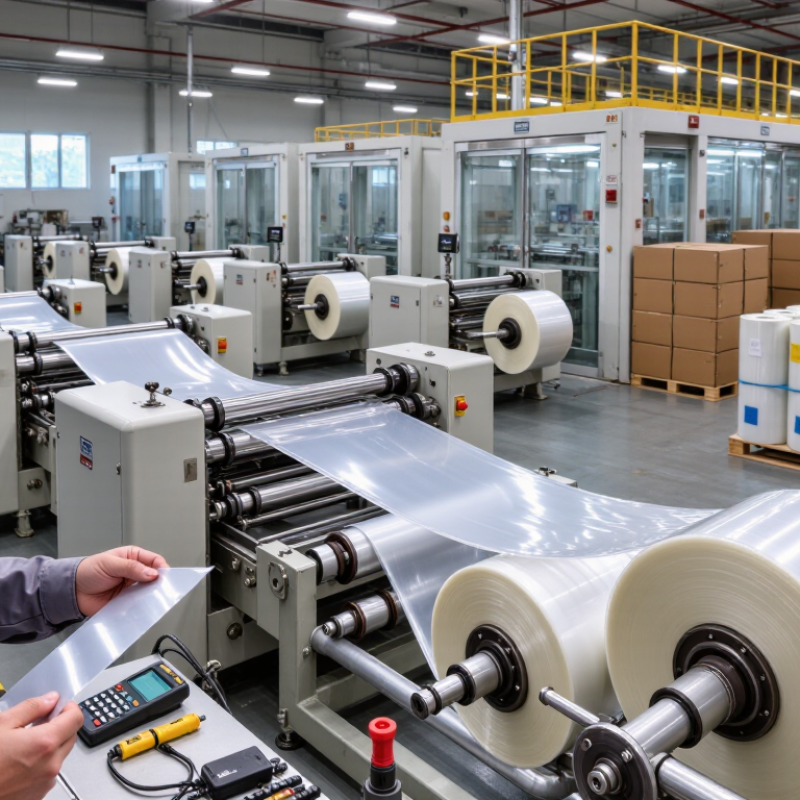
China Top 10 Heat Shrink Plastic Manufacturers?

What Are Heat Shrink Plastics and How Are They Used?

Heat shrink plastics are polymer tubes or films that contract when warmed. They are commonly made from polyolefin, PVC, fluoropolymer, or elastomer blends. During manufacture, the material is expanded and cooled under controlled conditions. Heating releases that stored shape. The tubing then tightens around an object. This behavior supports insulation, bundling, sealing, and surface protection. It is not merely decorative. A good installation creates a close, stable covering.

In practical work, technicians slide tubing over cable joints, connectors, battery leads, or small metal parts. A heat gun supplies steady warmth from a safe distance. The tube should shrink evenly, without scorching, bubbles, or sharp folds. I have seen rushed installations trap moisture at one end. That weakness may remain invisible until corrosion appears. Adhesive-lined versions can improve sealing, but they need clean, dry surfaces. Choosing the wrong shrink ratio also causes trouble. A loose tube may never grip properly.

Selection depends on temperature, chemical exposure, flexibility, wall thickness, and electrical requirements. Measure the largest diameter before shrinking, then check the recovered diameter. Transparent tubing helps with inspection, while thicker walls resist abrasion. Flame-retardant grades may suit equipment near heat sources, but performance depends on the complete system. Follow heating and ventilation guidance carefully. A perfect-looking finish does not prove reliability. Testing after installation remains worthwhile, especially where vibration, bending, or moisture is expected.

China Top 10 Heat Shrink Plastic Manufacturers? - What Are Heat Shrink Plastics and How Are They Used?

No. Manufacturer Category Primary Material Typical Shrink Ratio Typical Operating Temperature Main Product Forms Common Applications Relevant Performance Requirements
1 General-purpose tubing producer Polyolefin 2:1 or 3:1 Approximately −55°C to 125°C Thin-wall tubes, cut lengths, rolls Wire insulation, cable bundling, connector protection Electrical insulation, abrasion resistance, dimensional recovery
2 Adhesive-lined tubing producer Cross-linked polyolefin with hot-melt adhesive 3:1 or 4:1 Approximately −45°C to 110°C Dual-wall tubes, end caps, breakout boots Moisture sealing, cable joints, outdoor terminals Water resistance, strain relief, environmental sealing
3 High-temperature tubing producer Fluoropolymer, including PVDF or PTFE grades 1.7:1 to 2:1 Approximately −65°C to 200°C or higher Thin-wall tubing, laboratory tubing, precision sleeves Sensors, aerospace wiring, chemical and high-temperature assemblies Chemical resistance, low friction, thermal stability
4 Flexible elastomeric tubing producer Fluoroelastomer or silicone-modified elastomer 2:1 Approximately −55°C to 200°C Flexible tubes, boots, sleeves Automotive ignition systems, engine compartments, vibration-prone wiring Flexibility, oil resistance, vibration tolerance
5 Medium-voltage cable accessory producer Modified polyolefin or silicone rubber 2:1 to 4:1 Approximately −40°C to 125°C Termination kits, joint sleeves, stress-control components Power cable joints, terminations, substations Electrical tracking resistance, insulation recovery, sealing
6 Busbar insulation producer Flame-retardant cross-linked polyolefin 2:1 to 4:1 Approximately −40°C to 125°C Large-diameter tubing, flat busbar sleeves Switchgear, distribution cabinets, electrical panels Flame retardancy, dielectric strength, color coding
7 Automotive wiring protection producer Cross-linked polyolefin or flame-retardant polyolefin 2:1 or 3:1 Approximately −40°C to 135°C Harness sleeves, breakout covers, identification tubing Vehicle harnesses, battery cables, sensor connections Oil resistance, abrasion resistance, flame performance
8 Telecommunication cable protection producer Polyolefin or adhesive-lined polyolefin 3:1 to 4:1 Approximately −40°C to 110°C Splice closures, repair sleeves, cable breakout seals Fiber-optic cables, communication lines, outdoor network repairs Moisture sealing, tensile strength, UV resistance
9 Specialty identification tubing producer Polyolefin or fluoropolymer 2:1 or 3:1 Approximately −55°C to 135°C Printable markers, flat identification sleeves Panel wiring, control cabinets, industrial cable identification Print durability, legibility, flame retardancy
10 Large-diameter cable protection producer Cross-linked polyolefin or reinforced polyolefin 3:1 to 4:1 Approximately −40°C to 125°C Large-diameter tubes, cable repair sleeves, end caps Power cables, industrial cable repairs, marine and infrastructure projects Mechanical protection, water resistance, UV and weather resistance

Note: The table presents ten common heat-shrink product and manufacturing categories available in the Chinese market rather than named companies or brands. Temperature ranges and shrink ratios are typical industry values; exact specifications depend on the product construction, material formulation, wall thickness, and supplier datasheet.


How China’s Heat Shrink Plastic Manufacturing Industry Operates

China’s heat shrink plastic industry operates through a coordinated production chain. Manufacturers typically begin with polymer selection, often using polyolefin, PVC, or specialized engineering materials. Each material serves different temperature and insulation needs. Production teams blend resin, additives, colorants, and flame-control agents under controlled conditions. Extrusion then forms a continuous tube or film. The material may be cross-linked through irradiation or chemical processing before controlled heating expands it. After cooling, it remains ready to shrink around cables, pipes, or packaged components.

Quality control is practical and repetitive. Technicians measure wall thickness, shrink ratio, tensile strength, and recovery temperature. They also inspect surfaces for pinholes, uneven coloring, and weak seams. Batch records support traceability from raw material to final shipment. Reliable factories test samples in simulated installation conditions, not only in laboratories. Still, no factory gets every batch perfect. Humidity, machine speed, and operator judgment can affect consistency. That is where process discipline matters.

Tips: Ask for technical datasheets, sample testing, and production records before placing a large order. Confirm inner diameter, shrink temperature, longitudinal shrinkage, and packaging requirements. Visit the production site when possible. Observe clean storage areas, calibrated instruments, and clearly labeled batches. A low price can hide unstable tolerances. Think beyond the catalog.

China’s Top 10 Heat Shrink Plastic Manufacturers

China’s Top 10 Heat Shrink Plastic Manufacturers are often judged by material consistency, production scale, and testing discipline. A useful ranking should examine more than attractive samples. It should review shrink ratios, sealing strength, puncture resistance, thickness control, and delivery records. These details matter when film runs through high-speed packaging equipment.

The leading ten manufacturers typically offer polyethylene, polyolefin, and PVC shrink solutions for industrial and retail packaging. Their factories may use automated extrusion lines, digital thickness gauges, and controlled heating tunnels. Experienced buyers should request samples from different production batches. One sample proves very little. Ask for test data covering shrink temperature, tensile strength, haze, and seal performance. Food-related applications also require suitable documentation for the destination market.

No ranking is flawless. Some manufacturers present impressive machinery but provide limited long-term evidence. Others communicate well but need stronger technical support after delivery. I would verify factory capacity through audits, production videos, inspection records, and independent laboratory reports. Clear tolerances are essential. So are realistic lead times.

Small details reveal expertise. Does the supplier explain storage humidity? Can its engineers adjust film thickness for sharp-edged products? Does the factory investigate wrinkles instead of blaming the packaging line? Reliable manufacturers answer these questions with measurements and practical experience. Buyers should also compare recycled-content claims carefully, because performance can change between batches. The best choice is not always the lowest quotation. It is the supplier that documents limitations honestly and improves when problems appear.

How to Compare Heat Shrink Plastic Manufacturers in China

China Top 10 Heat Shrink Plastic Manufacturers?

Comparing China’s top ten heat shrink plastic manufacturers requires more than checking export prices. Start with film structure, thickness tolerance, shrink ratio, sealing strength, and printing accuracy. PlasticsEurope reported 413.8 million tonnes of global plastics production in 2023. This scale shows why raw-material traceability deserves attention. Ask each supplier for resin specifications, production capacity, and recent batch records.

A reliable comparison should include testing evidence. Request results for free shrink, tensile strength, elongation, coefficient of friction, and seal strength. ASTM D2732, ASTM D882, and ASTM D1894 provide useful reference methods. Smithers’ 2024 packaging outlook valued the global packaging market at roughly 1.2 trillion US dollars in 2023. Demand is strong, but quality still varies between factories. A low quotation may reflect thinner film, weaker seals, or inconsistent shrink performance. I would not treat a polished sample as proof of stable production. Samples can mislead.

Tips: Build a scorecard for all ten manufacturers. Give separate scores for material control, laboratory testing, equipment age, defect rates, delivery history, and communication. Check at least three production batches, not one. Measure roll length and thickness independently. Ask for corrective-action records after failed inspections. Numbers need context. A supplier with slightly higher pricing may reduce waste, line stoppages, and customer complaints. That assumption still needs verification through a small trial order.

How to Choose the Best Manufacturer for Your Needs

Choosing the Best Chinese Heat Shrink Plastic Manufacturer

Selecting a heat shrink plastic manufacturer requires more than comparing prices. Start with the material specification, including polymer type, shrink ratio, wall thickness, color, and operating temperature. Ask for production samples from the same line used for bulk orders. A polished sample may hide inconsistent batches.

Request documented quality procedures and recent test records. Check tensile strength, dielectric performance, shrink recovery, and dimensional stability. Reliable manufacturers should explain their testing equipment and sampling frequency clearly.

They should also provide traceability for raw materials and finished rolls. These details show working discipline.

Visit the factory when possible, or arrange a live video inspection. Observe extrusion areas, printing controls, storage conditions, and packaging methods. Ask how rejected products are separated. Weak answers matter. Confirm monthly capacity, minimum order quantities, lead times, and response times for technical problems.

A low quotation can become expensive after delays or repeated defects. Compare several suppliers using one written scorecard, not scattered impressions. I have found that communication quality often predicts delivery performance, although it is not perfect.

Some factories respond quickly but document poorly. Others have strong systems and slower replies. That difference deserves a careful conversation.

Before signing, approve a pre-production sample and define acceptance limits in writing. Keep one sealed reference sample for future inspections.

Powder Coat Booths

For those larger-sized parts, or smaller quantity runs, we have 2 independent powder coat booths and ovens. The quality, durability and affordability of today’s powder coating finishes make this the process of choice for world-class companies.

Powder coating advantages over other forms of coating are many. Materials used in the Powder coating process can be metals and non-metals that come in a multitude of thicknesses, textures, colors, etc. Another of Powder coating’s biggest advantages over conventional coatings is its ability to create finishes in many different textures. Powder Coating Booths allow us the ability to apply these advantages to large products.

Wet Paint Line

Tri-State Fabricators runs a full-service conveyor line for painting. Wet painting can provide protection or decoration to many different part styles. From start to finish, every project is easier to undergo random and point-based inspection by our skilled painting team.

Advantages to our Wet Paint Line are these lines start with product prep and ends with a thorough inspection of a high quality finished product. Our ability to complete large and small projects with a superior finish and doing so in a timely and economical fashion. This passes along the savings in production to our customers. When powder coating ins not an option, our Wet Paint Line gets the job done right the first time.

Wet Paint Booths

When the parts get big and heavy we roll-out our custom paint racks and oversize booth. By utilizing our partnerships with all the major paint brands, we can match virtually any color with wet paint.

The advantages of having access to a Wet Paint Booth are many. Large projects of many different shapes can be loaded into the booth. The Wet Paint Booth offers an environment that is much more controlled than a typical parts painting operation.

Not only are they used because of their controlled environment, but they’re are also advantageous when it comes to applying paint to parts that are needed in industries that require specialty coatings such as medical, aerospace, etc.

Military CARC

Our military forces have some very high standards when it comes to the finish of their vehicles and equipment. From the first pre-treatment step to final coat, it takes a great deal of knowledge and experience to protect the men and women of our armed forces. They deserve only the best, and Tri-State Fabricators provides it.

All of our processes are closely monitored by our staff and management teams. Both of which are highly trained in the processes of metal fabrication and finishing. Tri-State Fabricators’ goal is to always fully satisfy each and every customer, including the military. We will always put a 110% into what we do.

Glass-Bead Blasting

Abrasive media blasting is an excellent way to remove old paint, rust, and increase the paint/powder adhesion. Glass beads produce a much smoother and brighter finish than angular abrasives; leaving the part clean yet without any dimensional change. Chemically inert and environmentally friendly, we can recycle our beads approximately 30 times; making them a more preferred method of metal cleaning or surface finishing.

Advantages to Glass Bead Blasting are many. Glass bead blast media is used when a project is needing rough surfaces need to become smooth for applications of coatings such as paint. It is typically used to clean paint and rust from a product surface without deforming the surface it is being used on. Overall, compared to many other blasting media, Glass Bead Blasting is a very economical choice and those savings are always passed on to our customers.

Part Washing

Tri-State Fabricators utilize a zinc phosphate wash to clean and etch the material to ensure the best paint adhesion possible. The unique design of our 3-stage wash system does the work like a 5-stage. From Cleaning and rinsing to conversion coating and post-treatment, Our Part Washing process is a complete service and works throughout the fabrication service and the finishing service.

Along with the previously mentioned benefits, Curing is a vital chemical reaction that leaves the product finish hard and relatively safe from mild abrasion and aggressive corrosion. This process can be done in more than one way; ambient air-dry or in curing ovens at temps that exceed 240°.

Burn-Off Oven

From fixing paint mistakes (someone else’s of course) to simply cleaning our paint line hooks, our burn-off oven is put to good use. After a quick burn-off, a little clean up, and a fresh coat of paint, your parts will look better than new.

Why does our Burn-Off Oven work so well? Because super heating the air around parts turns the materials into ashes. From paint and powder coatings to rubber and machining oils, high temps do the job without degrading the integrity of the part.

Masking

Masking is a vital part of producing high quality products. We have die-cut masking patterns to protect machined surfaces as well as a wide range of plugs and caps to protect threaded holes and bolts. We provide permanent and temporary masking.

Masking allows the selected sections of a product to be protected from a fabrication or finishing service. This can be with both chemicals when etching and tapes, paints when only finishing just a section of the product. Masking is great in aiding the customization process of a project.

Screen Printing

Screen printing is a photographic process that transfers artwork onto a porous nylon screen which allows colored ink to flow through the screen and be deposited on an aluminum or plastic component. We can generally have just about any design created onto a screen for your parts.

Some of the advantages of Screen Printing are, brand recognition for your business displaying on your products, assembly instructions, product warnings/hazards, etc. Tri-State Fabricators produces Screen Printing of the highest quality so you know it’s durable.

Metal Finishing

Metal Finishing is the art of treating the exterior portion of product, often metal but can also be made of other materials, so that the surface is clean and free of any debris. Then the process of applying coats or either paint of powder coat takes place. This coating process improves the quality of the product in both appearance and resistance to wear and corrosion.

Tri-State Fabricators, Inc., understands that a project typically isn’t complete until a high-quality finish has been added to your product. This is why our painting and powder coating teams continuously inspect the products throughout the Metal Finishing process.
