


Plastic Enclosures protect sensitive electronics from dust, moisture, impact, heat, and daily handling. They also influence assembly speed, maintenance, product weight, and brand perception. That makes manufacturer selection more than a price comparison.
MarketsandMarkets’ Electrical Enclosures Market report identifies industrial automation, energy infrastructure, and electronics production as major demand drivers. Grand View Research also reports continued growth in global plastics consumption, supported by lightweight design and manufacturing efficiency. However, these reports combine several enclosure materials and applications. Their figures should not be treated as exact Plastic Enclosures sales data.
Standards matter. IEC 60529 defines IP protection ratings, while UL 50E addresses environmental considerations for electrical equipment enclosures. A strong supplier should explain testing, resin selection, flame performance, tolerances, and customization clearly. Vague claims are warning signs.
As Phoenix Contact technology leader Dr. Michael Weinhold puts it, “Protection, connectivity, and serviceability must be designed together.” That principle remains easy to overlook. A sealed box may survive water exposure but complicate cable routing or field repairs.
This guide examines ten leading Plastic Enclosures manufacturers worldwide. It considers engineering capability, material options, production scale, certification practices, customization, and customer support. Rankings are not absolute. Regional availability, application requirements, and purchase volume can change the best choice.
Look closely at the details. A poorly placed screw boss can weaken a thin wall. A careless gasket channel can undermine an impressive IP rating. The enclosure is small, but the consequences are not.
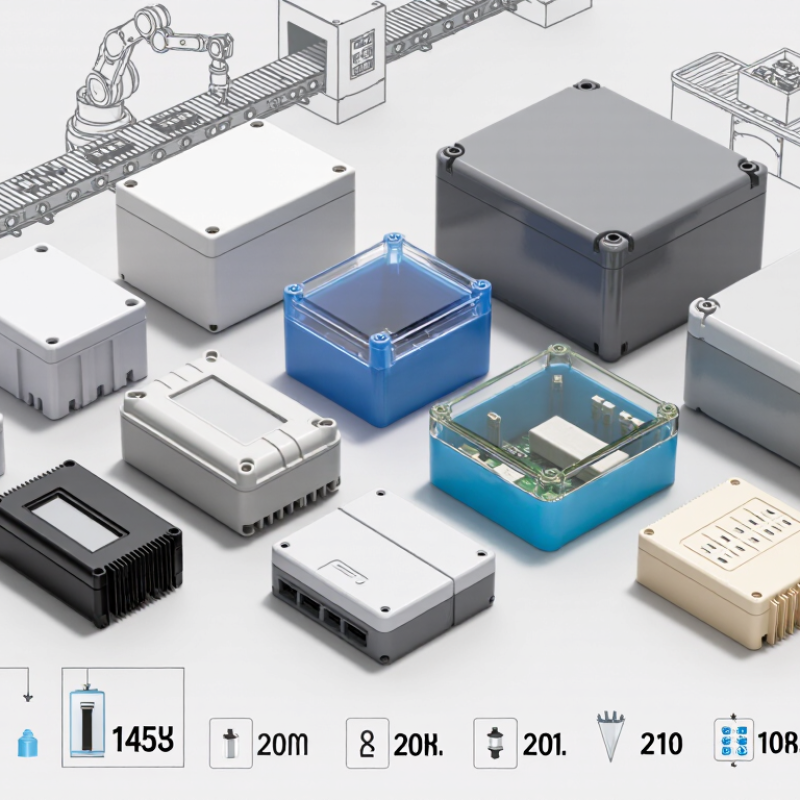
Worldwide enclosure manufacturers are evaluated through more than price or production volume. MarketsandMarkets estimated the global electrical enclosures market at about USD 7.5 billion in 2024, with continued growth toward 2029. This expansion increases pressure on manufacturers to prove consistency, not merely capacity. Auditors examine resin traceability, mold maintenance, dimensional control, and documented quality procedures. A reliable factory can show inspection records for wall thickness, thread accuracy, and gasket compression.
Material performance remains a decisive measure. IEC 60529 testing verifies resistance against dust and water through IP ratings. UL 94 testing also assesses plastic flammability behavior. These tests matter in humid workshops, outdoor cabinets, and crowded control panels.
The International Energy Agency’s energy efficiency reports highlight expanding electrification worldwide, which increases demand for durable protection around electrical components. Still, a certification label cannot replace practical validation. Designers should inspect samples after heat cycling, impact tests, and repeated screw installation.
Cost is important, but it can hide weaknesses. A low quotation may exclude tooling corrections, packaging protection, or future design changes. Sustainability also deserves scrutiny. PlasticsEurope reported that Europe recycled roughly 13.5 million tonnes of plastics in 2022, showing progress but leaving substantial room for improvement.
Manufacturers should disclose recycled content, scrap handling, and end-of-life options. In real purchasing work, delivery reliability can be harder to verify than laboratory performance. Some suppliers provide impressive samples, yet struggle with small-batch consistency. That uncomfortable gap deserves closer questioning.

Plastic enclosures protect electronics from dust, moisture, impact, and accidental contact. Common materials include ABS, polycarbonate, polypropylene, and glass-filled nylon. ABS offers easy machining and a clean surface finish. Polycarbonate performs better where impact resistance and visibility matter. Glass-filled nylon suits warmer, mechanically demanding environments, although it can absorb moisture and change dimensions slightly.
Design should follow the application, not fashion. Wall-mounted boxes need strong fixing points and accessible cable entries. Handheld housings require rounded edges, comfortable grip areas, and reliable screw bosses. Sealed designs often use gaskets, overlapping joints, and carefully controlled compression. Ventilated versions may need membranes to balance airflow and water resistance. In practical testing, weak corners and over-tightened screws remain frequent failure points. No enclosure is perfect.
Tips: Match the polymer to temperature, chemicals, UV exposure, and impact risk. Check wall thickness before adding threads or hinges. Leave space for connectors, wiring bends, and heat-producing components. Prototype the enclosure early. A drawing can hide awkward assembly problems. Engineers should also review flame performance, ingress protection, and recycling requirements with qualified testing laboratories. Small details matter.
The top ten plastic enclosure manufacturers reflect a market shaped by electronics, automation, energy storage, and connected equipment. MarketsandMarkets’ 2024 Electrical Enclosures report forecasts approximately 6.4% annual growth through 2029. That demand favors suppliers with practical engineering, not attractive catalogs alone.
Profile one focuses on flame-retardant ABS housings for control panels. Profile two specializes in polycarbonate boxes for outdoor equipment. Profile three develops compact enclosures for sensors and industrial IoT devices. Others stand out through custom injection molding, transparent covers, EMI shielding, or medical-grade production controls. Several leading manufacturers support IP65 to IP68 testing under IEC 60529. A smaller group also designs around UL 50E and IEC 60670 requirements. Regional production remains important. Mordor Intelligence identifies Asia-Pacific as the fastest-growing area for electrical enclosure demand, supported by factory automation and infrastructure investment. Capability claims still require verification. Some product pages are vague about testing conditions.
Tips: Ask for material data sheets, test reports, wall-thickness drawings, and sample units. Check gasket compression after repeated opening. Confirm whether the quoted IP rating applies to the complete assembled enclosure. Do not assume a higher rating guarantees better field performance. A brittle hinge or poorly placed cable gland can undermine an excellent shell. Pricing also deserves scrutiny, because low tooling costs may conceal longer lead times or limited design revisions.
Evaluating the top 10 plastic enclosure manufacturers worldwide requires more than counting factory size. Strong suppliers combine material expertise, tooling control, quality testing, and dependable regional delivery. ABS suits cost-sensitive indoor equipment, while polycarbonate supports tougher industrial environments. Some facilities run injection molding, CNC machining, printing, and assembly under one roof. That arrangement can shorten revisions from weeks to days. Details matter. Wall thickness, gasket compression, heat behavior, and screw-boss strength often decide field performance.
Global coverage is not simply a map with many shipping destinations. Manufacturers with plants or qualified partners across Asia, Europe, and North America can reduce freight delays. Local engineering teams can also adapt cable entries, mounting patterns, and documentation for different customer requirements. Reliable producers publish inspection methods and maintain traceable samples from each production batch. Certifications may support market entry, but they do not replace practical testing. A sealed box may pass a laboratory test and still fail after repeated maintenance. This happens.
Market reach also depends on minimum order quantities, engineering response time, and after-sales support. One supplier may offer advanced molding but lack responsive regional service. Another may provide fast delivery with fewer customization options. A ranking is never perfectly stable; capacity changes with energy costs, tooling loads, and regional demand. That limitation should be stated clearly. Buyers should request samples and perform drop tests, temperature cycling, water ingress checks, and assembly trials. Real performance is learned on the workbench, not only in a spreadsheet.
Choosing a plastic enclosure manufacturer requires more than comparing unit prices. Grand View Research valued the global plastics market at about US$712.6 billion in 2023. That scale creates many capable suppliers, but capability varies sharply by application. Start with material selection. ABS suits economical indoor housings, while polycarbonate handles stronger impact demands. For outdoor equipment, ask about UV stability, sealing, and temperature cycling.
Ask for documented testing, not attractive samples. The enclosure should match the required IP rating under IEC 60529. Request test conditions, sample size, and retest intervals. UL 94 flammability results also matter near electrical components. MarketsandMarkets’ 2024 injection molding analysis identifies automation, repeatability, and process monitoring as major production priorities. Therefore, inspect the supplier’s tooling controls, resin traceability, and dimensional records. A clean factory tour helps. It does not prove long-term reliability.
Evaluate engineering support before signing a contract. A strong manufacturer reviews wall thickness, ribs, draft angles, screw bosses, and heat buildup during design-for-manufacturing checks. Ask how defects are handled, including warpage, sink marks, and color variation. Review pilot-run data before approving mass production. No scorecard is perfect. A prototype can pass while production still disappoints. Confirm minimum order quantities, spare-tool policies, lead times, and change-control procedures in writing. Choose the supplier that can explain failures clearly, not the one offering the lowest first quotation.


For those larger-sized parts, or smaller quantity runs, we have 2 independent powder coat booths and ovens. The quality, durability and affordability of today’s powder coating finishes make this the process of choice for world-class companies.
Powder coating advantages over other forms of coating are many. Materials used in the Powder coating process can be metals and non-metals that come in a multitude of thicknesses, textures, colors, etc. Another of Powder coating’s biggest advantages over conventional coatings is its ability to create finishes in many different textures. Powder Coating Booths allow us the ability to apply these advantages to large products.
Tri-State Fabricators runs a full-service conveyor line for painting. Wet painting can provide protection or decoration to many different part styles. From start to finish, every project is easier to undergo random and point-based inspection by our skilled painting team.
Advantages to our Wet Paint Line are these lines start with product prep and ends with a thorough inspection of a high quality finished product. Our ability to complete large and small projects with a superior finish and doing so in a timely and economical fashion. This passes along the savings in production to our customers. When powder coating ins not an option, our Wet Paint Line gets the job done right the first time.
When the parts get big and heavy we roll-out our custom paint racks and oversize booth. By utilizing our partnerships with all the major paint brands, we can match virtually any color with wet paint.
The advantages of having access to a Wet Paint Booth are many. Large projects of many different shapes can be loaded into the booth. The Wet Paint Booth offers an environment that is much more controlled than a typical parts painting operation.
Not only are they used because of their controlled environment, but they’re are also advantageous when it comes to applying paint to parts that are needed in industries that require specialty coatings such as medical, aerospace, etc.
Our military forces have some very high standards when it comes to the finish of their vehicles and equipment. From the first pre-treatment step to final coat, it takes a great deal of knowledge and experience to protect the men and women of our armed forces. They deserve only the best, and Tri-State Fabricators provides it.
All of our processes are closely monitored by our staff and management teams. Both of which are highly trained in the processes of metal fabrication and finishing. Tri-State Fabricators’ goal is to always fully satisfy each and every customer, including the military. We will always put a 110% into what we do.
Abrasive media blasting is an excellent way to remove old paint, rust, and increase the paint/powder adhesion. Glass beads produce a much smoother and brighter finish than angular abrasives; leaving the part clean yet without any dimensional change. Chemically inert and environmentally friendly, we can recycle our beads approximately 30 times; making them a more preferred method of metal cleaning or surface finishing.
Advantages to Glass Bead Blasting are many. Glass bead blast media is used when a project is needing rough surfaces need to become smooth for applications of coatings such as paint. It is typically used to clean paint and rust from a product surface without deforming the surface it is being used on. Overall, compared to many other blasting media, Glass Bead Blasting is a very economical choice and those savings are always passed on to our customers.
Tri-State Fabricators utilize a zinc phosphate wash to clean and etch the material to ensure the best paint adhesion possible. The unique design of our 3-stage wash system does the work like a 5-stage. From Cleaning and rinsing to conversion coating and post-treatment, Our Part Washing process is a complete service and works throughout the fabrication service and the finishing service.
Along with the previously mentioned benefits, Curing is a vital chemical reaction that leaves the product finish hard and relatively safe from mild abrasion and aggressive corrosion. This process can be done in more than one way; ambient air-dry or in curing ovens at temps that exceed 240°.
From fixing paint mistakes (someone else’s of course) to simply cleaning our paint line hooks, our burn-off oven is put to good use. After a quick burn-off, a little clean up, and a fresh coat of paint, your parts will look better than new.
Why does our Burn-Off Oven work so well? Because super heating the air around parts turns the materials into ashes. From paint and powder coatings to rubber and machining oils, high temps do the job without degrading the integrity of the part.
Masking is a vital part of producing high quality products. We have die-cut masking patterns to protect machined surfaces as well as a wide range of plugs and caps to protect threaded holes and bolts. We provide permanent and temporary masking.
Masking allows the selected sections of a product to be protected from a fabrication or finishing service. This can be with both chemicals when etching and tapes, paints when only finishing just a section of the product. Masking is great in aiding the customization process of a project.
Screen printing is a photographic process that transfers artwork onto a porous nylon screen which allows colored ink to flow through the screen and be deposited on an aluminum or plastic component. We can generally have just about any design created onto a screen for your parts.
Some of the advantages of Screen Printing are, brand recognition for your business displaying on your products, assembly instructions, product warnings/hazards, etc. Tri-State Fabricators produces Screen Printing of the highest quality so you know it’s durable.
Metal Finishing is the art of treating the exterior portion of product, often metal but can also be made of other materials, so that the surface is clean and free of any debris. Then the process of applying coats or either paint of powder coat takes place. This coating process improves the quality of the product in both appearance and resistance to wear and corrosion.
Tri-State Fabricators, Inc., understands that a project typically isn’t complete until a high-quality finish has been added to your product. This is why our painting and powder coating teams continuously inspect the products throughout the Metal Finishing process.

