China Top 10 Fusion Pipe Welder Manufacturers?
China’s pipe-fusion equipment industry is expanding alongside demand for reliable plastic piping systems. Grand View Research has reported steady growth in the global plastic pipes market, driven by water infrastructure, gas distribution, mining, and industrial projects. China remains a major manufacturing base for these applications, supported by extensive polymer processing capacity and export networks.
A Fusion Pipe Welder must do more than heat and join thermoplastic pipes. It should maintain stable temperature, accurate pressure, controlled alignment, and repeatable welding cycles. These details matter on a construction site, where wind, dust, uneven ground, and limited power can affect joint quality. ASTM F2620, ISO 21307, and DVS 2207 provide useful references for evaluating butt-fusion procedures and equipment performance.
This guide examines ten notable Chinese manufacturers through practical criteria. These include product range, pipe-size coverage, heating-plate control, hydraulic design, operator usability, certifications, after-sales support, and export experience. Public company information and industry reports offer valuable evidence, but they do not reveal every factory’s real-world performance. That limitation deserves attention. A strong brochure cannot replace field testing, verified weld records, or customer feedback from comparable projects.
The ranking is therefore an informed market comparison, not an absolute verdict. Buyers should confirm calibration practices, spare-parts availability, training, and compliance requirements before selecting a supplier. Small differences matter. A stable clamp can protect an entire pipeline joint. Conversely, weak service support may turn a low purchase price into a costly delay.
What Is a Fusion Pipe Welder and How Does It Work?
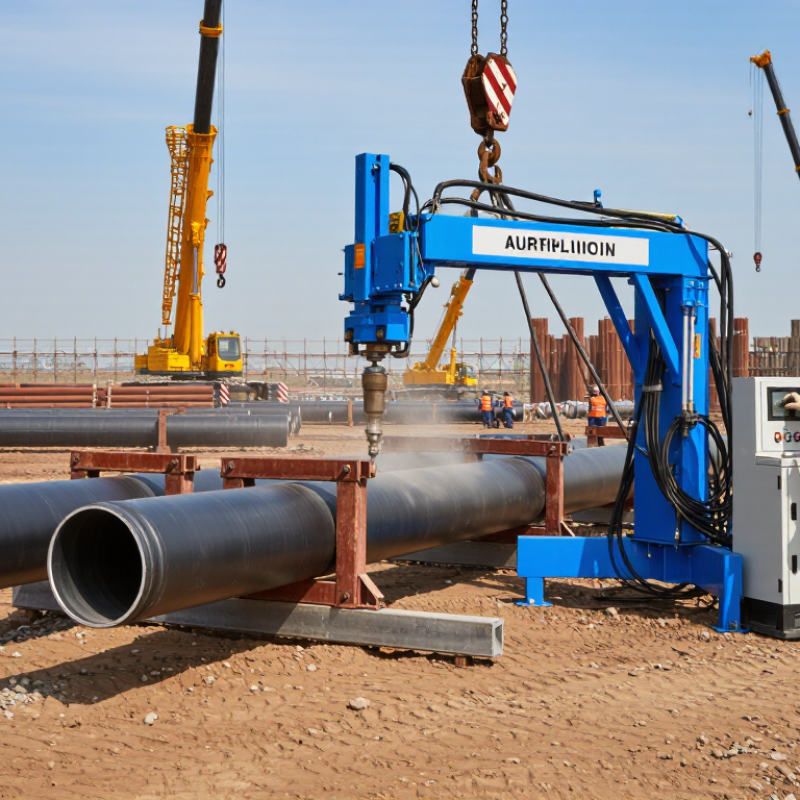
For buyers comparing China’s top 10 fusion pipe welder manufacturers, the machine’s working principle matters more than a polished product photo. A fusion pipe welder joins thermoplastic pipes by heating their ends and pressing them together. In butt fusion, a calibrated heating plate softens both faces. The operator then removes the plate and applies controlled pressure. The joint cools under pressure, forming one continuous pipe section. It is not glue. It is molecular bonding.
ASTM F2620 and ISO 21307 define key procedures for polyethylene butt fusion, including heating, changeover, joining, and cooling. A 2023 Grand View Research report estimated the global HDPE pipe market at about USD 20.6 billion in 2022. This growth increases demand for accurate welding equipment, especially in water, gas, and industrial networks. However, market size does not guarantee joint quality. Field technicians still check pipe alignment, surface cleanliness, heating temperature, bead shape, and hydraulic pressure. Small errors matter.
A practical machine needs stable clamping and readable controls. It should also maintain pressure when outdoor temperatures change. Cold wind can shorten the effective heating window. Dust can weaken the interface. Poor calibration remains a common risk. I have seen operators trust the machine display too quickly. That is a mistake. Records of temperature, pressure, pipe size, and cooling time support traceability, although real sites rarely document everything perfectly. Manufacturers should explain these limitations clearly, not hide them behind automation claims.
How to Evaluate Chinese Fusion Pipe Welder Manufacturers
How to Evaluate Chinese Fusion Pipe Welder Manufacturers
China’s fusion welding equipment market is broad, but low price alone proves little. A 2024 Grand View Research report estimated the global plastic pipes market at over US$70 billion in 2023. This growth increases demand for consistent welding equipment, not merely cheaper machines. In supplier audits, I examine heating plate uniformity, hydraulic stability, pressure control, and operator safety. Small temperature errors can create weak joints.
Ask manufacturers to provide calibration records and test results for each model. The equipment should support recognized procedures, including ISO 21307, ASTM F2620, or DVS 2207. ISO 12176 also offers useful guidance for thermoplastic welding equipment and traceability. Request a sample weld using your actual pipe material and diameter. Cut the joint and inspect its bead formation. Video demonstrations are helpful, but destructive testing is stronger evidence.
Check whether the manufacturer records temperature, fusion pressure, heating time, and cooling time. Data logging matters. A clear serial-number system improves after-sales accountability. Spare-part availability, technician training, and response times deserve equal attention. The 2023 World Bank Logistics Performance Index ranked supply chains across 139 economies, reminding buyers that delivery reliability affects real project costs. I would also audit the factory, although one visit can create false confidence. Repeated quality checks are better. Some suppliers offer impressive certificates, yet their calibration process remains unclear. That gap deserves careful questioning.
China’s Top 10 Fusion Pipe Welder Manufacturers
China’s top 10 fusion pipe welder manufacturers should be judged by verified performance, not attractive advertising. A dependable comparison examines factory capability, product testing, and service records. It also checks whether equipment suits polyethylene and polypropylene pipe projects.
During equipment evaluations, technicians should inspect heater plate temperature uniformity, hydraulic pressure stability, clamping accuracy, and alignment control.
Digital data logging is valuable during site work. It records heating time, pressure changes, and cooling periods.
These details support traceability and reduce avoidable welding errors. Compliance with applicable ISO 12176 requirements also deserves careful review.
The strongest manufacturers usually provide operator training, maintenance guidance, spare parts, and responsive technical support. Factory audits can reveal more than brochures. Look for calibration certificates, sample weld reports, and clear testing procedures.
Ask how the machines perform in dusty construction areas or unstable power conditions. Answers may expose practical limitations.
No ranking stays perfect. A supplier may offer excellent equipment but weak documentation. Another may provide strong support while lacking advanced automation.
Buyers should compare complete ownership costs, not only purchase prices.
A short demonstration using the actual pipe diameter can reveal clamping problems quickly. Independent inspection remains wise, especially for large infrastructure projects.
Key Products, Technologies, and Industry Applications
China Top 10 Fusion Pipe Welder Manufacturers?
Key Products, Technologies, and Industry Applications
China’s leading fusion pipe welder manufacturers typically offer hydraulic butt fusion machines, electrofusion units, heating plates, and pipe facing tools. Product ranges often cover small workshop equipment and heavy machines for pipes exceeding 1,000 millimeters. Experienced contractors examine frame strength, clamp accuracy, heating stability, and replacement-part availability before purchasing. A reliable machine should produce consistent joints in dusty sites, cold weather, and long installation shifts.
Modern equipment uses digital temperature controllers, hydraulic pressure gauges, and programmable welding cycles. Some systems record operator details, fusion pressure, heating time, and cooling duration. These records support quality checks during water pipeline construction and industrial maintenance. CNC alignment can reduce pipe mismatch, but it cannot correct damaged pipe ends or poor cleaning. That limitation is easy to overlook.
Field applications include municipal water networks, drainage systems, natural gas infrastructure, mining pipelines, aquaculture facilities, and chemical-fluid transport. Portable welders suit repair teams working beside narrow trenches. Large automated systems improve productivity in factory production lines. Buyers should verify material compatibility, calibration procedures, safety documentation, and local technical support. Certification labels alone are not enough. Actual trial welding, bead inspection, and operator training reveal more about long-term performance. Some manufacturers provide intelligent monitoring, yet users may still depend on manual measurements when sensors drift or site conditions change.
How to Choose the Right Chinese Manufacturer for Your Needs
A top-ten list is only a starting filter. The right Chinese fusion pipe welder manufacturer should match your pipe material, diameter range, voltage, and project standards. Ask for factory registration, production records, and recent export references. A polished website proves little.
The 2024 World Robotics report recorded 541,302 industrial robot installations worldwide in 2023. China represented about 51% of that total. This indicates strong automation capacity, but it does not guarantee welding quality.
Request a live factory audit. Inspect frame alignment, heating plate coating, pressure controls, and calibration labels. Require sample welds using your pipe grade and wall thickness. Review destructive test results, not only videos.
Check compliance with ISO 21307 and ASTM F2620 where applicable. Confirm whether the machine records temperature, fusion pressure, time, and operator identity. Digital traceability matters on long-distance water, gas, and industrial projects. Ask for a factory acceptance test before shipment. Include spare heaters, hydraulic seals, sensors, and local training in the contract. Service response should be measured in hours or days, not vague promises.
I have seen buyers overvalue low quotations. That choice can create hidden downtime. No checklist is perfect. Some suppliers may also outsource critical components without clear disclosure. Request a component-origin statement and serial-number photographs. Compare at least three technical quotations, then verify every claimed certificate with the issuing body.





