


A Finger Scan Door Lock promises a simple routine: place a finger on the sensor, wait for recognition, and open the door. In practice, the details matter. A smudged sensor, wet hands, a low battery, or awkward installation can change the experience. Convenience matters. So does reliable access when the fingerprint reader is unavailable.
This guide compares ten options through practical features, including recognition methods, user capacity, backup entry, power alerts, and installation requirements. Product specifications can show what a lock offers, but they cannot guarantee identical performance on every door. Check compatibility before buying, and consider how household members will use the lock each day. Security technologist Bruce Schneier’s well-known reminder applies: “Security is a process, not a product.” A fingerprint reader is only one part of that process; setup, updates, and backup access deserve attention too. Small details count. No model is flawless. This ranking is a starting point, not a substitute for checking current specifications and choosing a lock that fits your door, routine, and comfort level.
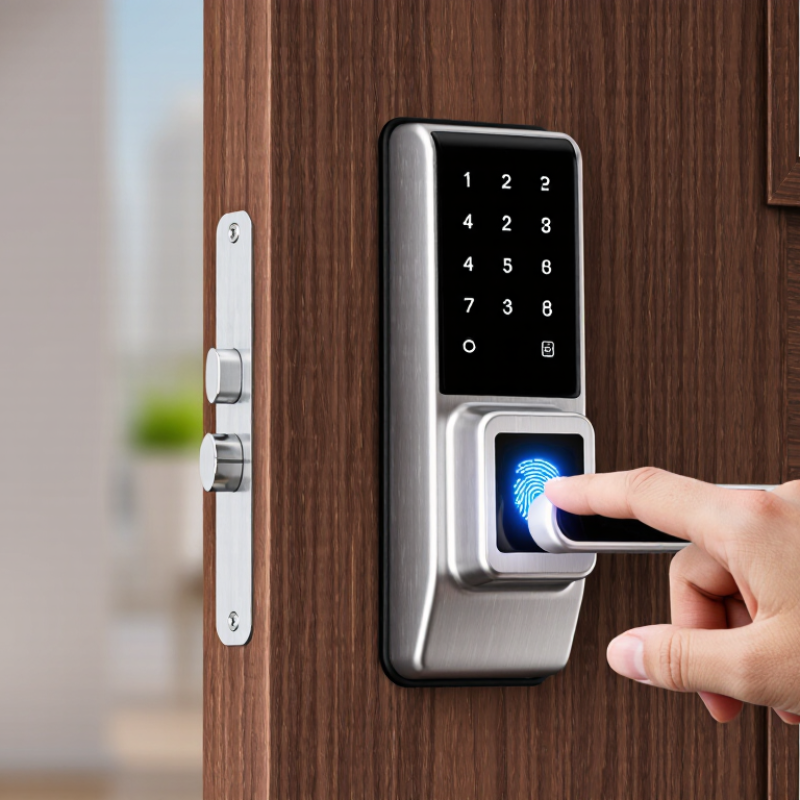
A fingerprint door lock does not “read” a whole finger like a photograph. Its sensor captures ridge patterns, then software extracts features such as ridge endings and splits. These features form a template, usually stored on the lock or in its connected system. During entry, a fresh scan is compared with enrolled templates. A match score must cross a preset threshold. Too strict, and cold, dry fingertips may be rejected; too loose, and security weakens. Small practical details matter.
NIST’s SP 800-76-2 specifies 500 pixels per inch for certain fingerprint images used in identity systems. That is a useful quality reference, not a promise that every residential lock meets it. NIST SP 800-63B also gives a false match rate benchmark of one in 1,000 or better for biometric comparison in digital authentication. It is guidance, not a consumer door-lock certification. Still, no scan is magic. Wet skin, worn ridges, sensor dirt, and hurried placement can change results. Look for clear enrollment instructions, multiple-finger registration, and a way to enter when scans fail. A fast unlock feels reassuring; testing it with clean and slightly damp hands is wiser.
The strongest fingerprint door locks are distinguished by more than a quick scan. Sensor accuracy matters when fingers are damp, cold, or slightly dirty. A responsive reader should unlock smoothly without repeated attempts. Still, no sensor is perfect. Test it with the people who will use it every day.
Look closely at how many fingerprints the lock stores and whether access can be assigned separately. A clear keypad or physical key offers useful backup when batteries run low. Battery warnings, emergency power options, and a simple interior release are practical safeguards. Small details matter. Auto-lock timing, tamper alerts, and access history can also make everyday use easier, especially in a busy household.
Weather resistance is important for an exposed doorway, while installation compatibility depends on door thickness and existing hardware. Check these measurements before buying. App controls can be convenient, but they should not be the only way to enter or manage the lock. Privacy settings deserve attention, too: understand what access records are kept and how they can be removed. A sleek touchscreen may look impressive, yet a reliable reader and clear backup plan matter more than extra features you may rarely use.
| No. | Lock Type | Fingerprint Access | Other Common Entry Methods | Power and Backup | Connectivity | Key Distinguishing Feature | Practical Consideration |
|---|---|---|---|---|---|---|---|
| 1 | Keypad-and-Fingerprint Deadbolt | Stores enrolled fingerprints for local unlocking. | PIN code and physical key are common options. | Usually battery-powered; many models provide an external emergency power contact or key override. | Often standalone; connectivity depends on the model. | Combines biometric entry with a familiar keypad and mechanical backup. | Check door thickness, backset, and whether the existing deadbolt bore matches the lock. |
| 2 | Fingerprint Lever Lock | Fingerprint reader is commonly built into the exterior lever or escutcheon. | May include a PIN, key, or app-based access. | Typically battery-powered, with backup arrangements varying by model. | Standalone or app-connected versions are available. | Lever-style operation can be convenient for interior doors and users who find knobs difficult to turn. | Confirm whether it is rated and configured for an exterior entry door; some lever locks are intended for interior use. |
| 3 | Fingerprint Smart Deadbolt | Uses an integrated fingerprint reader for keyless entry. | Common options include PIN codes, a physical key, or smartphone control. | Battery-powered; low-battery alerts and emergency access methods vary. | May use Bluetooth, Wi-Fi, or a separate hub, depending on the model. | Can pair biometric entry with remote features such as lock status or access management. | Remote functions may require a hub, compatible network, account, or subscription; check the requirements before purchase. |
| 4 | Fingerprint-Enabled Mortise Lock | Fingerprint access is integrated into a lock body fitted into a pocket in the door edge. | May support a PIN, card, key, or app, depending on configuration. | Power source and emergency override differ by design. | Some models are standalone; others support connected access systems. | Designed around a mortise lock case rather than a standard surface-mounted deadbolt. | Requires compatible door preparation and careful measurement; replacement may be less straightforward than a deadbolt swap. |
| 5 | Fingerprint Rim Lock | Reader is fitted into an exterior unit that operates a surface-mounted lock mechanism. | May offer a PIN, card, key, or remote release. | Often battery-powered; confirm how emergency power or manual entry works. | Connectivity varies from none to app or access-control integration. | Surface-mounted construction can suit some doors where a conventional deadbolt installation is unsuitable. | Verify door swing, frame alignment, and compatibility with the existing rim-lock hardware. |
| 6 | Fingerprint Smart Lever with App Access | Supports stored fingerprints, with enrollment and management features determined by the model. | Often combines fingerprints with PINs, keys, or app credentials. | Usually battery-powered, with battery alerts and backup access varying by product. | May connect through Bluetooth, Wi-Fi, or a hub. | App features can make it easier to manage users or review supported activity records. | App functions and logs are model-specific; review privacy settings and network requirements. |
| 7 | Fingerprint Lock with RFID Card Reader | Fingerprint is one of the supported credentials. | Typically includes contactless cards or fobs; some versions also provide a PIN or key. | Commonly battery-powered, with backup methods depending on the design. | Can be standalone or integrated with compatible access-control equipment. | Offers a card or fob alternative for people who do not want to use a fingerprint every time. | Check card compatibility, credential enrollment limits, and how lost cards can be removed from access. |
| 8 | Fingerprint Lock with Mechanical Key Override | Provides fingerprint entry for everyday use. | Includes a physical key for authorized backup access; a PIN may also be available. | Battery-operated electronics are backed up by a mechanical keyway. | Often standalone, though connected models exist. | A key override can provide an entry option if batteries are depleted or the electronic reader is unavailable. | Keep backup keys secure and confirm the keyway is accessible without removing exterior trim. |
| 9 | Fingerprint Lock with Emergency USB Power | Uses a built-in reader for enrolled fingerprints. | May also support a PIN, app, card, or physical key. | Some designs accept temporary power from an external USB power source when internal batteries are exhausted. | Connectivity is model-dependent and may be absent. | Emergency power can help restore electronic operation without opening the battery compartment from the inside. | Emergency power is not the same as a permanently rechargeable battery; check the specified port and backup procedure. |
| 10 | Fingerprint Access-Control Lock | Uses biometric credentials and may support centrally managed user enrollment. | May include PINs, cards, or credentials managed by a compatible system. | Power and emergency-release arrangements depend on the installation. | Designed for integration with compatible access-control systems; capabilities vary. | Can suit settings where administrators need to manage users and permissions across an installation. | Check system compatibility, installation requirements, data handling, and any applicable fire or egress rules. |
These are common fingerprint-lock configurations, not a ranking of specific products. Available credentials, capacity, connectivity, backup methods, and installation requirements vary by model.
What Are the Top 10 Finger Scan Door Locks?
How the Top 10 Fingerprint Door Locks Compare
A useful comparison looks beyond how quickly a lock opens in a product demonstration. Check recognition consistency, enrollment capacity, backup access, battery alerts, and weather protection. A sensor should read reliably when a fingertip is slightly dry or damp, not only under ideal conditions. That matters. Also compare how easily you can add or remove household users, and whether the lock records entry events.
NIST Special Publication 800-63B sets a false match rate benchmark of 1 in 1,000 or better for biometric systems. This is guidance for digital identity authentication, not a performance guarantee for residential door locks. Still, it offers a useful reference point when reviewing manufacturers’ test claims. Ask whether figures come from independent testing and whether they describe false matches, failed reads, or both. These measures are not interchangeable.
For the ten locks, compare the practical fallback: keypad, physical key, or another access method. Look for clear low-battery warnings and a way to regain entry if power runs out. Check the stated environmental rating before installing a lock on an exposed door. A high recognition rate on paper can hide frustrating failures in cold weather or with worn fingerprints. No ranking is perfect. Installation, door alignment, and sensor cleanliness can change everyday results.
A useful comparison looks beyond the fingerprint reader. Check how many fingerprints the lock stores, whether access records can be reviewed, and how administrators remove old users. A sensor should read reliably after ordinary hand washing, but wet or dusty fingers may still cause trouble. Test the keypad or app, too. A fingerprint is convenient, not infallible. Look for clear instructions on data storage and account protection. If the product does not explain where biometric data is kept, treat that as a reason to investigate further.
Tips: Enroll more than one trusted finger. Use a strong account password, and review app permissions. Keep access logs private. Small habits matter.
Backup access deserves equal attention. A physical key, external emergency power connection, or separate PIN can help when batteries run low or the sensor fails. Confirm the backup method before installation, and keep any spare key somewhere secure but reachable. Avoid hiding it beside the door. Check battery warnings regularly; a warning is easy to ignore during a busy week. Also consider who can reset the lock and whether that process removes saved fingerprints. A well-designed lock should make recovery understandable, though no setup is completely foolproof. Test the backup while the door is open.
A reliable fingerprint door lock should fit your door, support backup entry, and store prints securely. Compare sensor response, weather resistance, battery alerts, and emergency power options.
NIST Special Publication 800-63B sets a useful biometric benchmark: a false-match rate of 1 in 1,000 or better, with a false non-match rate below 5%. This guidance is not a certification for consumer locks, so check each model’s independent test details. Numbers matter.
Before buying, measure your door thickness and backset, then confirm the lock suits your deadbolt and handing. During installation, keep the bolt aligned with the strike plate; even slight friction can drain batteries or cause failed locking. Enroll more than one finger, using clean, dry fingertips from different angles. Test the keypad or key backup before relying on the fingerprint reader. A hurried setup can leave a dependable-looking lock awkward to use.
Tips:
Wipe the sensor with a soft, dry cloth; avoid abrasive cleaners. Replace batteries when alerts appear, and test access after every battery change. Recheck the bolt monthly for smooth movement. Keep a backup entry method available. Fingerprint recognition can vary with moisture, cuts, or worn ridges; that is inconvenient, and no sensor is perfect. A simple maintenance log helps reveal recurring errors before they become lockouts.



For those larger-sized parts, or smaller quantity runs, we have 2 independent powder coat booths and ovens. The quality, durability and affordability of today’s powder coating finishes make this the process of choice for world-class companies.
Powder coating advantages over other forms of coating are many. Materials used in the Powder coating process can be metals and non-metals that come in a multitude of thicknesses, textures, colors, etc. Another of Powder coating’s biggest advantages over conventional coatings is its ability to create finishes in many different textures. Powder Coating Booths allow us the ability to apply these advantages to large products.
Tri-State Fabricators runs a full-service conveyor line for painting. Wet painting can provide protection or decoration to many different part styles. From start to finish, every project is easier to undergo random and point-based inspection by our skilled painting team.
Advantages to our Wet Paint Line are these lines start with product prep and ends with a thorough inspection of a high quality finished product. Our ability to complete large and small projects with a superior finish and doing so in a timely and economical fashion. This passes along the savings in production to our customers. When powder coating ins not an option, our Wet Paint Line gets the job done right the first time.
When the parts get big and heavy we roll-out our custom paint racks and oversize booth. By utilizing our partnerships with all the major paint brands, we can match virtually any color with wet paint.
The advantages of having access to a Wet Paint Booth are many. Large projects of many different shapes can be loaded into the booth. The Wet Paint Booth offers an environment that is much more controlled than a typical parts painting operation.
Not only are they used because of their controlled environment, but they’re are also advantageous when it comes to applying paint to parts that are needed in industries that require specialty coatings such as medical, aerospace, etc.
Our military forces have some very high standards when it comes to the finish of their vehicles and equipment. From the first pre-treatment step to final coat, it takes a great deal of knowledge and experience to protect the men and women of our armed forces. They deserve only the best, and Tri-State Fabricators provides it.
All of our processes are closely monitored by our staff and management teams. Both of which are highly trained in the processes of metal fabrication and finishing. Tri-State Fabricators’ goal is to always fully satisfy each and every customer, including the military. We will always put a 110% into what we do.
Abrasive media blasting is an excellent way to remove old paint, rust, and increase the paint/powder adhesion. Glass beads produce a much smoother and brighter finish than angular abrasives; leaving the part clean yet without any dimensional change. Chemically inert and environmentally friendly, we can recycle our beads approximately 30 times; making them a more preferred method of metal cleaning or surface finishing.
Advantages to Glass Bead Blasting are many. Glass bead blast media is used when a project is needing rough surfaces need to become smooth for applications of coatings such as paint. It is typically used to clean paint and rust from a product surface without deforming the surface it is being used on. Overall, compared to many other blasting media, Glass Bead Blasting is a very economical choice and those savings are always passed on to our customers.
Tri-State Fabricators utilize a zinc phosphate wash to clean and etch the material to ensure the best paint adhesion possible. The unique design of our 3-stage wash system does the work like a 5-stage. From Cleaning and rinsing to conversion coating and post-treatment, Our Part Washing process is a complete service and works throughout the fabrication service and the finishing service.
Along with the previously mentioned benefits, Curing is a vital chemical reaction that leaves the product finish hard and relatively safe from mild abrasion and aggressive corrosion. This process can be done in more than one way; ambient air-dry or in curing ovens at temps that exceed 240°.
From fixing paint mistakes (someone else’s of course) to simply cleaning our paint line hooks, our burn-off oven is put to good use. After a quick burn-off, a little clean up, and a fresh coat of paint, your parts will look better than new.
Why does our Burn-Off Oven work so well? Because super heating the air around parts turns the materials into ashes. From paint and powder coatings to rubber and machining oils, high temps do the job without degrading the integrity of the part.
Masking is a vital part of producing high quality products. We have die-cut masking patterns to protect machined surfaces as well as a wide range of plugs and caps to protect threaded holes and bolts. We provide permanent and temporary masking.
Masking allows the selected sections of a product to be protected from a fabrication or finishing service. This can be with both chemicals when etching and tapes, paints when only finishing just a section of the product. Masking is great in aiding the customization process of a project.
Screen printing is a photographic process that transfers artwork onto a porous nylon screen which allows colored ink to flow through the screen and be deposited on an aluminum or plastic component. We can generally have just about any design created onto a screen for your parts.
Some of the advantages of Screen Printing are, brand recognition for your business displaying on your products, assembly instructions, product warnings/hazards, etc. Tri-State Fabricators produces Screen Printing of the highest quality so you know it’s durable.
Metal Finishing is the art of treating the exterior portion of product, often metal but can also be made of other materials, so that the surface is clean and free of any debris. Then the process of applying coats or either paint of powder coat takes place. This coating process improves the quality of the product in both appearance and resistance to wear and corrosion.
Tri-State Fabricators, Inc., understands that a project typically isn’t complete until a high-quality finish has been added to your product. This is why our painting and powder coating teams continuously inspect the products throughout the Metal Finishing process.