


Demand for advanced filtration is reshaping equipment decisions. Grand View Research valued the global nonwoven fabric market at approximately USD 53.56 billion in 2022. Its 2023–2030 outlook projects continued expansion, supported by healthcare, automotive, and environmental applications. Smithers’ “The Future of Nonwovens to 2028” also highlights filtration as a major growth area.
That growth makes the Filter Materials Lamination Machine more than a production purchase. It becomes a quality-control decision. Buyers must compare coating uniformity, web tension, thermal stability, adhesive control, and cleaning access. A machine may run quickly, yet waste material through wrinkles, edge trim, or uneven bonding. Small defects can appear clearly under a bright inspection lamp.
Dr. Behnam Pourdeyhimi, a leading nonwovens researcher and former executive director of The Nonwovens Institute, has described nonwovens as “engineered materials designed for a purpose.” That principle matters here. A laminated filter must balance filtration efficiency, airflow resistance, strength, and durability. No single machine wins every application.
This Top 10 comparison considers real purchasing conditions, including polypropylene, polyester, meltblown, spunbond, and membrane-based structures. It also examines production scale, energy use, automation, maintenance, and technical support. These points reflect practical evaluation criteria, not marketing claims alone.
The ranking is not absolute. A compact machine may suit a specialist converter better than a faster line. Reported specifications can also change between models and regions. Buyers should verify trial results, warranty terms, and certification requirements before signing. That step is easy to skip. It should not be.
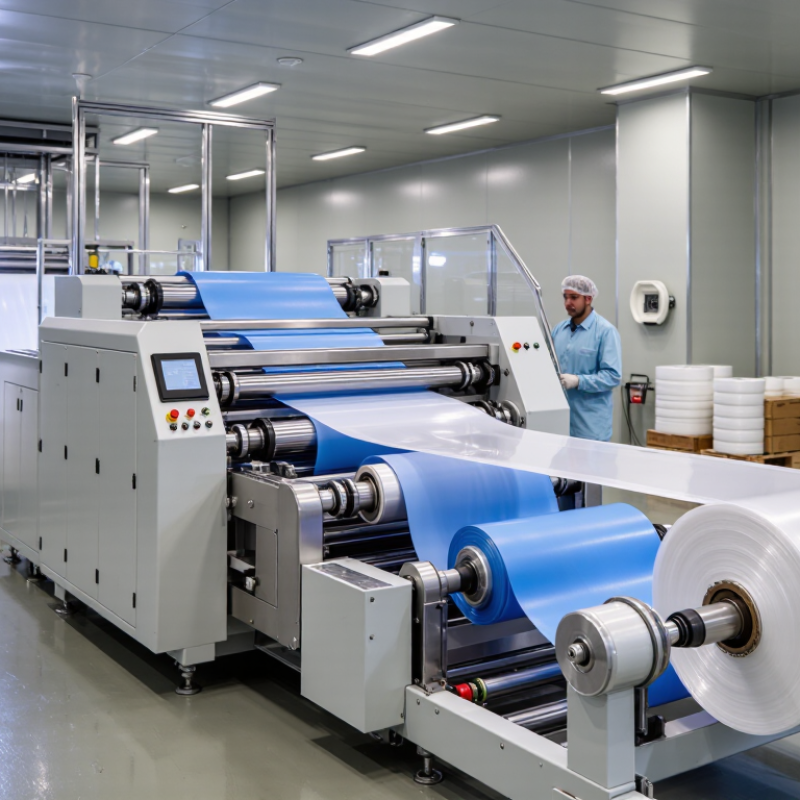
Filter-lamination buyers should define the material stack before comparing machines. Filter media may include meltblown polypropylene, spunbond polyester, fiberglass, cellulose, or expanded PTFE. Each material has different heat tolerance, porosity, stiffness, and surface energy. According to Grand View Research’s 2024 filtration market analysis, demand is growing across air, liquid, and industrial filtration applications. That growth increases pressure for stable, repeatable bonding.
Adhesives create another decision point. Hot-melt webs, powder adhesives, polyurethane, and acrylic systems behave differently under heat and pressure. A machine suitable for polypropylene may damage sensitive membrane media. Bonding targets can include media-to-media, media-to-support mesh, or media-to-frame assemblies. Buyers should check coating weight, activation temperature, line speed, nip pressure, and cooling time. Smithers’ 2024 nonwovens outlook highlights lightweight structures and functional surface treatments as continuing development areas. Still, reports often simplify factory conditions. Real production can be less predictable.
Tips: Request trials using the exact media, adhesive, and backing layer. Measure peel strength after conditioning, not only immediately after lamination. Inspect the web under backlight for blocked pores, wrinkles, and uneven adhesive distribution. A small pilot run may reveal more than a polished specification sheet. Do not ignore operator access, roll-change time, or cleaning requirements. These details quietly affect output.
| Rank | Machine Configuration | Typical Filter Media | Common Adhesives or Bonding Materials | Primary Bonding Target | Typical Process | Indicative Working Range | Typical Filter Applications | Key Buyer Considerations |
|---|---|---|---|---|---|---|---|---|
| 1 | Hot-Melt Web and Film Laminator | Nonwoven PP PET spunbond Glass fiber | EVA hot-melt film Polyamide hot-melt film Reactive polyurethane film | Filter media to support layer, scrim, foam, or protective facing | Heated nip lamination with pressure-controlled rollers | Web width: approximately 300–2,000 mm Line speed: approximately 5–60 m/min Bonding temperature: commonly 80–180°C, depending on adhesive | HVAC panels, cabin-air filters, prefilters, industrial dust filters | Check adhesive coat weight, open time, thermal damage risk, and release-liner handling. |
| 2 | Hot-Melt Spray Lamination Line | Meltblown PP Spunbond PP Synthetic fiber media | EVA hot-melt APAO hot-melt Pressure-sensitive hot-melt | Distributed adhesive layer between porous filter webs | Slot, spiral, or fiberized spray application followed by nip bonding | Web width: approximately 400–2,400 mm Line speed: approximately 10–120 m/min Adhesive add-on: often controlled in the low-to-medium g/m² range | Air-filtration rolls, surgical-mask media assemblies, disposable filter composites | Evaluate spray uniformity, overspray control, adhesive viscosity, and media pressure drop. |
| 3 | Ultrasonic Filter-Media Laminator | PP nonwoven PET nonwoven Composite laminates | No added adhesive in many designs Thermoplastic bonding layer when required | Thermoplastic media-to-media or media-to-frame contact points | High-frequency mechanical vibration creates localized melt bonds | Frequency: commonly around 20–35 kHz Bond width: generally localized rather than full-area Suitable for intermittent or continuous web bonding | Face masks, compact air filters, edge sealing, separator attachment | Best for thermoplastic components; control horn pressure, amplitude, energy, and dwell time. |
| 4 | Thermal Calender Laminator | Thermoplastic nonwoven Bicomponent fiber web Polyester media | No separate adhesive when fibers are thermally bondable Low-melt powder or web may be added if necessary | Fiber-to-fiber consolidation or media-to-carrier bonding | Heated engraved or smooth rollers apply heat and pressure | Web width: approximately 500–3,200 mm Line speed: approximately 10–150 m/min Temperature: commonly 90–220°C | Prefilters, automotive intake media, protective layers, dust-collection media | Consider basis weight, embossing pattern, porosity retention, nip pressure, and roller temperature. |
| 5 | Pleat-Creasing and Hot-Melt Bead Lamination Machine | Synthetic meltblown Glass-fiber paper Cellulose filter paper | EVA or polyolefin hot-melt beads Polyurethane hot-melt for selected applications | Pleat separators, support mesh, or adjacent pleat surfaces | Pleating followed by controlled adhesive-bead dispensing and setting | Pleat height: commonly 10–80 mm Adhesive bead diameter: often approximately 0.5–3 mm Output depends on pleat pitch and filter length | Panel filters, cartridge filters, automotive air filters, HEPA-style modules | Verify bead placement, separator spacing, pleat stability, and adhesive compatibility with the media. |
| 6 | Membrane-to-Support Lamination Machine | PTFE membrane PES membrane PVDF membrane Polypropylene support | Acrylic pressure-sensitive adhesive Polyurethane adhesive Thermoplastic adhesive film | Microporous membrane to nonwoven, mesh, or porous backing | Low-tension web handling with controlled nip pressure and optional heat | Web width: approximately 200–1,600 mm Line speed: approximately 1–40 m/min Low web tension is used to protect fragile membranes | Water-treatment cartridges, laboratory filtration, sterile vent filters, gas filtration | Prioritize pore protection, extractables, chemical resistance, dimensional stability, and cleanroom suitability. |
| 7 | Solvent-Based or Water-Based Adhesive Coating Laminator | Cellulose paper Glass fiber paper Polyester fabric | Water-based acrylic Solvent-based polyurethane Acrylic or rubber pressure-sensitive adhesive | Continuous adhesive film between filter media and carrier layers | Gravure, reverse-roll, knife-over-roll, or slot-die coating followed by drying | Coating width: approximately 300–2,000 mm Line speed: approximately 5–80 m/min Drying temperature depends on solvent or water removal requirements | Industrial liquid filters, composite air media, protective filter laminates | Assess drying capacity, VOC controls, residual moisture, adhesive migration, and coating-weight accuracy. |
| 8 | Impulse Heat-Sealing and Edge-Lamination Machine | PP nonwoven PE film Thermoplastic mesh | No added adhesive for compatible thermoplastics Heat-sealable coating or film where required | Perimeter seams, pockets, sleeves, and edge reinforcements | Heated sealing bars or impulse wires apply localized heat and pressure | Seal width: commonly 2–20 mm Cycle time: typically fractions of a second to several seconds Suitable for cut-sheet or assembled filter parts | Bag filters, dust bags, respirator components, disposable filter packs | Control seal temperature, pressure, dwell time, cooling, and seam peel strength. |
| 9 | Rotary Screen Adhesive Printing Laminator | Nonwoven media Filter paper Foam support Mesh | Hot-melt adhesive Water-based acrylic Reactive polyurethane adhesive | Patterned adhesive bonding between media and reinforcement layers | Rotary screen printing deposits dots, lines, or grid patterns before nip bonding | Pattern width: approximately 300–1,800 mm Line speed: approximately 5–60 m/min Pattern open area is adjusted to balance bond strength and airflow | Air filters, acoustic filter composites, separator-backed media | Compare pattern repeatability, adhesive penetration, open area, and pressure-drop impact. |
| 10 | Continuous RF or Dielectric Laminator | PVC-coated filter fabrics TPU films PU-coated textiles | Thermoplastic coating already present on the substrate TPU or PVC bonding film | Thermoplastic-coated fabric to film, seam, or reinforcement layer | Radio-frequency energy heats polar thermoplastic layers for localized bonding | Bonding frequency: commonly in the industrial RF range near 27 MHz Bond width: commonly 2–30 mm for seams or patterned areas Best suited to RF-responsive thermoplastics | Reusable industrial filter bags, coated technical textiles, liquid-filter housings and sleeves | Confirm dielectric compatibility, electrode design, field uniformity, safety shielding, and seam strength. |

Top 10 Filter Materials Lamination Machines for Buyers
A buyer should define the filter target before comparing the top ten machines. For HEPA media, verify tested performance at 0.3 μm, not only a supplier’s marketing claim. The lamination process must preserve efficiency after heat, pressure, and handling. Ask for test conditions, sample size, and repeatability. Reports should be traceable.
GSM affects stiffness, pressure drop, and material cost. Record the base media GSM, adhesive add-on, and finished GSM separately. A machine handling 80–150 GSM material may struggle with heavier support layers. Width needs equal attention. Measure usable web width, edge trim, and alignment tolerance. A 1,600 mm machine may deliver less output after trimming. Check roll diameter and tension control too.
Speed can look impressive on a specification sheet. Peak speed is seductive. Yet high speed may reduce bonding consistency or create wrinkles. Compare stable production speed, not the short trial peak. During trials, inspect a one-metre sample every few rolls. Check bond strength, surface damage, temperature stability, and final 0.3 μm performance. One assumption deserves rechecking: faster production is not always lower cost. Scrap, rework, and uneven rolls can quietly erase the savings. A practical buyer should request a trial using the intended GSM, width, adhesive, and operating speed. Small details matter.
This anonymous buyer benchmark compares typical upper operating ranges for filter-media lamination machine classes. HEPA efficiency is evaluated at 0.3 μm, while GSM, web width, and line speed should be confirmed against the target media structure and adhesive system before purchasing.
The top ten machines fall into three practical groups: roller, hot-melt, and ultrasonic bonding. Roller laminators apply pressure through heated or unheated cylinders. They suit continuous filter media and stable web widths. Hot-melt machines deposit adhesive in dots, lines, or films. They offer flexible bonding with limited material contact. Ultrasonic systems use vibration, pressure, and localized heat. They reduce consumables, but setup accuracy matters greatly.
MarketsandMarkets estimates the global filtration and contamination control market could reach about USD 58.5 billion by 2028. This growth increases demand for consistent multilayer filter construction. For high-volume lines, roller machines often provide strong speed and simple maintenance. Hot-melt systems help when substrates differ in porosity or thickness. Ultrasonic equipment can protect sensitive layers from excessive thermal exposure.
However, no machine type wins every application. In factory trials, edge curling and uneven tension still appear, even with advanced controls.
Tips:
Compare bonding strength after humidity and heat exposure. Ask for data at your actual web speed. Check adhesive consumption, horn life, roller hardness, and cleaning access.
The European Committee for Standardization emphasizes repeatable filter performance through controlled testing. Buyers should record peel strength, pressure drop, and dimensional change.
A small pilot test is wiser than relying on brochures. Some specifications look impressive, yet production waste may reveal another story.
Top 10 Filter Materials Lamination Machines for Buyers
Compare Data: 20–200 m/min, 300–2,000 mm Width, and ±1°C Control
Selecting a filter-material lamination machine starts with production targets, not brochure language. The listed speed range, from 20 to 200 m/min, covers trial batches and high-volume converting. Lower speeds help operators inspect adhesive spread and web alignment. Higher speeds demand stable tension, accurate unwinding, and fast response from the heating system. A machine rated at 200 m/min may not maintain quality with heavy nonwoven layers or uneven filter media.
Working width also changes the buying decision. A 300 mm machine suits narrow rolls and laboratory-scale development. Widths near 2,000 mm support larger rolls but require stronger frame construction and better edge control. Ask for usable width, not only maximum width. The difference can affect material waste. It is a small detail, but an expensive one.
Temperature control of ±1°C sounds precise, yet sensor placement matters. Sensors near the heater may not represent the actual nip temperature. During factory checks, measure across the roller surface and record readings at operating speed. Review adhesive viscosity, pressure stability, and cooling performance together. I have seen clean test results fail during longer runs. Dust, changing room temperature, and roll hardness can expose weaknesses. Buyers should request sample trials using their actual filter structure, thickness, and adhesive system. A detailed acceptance record is more useful than a confident sales promise.
Machine ranking should begin with measurable filtration performance, not advertised line speed. ISO 16890 classifies air filters by ePM1, ePM2.5, and ePM10 efficiency. Its test method uses realistic particle-size distributions. A lamination machine must preserve uniform bonding without blocking pores or creating edge leaks.
For high-efficiency media, EN 1822 evaluates performance at the most penetrating particle size, or MPPS. H13 requires at least 99.95% local efficiency, while H14 requires 99.995%. Buyers should request production samples, MPPS test records, and full-width inspection data. ASTM D737 can verify air permeability, while ASTM D903 can help assess peel resistance where adhesive bonding applies. These tests expose weak lamination settings quickly.
Total cost needs a wider lens. The IEA’s Energy Efficiency 2023 report states that buildings use about 30% of global final energy. Efficient filters can reduce fan energy, but excessive adhesive loading may increase pressure drop.
Compare scrap rate, curing energy, cleaning time, adhesive use, spare parts, and operator hours.
My own shortlist is not perfect. A cheaper machine may win on price, then lose through unstable tension and rejected rolls. Record these losses for twelve months, not one impressive trial. Small details matter.


For those larger-sized parts, or smaller quantity runs, we have 2 independent powder coat booths and ovens. The quality, durability and affordability of today’s powder coating finishes make this the process of choice for world-class companies.
Powder coating advantages over other forms of coating are many. Materials used in the Powder coating process can be metals and non-metals that come in a multitude of thicknesses, textures, colors, etc. Another of Powder coating’s biggest advantages over conventional coatings is its ability to create finishes in many different textures. Powder Coating Booths allow us the ability to apply these advantages to large products.
Tri-State Fabricators runs a full-service conveyor line for painting. Wet painting can provide protection or decoration to many different part styles. From start to finish, every project is easier to undergo random and point-based inspection by our skilled painting team.
Advantages to our Wet Paint Line are these lines start with product prep and ends with a thorough inspection of a high quality finished product. Our ability to complete large and small projects with a superior finish and doing so in a timely and economical fashion. This passes along the savings in production to our customers. When powder coating ins not an option, our Wet Paint Line gets the job done right the first time.
When the parts get big and heavy we roll-out our custom paint racks and oversize booth. By utilizing our partnerships with all the major paint brands, we can match virtually any color with wet paint.
The advantages of having access to a Wet Paint Booth are many. Large projects of many different shapes can be loaded into the booth. The Wet Paint Booth offers an environment that is much more controlled than a typical parts painting operation.
Not only are they used because of their controlled environment, but they’re are also advantageous when it comes to applying paint to parts that are needed in industries that require specialty coatings such as medical, aerospace, etc.
Our military forces have some very high standards when it comes to the finish of their vehicles and equipment. From the first pre-treatment step to final coat, it takes a great deal of knowledge and experience to protect the men and women of our armed forces. They deserve only the best, and Tri-State Fabricators provides it.
All of our processes are closely monitored by our staff and management teams. Both of which are highly trained in the processes of metal fabrication and finishing. Tri-State Fabricators’ goal is to always fully satisfy each and every customer, including the military. We will always put a 110% into what we do.
Abrasive media blasting is an excellent way to remove old paint, rust, and increase the paint/powder adhesion. Glass beads produce a much smoother and brighter finish than angular abrasives; leaving the part clean yet without any dimensional change. Chemically inert and environmentally friendly, we can recycle our beads approximately 30 times; making them a more preferred method of metal cleaning or surface finishing.
Advantages to Glass Bead Blasting are many. Glass bead blast media is used when a project is needing rough surfaces need to become smooth for applications of coatings such as paint. It is typically used to clean paint and rust from a product surface without deforming the surface it is being used on. Overall, compared to many other blasting media, Glass Bead Blasting is a very economical choice and those savings are always passed on to our customers.
Tri-State Fabricators utilize a zinc phosphate wash to clean and etch the material to ensure the best paint adhesion possible. The unique design of our 3-stage wash system does the work like a 5-stage. From Cleaning and rinsing to conversion coating and post-treatment, Our Part Washing process is a complete service and works throughout the fabrication service and the finishing service.
Along with the previously mentioned benefits, Curing is a vital chemical reaction that leaves the product finish hard and relatively safe from mild abrasion and aggressive corrosion. This process can be done in more than one way; ambient air-dry or in curing ovens at temps that exceed 240°.
From fixing paint mistakes (someone else’s of course) to simply cleaning our paint line hooks, our burn-off oven is put to good use. After a quick burn-off, a little clean up, and a fresh coat of paint, your parts will look better than new.
Why does our Burn-Off Oven work so well? Because super heating the air around parts turns the materials into ashes. From paint and powder coatings to rubber and machining oils, high temps do the job without degrading the integrity of the part.
Masking is a vital part of producing high quality products. We have die-cut masking patterns to protect machined surfaces as well as a wide range of plugs and caps to protect threaded holes and bolts. We provide permanent and temporary masking.
Masking allows the selected sections of a product to be protected from a fabrication or finishing service. This can be with both chemicals when etching and tapes, paints when only finishing just a section of the product. Masking is great in aiding the customization process of a project.
Screen printing is a photographic process that transfers artwork onto a porous nylon screen which allows colored ink to flow through the screen and be deposited on an aluminum or plastic component. We can generally have just about any design created onto a screen for your parts.
Some of the advantages of Screen Printing are, brand recognition for your business displaying on your products, assembly instructions, product warnings/hazards, etc. Tri-State Fabricators produces Screen Printing of the highest quality so you know it’s durable.
Metal Finishing is the art of treating the exterior portion of product, often metal but can also be made of other materials, so that the surface is clean and free of any debris. Then the process of applying coats or either paint of powder coat takes place. This coating process improves the quality of the product in both appearance and resistance to wear and corrosion.
Tri-State Fabricators, Inc., understands that a project typically isn’t complete until a high-quality finish has been added to your product. This is why our painting and powder coating teams continuously inspect the products throughout the Metal Finishing process.

