Top 10 Evaporation Evaporators for Global Buyers
Choosing the right Evaporation Evaporators requires more than comparing purchase prices. The right system must match product characteristics, production volume, energy targets, and available utilities. This guide introduces ten evaporator options for global buyers seeking dependable processing performance. It compares thermal efficiency, evaporation capacity, material quality, automation, cleaning access, maintenance needs, and supplier support. A unit that performs well in a laboratory may struggle beside a busy production line. Small details matter. A fouled heat-transfer surface can reduce output, increase steam use, and interrupt delivery schedules. Experienced engineers therefore review operating conditions before trusting attractive catalogue figures.
No single evaporator suits every factory. A dairy processor may prioritize gentle treatment and hygienic cleaning, while a food ingredient producer may need high concentration efficiency. Regional power costs, water quality, climate, spare-part access, and operator training also influence the final decision. We consider these practical differences instead of presenting a universal winner. Our ranking is useful, but not absolute. Some judgments remain debatable, especially when manufacturers report performance under different test conditions. Buyers should request verified data, reference installations, warranty terms, and commissioning support before signing a contract. That sounds simple. It is often overlooked. The following selection focuses on realistic ownership value, transparent specifications, and long-term operating confidence. Each entry highlights where the equipment performs strongly and where careful evaluation remains necessary.
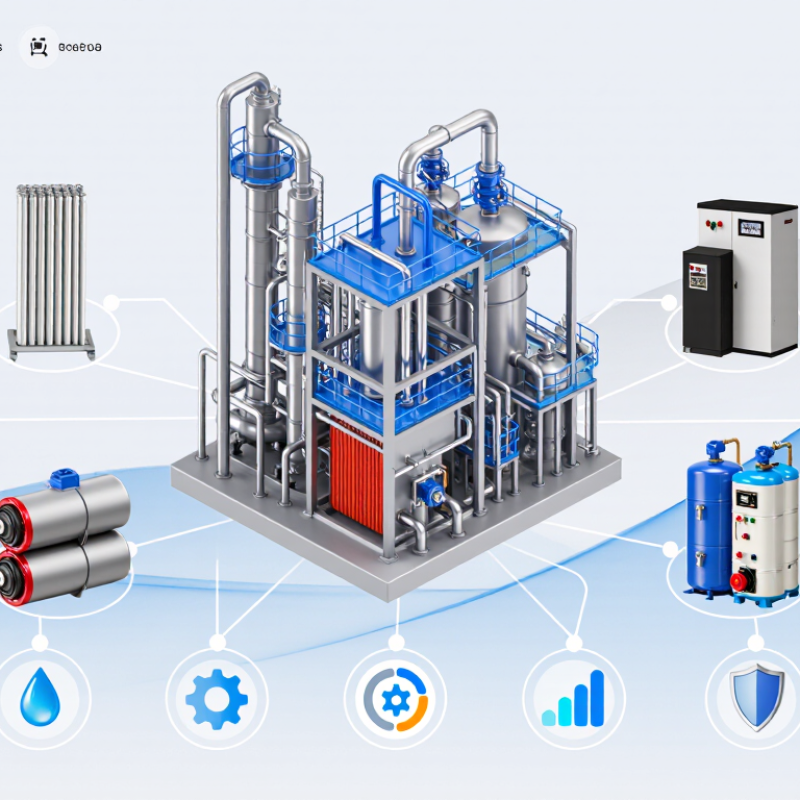
Evaporator Fundamentals and Their Role in Industrial Processing
Top 10 Evaporation Evaporators for Global Buyers
Evaporators remove water by transferring heat into a liquid feed. The process concentrates dissolved solids, salts, proteins, or chemicals. Common designs include falling-film, rising-film, forced-circulation, plate, wiped-film, short-path, vacuum, multiple-effect, crystallizing, and mechanical-vapor-recompression units.
Selection begins with feed behavior, not catalog ranking. Falling-film systems suit heat-sensitive liquids and continuous production. Forced-circulation models handle viscous feeds and suspended crystals more reliably. Wiped-film designs support high-viscosity or fouling materials, but their mechanical complexity requires disciplined maintenance.
Vacuum operation lowers boiling temperature, protecting sensitive products from excessive thermal exposure. Small details matter, especially residence time and cleaning access.
Energy performance deserves close attention. The International Energy Agency reported that industry used about 37% of global final energy in 2022. Multiple-effect evaporation can reuse vapor between effects, reducing fresh steam demand. Mechanical vapor recompression can reduce external heating further, although electricity use and compressor conditions must be assessed carefully. The U.S. Department of Energy identifies heat recovery, insulation, and process integration as major industrial efficiency opportunities.
Real plants rarely match brochure assumptions. Feed concentration changes, scaling, and unstable steam pressure can weaken advertised capacity. A design tested with clean water may behave differently with proteins or minerals. Buyers should request mass-balance data, verified evaporation rates, fouling history, and cleaning-cycle evidence. The best unit is not always the most efficient on paper. It must remain controllable at the plant’s dirtiest operating point.
The Ten Main Evaporator Types Used by Global Buyers
Top 10 Evaporation Evaporators for Global Buyers
The ten main evaporator types serve different duties, feed qualities, and energy targets. Open-pan evaporators suit small batches and simple solutions, but they need large floor areas. Short-tube vertical evaporators handle moderate solids with steady natural circulation. Long-tube rising-film units offer high heat-transfer rates for low-viscosity liquids. Falling-film evaporators reduce residence time and protect many heat-sensitive products. They need even feed distribution. Poor distribution can cause dry surfaces.
Forced-circulation evaporators manage viscous feeds, crystallizing liquids, and heavy fouling. A circulation pump keeps liquid moving through the heater. Plate evaporators provide compact layouts and flexible capacity, although narrow channels may block easily. Wiped-film evaporators use rotating blades to spread thick liquid across a heated wall. Agitated thin-film units work well with concentrated, sensitive, or difficult-to-flow materials. Cleaning access matters more than many buyers expect.
Multiple-effect evaporators reuse vapor between heating stages, reducing steam consumption. Mechanical vapor recompression systems compress secondary vapor and return its heat to the process. They can lower operating costs, but electrical demand and control quality require careful review. A perfect ranking does not exist. Feed viscosity changes with temperature, and laboratory results may not represent plant behavior. Buyers should compare heat-transfer area, materials, residence time, fouling tendency, cleaning method, and local utility prices before selecting equipment.
How Evaporator Designs Differ in Capacity, Efficiency, and Operation
Top 10 Evaporation Evaporators for Global Buyers
Evaporator designs differ sharply in capacity, efficiency, and daily operation. Falling-film units suit large, heat-sensitive liquid streams. Their thin liquid film reduces residence time and protects product quality. Rising-film designs can handle simpler fluids, but they need stable circulation and heat transfer. Forced-circulation systems tolerate higher viscosity and fouling. They also consume more pumping energy.
Capacity is not only a tank-size question. Feed concentration, boiling temperature, solids content, and available steam determine real output. A compact vacuum evaporator may process less material, yet save energy through lower boiling temperatures. Multiple-effect systems reuse vapor between stages. This can reduce steam demand, although piping and controls become more complicated. More efficient on paper.
Operation often decides the final cost. Automatic cleaning reduces labor, but sensors and valves require skilled maintenance. Scraped-surface units manage sticky materials well, while their moving parts add wear points. In field evaluations, I look for inspection access, drainability, spare-part availability, and operator training needs. A high-capacity machine can underperform when cleaning takes too long.
Specifications can mislead. Laboratory tests rarely represent seasonal feed changes, unstable steam pressure, or inconsistent solids. Buyers should request pilot data using their actual liquid and target concentration. I would also question optimistic energy figures. Real plants lose heat, and operators make adjustments. That gap matters.
Top 10 Evaporation Evaporators for Global Buyers
How evaporator designs differ in capacity, efficiency, and operation
The chart compares representative industrial evaporation-capacity ranges, measured as tonnes of water evaporated per hour. Multiple-effect, falling-film, MVR, and vapor-recompression systems generally support higher throughput and better steam economy, while wiped-film, scraped-surface, and batch vacuum designs are preferred for smaller capacities, viscous products, heat-sensitive materials, or flexible operation. Actual performance depends on feed properties, boiling temperature, concentration ratio, number of effects, and operating conditions.
Key Buying Criteria for Selecting an Industrial Evaporator
Top 10 Evaporation Evaporators for Global Buyers
Key Buying Criteria for Selecting an Industrial Evaporator
Selecting an industrial evaporator starts with the feed, not the equipment catalogue. Record flow rate, solids content, viscosity, acidity, and heat sensitivity. A thin liquid may require different circulation than a syrup containing suspended particles. Small details matter. Ask for laboratory or pilot data before approving a full-scale design. Pilot testing can reveal foaming, scaling, and unexpected crystal formation that calculations often miss.
Energy use deserves careful attention. Compare steam consumption, vapor recompression options, heat-transfer area, and cooling-water demand. A low purchase price can become expensive after several years of operation. Check the expected boiling temperature and vacuum range under real production loads. Also inspect the proposed materials, especially around corrosive feed zones. Stainless steel may be suitable, but some fluids demand stronger alloys or special surface finishes.
Cleaning access is a practical buying criterion. Operators need drainable vessels, visible inspection points, and reliable cleaning-in-place coverage. Ask how long routine cleaning takes and how much product remains in the system. Instrument quality also affects safety and consistency. Useful controls include pressure, temperature, level, conductivity, and vapor-flow monitoring. Service availability matters across borders, too. Spare seals and sensors should arrive quickly. I have seen projects focus heavily on capacity while underestimating maintenance space. That mistake can delay production. Review utility fluctuations, operator training, documentation, and local compliance requirements before signing the specification.
Global Standards, Applications, and Supplier Evaluation Factors
Global buyers should compare evaporators through standards, applications, and evidence—not brochure rankings alone. Common options include falling-film, rising-film, forced-circulation, plate, scraped-surface, thin-film, batch, vacuum, multiple-effect, and vapor recompression systems. Each design suits different fluids, solids, viscosities, and heat sensitivities. Falling-film units often support gentle concentration of dairy or plant extracts. Scraped-surface designs handle thicker products. Wastewater applications may require forced circulation and careful fouling control.
Check the welds. Material selection must match corrosion risks, cleaning chemicals, temperature, and pressure. Suppliers should provide traceable material certificates, pressure-test records, and hygienic design details. ISO 9001 can indicate controlled quality processes, while ISO 14001 may support environmental management. ASME or PED compliance could matter, depending on the installation country and vessel classification. Regional requirements still need professional verification.
Supplier evaluation should include heat-transfer calculations, steam consumption, vacuum performance, feed variability, and expected uptime. Ask for pilot data using a similar liquid. Ask for evidence. Commissioning experience is valuable, especially when crystallization or foaming appears unexpectedly. Factory acceptance testing should verify controls, alarms, and cleaning cycles before shipment. Site acceptance testing should confirm actual capacity and product quality.
Service reach matters as much as equipment design. Review spare-parts availability, response times, training, and technical documentation. A low purchase price may conceal higher energy or maintenance costs. I have seen polished specifications miss seasonal feed changes. No shortlist is perfect. Buyers should challenge assumptions, record uncertainties, and compare lifecycle performance over several operating years.





