Top 10 Disc Diffuser Manufacturers for Global Buyers
Choosing the right Disc Diffuser can determine oxygen efficiency, maintenance costs, and biological treatment stability. For global buyers, the decision involves more than comparing prices or browsing attractive product photos. Membrane material, pore structure, air distribution, pressure loss, and field support all deserve close attention.
Dr. George Tchobanoglous, a respected wastewater-treatment expert, has emphasized that treatment must “protect public health and the environment.” That principle gives this comparison a practical foundation. A reliable manufacturer should provide clear oxygen-transfer data, operating conditions, material specifications, and verifiable project references. Buyers should also examine EPDM or PTFE membrane durability, connector quality, fouling resistance, and compatibility with existing blowers.
This guide reviews ten leading Disc Diffuser manufacturers serving international markets. The assessment considers product performance, manufacturing consistency, technical documentation, customization capacity, after-sales service, and delivery experience. Specific details matter. A diffuser operating in a deep aeration tank faces different pressure and fouling risks from one used in a compact municipal plant.
No ranking is perfect.
Test conditions vary between suppliers. Laboratory results may not reflect a full-scale basin with uneven airflow, seasonal temperature changes, or difficult wastewater. That limitation deserves attention. Global buyers should treat this list as a qualified starting point, then confirm performance through pilot testing, reference checks, and written warranty terms. The strongest supplier is not always the largest. It is the one that delivers measurable efficiency, stable operation, and practical support after installation.
Disc Diffuser Basics and Their Role in Water Treatment
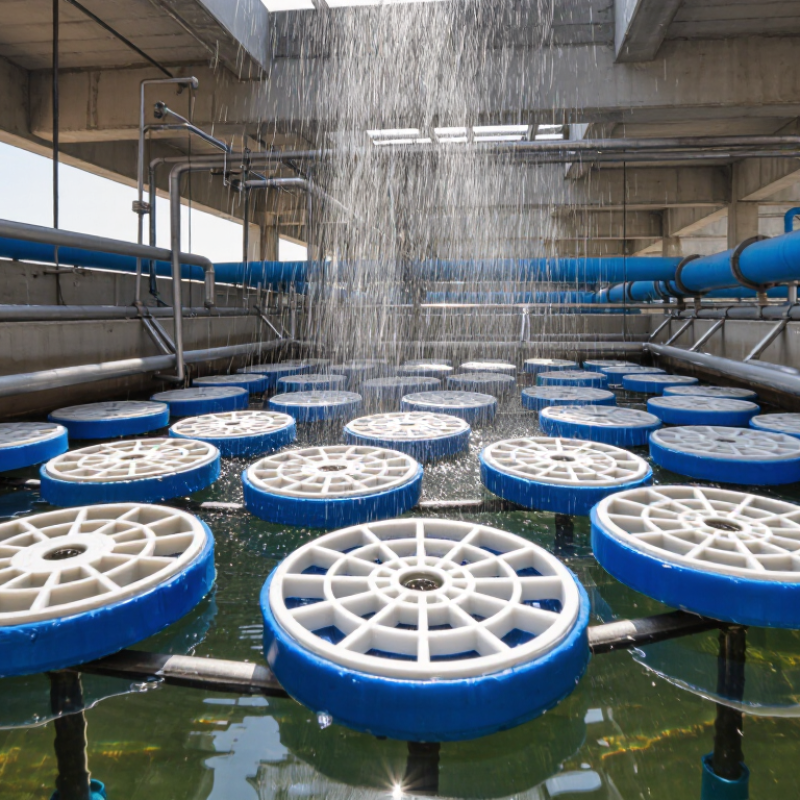
Disc diffusers are submerged aeration devices used in wastewater treatment basins. They release compressed air through small pores in a flexible membrane. The air forms fine bubbles, increasing contact with water and improving oxygen transfer. Fine bubbles usually offer higher efficiency than coarse bubbles. However, they can clog more easily.
A typical system includes diffuser discs, air headers, valves, and a blower. Water depth affects pressure and energy demand. Temperature, solids, grease, and biological growth also influence performance. In operating plants, uneven bubbling often signals fouling, damaged membranes, or poor air distribution. A clean-looking disc may still have hardened pores. That detail is easy to miss. Operators should compare airflow, pressure, dissolved oxygen, and basin readings during routine inspections. Excessive airflow wastes electricity and may disturb settling.
Global buyers should examine test data, membrane material, pore consistency, service life, and replacement procedures. Common membrane options include EPDM, silicone, and other engineered elastomers. The best choice depends on wastewater chemistry and operating temperature. A reliable manufacturer should provide pressure-loss curves and practical installation guidance. Factory claims are useful, but site conditions can change results. Buyers should request independent performance evidence when possible. Disc diffusers are simple in appearance, yet their small pores control a major part of treatment efficiency.
Standards for Evaluating Global Disc Diffuser Manufacturers
Top 10 Disc Diffuser Manufacturers for Global Buyers
Standards for Evaluating Global Disc Diffuser Manufacturers
A reliable disc diffuser manufacturer should provide measured oxygen-transfer results, not only attractive catalog figures. ASCE/EWRI 18-18 outlines clean-water testing methods for oxygen-transfer performance. Buyers should request test conditions, airflow rates, water temperature, immersion depth, and fouling assumptions. Without these details, a claimed efficiency number has limited value.
Start with membrane quality. EPDM and silicone behave differently under chemicals, temperature changes, and biological loading. Check pore consistency, tensile strength, compression recovery, and resistance to clogging. Pressure-drop data matters too. A diffuser that needs excessive blower power can increase operating costs significantly. The World Bank reported that roughly 80% of global wastewater is released without adequate treatment. This strengthens the case for efficient, durable aeration equipment. Still, capacity alone does not prove suitability.
Manufacturers should also show quality-system certification, batch traceability, warranty terms, and field performance from comparable plants. Ask for independent laboratory reports and installation references in similar climates. Energy modeling should include blower efficiency, cleaning frequency, replacement labor, and expected membrane life. The lowest purchase price may age badly. I would not accept a perfect lifespan claim without maintenance records. Real plants face grease, grit, uneven airflow, and operator mistakes. That is where supplier experience becomes visible.cuntegn
Top 10 Disc Diffuser Manufacturers for Global Buyers — Standards for Evaluating Global Disc Diffuser Manufacturers
This chart presents a practical buyer-side weighting model for comparing disc diffuser manufacturers. The criteria reflect commonly used wastewater-aeration evaluation factors, including oxygen-transfer testing, pressure-loss control, membrane durability, quality management, and lifecycle support.
The percentages represent evaluation priorities rather than company rankings or reported manufacturer results. Reference points include ASCE/EWRI oxygen-transfer testing practices, ISO 9001 quality-management principles, ASTM D543 chemical-resistance testing, and EN 12255 wastewater-treatment design guidance.
Top 10 Disc Diffuser Manufacturers by Products and Market Reach
Top 10 Disc Diffuser Manufacturers for Global Buyers
The top ten disc diffuser manufacturers are best compared by product depth and market reach. Strong producers usually offer fine-bubble, coarse-bubble, ceramic, EPDM, silicone, and membrane disc diffusers. These options support municipal wastewater plants, food-processing facilities, aquaculture systems, and industrial treatment lines. Product quality depends on pore uniformity, air distribution, membrane strength, and resistance to clogging. A serious supplier should provide airflow ranges, oxygen-transfer data, material specifications, and installation guidance. Factory testing matters too.
Market reach reveals another layer of capability. Leading manufacturers often serve multiple regions through local distributors, technical teams, and spare-part networks. Buyers should check delivery times, export experience, warranty terms, and after-sales response. A supplier may sell widely but still struggle with local support. That detail is easy to miss. It can affect maintenance costs and plant downtime.
Tips: Compare performance data under similar water temperatures and operating depths. Ask for references from facilities with comparable loading conditions. Inspect replacement-membrane availability before signing a long-term contract. Do not judge a diffuser only by its purchase price. Energy use, cleaning frequency, service life, and installation labor may change the real cost. Rankings are also imperfect; a manufacturer with fewer products may provide better engineering support for a specialized project. Credible evaluation needs technical documents, field evidence, and careful verification.
How Global Buyers Can Choose the Right Disc Diffuser Supplier
Top 10 Disc Diffuser Manufacturers for Global Buyers
How Global Buyers Can Choose the Right Disc Diffuser Supplier
Global buyers should compare disc diffuser suppliers through measurable performance, not catalog photographs. The U.S. EPA’s 2023 Clean Watersheds Needs Survey estimated wastewater infrastructure needs at $630.1 billion over 20 years. That investment makes lifecycle efficiency more important than the lowest purchase price. EPA energy guidance also identifies aeration as one of the largest electricity loads in wastewater treatment. Small pressure losses can become expensive over thousands of operating hours.
Ask each shortlisted manufacturer for clean-water oxygen transfer results, process-water test conditions, airflow limits, and pressure-loss curves. ASCE/EWRI 18-18 provides a recognized framework for measuring oxygen transfer in clean water. However, clean-water data is not enough. Industrial wastewater may contain oil, fibers, salts, or biological solids. Request fouling evidence, membrane aging data, and field references from similar applications. No test is perfect.
Material selection deserves close attention. EPDM, silicone, and other membranes respond differently to temperature, chemicals, and cleaning cycles. A reliable supplier should explain pore structure, rubber formulation, support plate design, and replacement procedures. Check quality records, traceability, inspection plans, and ISO 9001 certification. Confirm whether spare parts are locally available.
A practical evaluation can score ten suppliers across oxygen transfer, energy demand, service response, warranty terms, and total ownership cost. Do not trust impressive percentages without test boundaries. I would also require a pilot trial when wastewater conditions are unusual. It costs more initially, but one overlooked fouling problem can erase years of projected savings.





