


Choosing a Control Valve manufacturer is not merely a comparison of catalogs, prices, or familiar logos. It is a decision about process stability, plant safety, energy use, and long-term maintenance. A valve installed beside a steam line may open thousands of times each week. Small errors in sizing, materials, or actuator selection can then become expensive operational problems.
Béla G. Lipták, a respected process-control authority, wrote, “The control valve is the most common final control element in the process industries.” That observation still matters. A reliable Control Valve must respond accurately, tolerate demanding media, and remain serviceable when production cannot easily stop. The best manufacturers usually combine tested designs, application engineering, global service networks, and documented quality systems. Their strengths may appear in different areas, such as severe-service performance, digital diagnostics, corrosion resistance, or custom automation.
This Top 10 Control Valve Manufacturers in the World guide examines those practical differences. It considers product range, engineering capability, industry experience, certifications, aftermarket support, and evidence from real installations. It does not treat market size as proof of technical excellence. That would be too simple.
Some rankings remain debatable. Regional service quality can change the customer experience dramatically. A technically strong valve may still disappoint when spare parts arrive late or local engineers lack training. Therefore, readers should match each manufacturer’s strengths with their own pressure, temperature, flow, and maintenance conditions. The final choice should be verified against the process design, not accepted because a brand appears near the top.
Control Valve Fundamentals and Their Role in Process Control
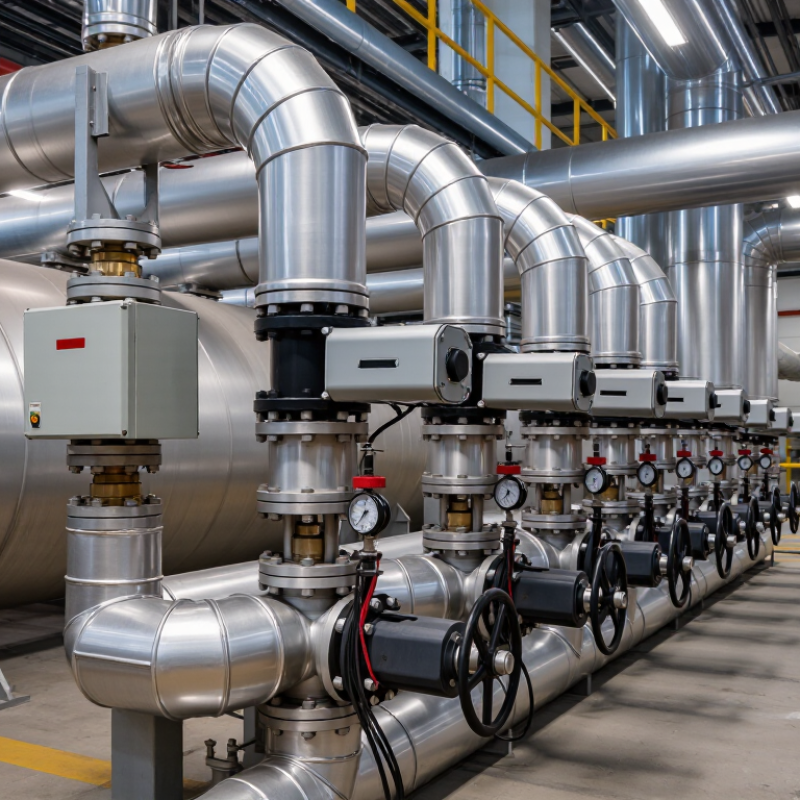
Control valves regulate fluid flow, pressure, temperature, and liquid level in process plants. A controller sends a signal, while the actuator moves the valve plug or disc. The valve then changes flow resistance inside the pipeline. Small movements can create large process changes.
Selection requires more than comparing the top 10 control valve manufacturers worldwide. Engineers must evaluate flow coefficient, pressure drop, temperature, cavitation risk, noise, and material compatibility. A valve that fits the line may still perform poorly. That assumption fails often. Real plants are less tidy than spreadsheets.
Grand View Research estimates the global control valve market reached about USD 7.8 billion in 2023, with continued growth through 2030. MarketsandMarkets projects expansion from roughly USD 7.6 billion in 2023 to USD 10.4 billion by 2028. These figures reflect wider automation demand, but market forecasts differ by scope and methodology. ISA standards and plant commissioning records also show why calibration, fail-safe positioning, and actuator response matter. A well-sized valve should respond smoothly, limit energy losses, and remain stable during disturbances. Maintenance teams should inspect packing, position feedback, and air supply regularly. Otherwise, a precise control strategy can become unreliable hardware.

Ranking the top control valve manufacturers requires more than comparing catalog size. Serious evaluation begins with application evidence. Reviewers should examine pressure classes, temperature limits, flow characteristics, and materials for corrosive service. These details show whether a manufacturer designs for real process conditions or broad market coverage. An experienced supplier can explain cavitation control, flashing risks, actuator sizing, and positioner response without hiding behind jargon. Ask for test records.
Quality systems deserve equal attention. Look for traceable materials, calibrated inspection tools, documented assembly procedures, and repeatable factory testing. Certifications can support credibility, but they do not replace technical verification. A reliable manufacturer should provide pressure-test results, leakage classifications, dimensional records, and clear acceptance criteria. Factory witness testing may reveal weaknesses before equipment reaches a plant. Small details matter.
Service capability separates a dependable manufacturer from a convenient supplier. Evaluate response times, spare-part availability, field troubleshooting, training, and repair support across regions. Review comparable installations, not only polished case studies. Speak with maintenance teams when possible. Their experience often exposes delays that sales documents omit. Digital diagnostics and cybersecurity controls also require careful review, especially for connected valve systems. No manufacturer leads in every category. Published claims still need independent checking. That is where evaluation becomes less comfortable, but more useful.
| No. | Evaluation Criterion | Suggested Weight | Relevant Technical Benchmark | Verification Evidence | Why It Matters |
|---|---|---|---|---|---|
| 1 | Product Range and Valve Types | 15% | Coverage of globe, rotary, ball, butterfly, eccentric plug, and severe-service control valves, with pneumatic, electric, or hydraulic actuation options. | Product catalogs, dimensional drawings, pressure-temperature ratings, flow-coefficient data, and application documentation. | A broad portfolio helps customers standardize equipment across process, energy, water, chemical, and industrial applications. |
| 2 | Flow-Control Performance | 13% | Published Cv or Kv data, inherent flow characteristics, controllability information, rangeability data, and cavitation or flashing guidance. | IEC 60534 sizing documentation, laboratory test records, performance curves, and application-specific sizing calculations. | Accurate flow control improves process stability, product quality, energy efficiency, and equipment protection. |
| 3 | Pressure, Temperature, and Material Capability | 12% | Compliance with applicable pressure-boundary requirements, including ASME B16.34, together with documented material and temperature limits. | Material certificates, pressure-temperature charts, casting or forging specifications, and design verification records. | Correct pressure, temperature, and material selection is essential for safe operation and long service life. |
| 4 | Seat Leakage and Shutoff Reliability | 11% | Clearly stated leakage class and test method, such as IEC 60534-4 or ISO 5208, with soft-seat or metal-seat options where required. | Factory acceptance test reports, leakage test certificates, seat-material specifications, and published leakage classifications. | Reliable shutoff reduces emissions, prevents product loss, and supports safe isolation during operation and maintenance. |
| 5 | Actuator and Positioner Integration | 10% | Compatibility with common pneumatic, electric, and hydraulic actuators, plus support for digital positioners and standard communication protocols. | Actuator sizing tables, instrument compatibility lists, calibration records, control-loop test reports, and communication protocol documentation. | Integrated actuation improves response time, control accuracy, diagnostics, and commissioning efficiency. |
| 6 | Safety and Regulatory Compliance | 10% | Applicable certifications and design practices related to pressure equipment, functional safety, hazardous areas, fire safety, and emissions control. | Valid certificates, third-party assessment reports, quality manuals, safety-instrumented-system documentation, and compliance declarations. | Verified compliance helps operators meet legal, contractual, and plant-level safety requirements. |
| 7 | Manufacturing Quality and Testing | 9% | Controlled manufacturing processes, traceability, non-destructive examination where applicable, calibration control, and final inspection procedures. | ISO 9001 certification, inspection and test plans, material traceability records, hydrostatic test reports, and non-destructive testing results. | Consistent quality reduces premature failures, field repairs, and unplanned production interruptions. |
| 8 | Reliability and Lifecycle Durability | 8% | Documented service-life expectations, wear-resistant trim options, maintenance intervals, cycle testing, and design provisions for difficult services. | Endurance test results, failure-rate information, reference-project records, maintenance manuals, and spare-parts recommendations. | Durable valves reduce total cost of ownership and minimize downtime in continuous-process facilities. |
| 9 | Global Supply Chain and Service Coverage | 7% | Regional engineering support, spare-parts availability, repair capability, local inventory, training resources, and documented delivery processes. | Service-center locations, stated lead times, spare-parts policies, technical support procedures, and customer training programs. | Strong local support shortens response times and improves maintenance continuity for international projects. |
| 10 | Technical Innovation and Sustainability | 5% | Digital diagnostics, condition monitoring, low-emission packing systems, energy-efficient actuation, repairability, and material-efficiency initiatives. | Technical papers, product lifecycle information, emissions test results, digital platform documentation, and environmental management certifications. | Innovation can improve predictive maintenance, reduce emissions, lower energy use, and support long-term sustainability targets. |
The ten profiled control valve manufacturers represent different strengths across process industries. Their portfolios commonly cover globe, ball, butterfly, and diaphragm valves. The strongest suppliers combine accurate flow control with actuator integration, diagnostics, and lifecycle support. MarketsandMarkets valued the global control valve market at about USD 7.8 billion in 2023. It projects growth to approximately USD 10.5 billion by 2028. That expansion reflects demand from energy, chemicals, water treatment, and advanced manufacturing.
One manufacturer profile may emphasize severe-service valves for high pressure and abrasive media. Another may focus on compact valves for pharmaceutical skids and laboratory systems. Several leading producers invest in smart positioners, remote monitoring, and predictive maintenance. TÜV-certified testing, traceable materials, and documented factory calibration strengthen technical credibility. However, published performance figures are not always comparable. Different test fluids, pressure classes, and reporting methods can distort direct rankings. That limitation deserves attention.
Tips: Compare installed cost, not purchase price alone. Check leakage class, response time, spare-part availability, and local service coverage. Ask for test records and application references. A valve that performs well in clean water may fail quickly in slurry service. Industry reports provide useful market direction, but site data should guide the final selection. In my assessment, reliability depends as much on sizing discipline as on manufacturer reputation. Mistakes still happen.
Manufacturer-neutral comparison of standardized control valve flow characteristics used across industrial valve applications.
The chart compares normalized flow capacity against valve travel for linear, equal-percentage, and quick-opening characteristics. Values are expressed as a percentage of maximum flow capacity (Cv/Cvmax × 100), reflecting commonly used control-valve engineering profiles rather than individual company performance.
The world’s leading ten control-valve manufacturers now compete through smarter product technologies, not only flow capacity. Their portfolios commonly include pneumatic and electric actuators, digital positioners, remote diagnostics, and fieldbus communication. A 2024 Global Control Valve Market Report estimates the sector will grow at roughly 6% annually through 2030. That growth reflects rising demand for measurable energy efficiency.
For chemical plants, manufacturers supply corrosion-resistant alloys, lined valves, and severe-service trims for abrasive fluids. Oil and gas facilities require high-pressure designs, emergency shutdown integration, and reliable performance across wide temperature ranges. Power stations often use steam-rated globe valves, while food and pharmaceutical plants need hygienic, cleanable designs. A 2024 Industrial Automation Outlook reports that process industries remain the largest users of connected valve systems.
Water treatment adds another practical test. Valves must handle chemicals, suspended solids, and frequent cycling with limited maintenance access. Newer platforms combine embedded sensors with cloud-ready condition monitoring. Useful, but not flawless. Poor calibration, weak network security, and incomplete maintenance data can reduce the value of “smart” equipment. Cryogenic processing, hydrogen infrastructure, and carbon-management projects are also pushing manufacturers toward low-emission packing, tighter shutoff, and specialized materials. Performance claims still need independent testing under actual operating conditions.
Choosing a control valve manufacturer requires more than comparing purchase prices. Grand View Research estimates the global control valves market at about USD 7.3 billion in 2023, with continued growth through 2030. This expansion increases supplier choice, but also makes verification harder. A reliable manufacturer should show documented testing, traceable materials, and process-specific engineering experience.
Review the manufacturer’s quality system before discussing discounts. ISO 9001 certification is useful, but it does not prove every valve will suit your plant. Ask for pressure-test records, flow-capacity data, leakage classifications, and actuator sizing calculations. For hazardous process applications, verify relevant functional-safety competence and compliance with IEC 61508 or project-specific standards. Request references from facilities with similar pressure, temperature, and fluid conditions.
Field support matters as much as factory capability. MarketsandMarkets’ 2024 Control Valves Market report identifies oil and gas, chemicals, and power generation as major application sectors, each demanding different materials and maintenance plans. Check spare-parts availability, response times, commissioning support, and technician training. A valve may perform well in a workshop and still fail after poor installation. Not every failure is the manufacturer’s fault. Our own specifications can be incomplete. Leave room for site feedback, especially after observing vibration, cavitation, or unstable flow. Choose evidence, not brochures.


For those larger-sized parts, or smaller quantity runs, we have 2 independent powder coat booths and ovens. The quality, durability and affordability of today’s powder coating finishes make this the process of choice for world-class companies.
Powder coating advantages over other forms of coating are many. Materials used in the Powder coating process can be metals and non-metals that come in a multitude of thicknesses, textures, colors, etc. Another of Powder coating’s biggest advantages over conventional coatings is its ability to create finishes in many different textures. Powder Coating Booths allow us the ability to apply these advantages to large products.
Tri-State Fabricators runs a full-service conveyor line for painting. Wet painting can provide protection or decoration to many different part styles. From start to finish, every project is easier to undergo random and point-based inspection by our skilled painting team.
Advantages to our Wet Paint Line are these lines start with product prep and ends with a thorough inspection of a high quality finished product. Our ability to complete large and small projects with a superior finish and doing so in a timely and economical fashion. This passes along the savings in production to our customers. When powder coating ins not an option, our Wet Paint Line gets the job done right the first time.
When the parts get big and heavy we roll-out our custom paint racks and oversize booth. By utilizing our partnerships with all the major paint brands, we can match virtually any color with wet paint.
The advantages of having access to a Wet Paint Booth are many. Large projects of many different shapes can be loaded into the booth. The Wet Paint Booth offers an environment that is much more controlled than a typical parts painting operation.
Not only are they used because of their controlled environment, but they’re are also advantageous when it comes to applying paint to parts that are needed in industries that require specialty coatings such as medical, aerospace, etc.
Our military forces have some very high standards when it comes to the finish of their vehicles and equipment. From the first pre-treatment step to final coat, it takes a great deal of knowledge and experience to protect the men and women of our armed forces. They deserve only the best, and Tri-State Fabricators provides it.
All of our processes are closely monitored by our staff and management teams. Both of which are highly trained in the processes of metal fabrication and finishing. Tri-State Fabricators’ goal is to always fully satisfy each and every customer, including the military. We will always put a 110% into what we do.
Abrasive media blasting is an excellent way to remove old paint, rust, and increase the paint/powder adhesion. Glass beads produce a much smoother and brighter finish than angular abrasives; leaving the part clean yet without any dimensional change. Chemically inert and environmentally friendly, we can recycle our beads approximately 30 times; making them a more preferred method of metal cleaning or surface finishing.
Advantages to Glass Bead Blasting are many. Glass bead blast media is used when a project is needing rough surfaces need to become smooth for applications of coatings such as paint. It is typically used to clean paint and rust from a product surface without deforming the surface it is being used on. Overall, compared to many other blasting media, Glass Bead Blasting is a very economical choice and those savings are always passed on to our customers.
Tri-State Fabricators utilize a zinc phosphate wash to clean and etch the material to ensure the best paint adhesion possible. The unique design of our 3-stage wash system does the work like a 5-stage. From Cleaning and rinsing to conversion coating and post-treatment, Our Part Washing process is a complete service and works throughout the fabrication service and the finishing service.
Along with the previously mentioned benefits, Curing is a vital chemical reaction that leaves the product finish hard and relatively safe from mild abrasion and aggressive corrosion. This process can be done in more than one way; ambient air-dry or in curing ovens at temps that exceed 240°.
From fixing paint mistakes (someone else’s of course) to simply cleaning our paint line hooks, our burn-off oven is put to good use. After a quick burn-off, a little clean up, and a fresh coat of paint, your parts will look better than new.
Why does our Burn-Off Oven work so well? Because super heating the air around parts turns the materials into ashes. From paint and powder coatings to rubber and machining oils, high temps do the job without degrading the integrity of the part.
Masking is a vital part of producing high quality products. We have die-cut masking patterns to protect machined surfaces as well as a wide range of plugs and caps to protect threaded holes and bolts. We provide permanent and temporary masking.
Masking allows the selected sections of a product to be protected from a fabrication or finishing service. This can be with both chemicals when etching and tapes, paints when only finishing just a section of the product. Masking is great in aiding the customization process of a project.
Screen printing is a photographic process that transfers artwork onto a porous nylon screen which allows colored ink to flow through the screen and be deposited on an aluminum or plastic component. We can generally have just about any design created onto a screen for your parts.
Some of the advantages of Screen Printing are, brand recognition for your business displaying on your products, assembly instructions, product warnings/hazards, etc. Tri-State Fabricators produces Screen Printing of the highest quality so you know it’s durable.
Metal Finishing is the art of treating the exterior portion of product, often metal but can also be made of other materials, so that the surface is clean and free of any debris. Then the process of applying coats or either paint of powder coat takes place. This coating process improves the quality of the product in both appearance and resistance to wear and corrosion.
Tri-State Fabricators, Inc., understands that a project typically isn’t complete until a high-quality finish has been added to your product. This is why our painting and powder coating teams continuously inspect the products throughout the Metal Finishing process.

