


China Top 10 Home Energy Storage Battery Manufacturers

Home Energy Storage Battery demand is rising as households seek greater control over electricity costs, backup power, and rooftop solar. The International Energy Agency’s Batteries and Secure Energy Transitions report records 42 gigawatts of battery storage additions worldwide in 2023, a 130% increase from 2022. That growth makes manufacturer choice more consequential. A battery sits quietly in a garage or utility room, yet its chemistry, inverter compatibility, warranty, and service network shape years of daily use.

China is a major hub for battery manufacturing, and its suppliers vary widely in scale, product design, and export experience. IEA Executive Director Fatih Birol has called batteries “a key technology for the clean energy transition.” That observation applies directly to home storage, where dependable systems help households use solar power after sunset and maintain essential loads during outages. Still, a top-ten list cannot tell the whole story. Nameplate capacity alone may obscure usable energy, safety testing, software support, or long-term warranty conditions. Buyers should compare those details, not just price.

This guide introduces ten Chinese Home Energy Storage Battery manufacturers and the capabilities that distinguish them. It is intended as a starting point, not a substitute for product-level checks. Market leadership can shift quickly, and published specifications do not always reflect performance in every home. A careful comparison should include certifications, installation requirements, local after-sales support, and independently verifiable product data.
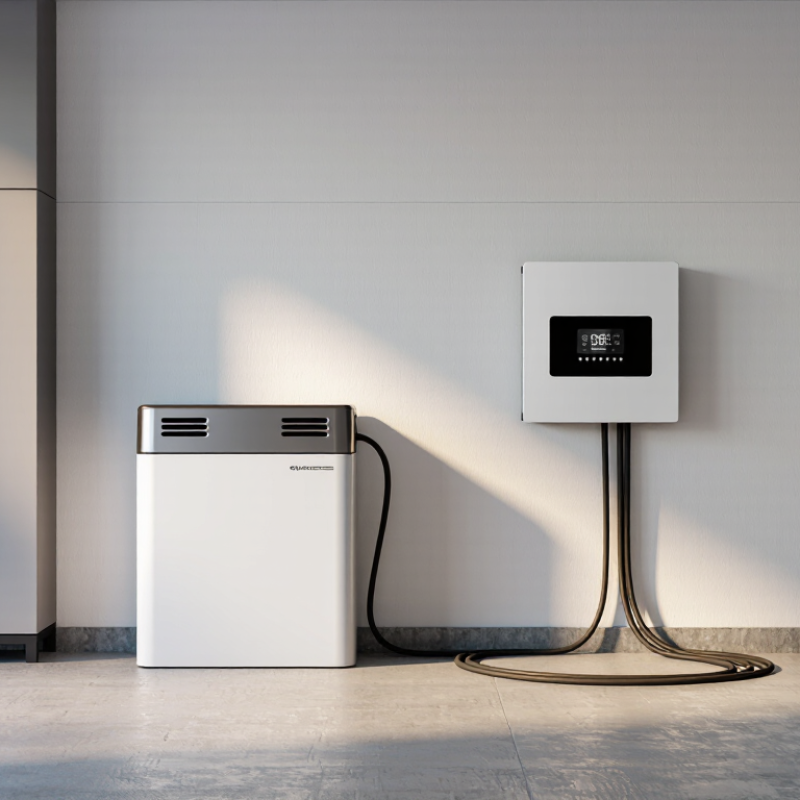
China Top 10 Home Energy Storage Battery Manufacturers

What Home Energy Storage Batteries Are and How They Work

A home energy storage battery stores electricity for use when solar panels produce little power, or when household demand rises. It usually combines battery cells, a battery management system, and an inverter. The inverter converts stored direct current into alternating current for household appliances. Some systems can also charge from the grid, depending on their configuration.

During sunny hours, excess solar electricity can charge the battery. At night, the system discharges power to lights, refrigerators, or other selected loads. The battery management system monitors temperature, voltage, and charge levels to support safe operation and longer service life. According to the International Energy Agency’s Batteries and Secure Energy Transitions report (2024), annual battery storage additions in the power sector more than doubled in 2023, reaching about 42 GW. That figure describes storage across the power sector, not home batteries alone. Not magic. Conversion losses and household load patterns affect how much energy is actually available.

Tips: List essential appliances and their wattage before choosing capacity. A sizing estimate can still miss real evening habits; measure usage for a few days, then review the plan with a qualified installer.


China’s Residential Energy Storage Battery Industry

China’s residential energy storage battery industry brings together cell production, battery-pack engineering, inverter integration, and household installation. Manufacturers design systems for homes with rooftop solar, time-based electricity rates, or backup needs. A typical setup pairs a wall-mounted battery with a hybrid inverter and monitoring software. Capacity should match actual use, not just a sales estimate. That matters at home. Evening cooking, heating, and electric-vehicle charging can create very different demand patterns. Product labels alone may not reveal how much usable energy remains after reserve settings and conversion losses.

Buyers can compare usable capacity, continuous output, cycle-life test conditions, warranty coverage, and local service arrangements. Battery chemistry affects safety, lifespan, and performance across operating temperatures. Installers also need to check electrical compatibility, ventilation, mounting space, and household load requirements. Not every system fits. A practical weakness in many buying guides is the focus on battery price while overlooking installation quality and after-sales support. Export-oriented supply chains can offer broad model choices, but availability and service vary by region. Ask for documented test data and a clear warranty process. A careful comparison starts with household consumption records and a realistic backup plan, rather than a headline capacity figure.

China Top 10 Home Energy Storage Battery Manufacturers - China’s Residential Energy Storage Battery Industry

Typical Cycle-Life Ranges by Battery Chemistry

Residential energy storage systems commonly use lithium iron phosphate (LFP) or nickel manganese cobalt (NMC) batteries. LFP cells typically offer a longer cycle life, while actual performance varies with product design, operating conditions, and testing standards. These chemistry-level ranges do not represent individual manufacturers.

Criteria for Evaluating Leading Manufacturers

A useful comparison of China’s leading home energy storage battery manufacturers starts with evidence, not rankings alone. Check whether published capacity means nominal or usable energy. A 10 kWh label may not represent the energy available to a household. Review cell chemistry, inverter compatibility, charge and discharge limits, and battery management safeguards. Ask for test reports and certifications relevant to the destination market. Details matter.

Manufacturing consistency is as important as a strong specification sheet. Look for documented quality checks, traceable components, and clear procedures for handling defects. Warranty terms should state the coverage period, throughput limits, and exclusions in plain language. Compare service response times and spare-parts availability, especially for systems installed far from major service centers. Independent audits can add confidence, though they do not guarantee every unit will perform identically. That part is easy to overlook.

Tips: Request a sample datasheet, warranty, and test report before shortlisting. Ask how usable capacity changes with temperature and age. If answers stay vague, pause and verify them with an independent technical reviewer.

China Top 10 Home Energy Storage Battery Manufacturers - Criteria for Evaluating Leading Manufacturers

Suggested evaluation framework. The weights and screening benchmarks below are assessment guidelines, not verified ratings of specific manufacturers.

Evaluation Criterion Suggested Weight Evidence to Review Practical Screening Considerations
Safety and product compliance 18% Current certificates and test reports for the specific battery model; transport test documentation; applicable market approvals. Check applicability of standards such as IEC 62619, IEC 63056, and UN 38.3 against the product, intended use, and destination market. Verify report scope and issuing laboratory.
Cycle life and performance transparency 14% Datasheets and test reports stating cycle count, remaining capacity, depth of discharge, temperature, charge/discharge rate, and test method. Compare cycle-life claims only when test conditions are comparable; distinguish tested results from projections and marketing estimates.
Usable capacity and power rating 10% Rated and usable energy, continuous and peak power, operating limits, and system-level efficiency documentation. Confirm whether quoted capacity is nominal or usable and whether power figures apply to the battery alone or the complete system.
Battery management and protection 10% BMS protection functions, monitoring and fault records, temperature limits, balancing method, and emergency response documentation. Review protections for overvoltage, undervoltage, overcurrent, and temperature, as well as system-level safeguards and update procedures.
Inverter and system compatibility 10% Validated compatibility list, communication protocol documentation, installation instructions, and commissioning support details. Confirm compatibility with the intended inverter, system voltage, firmware, and local electrical requirements before purchase.
Warranty clarity and service support 10% Written warranty terms, throughput or cycle limits, capacity-retention conditions, exclusions, claim process, and service contacts. Assess the full warranty conditions, including installation requirements, operating limits, response process, and who is responsible for service in the destination market.
Manufacturing quality controls 9% Quality-management documentation, traceability records, incoming and outgoing inspection procedures, and audit findings where available. Look for documented controls across production and traceability; verify certificates are current and cover the relevant site and activities.
Supply capability and delivery reliability 7% Production and lead-time statements, order references, shipment records, and documented contingency planning. Validate capacity and lead-time claims against the proposed order volume and delivery schedule rather than relying on headline figures alone.
Environmental and end-of-life information 6% Material and environmental disclosures, safe handling guidance, and take-back or recycling information where applicable. Check documentation against the regulations and recycling arrangements relevant to the installation market.
Commercial and financial reliability 6% Business registration, contract terms, product liability coverage where applicable, and verifiable references. Review the contracting entity, payment protections, delivery obligations, and ability to support warranty commitments over time.
Total 100% Use a consistent scoring scale and compare equivalent products, documentation, and operating conditions.

Profiles of China’s Top 10 Home Energy Storage Battery Manufacturers

A useful profile of China’s ten leading home energy storage battery manufacturers should look beyond production scale. It should examine how each company designs systems for everyday homes: wall-mounted battery units, hybrid inverters, backup circuits, and monitoring software. Product details matter. Look for usable capacity, power output, cycle-life test conditions, operating temperature, and warranty terms. A large capacity figure alone says little about performance during a winter outage.

Manufacturers differ in cell sourcing, system integration, quality controls, and service support. Some focus on compact batteries for apartments; others build modular systems that can expand as household demand grows. Installation guidance and access to replacement parts also deserve attention. Ask how safety tests were conducted, and whether the stated results apply to the complete system or only individual cells. A datasheet is only a starting point. Real-world performance can depend on wiring, inverter compatibility, and local climate. Comparisons are imperfect, too; published figures may use different test methods. A careful profile should state what is known, flag what is unclear, and avoid treating marketing claims as independent verification.

Product Comparison and Key Factors for Choosing a Manufacturer

Comparing home energy storage batteries means looking beyond advertised capacity. Check usable kilowatt-hours, continuous output, and round-trip efficiency against your evening loads. The IEA’s Batteries and Secure Energy Transitions report recorded about 42 GW of battery storage additions in the power sector in 2023, more than double the previous year. That signals rapid market growth, not guaranteed household performance. A solar home may value daytime charging and backup power differently from a home facing frequent outages.

Compare manufacturers using the same test conditions. Ask for cycle-life data, retained capacity at the stated cycle count, and warranty limits on energy throughput. Check whether the battery’s inverter communication protocol matches your existing system. Cell chemistry matters, but so do enclosure design, temperature control, and clear safety documentation. Look for independent test reports, not just product brochures.

Numbers need context. A long cycle-life claim can depend on shallow daily cycling and moderate temperatures; real homes are less tidy.

Request written service response times, replacement procedures, and local support arrangements before comparing prices. I would also ask how usable capacity changes after several years, because brochures rarely make degradation feel concrete.

Powder Coat Booths

For those larger-sized parts, or smaller quantity runs, we have 2 independent powder coat booths and ovens. The quality, durability and affordability of today’s powder coating finishes make this the process of choice for world-class companies.

Powder coating advantages over other forms of coating are many. Materials used in the Powder coating process can be metals and non-metals that come in a multitude of thicknesses, textures, colors, etc. Another of Powder coating’s biggest advantages over conventional coatings is its ability to create finishes in many different textures. Powder Coating Booths allow us the ability to apply these advantages to large products.

Wet Paint Line

Tri-State Fabricators runs a full-service conveyor line for painting. Wet painting can provide protection or decoration to many different part styles. From start to finish, every project is easier to undergo random and point-based inspection by our skilled painting team.

Advantages to our Wet Paint Line are these lines start with product prep and ends with a thorough inspection of a high quality finished product. Our ability to complete large and small projects with a superior finish and doing so in a timely and economical fashion. This passes along the savings in production to our customers. When powder coating ins not an option, our Wet Paint Line gets the job done right the first time.

Wet Paint Booths

When the parts get big and heavy we roll-out our custom paint racks and oversize booth. By utilizing our partnerships with all the major paint brands, we can match virtually any color with wet paint.

The advantages of having access to a Wet Paint Booth are many. Large projects of many different shapes can be loaded into the booth. The Wet Paint Booth offers an environment that is much more controlled than a typical parts painting operation.

Not only are they used because of their controlled environment, but they’re are also advantageous when it comes to applying paint to parts that are needed in industries that require specialty coatings such as medical, aerospace, etc.

Military CARC

Our military forces have some very high standards when it comes to the finish of their vehicles and equipment. From the first pre-treatment step to final coat, it takes a great deal of knowledge and experience to protect the men and women of our armed forces. They deserve only the best, and Tri-State Fabricators provides it.

All of our processes are closely monitored by our staff and management teams. Both of which are highly trained in the processes of metal fabrication and finishing. Tri-State Fabricators’ goal is to always fully satisfy each and every customer, including the military. We will always put a 110% into what we do.

Glass-Bead Blasting

Abrasive media blasting is an excellent way to remove old paint, rust, and increase the paint/powder adhesion. Glass beads produce a much smoother and brighter finish than angular abrasives; leaving the part clean yet without any dimensional change. Chemically inert and environmentally friendly, we can recycle our beads approximately 30 times; making them a more preferred method of metal cleaning or surface finishing.

Advantages to Glass Bead Blasting are many. Glass bead blast media is used when a project is needing rough surfaces need to become smooth for applications of coatings such as paint. It is typically used to clean paint and rust from a product surface without deforming the surface it is being used on. Overall, compared to many other blasting media, Glass Bead Blasting is a very economical choice and those savings are always passed on to our customers.

Part Washing

Tri-State Fabricators utilize a zinc phosphate wash to clean and etch the material to ensure the best paint adhesion possible. The unique design of our 3-stage wash system does the work like a 5-stage. From Cleaning and rinsing to conversion coating and post-treatment, Our Part Washing process is a complete service and works throughout the fabrication service and the finishing service.

Along with the previously mentioned benefits, Curing is a vital chemical reaction that leaves the product finish hard and relatively safe from mild abrasion and aggressive corrosion. This process can be done in more than one way; ambient air-dry or in curing ovens at temps that exceed 240°.

Burn-Off Oven

From fixing paint mistakes (someone else’s of course) to simply cleaning our paint line hooks, our burn-off oven is put to good use. After a quick burn-off, a little clean up, and a fresh coat of paint, your parts will look better than new.

Why does our Burn-Off Oven work so well? Because super heating the air around parts turns the materials into ashes. From paint and powder coatings to rubber and machining oils, high temps do the job without degrading the integrity of the part.

Masking

Masking is a vital part of producing high quality products. We have die-cut masking patterns to protect machined surfaces as well as a wide range of plugs and caps to protect threaded holes and bolts. We provide permanent and temporary masking.

Masking allows the selected sections of a product to be protected from a fabrication or finishing service. This can be with both chemicals when etching and tapes, paints when only finishing just a section of the product. Masking is great in aiding the customization process of a project.

Screen Printing

Screen printing is a photographic process that transfers artwork onto a porous nylon screen which allows colored ink to flow through the screen and be deposited on an aluminum or plastic component. We can generally have just about any design created onto a screen for your parts.

Some of the advantages of Screen Printing are, brand recognition for your business displaying on your products, assembly instructions, product warnings/hazards, etc. Tri-State Fabricators produces Screen Printing of the highest quality so you know it’s durable.

Metal Finishing

Metal Finishing is the art of treating the exterior portion of product, often metal but can also be made of other materials, so that the surface is clean and free of any debris. Then the process of applying coats or either paint of powder coat takes place. This coating process improves the quality of the product in both appearance and resistance to wear and corrosion.

Tri-State Fabricators, Inc., understands that a project typically isn’t complete until a high-quality finish has been added to your product. This is why our painting and powder coating teams continuously inspect the products throughout the Metal Finishing process.
